I can still taste the first bechamel sauce I ever made. It was lumpy, scorched at the bottom, and somehow both too thick and too thin at the same time.
My French mother-in-law watched me struggle through it during my first attempt at making lasagna from scratch. She didn’t say a word until I was close to tears. Then she quietly took over, showing me the simple rhythm of whisking that transforms butter and flour into liquid gold.
That was eight years ago. Now I make this bechamel sauce recipe at least twice a week, and it’s become the foundation of so many dishes in my kitchen. It’s one of those recipes that seems intimidating until you understand the basic technique, and then it becomes second nature.
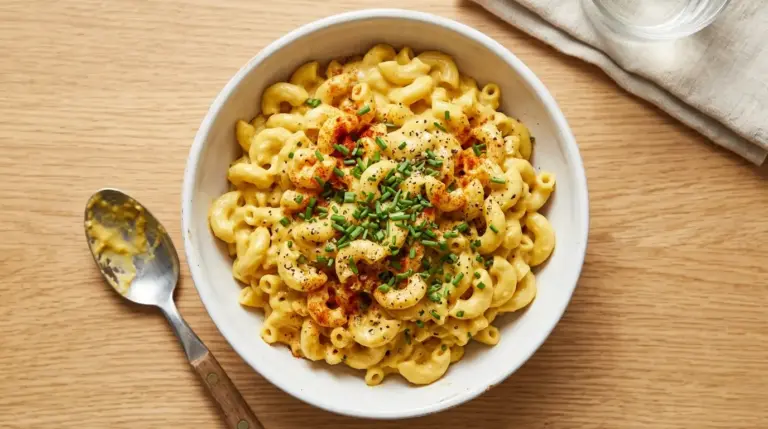
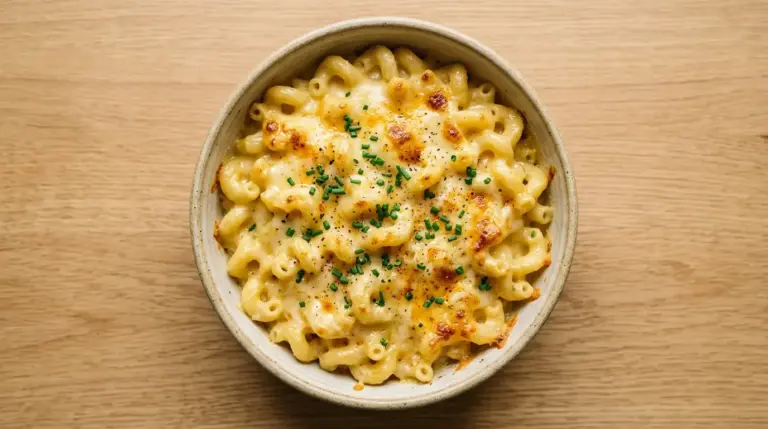
Once you master this classic white sauce, you’ll find yourself reaching for it constantly. It’s the creamy base for mac and cheese, the binding agent in lasagna, and the secret to restaurant-quality gratins.
| Quick Recipe Summary | |
|---|---|
| Prep Time | 5 minutes |
| Cook Time | 10 minutes |
| Total Time | 15 minutes |
| Servings | 2 cups (about 4-6 servings) |
| Difficulty Level | Easy |
Why You’ll Love This Bechamel Sauce Recipe
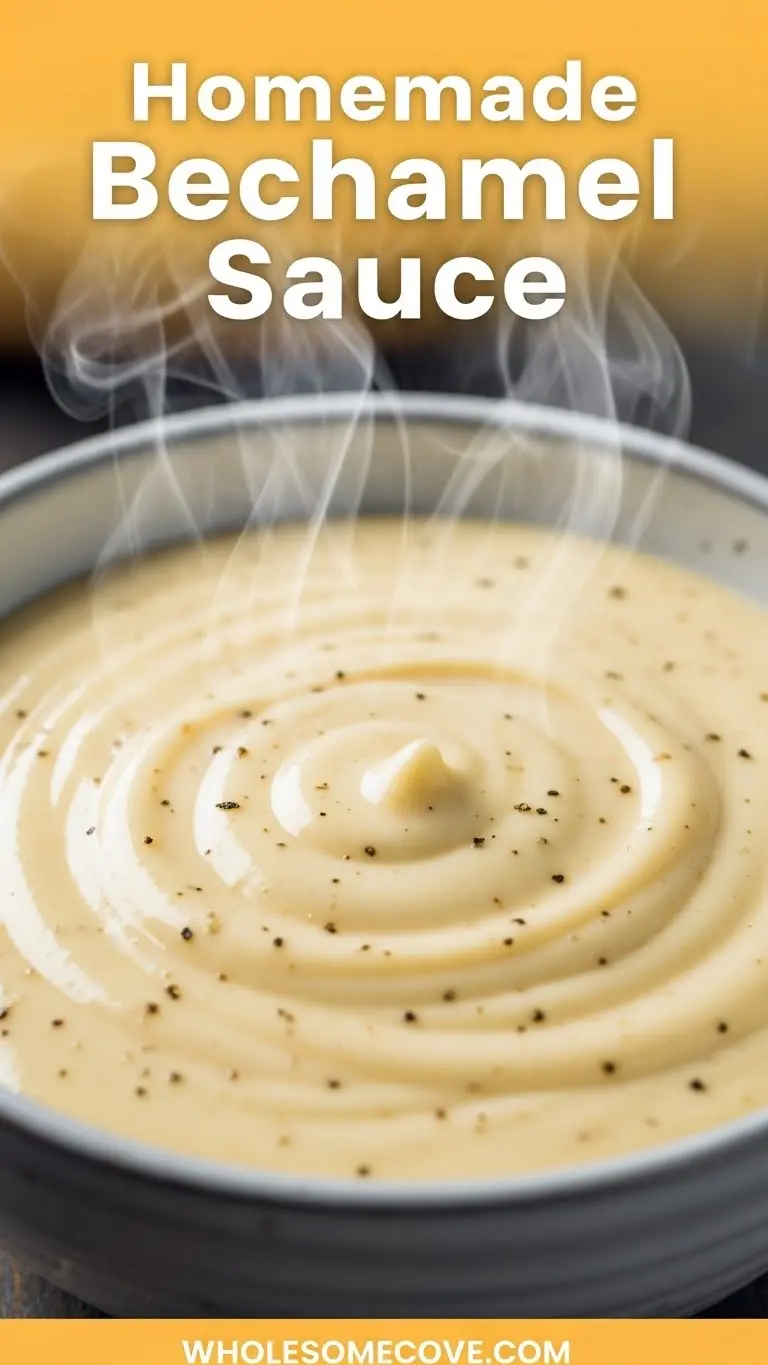
This isn’t just another white sauce. It’s a versatile base that elevates everything it touches, and once you nail the technique, you’ll wonder why you ever bought jarred sauces.
The beauty of bechamel lies in its simplicity and adaptability. With just three core ingredients and about fifteen minutes, you can create a sauce that forms the backbone of countless classic dishes.
- Foolproof technique: The whisking method I share eliminates lumps and ensures silky smoothness every single time
- Infinitely customizable: Add cheese for Mornay sauce, mustard for a tangy variation, or nutmeg for traditional Italian applications
- Budget-friendly: Uses basic pantry staples that you probably already have on hand
- Quick preparation: From start to finish in just 15 minutes, making it perfect for weeknight cooking
- Restaurant-quality results: That velvety texture and rich flavor rivals anything you’d get at a high-end bistro
- Forgiving nature: Unlike temperamental sauces like hollandaise, bechamel is remarkably stable and reheats beautifully
You might also enjoy: Cheese Sauce
Ingredients
The magic of bechamel lies in its simplicity. Just a handful of ingredients come together to create something truly special, and the quality of each one matters more than you might think.
- 4 tablespoons (57g) unsalted butter: The foundation of your roux; European-style butter adds extra richness
- 4 tablespoons (32g) all-purpose flour: Creates the thickening power; use a light hand when measuring
- 2 cups (480ml) whole milk: The star of the show; don’t skimp by using low-fat versions
- 1/2 teaspoon salt: Enhances all the flavors without making the sauce taste salty
- 1/4 teaspoon white pepper: Adds subtle heat without visible black specks
- Pinch of freshly grated nutmeg (optional): The traditional French touch that adds warmth and depth
- 1 bay leaf (optional): Infuses subtle herbal notes during cooking
Kitchen Equipment Needed
Having the right tools makes all the difference when making bechamel. Trust me, I learned this the hard way after ruining three batches with the wrong equipment.
- Heavy-bottomed saucepan (2-quart): Prevents hot spots that cause scorching; this is non-negotiable for smooth results
- Wire whisk: A balloon whisk works best for incorporating air and preventing lumps
- Measuring cups and spoons: Precision matters more here than in most recipes
- Wooden spoon or heat-resistant spatula: For stirring and scraping the bottom of the pan
- Small bowl: To mix your roux before adding liquid if you prefer the alternative method
- Fine-mesh strainer: Your insurance policy against any rogue lumps making it to the final sauce
Another favorite: Marinara Sauce
Recommended Products for This Recipe
After making bechamel hundreds of times, I’ve found a few specific products that genuinely make the process easier and deliver better results. These aren’t just random recommendations—they’re tools and ingredients I reach for every time.
1. Le Creuset Enameled Cast Iron Saucepan
The even heat distribution of this saucepan has saved me from countless scorched roux situations. The enameled surface means nothing sticks, and cleanup takes maybe 30 seconds. It’s pricey, but after six years of near-daily use, mine still looks brand new.
2. OXO Good Grips Balloon Whisk
This whisk changed my bechamel game completely. The wire density is perfect for breaking up any potential lumps, and the comfortable grip means you can whisk continuously without hand fatigue. I actually own three of these because I refuse to make sauce with anything else.
3. Organic Valley Whole Milk
The difference between standard and high-quality milk is genuinely noticeable in bechamel. This organic whole milk has a richer, creamier taste that creates a noticeably more luxurious sauce. The fat content is consistent, which means your sauce thickness is predictable every time.
4. Kerrygold Pure Irish Butter
European-style butter has a higher fat content than American butter, and you can absolutely taste it in bechamel. The slightly cultured flavor adds complexity, and the golden color makes your sauce look more appetizing. Once I switched to Kerrygold, I never looked back.
5. Cuisinart Fine Mesh Strainer
Even with perfect technique, having a quality strainer as backup gives you confidence. This one has the right mesh density to catch any flour clumps while letting the smooth sauce flow through quickly. The sturdy construction means it won’t collapse when you’re pressing sauce through.
Step-by-Step Instructions: How to Make Bechamel Sauce
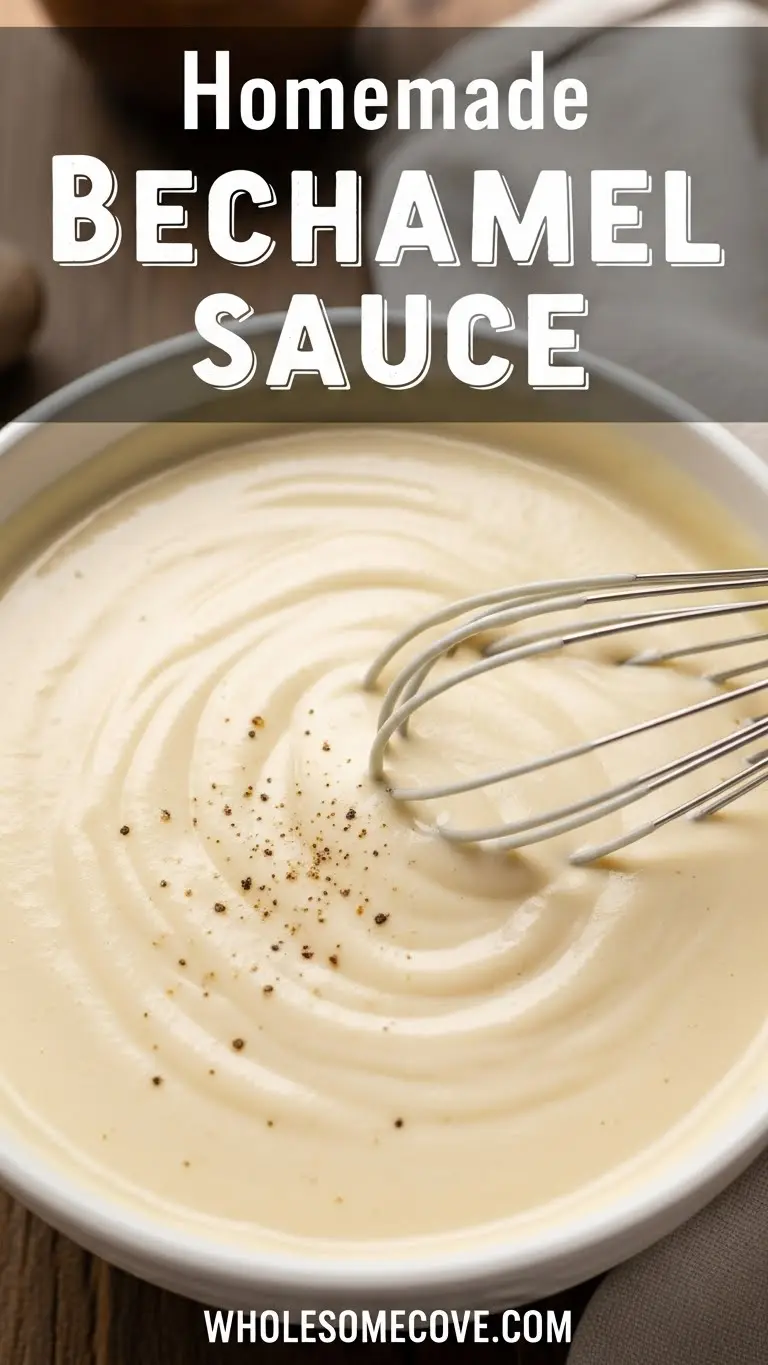
Making bechamel is all about the rhythm and timing. Follow these steps carefully the first few times, and soon you’ll be able to make it without even thinking.
1. Warm Your Milk
- Pour the milk into a microwave-safe container or small saucepan
- Heat until warm to the touch but not steaming (about 100-110°F or 38-43°C)
- If using a bay leaf, add it to the milk now and let it steep while you make the roux
- Warming the milk prevents temperature shock when you add it to the roux, which is the main cause of lumps
2. Create the Roux
- Melt the butter in your heavy-bottomed saucepan over medium heat
- Watch carefully as the butter melts—you want it fully melted but not browning
- Once melted, add all the flour at once
- Immediately begin whisking vigorously to combine the butter and flour into a smooth paste
- Continue cooking the roux for 2-3 minutes, whisking constantly
- The mixture should bubble gently and smell slightly nutty, but remain pale blonde in color
- This cooking time is crucial—it removes the raw flour taste that would otherwise make your sauce taste pasty
Read Also: Easy Alfredo Sauce
3. Add the Milk Gradually
- Remove the bay leaf from the warmed milk if you used one
- Add about 1/4 cup of the warm milk to the roux while whisking continuously
- The mixture will seize up and look like a thick paste—this is completely normal and correct
- Keep whisking until the paste loosens and becomes smooth again
- Add another 1/4 cup of milk and repeat the whisking process
- Once the mixture starts to look more like a sauce than a paste, you can add the remaining milk in larger increments (about 1/2 cup at a time)
- Continue whisking between each addition until fully incorporated
- This gradual method is the secret to lump-free bechamel
4. Season and Simmer
- Once all the milk is incorporated, add the salt, white pepper, and nutmeg if using
- Bring the sauce to a gentle simmer over medium heat, whisking frequently
- You’ll notice the sauce start to thicken significantly as it heats
- Reduce heat to low and continue simmering for 3-5 minutes
- Whisk occasionally to prevent a skin from forming on top
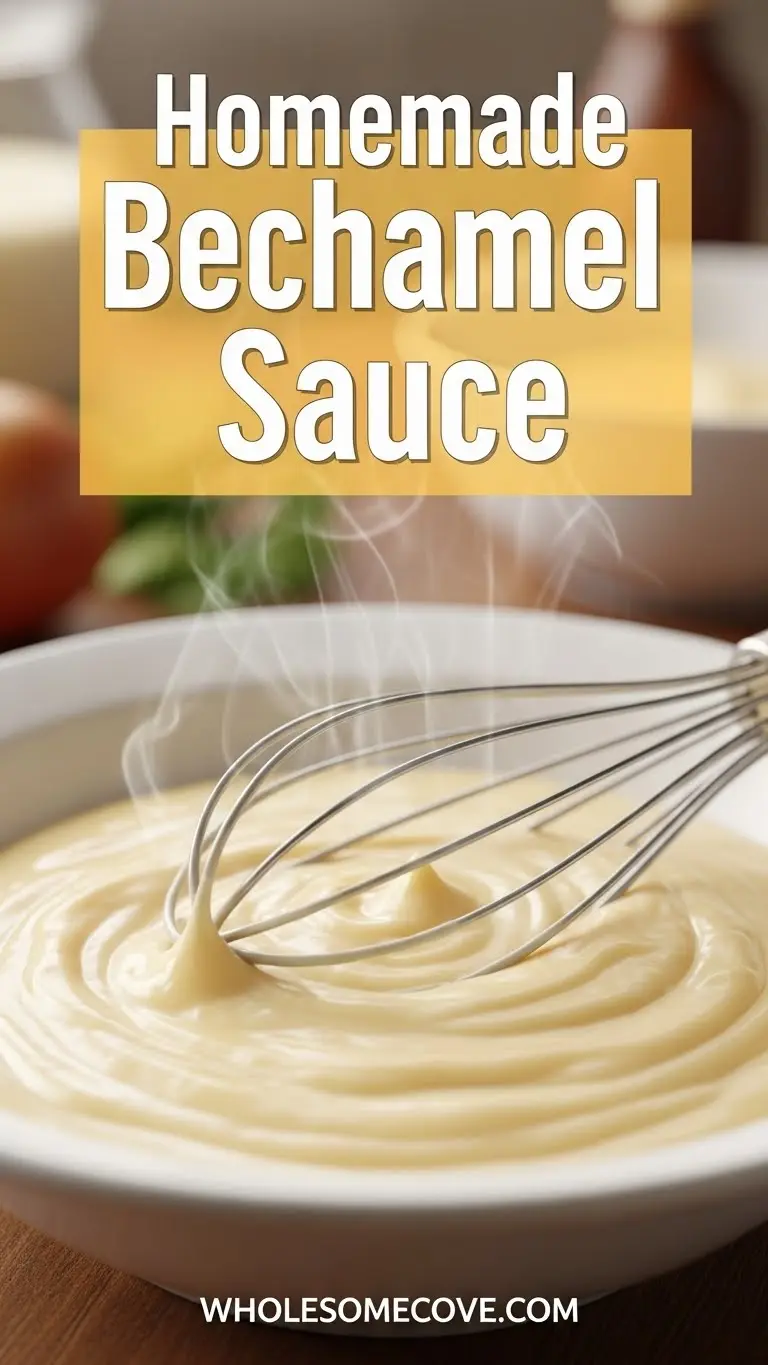
- The sauce is ready when it coats the back of a spoon and you can draw a line through it with your finger that doesn’t immediately run back together
- If you see any lumps at all, push the sauce through your fine-mesh strainer before using
5. Adjust Consistency
- For a thinner sauce (for soups or as a base for other dishes), whisk in additional warm milk 2 tablespoons at a time
- For a thicker sauce (for lasagna or to top vegetables), simply simmer longer to reduce
- Remember that the sauce will thicken slightly as it cools
- If your sauce gets too thick while sitting, whisk in a little warm milk to loosen it
This pairs beautifully with my Chicken Parmesan for a complete Italian dinner.
Tips for The Best Bechamel Sauce
After making this sauce countless times (and teaching dozens of friends and family members to make it), I’ve accumulated quite a few tricks that ensure success every single time.
- Temperature control is everything: Keep your heat at medium or medium-low throughout the process; high heat causes scorching and uneven cooking
- Whisk constantly during milk addition: This is when lumps form, so don’t take any phone calls or get distracted during this crucial step
- Use room temperature butter: Cold butter takes longer to melt and can cause the flour to clump before it’s fully incorporated
- Don’t rush the roux: Those 2-3 minutes of cooking the butter and flour mixture removes the raw flour taste that ruins otherwise perfect sauce
- Warm your milk every time: Adding cold milk to hot roux causes the mixture to seize and creates stubborn lumps that are nearly impossible to eliminate
- Keep a strainer handy: Even with perfect technique, it’s good insurance to have a fine-mesh strainer nearby
- Season at the end: Salt added too early can break the sauce, and you can better judge seasoning once the sauce is at serving consistency
- Freshly grate your nutmeg: Pre-ground nutmeg has almost no flavor compared to freshly grated; the difference is dramatic
- Use a heavy pan: Thin pans create hot spots that scorch the sauce before you even know what’s happening
- Stir, don’t just whisk: Occasionally use a spatula to scrape the bottom and corners where the whisk can’t reach
- Don’t walk away: Bechamel needs almost constant attention, especially in the early stages
- Make extra: This sauce freezes beautifully, so I always double the recipe and freeze half for future use
Serving Suggestions
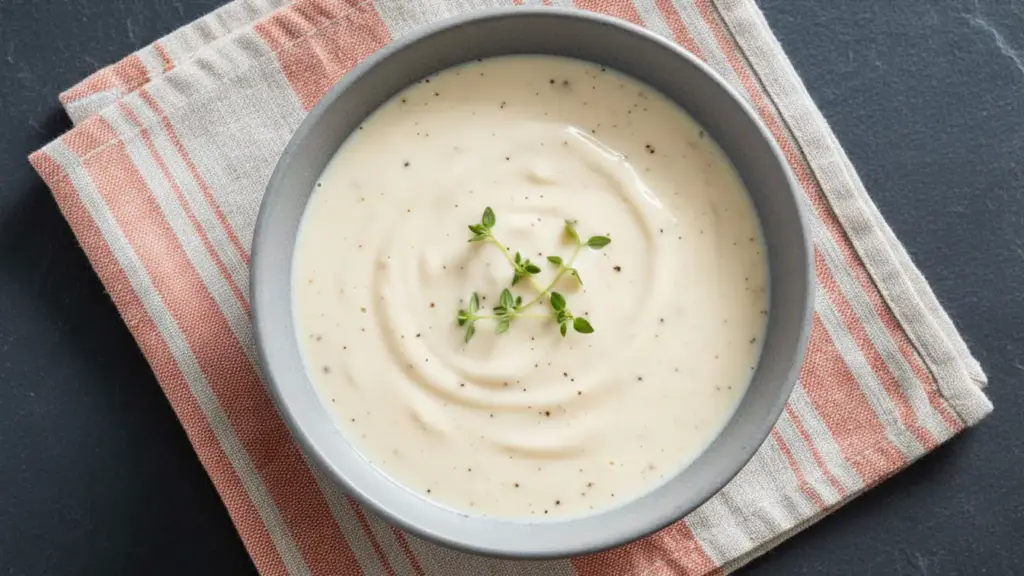
Bechamel is incredibly versatile and shows up in cuisines from France to Greece to Italy. Here are my favorite ways to use it, along with some unexpected applications that might surprise you.
Once you have bechamel mastered, an entire world of dishes becomes accessible to you. I find myself using it in ways I never expected when I first learned to make it.
- Classic lasagna: Layer it between pasta sheets with spaghetti sauce and cheese for authentic Italian lasagne alla bolognese
- Mac and cheese base: Add sharp cheddar, gruyere, or any cheese you love for the creamiest mac and cheese you’ve ever had
- Vegetable gratin: Pour over sliced potatoes, cauliflower, or mixed vegetables, top with breadcrumbs, and bake until golden
- Croque monsieur: Spread on bread with ham and cheese for this legendary French sandwich
- Moussaka: The traditional Greek casserole uses bechamel as the creamy top layer that browns beautifully
- Croquettes: Mix with cooked chicken, ham, or seafood, chill, bread, and fry for crispy-creamy perfection
- Creamed spinach: Stir in cooked spinach for an elegant steakhouse-style side dish
- Soufflé base: Bechamel provides the structure for both savory and sweet soufflés
- Pot pie filling: Use it to bind chicken or vegetables in a hearty pot pie
- Pasta sauces: Turn it into healthy alfredo sauce by adding parmesan and garlic
Variations of Bechamel Sauce
The beautiful thing about mastering basic bechamel is that it opens the door to dozens of derivative sauces. Each variation has its own personality and traditional uses.
- Mornay sauce: Add 1/2 cup (50g) grated Gruyère or Swiss cheese and 2 tablespoons (10g) Parmesan; perfect for gratins and lobster mac and cheese
- Mustard bechamel: Whisk in 2 tablespoons Dijon mustard for a tangy sauce that’s incredible with pork chops or ham
- Herb-infused bechamel: Steep fresh thyme, rosemary, or sage in the warming milk before making your roux; strain before using
- Garlic bechamel: Sauté 3-4 minced garlic cloves in the butter before adding flour; transforms into a sauce that’s perfect for chicken caprese skillet
- Cheddar bechamel: Stir in 1 cup (113g) sharp cheddar cheese for the ultimate bacon mac and cheese
- Parmesan bechamel: Add 1/2 cup (50g) freshly grated Parmesan and a pinch of garlic powder for an Italian twist
- Mushroom bechamel: Sauté 8 ounces (225g) sliced mushrooms until browned, then add to finished sauce
- Lemon bechamel: Add the zest of one lemon and 2 tablespoons fresh lemon juice; incredible with fish and asparagus
- Onion bechamel: Simmer a halved onion in the milk for 15 minutes before making the sauce, then discard the onion
- Cayenne bechamel: Add 1/4 teaspoon cayenne pepper for a subtle kick that works beautifully in taco casserole
- White wine bechamel: Replace 1/4 cup of the milk with dry white wine for added complexity
For a lighter option, try: Healthy Alfredo Sauce
Storage and Reheating
Proper storage is key to maintaining the smooth texture of your bechamel. I’ve learned these tips through trial and error, including one memorable disaster involving a microwave on high power.
- Refrigerator storage: Transfer cooled sauce to an airtight container; press plastic wrap directly onto the surface to prevent skin formation
- Storage duration: Keeps beautifully for 3-4 days in the refrigerator
- Freezer storage: Pour into freezer-safe containers, leaving 1/2 inch headspace for expansion; freeze for up to 3 months
- Preventing skin: Always cover the surface with plastic wrap or butter wrapper while storing
- Thawing: Move frozen sauce to the refrigerator 24 hours before using; never thaw at room temperature
- Stovetop reheating: Place in a saucepan over low heat, whisking frequently as it warms
- Adding liquid: Whisk in 1-2 tablespoons of warm milk if the sauce seems too thick after reheating
- Microwave reheating: Use 50% power in 30-second intervals, whisking between each interval to prevent separation
- Broken sauce fix: If the sauce separates after reheating, whisk in 1 tablespoon of cold butter or cream to bring it back together
- Batch preparation: I often make a triple batch on Sunday and freeze in 1-cup portions for easy weeknight meals

Nutritional Facts
Per serving (1/2 cup or 120ml of bechamel, based on 4 servings total):
- Calories: 165
- Total Fat: 12g
- Saturated Fat: 7.5g
- Cholesterol: 35mg
- Sodium: 320mg
- Total Carbohydrates: 10g
- Dietary Fiber: 0g
- Sugars: 6g
- Protein: 4g
- Calcium: 150mg
- Vitamin A: 450 IU
- Vitamin D: 1.2mcg
Note: Nutritional values are approximate and will vary based on specific brands used and any variations or additions to the basic recipe.
Health Benefits of Key Ingredients
While bechamel isn’t exactly health food, the ingredients do offer some nutritional benefits that might surprise you. Understanding what each component contributes helps you make informed decisions about incorporating this sauce into your diet.
- Whole milk: Provides high-quality protein, calcium for bone health, vitamin D for immune function, and vitamin B12 for energy production and nervous system health
- Butter: Contains fat-soluble vitamins A, E, and K2; the natural fats help your body absorb these nutrients and provide essential fatty acids
- White pepper: Offers antioxidants and has been traditionally used to aid digestion; contains less of the outer layer than black pepper, making it gentler on sensitive stomachs
- Nutmeg: Contains compounds that may help improve digestion and has been used traditionally to promote better sleep; also provides small amounts of minerals like manganese and copper
Read Also: Velveeta Mac and Cheese
FAQs About Bechamel Sauce
1. Why is my bechamel sauce lumpy?
Lumps form when flour clumps aren’t fully incorporated into the butter, or when cold milk hits hot roux too quickly. The solution is whisking constantly and adding milk gradually while the mixture is over gentle heat. If you do end up with lumps, push the sauce through a fine-mesh strainer to remove them completely.
2. Can I make bechamel sauce ahead of time?
Absolutely, and I recommend it for busy weeknight cooking. Make the sauce up to 3 days ahead, cool it completely, then refrigerate in an airtight container with plastic wrap pressed directly on the surface. Reheat gently over low heat, whisking in a splash of warm milk to restore the perfect consistency.
3. What’s the difference between bechamel and white sauce?
They’re actually the same thing. Bechamel is the French name for basic white sauce, and it’s one of the five “mother sauces” in classical French cuisine. Some people use “white sauce” as a more casual term, but they’re referring to the same butter-flour-milk combination.
4. Can I use non-dairy milk to make bechamel?
Yes, but results vary by milk type. Unsweetened soy milk works best because its protein content is closest to dairy milk, giving you similar thickness and stability. Oat milk is my second choice and creates a slightly sweeter sauce. Avoid almond milk—it’s too thin and lacks the protein needed for proper body.
5. How do I fix a bechamel sauce that’s too thick or too thin?
For thick sauce, whisk in warm milk one tablespoon at a time until you reach your desired consistency. For thin sauce, mix 1 tablespoon flour with 2 tablespoons cold milk until smooth, then whisk this slurry into the simmering sauce and cook for 2-3 minutes until thickened.
Bechamel Sauce
Ingredients
- 4 tablespoons unsalted butter - 57g; European-style butter recommended for extra richness
- 4 tablespoons all-purpose flour - 32g; use a light hand when measuring
- 2 cups whole milk - 480ml; do not substitute low-fat versions
- 1/2 teaspoon salt
- 1/4 teaspoon white pepper
- freshly grated nutmeg - Pinch; traditional French touch that adds warmth and depth
- 1 bay leaf - Infuses subtle herbal notes during cooking; remove before serving
Equipment
- Heavy-bottomed saucepan - 2-quart capacity; prevents hot spots and scorching
- Wire whisk - Balloon whisk preferred for best lump prevention
- Measuring cups and spoons
- Wooden spoon or heat-resistant spatula - For scraping bottom and corners of pan
- Small bowl - Optional — for mixing roux using alternative method
- Fine-mesh strainer - Optional — insurance against any rogue lumps
Method
- Pour milk into a microwave-safe container or small saucepan and heat until warm to the touch (100–110°F / 38–43°C). If using a bay leaf, add it to the milk now and let it steep while you make the roux.
- Melt butter in a heavy-bottomed saucepan over medium heat, then add all the flour at once and whisk vigorously to form a smooth paste. Cook the roux for 2–3 minutes, whisking constantly, until it smells slightly nutty and remains pale blonde in color.
- Remove the bay leaf from the warmed milk, then add about 1/4 cup of milk to the roux while whisking continuously — the mixture will seize into a thick paste, which is normal. Keep whisking and adding milk in 1/4-cup increments until it loosens, then add the remaining milk in larger 1/2-cup additions, whisking fully between each.
- Add the salt, white pepper, and nutmeg (if using), then bring the sauce to a gentle simmer over medium heat, whisking frequently. Reduce heat to low and simmer 3–5 minutes until the sauce coats the back of a spoon and a finger-drawn line holds its shape.
- For a thinner sauce, whisk in additional warm milk 2 tablespoons at a time; for a thicker sauce, simmer a few minutes longer. If any lumps remain, press the sauce through a fine-mesh strainer before using.
Nutrition
Notes
- Warm your milk every time: Adding cold milk to hot roux is the primary cause of stubborn lumps — don’t skip this step.
- Don’t rush the roux: Cooking the butter-flour paste for a full 2–3 minutes removes the raw flour taste that ruins otherwise perfect sauce.
- Whisk constantly during milk addition: This is the most critical stage — stay focused and don’t walk away.
- Use a heavy-bottomed pan: Thin pans create hot spots that scorch the sauce before you realize it.
- Scrape the corners: Occasionally use a spatula to reach spots the whisk misses at the bottom and edges of the pan.
- Freshly grate your nutmeg: Pre-ground nutmeg has almost no flavor compared to fresh — the difference is dramatic.
- Mornay sauce variation: Stir in 1/2 cup grated Gruyère and 2 tablespoons Parmesan for a rich cheese sauce perfect for gratins.
- Storage: Press plastic wrap directly onto the surface of cooled sauce and refrigerate for up to 3–4 days, or freeze in portions for up to 3 months.
- Reheating: Warm gently over low heat, whisking in a splash of warm milk to restore silky consistency. Use 50% power in the microwave in 30-second intervals if reheating that way.
- Non-dairy option: Unsweetened soy milk works best as a dairy-free substitute; avoid almond milk as it’s too thin.
Private Notes
Tried this recipe?
Let us know how it was!Final Thoughts
Mastering bechamel sauce is one of those cooking skills that pays dividends for years. Once you understand the simple technique, you’ll find yourself using it constantly and experimenting with all the delicious variations.
The confidence that comes from knowing you can whip up a perfect, silky sauce in 15 minutes opens up so many cooking possibilities. From weeknight pasta dishes to elegant dinner party gratins, bechamel is your secret weapon in the kitchen.
I hope you’ll give this bechamel sauce recipe a try and experience that satisfying moment when everything comes together into velvety perfection. Let me know in the comments how yours turns out, and don’t hesitate to share any creative ways you’ve used it!
Recommended:
- Stuffed Shells
- Lasagna
- Creamed Spinach
- Green Bean Casserole
- Chicken Gnocchi Soup
- Swedish Meatball
- Eggplant Parmesan with Zucchini
- Butternut Squash Gnocchi
- Best Sausage Tortellini Soup
- Pasta Fagioli