I still remember the first time I drizzled a proper Gorgonzola cream sauce over a pan-seared steak at home. I had always ordered it at restaurants and assumed it was some kind of complicated kitchen magic.
Turns out, it’s one of the simplest, most rewarding sauces you can make in under 20 minutes. This Gorgonzola Cream Sauce recipe has become my most-requested dinner party trick, and once you try it, you’ll understand why.
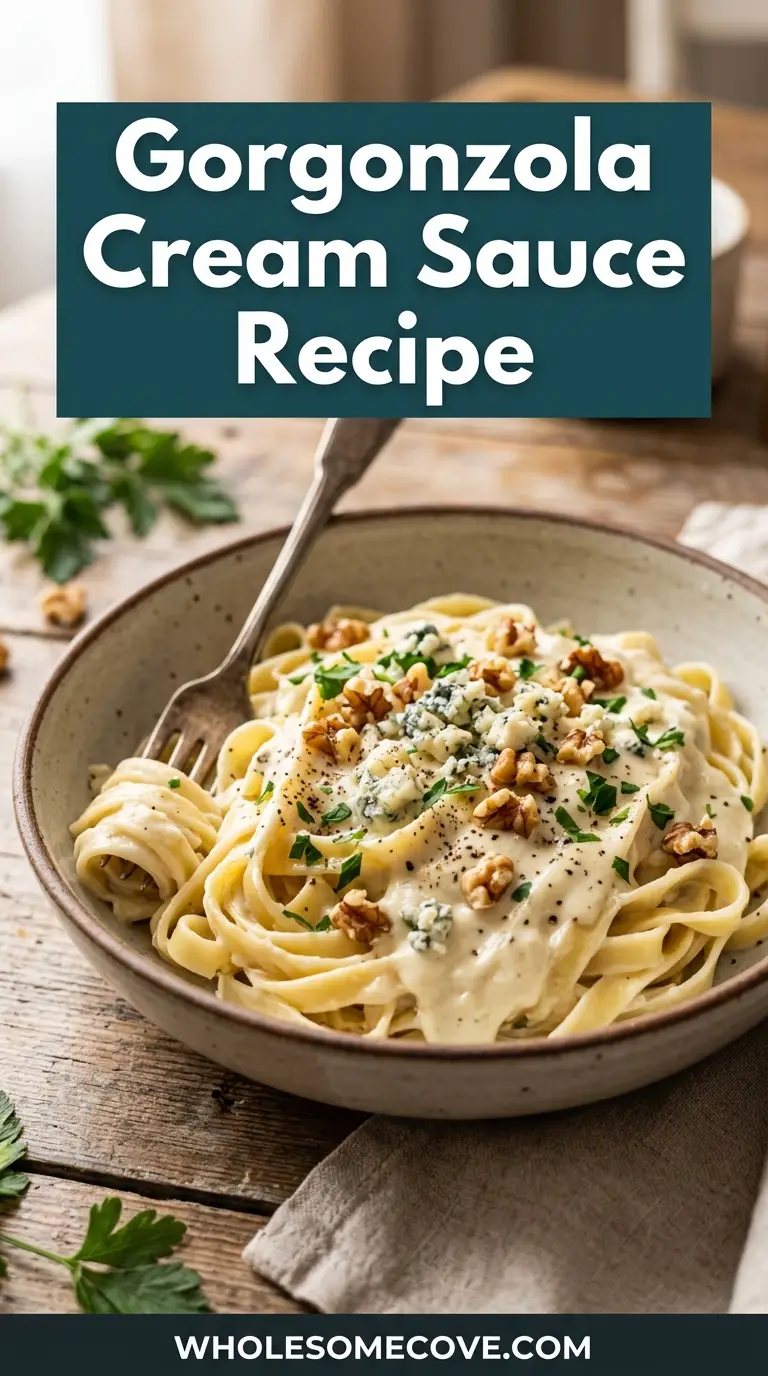
The combination of rich heavy cream, sharp-yet-buttery Gorgonzola, a whisper of garlic, and a touch of Parmesan creates something that tastes genuinely restaurant-worthy. I’ve poured it over steak, tossed it with pasta, spooned it over gnocchi, and honestly, I’ve been caught eating it straight from the pan with a piece of crusty bread.
My first attempt at this sauce was a bit of a disaster. I cranked the heat too high and ended up with a grainy, broken mess because I didn’t understand that dairy sauces need patience and low, steady heat. Once I slowed things down, everything clicked into place. The cream reduces into this glossy, velvety base, and the Gorgonzola melts right in without any fuss.
| Quick Recipe Summary | |
|---|---|
| Prep Time | 5 minutes |
| Cook Time | 15 minutes |
| Total Time | 20 minutes |
| Servings | 4 servings |
| Difficulty Level | Easy |
If you enjoy rich, cheese-forward sauces, you might also love my Garlic Parmesan Sauce for another indulgent option.
Why You’ll Love This Gorgonzola Cream Sauce Recipe
This sauce is genuinely one of those recipes that makes people think you’ve spent hours in the kitchen when you’ve really only been at the stove for 20 minutes. It delivers bold, complex flavor with almost zero effort.
- It’s incredibly versatile. Pour it over steak, chicken, gnocchi, pasta, roasted vegetables, or even baked potatoes. This one sauce does the heavy lifting across dozens of meals.
- It comes together fast. From start to finish, you’re looking at about 20 minutes. That includes the time it takes to reduce the cream.
- It uses just a handful of ingredients. You need heavy cream, Gorgonzola, garlic, butter, Parmesan, Dijon mustard, and basic seasonings. Nothing obscure or hard to find.
- It’s naturally gluten-free. No flour or thickening agents needed. The cream reduces down on its own into that signature silky consistency.
- It’s deeply satisfying. The blue cheese flavor is bold enough to be interesting but mellowed by the cream so it doesn’t overwhelm. Even self-described blue cheese skeptics tend to love this sauce.
- It reheats beautifully. A splash of cream when warming it back up brings it right back to life. It’s just as good the next day.
- It impresses every time. I’ve served this at dinner parties, casual weeknights, and holiday meals. People always ask for the recipe.
You might also enjoy this Easy Alfredo Sauce for nights when you want something a little more classic and mild.
Ingredients
The key to a great Gorgonzola cream sauce is using quality cheese. Gorgonzola Dolce (the sweeter, creamier variety) is my go-to because it melts smoothly and doesn’t overpower. If you prefer a more assertive flavor, Gorgonzola Piccante works wonderfully too. Don’t skimp on the heavy cream either. It’s the backbone of this sauce.
- 1 cup (240 ml) heavy whipping cream
- 3 oz (85 g) Gorgonzola cheese, crumbled (Gorgonzola Dolce preferred for a milder sauce)
- 2 tablespoons (28 g) unsalted butter
- 2 cloves garlic, minced
- 1 small shallot, finely diced
- ¼ cup (25 g) freshly grated Parmigiano Reggiano
- 1 teaspoon Dijon mustard
- ¼ teaspoon freshly cracked black pepper
- Pinch of kosher salt (to taste, since Gorgonzola is already quite salty)
- 1 tablespoon fresh flat-leaf parsley, finely chopped (plus extra for garnish)
Read Also: Bechamel Sauce Recipe
Kitchen Equipment Needed
You don’t need anything fancy for this sauce. A good-quality saucepan is really the most important tool here since the heavy base ensures even heat distribution and prevents the cream from scorching.
- Medium saucepan (heavy-bottomed works best)
- Silicone whisk
- Wooden spoon or silicone spatula
- Cheese grater or microplane (for the Parmesan)
- Sharp knife and cutting board
- Measuring cups and spoons
- Small ladle for serving
The same basic setup works beautifully for making my Vodka Sauce.
Recommended Products for This Recipe
These are the products I personally reach for when making this sauce, and they genuinely make a difference in the final result.
1. Gorgonzola Dolce (Imported Italian)
The type of Gorgonzola you use matters more than you’d think. Imported Gorgonzola Dolce is creamier, less aggressively salty, and melts like a dream into the sauce. Domestic crumbles can work in a pinch, but the texture and flavor won’t be quite the same. If you want that truly velvety, restaurant-style finish, source the real thing.
2. Parmigiano Reggiano (Aged, Wedge)
Pre-grated Parmesan from a canister has anti-caking additives that can make your sauce grainy. A proper wedge of aged Parmigiano Reggiano, freshly grated with a microplane, melts flawlessly and adds that deep, nutty undertone this sauce needs. It’s a small upgrade that makes a noticeable difference.
3. Heavy-Bottomed Stainless Steel Saucepan
A thin-bottomed pan is the number one reason home cooks end up with scorched, broken cream sauces. A heavy-bottomed stainless steel saucepan distributes heat evenly and gives you far more control, especially when you’re reducing the cream. It’s the kind of pan that pays for itself over a lifetime of sauces.
4. Microplane Zester/Grater
A microplane produces the finest, fluffiest Parmesan that disappears into the sauce without any lumps. It’s also great for zesting citrus, grating garlic, or shaving chocolate. Mine lives on my counter because I use it almost every time I cook.
Another creamy sauce worth trying next is this Olive Garden Alfredo Sauce for an Italian-restaurant-style experience at home.
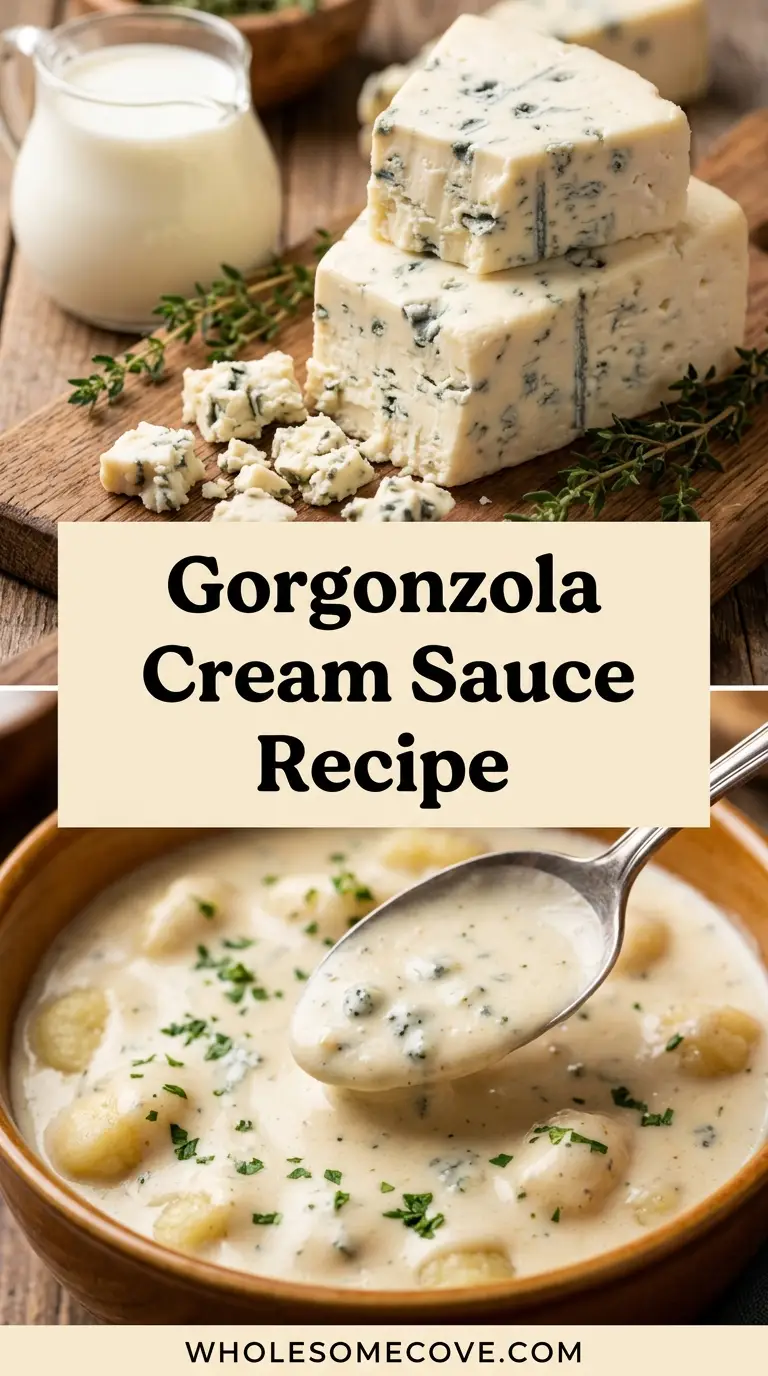
Step-by-Step Instructions: How to Make Gorgonzola Cream Sauce
1. Prep Your Ingredients
- Crumble the Gorgonzola into small, roughly equal pieces. This helps it melt evenly and quickly without clumping together in the pan.
- Mince the garlic as finely as you can. Large chunks of garlic will cook unevenly and leave sharp raw notes in the finished sauce.
- Dice the shallot into very small pieces. A fine dice means the shallot will soften and nearly dissolve into the sauce rather than leaving distinct chunks behind.
- Grate the Parmigiano Reggiano using a fine microplane. Set it aside in a small bowl.
- Chop the parsley and have it ready to add at the end. Fresh parsley added at the very last minute keeps its bright color and slight herbal brightness.
- Measure out your heavy cream and Dijon mustard. Having everything ready before you start cooking makes the process smooth and stress-free.
2. Sauté the Shallot and Garlic
- Place your medium saucepan over medium heat and add the butter.
- Let the butter melt completely, swirling the pan gently so it coats the bottom evenly. You want the butter hot but not browning at this stage.
- Add the diced shallot to the melted butter. Cook, stirring frequently, for about 2 minutes until the shallot turns soft and translucent. You should be able to see through it and it will have lost its raw, pungent smell.
- Add the minced garlic and stir it into the shallot mixture. Cook for just 30 to 45 seconds. Garlic burns quickly, so keep stirring and watch carefully. You want it fragrant and just barely golden at the edges, not brown.
- If the garlic starts to color too quickly, reduce the heat slightly before moving on to the next step.
3. Add the Heavy Cream and Reduce
- Pour the heavy cream directly into the pan over the sautéed shallot and garlic.
- Increase the heat to medium-high and bring the cream to a gentle boil, stirring occasionally to prevent it from sticking to the bottom.
- Once it reaches a boil, reduce the heat back to medium and let the cream simmer. This is the reduction phase, and it’s what gives the sauce its thick, velvety body.
- Stir every minute or so to keep it moving and prevent a skin from forming on top.
- Allow the cream to simmer for 8 to 10 minutes, or until it has reduced by about one-third and has thickened noticeably. You’ll know it’s ready when it coats the back of a spoon and a line drawn through the coating holds its shape cleanly.
- Keep the heat steady. A rolling boil will cause the cream to bubble up and over the sides of the pan, which is messy and can cause the sauce to break.
4. Lower the Heat and Add the Gorgonzola
- Reduce the heat to low. This is important. Adding cheese to a very hot, rapidly simmering sauce can cause it to become grainy or separate.
- Add the crumbled Gorgonzola to the reduced cream, stirring immediately and gently to help it melt into the sauce.
- Continue stirring for about 1 to 2 minutes. The Gorgonzola will gradually disappear into the cream, turning the sauce a pale ivory color with a wonderfully complex aroma.
- If you notice any small lumps of unmelted cheese, keep stirring on low heat. They will dissolve with patience. Do not raise the heat to rush this process.
5. Finish the Sauce
- Stir in the Dijon mustard. This adds a subtle tang that balances the richness of the cream and the sharpness of the Gorgonzola without tasting like mustard.
- Add the freshly grated Parmigiano Reggiano and stir until it has fully melted into the sauce. The Parmesan adds a deeper, nuttier savory dimension and helps stabilize the sauce’s texture.
- Taste the sauce and season with a pinch of kosher salt if needed. Remember, both the Gorgonzola and Parmesan are already salty, so you likely won’t need much.
- Add the freshly cracked black pepper and stir to combine.
- Remove the pan from the heat and stir in the chopped fresh parsley. The residual heat will warm the parsley through without wilting it completely.
- Serve immediately for the best texture and flavor. If the sauce sits too long off the heat, it will begin to thicken considerably. A quick stir and 30 seconds over low heat will bring it back.
Read Also: Cheese Sauce Recipe
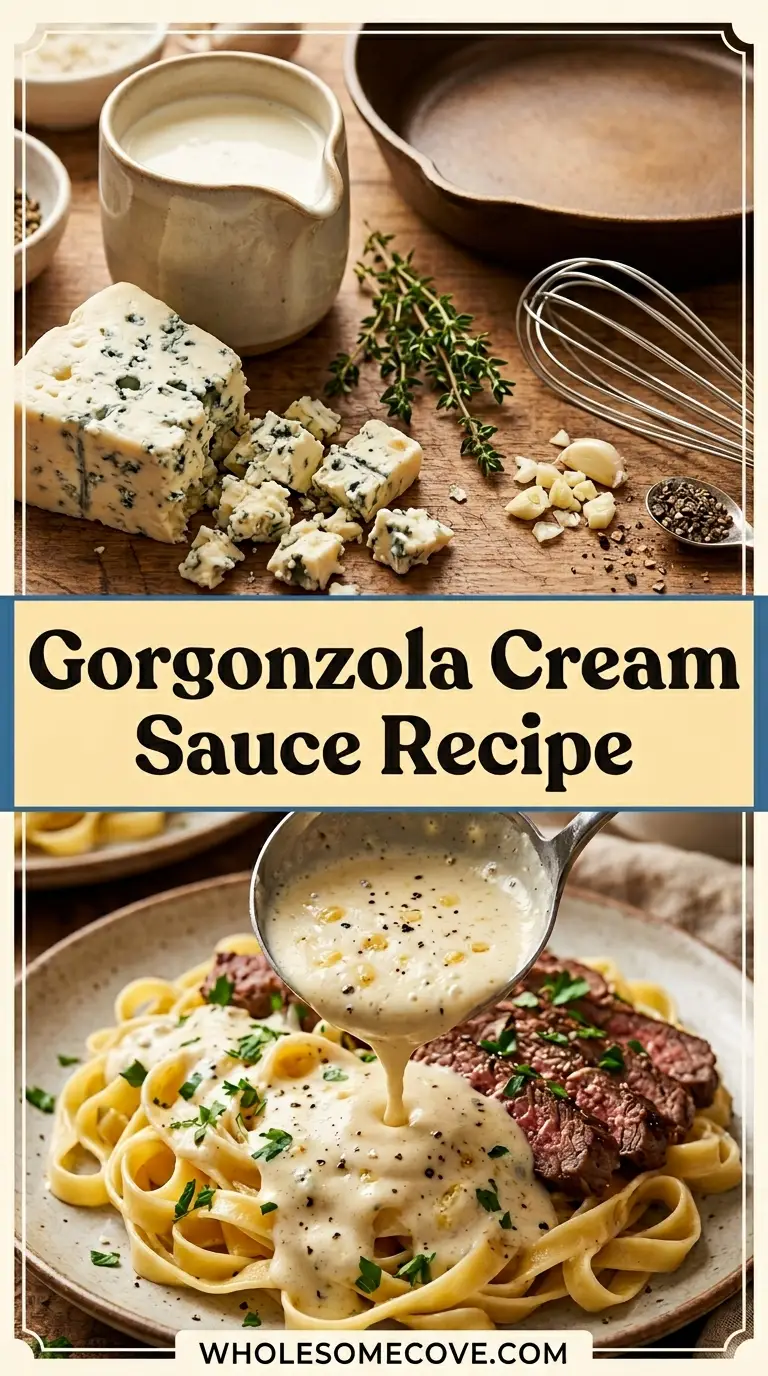
Tips for The Best Gorgonzola Cream Sauce
Getting this sauce perfect every time comes down to a few key principles. Once you understand why each step matters, you’ll have complete confidence every time you make it.
- Choose the right Gorgonzola. Gorgonzola Dolce is milder, creamier, and melts more smoothly. Gorgonzola Piccante is firmer and sharper. For a balanced sauce that everyone at the table will love, Dolce is the better choice.
- Never rush the cream reduction. Medium heat and patience are what create the glossy, thick base. High heat causes the cream to bubble violently, which can lead to a broken or grainy sauce.
- Take the pan off the heat before adding the cheese. Or at the very least, drop to the lowest possible heat. Dairy proteins tighten and clump when exposed to very high temperatures. Low and slow is the rule.
- Use freshly grated Parmesan, not pre-shredded. Pre-shredded Parmesan often contains starch or cellulose to prevent clumping, and those additives can make your sauce slightly gummy or grainy instead of silky.
- Don’t skip the Dijon. It might seem like an odd ingredient, but the mustard acts as an emulsifier, helping to hold the sauce together and adding a subtle background acidity that brightens the whole thing.
- Season at the end. Gorgonzola and Parmesan are both very salty cheeses. Taste the sauce after all the cheese has been added before reaching for the salt.
- If the sauce looks too thin, keep simmering. It will thicken further as it cools, so pull it off the heat while it still looks slightly looser than you’d like. It will reach the perfect consistency by the time it hits the plate.
- Reheat gently with a splash of cream. Cold Gorgonzola cream sauce seizes up into a thick paste in the fridge. Warming it slowly over low heat with a tablespoon or two of fresh cream brings it back to a perfect pouring consistency.
For another deeply savory Italian sauce worth adding to your repertoire, try my Bolognese.
What to Serve with Gorgonzola Cream Sauce
This sauce is genuinely one of the most versatile things you can have on a weeknight dinner rotation. It elevates almost any protein, carb, or vegetable it touches.
- Beef Tenderloin: This is the classic pairing. A thick slice of perfectly seared beef tenderloin with a generous pour of Gorgonzola cream sauce is the kind of meal people talk about.
- Filet Mignon: Same idea as the tenderloin but with individual steaks. The mild, buttery flavor of filet mignon is the perfect canvas for this bold sauce.
- Roast Chicken: Spoon this over sliced roast chicken for a French-bistro-inspired dinner that feels luxurious without much extra work.
- Cacio e Pepe or plain pasta: Toss the sauce with your favorite pasta for a quick and intensely satisfying dinner. Tagliatelle, pappardelle, and rigatoni all work beautifully.
- Gnocchi: Pillowy potato gnocchi coated in Gorgonzola cream sauce is a combination that borders on life-changing. A simple pan-fry of the gnocchi before adding the sauce adds beautiful texture.
- Roasted Brussels sprouts: The slight bitterness of roasted Brussels sprouts plays wonderfully against the rich, tangy sauce. This combination is one of my favorite vegetable side dishes of all time.
- Baked Potato: Spoon this over a hot baked potato with a crack of black pepper and some chive for an absurdly good loaded potato experience.
- Grilled Portobello Mushrooms: The deep, earthy flavor of portobellos and the bold creaminess of the sauce are a match made in heaven, especially for a vegetarian main course.
Variations of Gorgonzola Cream Sauce
The base recipe is wonderful on its own, but there are several small tweaks that can change the personality of the sauce dramatically depending on what you’re serving it with.
- Rosemary Gorgonzola Cream Sauce: Add 1 teaspoon of finely minced fresh rosemary along with the garlic. This herb pairs exceptionally well with the cheese and gives the sauce an almost woodsy, autumnal quality that is perfect over lamb or pork.
- Walnut and Gorgonzola Cream Sauce: Fold in ¼ cup (30 g) of toasted chopped walnuts at the end of cooking. The crunch and slight bitterness of walnuts against the creamy sauce is a classic Italian flavor combination, especially beautiful over pasta.
- White Wine Gorgonzola Sauce: After sautéing the shallot and garlic, add ¼ cup (60 ml) of dry white wine to the pan and let it reduce by half before adding the cream. This adds brightness and a subtle fruity note that makes the sauce feel a little lighter.
- Spicy Gorgonzola Cream Sauce: Add ¼ teaspoon of red chili flakes along with the garlic. The heat cuts through the richness of the cream beautifully and gives the sauce a more assertive personality.
- Blue Cheese Variation: If Gorgonzola is unavailable, substitute with an equal amount of any good-quality blue cheese. Roquefort will make a sharper, more intense sauce. A domestic blue like Maytag Blue will produce a milder result.
- Lighter Version: Replace the heavy cream with a 50/50 mixture of heavy cream and whole milk. The sauce won’t be quite as thick or rich, but it’s a reasonable lighter option that still delivers most of the flavor.
For another comforting Italian-inspired dish to pair with your sauce, try this Stuffed Shells Recipe.
Storage and Reheating
Gorgonzola cream sauce is best eaten fresh, straight from the pan. That said, it stores quite well and reheats beautifully with a little attention.
- Refrigerator storage: Transfer leftover sauce to an airtight container and refrigerate for up to 3 days. The sauce will thicken considerably in the fridge as the cream and cheese solidify. This is completely normal.
- Freezer storage: Technically the sauce can be frozen, but it’s not recommended. Dairy-based sauces can separate and turn grainy when thawed, affecting both the texture and the flavor. If you do freeze it, store in a sealed freezer-safe container for up to 1 month and thaw slowly overnight in the refrigerator.
- Reheating on the stovetop: Place the cold sauce in a small saucepan over the lowest possible heat. Add 2 to 3 tablespoons (30 to 45 ml) of fresh heavy cream to the pan to help loosen it. Stir gently and continuously until the sauce is warm and smooth. Avoid the temptation to raise the heat to speed things up.
- Reheating in the microwave: Transfer the sauce to a microwave-safe bowl, add a splash of cream, and heat in 20-second bursts, stirring between each interval until warmed through.
- Do not boil when reheating. Boiling the sauce during reheating can cause the dairy proteins to seize, resulting in a grainy, broken texture that’s hard to fix.
Read Also: Pesto Recipe
Nutritional Facts
The following values are approximate per serving (based on 4 servings) and will vary depending on the specific brands and quantities of ingredients used.
| Nutrient | Per Serving |
|---|---|
| Calories | ~310 kcal |
| Total Fat | 30 g |
| Saturated Fat | 19 g |
| Cholesterol | 95 mg |
| Sodium | 380 mg |
| Total Carbohydrates | 3 g |
| Fiber | 0 g |
| Sugars | 2 g |
| Protein | 8 g |
| Calcium | 185 mg |
This sauce is naturally low-carb and gluten-free, making it suitable for keto and grain-free diets. Because of its high fat content, a little goes a long way, so modest serving sizes still deliver tremendous flavor.
You might also enjoy this Healthy Alfredo Sauce if you’re looking for a lighter creamy pasta sauce option.
Health Benefits of Key Ingredients
While this is undeniably an indulgent sauce, its core ingredients bring some real nutritional value to the table alongside all that richness.
- Gorgonzola cheese: Like most aged cheeses, Gorgonzola is a good source of calcium and phosphorus, both of which are essential for bone health and density. It also contains a moderate amount of protein and provides beneficial fat-soluble vitamins including vitamin A and vitamin K2, which supports cardiovascular health.
- Heavy cream: Rich in fat-soluble vitamins A, D, E, and K, heavy cream provides a concentrated source of energy. The saturated fat in cream, when consumed in moderate amounts, does not necessarily increase cardiovascular risk according to more recent nutritional research.
- Garlic: One of the most well-studied culinary ingredients in nutritional science, garlic contains allicin, a sulfur compound with demonstrated antimicrobial and anti-inflammatory properties. It has also been linked to modest reductions in blood pressure and cholesterol.
- Parmigiano Reggiano: Aged Parmesan is among the most nutrient-dense cheeses available. It’s rich in calcium, phosphorus, and high-quality complete protein. It also contains the amino acid tyrosine, which supports cognitive function and mood regulation.
- Shallots: Shallots contain quercetin, a powerful flavonoid antioxidant. They’re also a source of prebiotic fiber, which feeds beneficial gut bacteria and supports digestive health.
- Parsley: A tablespoon of fresh parsley provides a surprising amount of vitamin K, vitamin C, and vitamin A. It’s also a natural source of folate and antioxidant flavonoids.
- Dijon mustard: Made from mustard seeds, Dijon provides small amounts of selenium, magnesium, and omega-3 fatty acids. It also contains glucosinolates, compounds that have been studied for their anti-inflammatory effects.
For another dish built around healthy, whole ingredients, check out this Healthy Chicken Parmesan.
FAQs About Gorgonzola Cream Sauce
1. Can I use blue cheese instead of Gorgonzola?
Yes, absolutely. Blue cheese is the closest substitute and will produce a similar sauce. Keep in mind that some blue cheeses, like Roquefort, are sharper and saltier than Gorgonzola Dolce, so the flavor will be more intense. Taste as you go and adjust seasoning accordingly.
2. Why did my sauce turn grainy?
Grainy texture usually happens because the heat was too high when the cheese was added. Dairy proteins tighten and separate under high heat. If your sauce breaks, try whisking it vigorously off the heat with a small splash of cold cream. This can sometimes bring it back together.
3. Can I make this sauce ahead of time?
You can make it up to 3 days in advance and store it in the refrigerator. It thickens significantly when cold, so reheat it gently over low heat with a splash of heavy cream, stirring constantly until it returns to a smooth, pourable consistency.
4. Is this sauce gluten-free?
Yes, this recipe is naturally gluten-free. It uses no flour or starch. The sauce thickens through simple cream reduction rather than any added thickening agents. Always double-check your Dijon mustard and other packaged ingredients if you have a severe gluten intolerance or celiac disease.
5. What pasta works best with Gorgonzola cream sauce?
Wide, flat pasta shapes like tagliatelle, pappardelle, and fettuccine work beautifully because their surface area holds the sauce well. Ridged shapes like rigatoni and penne are also excellent because the sauce clings inside the ridges. Gnocchi is another outstanding option, particularly if you pan-fry the gnocchi first to get a golden crust.
Read Also: Carbonara Recipe
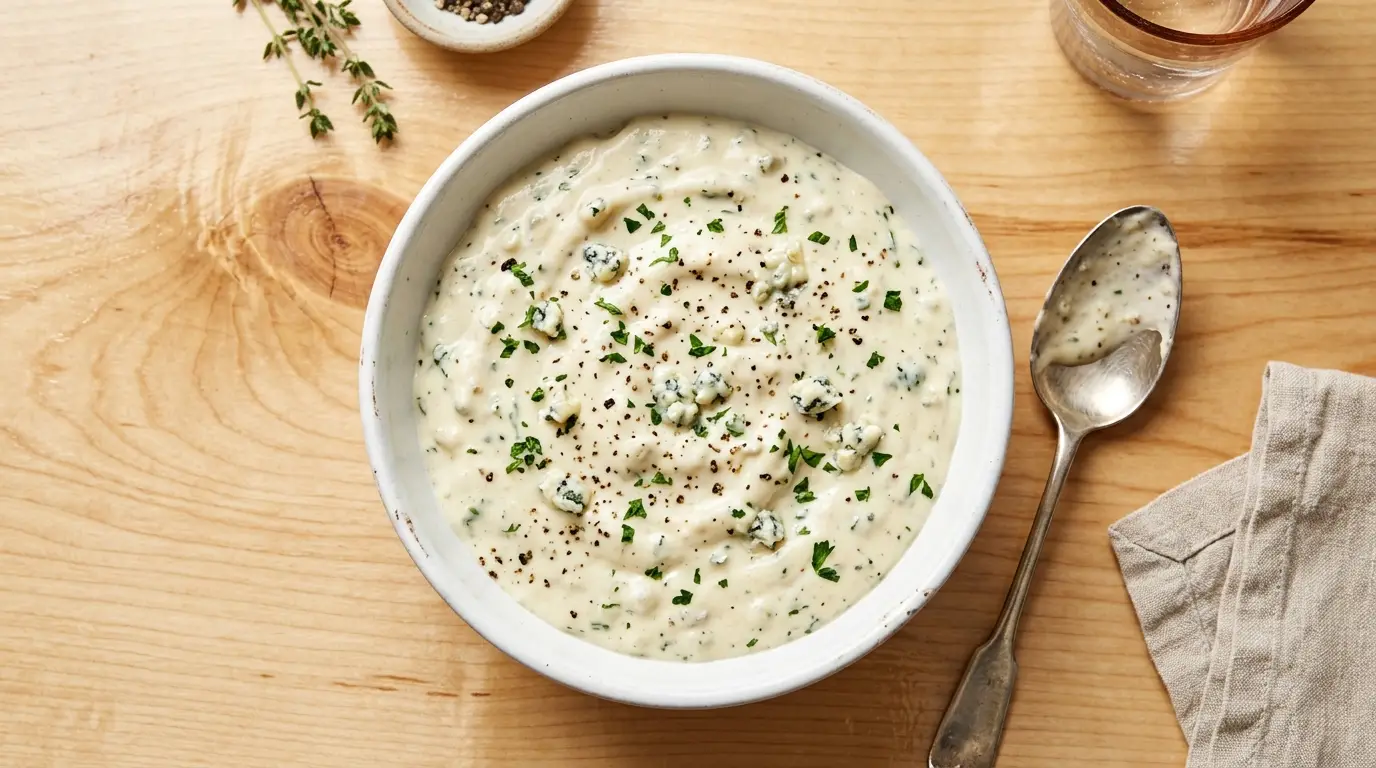
Gorgonzola Cream Sauce
Ingredients
- 1 cup heavy whipping cream - 240 ml
- 3 oz Gorgonzola cheese - 85 g, crumbled; Gorgonzola Dolce preferred for a milder, creamier sauce
- 2 tbsp unsalted butter - 28 g
- 2 garlic cloves - minced as finely as possible
- 1 small shallot - finely diced
- 1/4 cup Parmigiano Reggiano - 25 g, freshly grated with a microplane
- 1 tsp Dijon mustard
- 1/4 tsp freshly cracked black pepper
- kosher salt - pinch, to taste; add sparingly as Gorgonzola and Parmesan are already salty
- 1 tbsp fresh flat-leaf parsley - finely chopped, plus extra for garnish
Equipment
- Medium saucepan - Heavy-bottomed preferred for even heat distribution
- Silicone whisk
- Microplane or cheese grater - For freshly grating Parmigiano Reggiano
- Small ladle - For serving
Method
- Crumble the Gorgonzola into small pieces, mince the garlic finely, and dice the shallot into a very fine dice. Grate the Parmigiano Reggiano with a microplane and chop the parsley, setting both aside until needed.
- Melt the butter in a medium saucepan over medium heat, then add the shallot and cook for 2 minutes until soft and translucent. Add the minced garlic and cook for 30 to 45 seconds, stirring constantly, until fragrant but not browned.
- Pour in the heavy cream and bring to a gentle boil over medium-high heat, then reduce to medium and simmer for 8 to 10 minutes, stirring occasionally, until the cream has reduced by about one-third and coats the back of a spoon.
- Reduce the heat to low and add the crumbled Gorgonzola, stirring gently for 1 to 2 minutes until fully melted and the sauce is smooth and pale ivory in color.
- Stir in the Dijon mustard, grated Parmigiano Reggiano, black pepper, and salt to taste, then remove from heat and fold in the fresh parsley. Serve immediately for the best texture.
Nutrition
Notes
- Use Gorgonzola Dolce for a milder, creamier sauce that melts smoothly. Gorgonzola Piccante produces a sharper, more intense flavor.
- Never rush the cream reduction. Medium heat and patience are key — a rapid boil can cause the sauce to break or boil over.
- Always reduce the heat to low before adding the Gorgonzola. High heat causes dairy proteins to seize and the sauce to turn grainy.
- Use freshly grated Parmigiano Reggiano only. Pre-shredded Parmesan contains anti-caking additives that can make the sauce gummy or grainy.
- Don’t skip the Dijon mustard — it acts as an emulsifier and adds a subtle acidity that balances the richness of the cream and cheese.
- Season with salt at the very end. Both Gorgonzola and Parmesan are naturally salty, so you may need very little or none at all.
- If the sauce looks slightly thinner than desired, pull it from the heat while it still appears loose — it will continue to thicken as it cools.
- To reheat, warm slowly over low heat with 2 to 3 tablespoons of fresh heavy cream, stirring gently until smooth. Do not boil.
- Store leftovers in an airtight container in the refrigerator for up to 3 days. Freezing is not recommended as the sauce may separate upon thawing.
- For a white wine variation, add 1/4 cup (60 ml) dry white wine after sautéing the shallot and garlic, and reduce by half before adding the cream.
Private Notes
Tried this recipe?
Let us know how it was!Final Thoughts
Making this Gorgonzola cream sauce from scratch is one of those simple kitchen wins that makes weeknight dinners feel genuinely special. It takes 20 minutes, uses a short list of quality ingredients, and produces results that taste like something you’d pay top dollar for at a good restaurant.
I hope you give it a try the next time you’re looking for a sauce that does all the heavy lifting for you. Once you make it, I promise it’ll earn a permanent spot in your cooking rotation.
Drop a comment below and let me know how it turned out, or share a photo of your finished dish! I’d love to know what you served it with.
Recommended:
- Best Sauce Recipes
- Marinara Sauce Recipe
- Puttanesca Sauce Recipe
- Amatriciana Sauce Recipe
- Arrabbiata Sauce Recipe
- Tomato Sauce Recipe
- Spaghetti Sauce Recipe
- Beef Tenderloin Steak Recipe
- Smoked Beef Tenderloin Recipe
- Baked Ziti Recipe