I first made a puttanesca sauce recipe on a Tuesday night when the fridge was nearly bare and I had absolutely no energy for anything complicated. All I had was a can of San Marzano tomatoes, a tin of anchovies, some kalamata olives, capers, and garlic.
I threw it together half-expecting something mediocre, and what came out was one of the most intensely flavorful pasta sauces I had ever tasted in my life.
That was about four years ago, and I have been making it on repeat ever since.
The name “puttanesca” comes from Southern Italy, with origins in Naples, and loosely translates to “in the style of a working woman.” The stories behind the name are colorful, but what really matters is that this is a pantry-driven sauce built for busy nights. Every ingredient punches well above its weight.
No fresh produce. No long simmering. Just a deeply savory, briny, slightly spicy tomato sauce that coats your pasta like it was born to do exactly that.
| Quick Recipe Summary | |
|---|---|
| Prep Time | 10 minutes |
| Cook Time | 20 minutes |
| Total Time | 30 minutes |
| Servings | 4 servings |
| Difficulty Level | Easy |
If you love bold Italian sauces, you might also enjoy this Arrabbiata Sauce Recipe for another spicy tomato classic.
Why You’ll Love This Puttanesca Sauce Recipe
This sauce is for anyone who has ever stood in front of the pantry at 6 PM wondering how to make dinner happen with almost nothing on hand.
It takes 30 minutes from start to finish, including pasta cooking time. That means weeknight dinners are completely covered without any stress.
The flavor profile is extraordinary for how little effort goes in. You get savory depth from the anchovies, tang from the capers, richness from the olives, and bright acidity from the tomatoes, all in one pan.
This is also one of those recipes that gets better the more you make it. Once you understand how the ingredients layer together, you can build it completely from memory.
- Made entirely from pantry staples: No trips to the grocery store are needed if your pantry is stocked with a few Italian essentials.
- Ready in 30 minutes: From cold pan to plated dinner, the whole process takes half an hour or less.
- Incredibly bold flavor: The combination of anchovies, capers, olives, and tomatoes creates an umami-rich sauce that tastes like it cooked for hours.
- Naturally gluten-free base: The sauce itself contains no gluten, making it easy to serve with gluten-free pasta for guests with dietary needs.
- Versatile beyond pasta: This sauce is brilliant over grilled fish, spooned onto bruschetta, or used as a base for baked chicken or eggs.
- Pantry-friendly and budget-conscious: Every ingredient is shelf-stable or long-lasting, so the cost per serving is very low.
- Minimal cleanup: Everything is made in one skillet, which means less mess and less time spent at the sink.
You might also enjoy another Italian classic: Amatriciana Sauce Recipe.
Ingredients
The beauty of puttanesca sauce is that every ingredient is intentional. Nothing here is filler. The anchovies dissolve completely into the oil, giving you a deep savory backbone without any fishiness. The capers and olives deliver brine and salt so you barely need to season the sauce at all. Use the best canned tomatoes you can find, because in a sauce with this few ingredients, quality genuinely matters.
- 3 tablespoons (45 ml) extra virgin olive oil
- 4 cloves garlic, thinly sliced
- 4–6 anchovy fillets in olive oil, drained
- 1/2 teaspoon red pepper flakes (adjust to taste)
- 3 tablespoons (27 g) capers, drained (do not rinse)
- 1/2 cup (80 g) kalamata olives, pitted and roughly chopped
- 1 can (28 oz / 800 g) San Marzano whole peeled tomatoes, crushed by hand
- 1 tablespoon tomato paste
- 1/2 teaspoon dried oregano
- Salt and freshly ground black pepper, to taste
- 12 oz (340 g) spaghetti or linguine, for serving
- 1/4 cup (15 g) fresh flat-leaf parsley, roughly chopped, for garnish
- Parmesan or Pecorino Romano (optional, for serving)
Read Also: Marinara Sauce Recipe
Kitchen Equipment Needed
Having the right tools makes the sauce come together effortlessly. A wide skillet is key here because it gives the sauce enough surface area to reduce and thicken properly. A heavy-bottomed pan distributes heat evenly so the garlic doesn’t burn before the anchovies can melt.
- Large skillet or sauté pan (12-inch / 30 cm recommended)
- Large pot for boiling pasta
- Wooden spoon or silicone spatula
- Colander for draining pasta
- Chef’s knife and cutting board
- Ladle or measuring cup for pasta water
- Large mixing bowl (for crushing tomatoes by hand)
- Garlic slicer or sharp knife
Read Also: Best Sauce Recipes
Recommended Products for This Recipe
These are a few products I personally use and genuinely recommend after making this sauce dozens of times. They make a real difference in both the process and the final flavor.
1. San Marzano DOP Whole Peeled Tomatoes
San Marzano tomatoes grown in the volcanic soil near Mount Vesuvius have a distinctly sweeter, less acidic flavor than regular canned tomatoes, and it shows in the finished sauce. I switched to DOP-certified San Marzano tomatoes a few years ago and the difference was immediate. The sauce is smoother, richer, and less sharp.
2. Oil-Packed Anchovy Fillets
The quality of anchovies makes a bigger difference than most people realize. Cheaper anchovies can be overly salty and sharp, while a good oil-packed variety melts gently into the sauce and adds pure savory depth. I always look for anchovies packed in olive oil rather than vegetable oil.
3. Pitted Kalamata Olives in Brine
Pre-pitted kalamata olives save serious prep time, and the brine they sit in is actually part of the flavor you want in the sauce. I never rinse my olives for puttanesca. The brine contributes exactly the tangy, salty punch the sauce needs.
4. Bronze-Die Cut Spaghetti
Bronze-die cut pasta has a rougher texture than Teflon-cut pasta, which means the sauce clings to every strand instead of sliding off. Once I started using bronze-die pasta, I never went back to regular spaghetti. It makes the eating experience noticeably better.
5. Heavy-Bottomed Stainless Steel Skillet
A heavy-bottomed skillet distributes heat evenly and prevents the garlic and anchovies from burning before they have a chance to soften and melt. I use a 12-inch stainless steel skillet for this sauce and it works perfectly every time.
Another recipe that benefits from great pantry ingredients: Vodka Sauce Recipe.
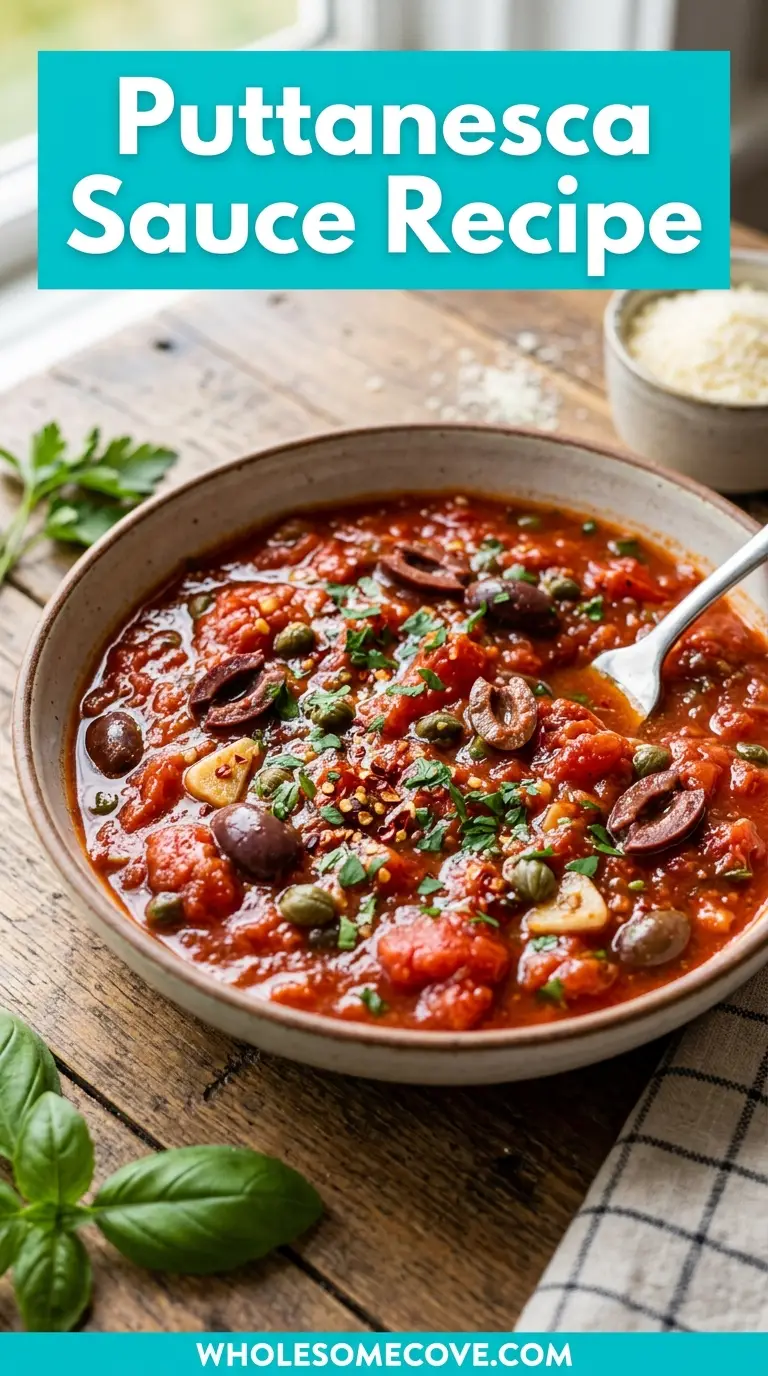
Step-by-Step Instructions: How to Make Puttanesca Sauce
Step 1: Crush the Tomatoes and Prepare Your Ingredients
- Open your can of San Marzano whole peeled tomatoes and pour them into a large mixing bowl.
- Use your hands to crush each tomato, squeezing them until they break apart into irregular chunks. This is the most satisfying step, and it gives the sauce better texture than using pre-crushed tomatoes.
- Keep any juice from the can and add it to the bowl with the tomatoes, as it will add depth to the sauce.
- Drain your anchovy fillets from the oil and set aside. If they are large, you can roughly chop them, though they will fully dissolve during cooking regardless.
- Drain the capers but do not rinse them; that brine is flavor.
- Roughly chop the pitted kalamata olives into halves or rough thirds. You want pieces large enough to bite into, not mush.
- Thinly slice all four garlic cloves. Thin slices will melt more gently into the oil than minced garlic, which can burn quickly.
- Measure out your red pepper flakes, dried oregano, and tomato paste and have them ready at the stove. Moving fast once the garlic hits the oil is important.
Step 2: Start Your Pasta Water
- Fill a large pot with at least 4 quarts (3.8 liters) of water and place it over high heat to bring to a boil.
- Generously salt the water once it boils. It should taste pleasantly salty, like mild seawater. For puttanesca, the salt in the sauce is largely provided by the anchovies, capers, and olives, so the pasta water is where you control the pasta’s seasoning.
- Do not add the pasta yet. Wait until the sauce is almost finished so both components are ready at the same time.
- Once the water is at a rolling boil and the sauce is nearly done, add your spaghetti and cook it according to the package instructions until al dente, which is usually 8 to 10 minutes for dried spaghetti.
- Before draining, scoop out at least 1 cup (240 ml) of pasta cooking water and set it aside. This starchy water is your secret weapon for bringing the sauce and pasta together.
Step 3: Build the Flavor Base in the Skillet
- Pour the extra virgin olive oil into your large skillet and place it over medium-low heat.
- Add the sliced garlic to the cold oil and let it warm up gradually with the pan. Starting in cold oil lets the garlic infuse the oil gently without immediately browning or burning.
- Cook the garlic for about 2 to 3 minutes, stirring occasionally, until it just starts to turn golden at the edges and becomes fragrant. Watch it closely; burned garlic will make the whole sauce bitter.
- Add the anchovy fillets directly to the garlic oil. They will sizzle immediately.
- Use your wooden spoon to press and break up the anchovies as they cook. Within 1 to 2 minutes, they will completely dissolve into the oil, leaving no visible trace but an incredible savory depth.
- Add the red pepper flakes at this stage and stir to combine. The heat of the oil will toast the flakes slightly and bloom their flavor.
Step 4: Add Capers, Olives, and Tomato Paste
- Add the drained capers to the skillet and stir them into the garlicky anchovy oil. Let them cook for about 1 minute, stirring occasionally.
- Add the roughly chopped kalamata olives and stir to combine. Cook for another minute so they warm through and start to release a little of their brine into the oil. The skillet should smell absolutely incredible at this point.
- Push everything to one side of the pan and add the tomato paste directly to the open space. Let it cook and caramelize against the hot pan for about 30 to 45 seconds, stirring it slightly, before mixing it into the rest of the base. This brief caramelization deepens the tomato flavor significantly.
Step 5: Add the Tomatoes and Simmer the Sauce
- Add the hand-crushed San Marzano tomatoes, along with all their juices, to the skillet and stir everything together to combine with the flavor base.
- Add the dried oregano and stir to distribute evenly.
- Increase the heat to medium and bring the sauce to a gentle simmer.
- Once simmering, reduce the heat to medium-low and let the sauce cook uncovered for 12 to 15 minutes, stirring occasionally. The tomatoes will break down further, the flavors will meld, and the sauce will thicken to a rich, glossy consistency.
- Taste the sauce carefully before adding any salt. The anchovies, capers, and olives already provide significant salt, and it is very easy to over-season puttanesca. Add a pinch of black pepper and only a small amount of salt if you feel it is needed.
Step 6: Combine the Pasta and Sauce
- Once your pasta is cooked al dente, use tongs or a pasta fork to transfer it directly from the boiling water into the skillet with the puttanesca sauce. This method transfers a little extra pasta water naturally, which helps emulsify the sauce.
- Alternatively, drain the pasta in a colander, reserving 1 cup (240 ml) of pasta water first, and add the drained pasta to the sauce.
- Toss the pasta and sauce together over medium-low heat for 1 to 2 minutes. If the sauce feels too thick or is not coating the pasta evenly, add pasta water a few tablespoons at a time and continue tossing until every strand is glossy and beautifully coated.
- The pasta water starch is what makes the sauce cling to the spaghetti rather than pooling at the bottom of the bowl.
Step 7: Finish, Plate, and Serve
- Remove the skillet from heat and add the freshly chopped flat-leaf parsley, tossing it through the pasta. Adding parsley off the heat preserves its bright green color and fresh flavor.
- Taste one final time and adjust seasoning if needed.
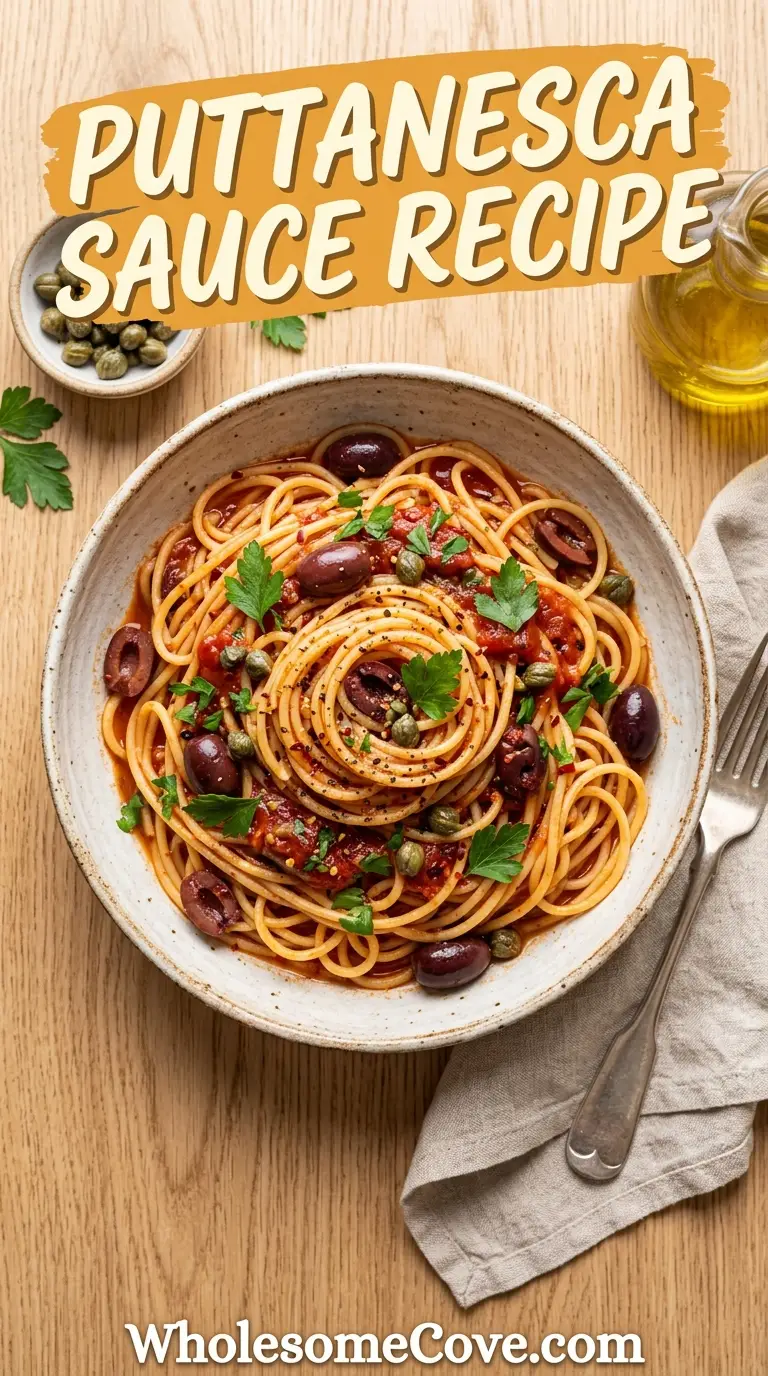
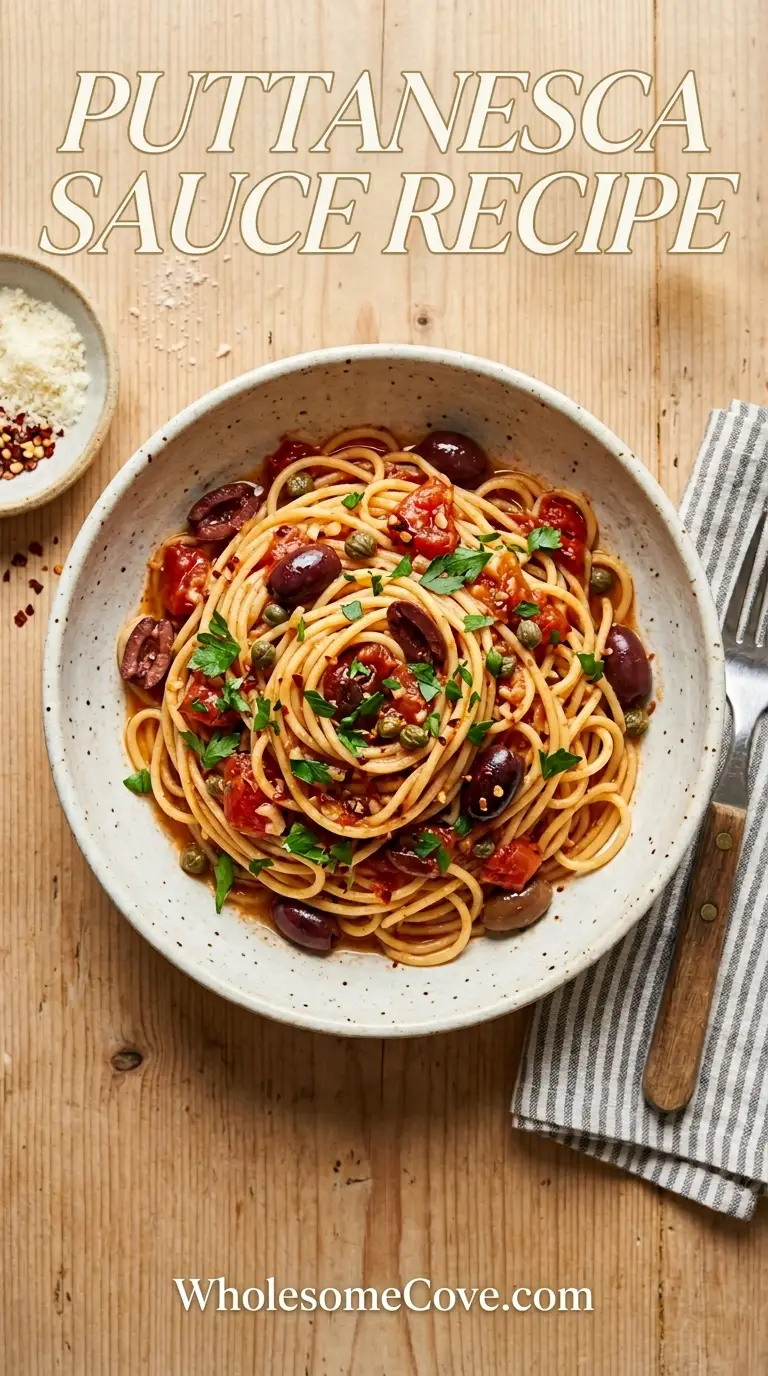
- Divide the pasta into four warm bowls, using tongs to twist it into nests for a beautiful presentation.
- If desired, finish with a light grating of Pecorino Romano or Parmesan, though traditional puttanesca is often served without cheese since the sauce is already very savory.
- Serve immediately. Puttanesca sauce is best eaten fresh and hot.
For another pantry-friendly Italian pasta, try this Cacio e Pepe Recipe.
Tips for The Best Puttanesca Sauce
A few small adjustments separate a good puttanesca from a truly great one. The biggest mistakes I see people make are burning the garlic, rinsing the capers, and adding too much salt without tasting first. Take your time in the first few minutes of cooking and the rest falls into place.
- Do not skip the anchovies: Even anchovy skeptics are converted by puttanesca. The fillets dissolve completely into the oil and leave nothing but pure savory depth. You will not taste fish. What you will taste is the kind of richness that plain tomato sauce simply cannot achieve.
- Use whole peeled tomatoes and crush them yourself: Pre-crushed or diced canned tomatoes are convenient, but hand-crushing whole tomatoes creates a more varied, rustic texture that holds up better in a quick-cooking sauce.
- Start garlic in cold oil: Adding sliced garlic to cold oil and slowly bringing the heat up gives you golden, fragrant garlic instead of burnt, bitter garlic. This one technique changes everything.
- Do not rinse the capers or olives: Their brine is part of the seasoning system. Rinsing them strips away exactly the tangy, salty flavor that makes puttanesca taste like puttanesca.
- Bloom the red pepper flakes in the oil: Adding red pepper flakes to the hot oil along with the anchovies releases their heat and flavor in a way that sprinkling them in later cannot replicate.
- Save your pasta water: Always scoop out at least 1 cup of pasta water before draining. The starch in it emulsifies the sauce beautifully and helps it coat every strand.
- Cook the pasta al dente: The pasta will continue to cook briefly when you toss it in the hot sauce, so pull it a minute early. Overcooked pasta makes the dish feel heavy.
- Caramelize the tomato paste: Taking 30 to 45 seconds to cook the tomato paste directly against the hot pan before adding tomatoes builds a layer of roasted tomato flavor that makes the whole sauce taste more complex.
- Taste before you salt: The anchovies, capers, and olives are all salty ingredients. Nine times out of ten, this sauce needs little to no added salt. Always taste before reaching for the salt shaker.
- Use fresh parsley at the very end: Parsley added off the heat stays bright green and fragrant. Parsley added while the sauce is still simmering turns dull and loses its freshness.
You might also love the bold flavors in this Spaghetti Sauce Recipe.
What to Serve with Puttanesca Sauce
Puttanesca sauce is a complete, deeply flavorful dish on its own, and it honestly needs very little alongside it. That said, a few accompaniments turn it into a proper spread when you are cooking for guests or just want to make dinner feel more special.
The classic Italian approach is to start with something simple and let the pasta be the centerpiece. A light appetizer, some good bread for sauce-mopping, and a crisp salad are all you need.
- Crusty bread or focaccia: Fresh crusty bread is essential for scooping up any sauce left in the bowl. My Sourdough Focaccia is a perfect accompaniment and takes the meal to another level.
- Healthy Bruschetta: A quick bruschetta with fresh tomatoes and basil is a natural Italian opener before a bowl of puttanesca.
- Simple green salad: A lightly dressed arugula or romaine salad cuts through the richness of the sauce beautifully. Keep the dressing simple so it does not compete.
- Tomato Basil Mozzarella Flatbread Pizza: Serve alongside smaller portions of puttanesca for an Italian-inspired spread at a dinner party.
- Grilled fish: Puttanesca sauce is a classic pairing with grilled or pan-seared fish like tuna, cod, or halibut. The briny sauce complements seafood brilliantly.
- Chicken Parmesan: If you are making a larger Italian feast, chicken parmesan alongside pasta puttanesca is a crowd-pleasing combination.
- Authentic Italian Tiramisu: Finish the meal with a classic tiramisu to keep the Italian theme going from start to finish.
Read Also: Baked Ziti Recipe
Variations of Puttanesca Sauce
The classic puttanesca is nearly perfect as it is, but there are a handful of well-known variations worth knowing. Some are regional, some are practical substitutions, and some I have developed myself after years of making this sauce with whatever happened to be in the pantry that night.
Here are some great ways to adapt puttanesca sauce:
- Vegetarian or vegan puttanesca: Omit the anchovies entirely for the Campanian version of the sauce, which is traditionally anchovy-free. To maintain the umami depth, add an extra tablespoon of capers and a pinch of dulse flakes or nutritional yeast for a savory backbone.
- Puttanesca with tuna: Open a can of good-quality oil-packed tuna and fold it into the sauce for the last 2 minutes of cooking. This version is heartier and more substantial, almost like a full meal with no pasta required.
- Spicy puttanesca: Double the red pepper flakes or add a fresh sliced red chili pepper along with the garlic for a noticeably spicier sauce. This works beautifully on a cold night.
- Puttanesca with chicken: Sear boneless chicken thighs separately, then spoon the sauce over them and bake at 375°F (190°C) for 20 minutes. The result is essentially a chicken puttanesca that is spectacular over polenta.
- Green olive puttanesca: Swap the kalamata olives for Castelvetrano olives, which are milder, buttery, and less intensely briny. The sauce becomes slightly sweeter and more approachable for olive skeptics.
- Puttanesca with capers and sundried tomatoes: Add 2 tablespoons of chopped sundried tomatoes along with the capers for an extra layer of concentrated tomato flavor. This version has incredible depth.
- Bucatini alla puttanesca: Simply swap the spaghetti for thick, hollow bucatini. The sauce gets trapped inside each strand, making every bite even more flavorful.
- Puttanesca shakshuka: Use the sauce as a base and poach eggs directly in it, Middle-Eastern style. It is one of my favorite Sunday brunch variations inspired by this Shakshuka Recipe.
For another bold Italian pasta sauce, try this Bolognese Recipe.
Storage and Reheating
One of the most underrated things about puttanesca sauce is how well it stores. The flavors actually deepen overnight, and leftover puttanesca the next day is sometimes even better than it was fresh. The key is to store the sauce separately from the pasta if possible, which prevents the noodles from absorbing all the liquid and turning mushy.
- Refrigerator storage (sauce only): Transfer cooled puttanesca sauce to an airtight container and store in the refrigerator for up to 5 days. The flavor will intensify beautifully by the next day.
- Refrigerator storage (sauce with pasta): Store combined pasta and sauce in an airtight container for up to 3 days. The pasta will absorb some of the sauce, so add a splash of water or olive oil when reheating to loosen it.
- Freezer storage (sauce only): Puttanesca sauce freezes exceptionally well. Pour cooled sauce into a freezer-safe container or silicone freezer bag and freeze for up to 3 months. Thaw overnight in the refrigerator before reheating.
- Do not freeze pasta and sauce combined: Frozen cooked pasta becomes mushy when thawed. Always freeze the sauce separately and cook fresh pasta when you are ready to serve.
- Reheating on the stovetop: Place the sauce or combined pasta in a skillet over medium-low heat. Add 2 to 3 tablespoons of water per serving and stir gently until heated through, about 3 to 5 minutes. Adjust seasoning and serve.
- Reheating in the microwave: Transfer the desired portion to a microwave-safe bowl. Add a splash of water, cover loosely with a damp paper towel, and microwave in 60-second intervals at medium power, stirring between each interval, until hot.
- Reviving leftover pasta: If the pasta has soaked up too much sauce in the fridge, add a drizzle of fresh olive oil and a tablespoon of water per serving before reheating. This helps restore the glossy, saucy consistency.
Another great Italian recipe to bookmark: Stuffed Shells Recipe.
Nutritional Facts
The following values are estimates per serving (sauce plus pasta, 4 servings total). Actual values may vary based on the specific brands and amounts of ingredients used.
| Nutrient | Per Serving |
|---|---|
| Calories | 480 kcal |
| Total Fat | 16 g |
| Saturated Fat | 2.5 g |
| Unsaturated Fat | 12 g |
| Cholesterol | 8 mg |
| Sodium | 870 mg |
| Total Carbohydrates | 68 g |
| Dietary Fiber | 5 g |
| Sugars | 7 g |
| Protein | 14 g |
| Vitamin A | 18% DV |
| Vitamin C | 22% DV |
| Iron | 15% DV |
| Calcium | 6% DV |
Note: Sodium is higher than average due to the anchovies, capers, and olives. If you are watching sodium intake, reduce the number of anchovy fillets and rinse the capers lightly.
For a lighter pasta option, check out this Creamy Avocado Pasta Recipe.
Health Benefits of Key Ingredients
Puttanesca sauce is not just bold and delicious. It is also packed with ingredients that bring meaningful nutritional value to the table. The Mediterranean Diet, which this sauce strongly represents, is consistently ranked among the healthiest eating patterns in the world, and puttanesca is a textbook example of how it works: quality fats, vegetables, herbs, and minimal processing.
The combination of extra virgin olive oil, tomatoes, olives, capers, and garlic makes this sauce genuinely nourishing as well as satisfying.
- Extra virgin olive oil: Rich in monounsaturated fats and powerful antioxidants called polyphenols, extra virgin olive oil is one of the most studied heart-healthy fats in the world. It also helps your body absorb the fat-soluble nutrients in the tomatoes.
- San Marzano tomatoes: Tomatoes are a rich source of lycopene, a potent antioxidant associated with reduced risk of certain cancers and cardiovascular disease. Cooking tomatoes in olive oil actually increases the bioavailability of lycopene significantly.
- Garlic: One of the most researched foods in nutrition science, garlic contains allicin and other sulfur compounds that have demonstrated antibacterial, anti-inflammatory, and cardiovascular protective properties.
- Anchovies: Small but mighty, anchovies are an excellent source of omega-3 fatty acids, which support brain health, reduce inflammation, and benefit heart health. They also contribute calcium, selenium, and B vitamins.
- Kalamata olives: Like olive oil, whole olives are rich in heart-healthy monounsaturated fats and anti-inflammatory polyphenols. They also provide vitamin E, iron, and copper.
- Capers: Capers are a surprisingly good source of quercetin, a potent flavonoid antioxidant with anti-inflammatory and antihistamine properties. They also contain vitamin K and copper.
- Fresh parsley: Often overlooked as a garnish, parsley is genuinely nutritious, providing significant vitamin K, vitamin C, and folate in even small amounts. It also contains flavonoids that act as antioxidants.
You might enjoy exploring more Mediterranean flavors with this Pesto Recipe.
FAQs About Puttanesca Sauce
1. Do I really have to use anchovies in puttanesca sauce?
Technically, no. The Campanian version of puttanesca, from the Naples region where the dish originated, is traditionally made without anchovies. However, the version that has become most widely popular outside Italy does include them, and they make a significant difference to the flavor depth. They dissolve completely into the oil and contribute a savory, umami richness that is very difficult to replicate with other ingredients.
If you are firmly opposed to anchovies or cooking for someone with a seafood allergy, you can omit them and the sauce will still be delicious. A teaspoon of miso paste or a pinch of dulse flakes can partially replace that savory depth.
2. What pasta shape is best for puttanesca sauce?
Spaghetti is the most traditional choice, and for good reason. The long, thin strands allow the sauce to coat every surface evenly. Linguine and bucatini are excellent alternatives that work just as well.
Short pasta shapes like penne, rigatoni, or fusilli also work very well, catching bits of caper and olive in their ridges and hollows. Avoid fresh egg pasta for this sauce, as the delicate flavor of fresh pasta can get overwhelmed by the intensity of puttanesca.
3. Can I make puttanesca sauce ahead of time?
Absolutely, and I actually encourage it. The sauce keeps well in the refrigerator for up to 5 days, and the flavors deepen and improve overnight as everything continues to meld together.
Make the sauce a day ahead and reheat it gently in a skillet with a splash of water before tossing with freshly cooked pasta. Day-two puttanesca is genuinely one of life’s simple pleasures.
4. Why is my puttanesca sauce too salty?
This is the most common mistake and it happens because the anchovies, capers, and olives already bring a significant amount of salt. If you seasoned generously with additional salt before tasting, the sauce can easily become too salty.
To fix an overly salty puttanesca, add a little extra crushed tomato or a small amount of water and let the sauce simmer for a few more minutes. A small drizzle of olive oil can also help balance the saltiness. Next time, taste the sauce thoroughly before adding any salt at all.
5. Is puttanesca sauce the same as arrabbiata sauce?
They are related but distinct sauces. Both are spicy Southern Italian tomato sauces, but arrabbiata contains only tomatoes, garlic, olive oil, and red chili peppers, with no anchovies, olives, or capers.
Puttanesca is considerably more complex in flavor because of those briny, savory additions. Arrabbiata is pure heat and tomato, while puttanesca layers heat, brine, umami, and acidity all at once. If you love one, there is an excellent chance you will love the other. You can find a great version here: Arrabbiata Sauce Recipe.
Read Also: Carbonara Recipe
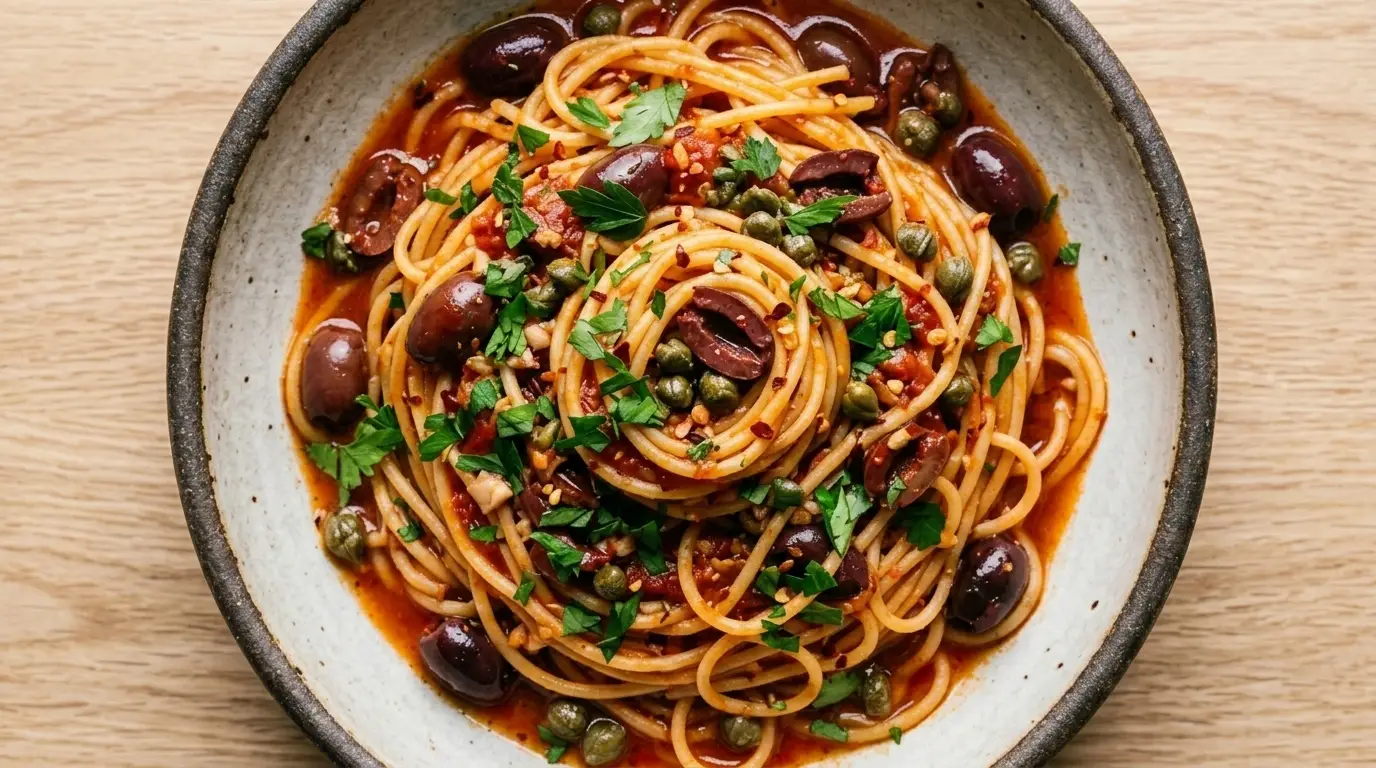
Puttanesca Sauce
Ingredients
- 3 tbsp extra virgin olive oil - 45 ml
- 4 garlic cloves - thinly sliced
- 4-6 anchovy fillets in olive oil - drained
- 1/2 tsp red pepper flakes - adjust to taste
- 3 tbsp capers - 27 g, drained, do not rinse
- 1/2 cup kalamata olives - 80 g, pitted and roughly chopped
- 1 can (28 oz) San Marzano whole peeled tomatoes - 800 g, crushed by hand
- 1 tbsp tomato paste
- 1/2 tsp dried oregano
- salt and freshly ground black pepper - to taste
- 12 oz spaghetti or linguine - 340 g
- 1/4 cup fresh flat-leaf parsley - 15 g, roughly chopped
- Parmesan or Pecorino Romano - optional, for serving
Equipment
- Large skillet or sauté pan (12-inch) - Heavy-bottomed recommended for even heat distribution
- Large pot - For boiling pasta
- Colander - For draining pasta
- Ladle or measuring cup - For reserving pasta water
- Large mixing bowl - For crushing tomatoes by hand
Method
- Pour the canned San Marzano tomatoes into a large bowl and crush them by hand into irregular chunks, keeping all the juice. Drain the anchovies and capers, roughly chop the olives, and thinly slice all garlic cloves.
- Bring a large pot of generously salted water to a rolling boil over high heat. Hold off adding the pasta until the sauce is nearly finished.
- Add the olive oil and sliced garlic to a cold 12-inch skillet, then bring to medium-low heat and cook for 2 to 3 minutes until golden at the edges. Add the anchovy fillets and red pepper flakes, pressing the anchovies with a spoon until they fully dissolve into the oil, about 1 to 2 minutes.
- Stir in the capers and chopped olives and cook for 2 minutes. Push everything to one side, add the tomato paste to the open space, and let it caramelize for 30 to 45 seconds before stirring it into the base.
- Add the hand-crushed San Marzano tomatoes with all their juices and the dried oregano, stir to combine, and bring to a gentle simmer. Cook uncovered over medium-low heat for 12 to 15 minutes, stirring occasionally, until the sauce thickens and the flavors meld. Taste before adding any salt.
- Add the spaghetti to the boiling water and cook according to package instructions until al dente, about 8 to 10 minutes. Before draining, scoop out 1 cup (240 ml) of pasta water and set aside.
- Transfer the drained pasta directly into the skillet with the sauce and toss over medium-low heat for 1 to 2 minutes. Add reserved pasta water a few tablespoons at a time as needed until every strand is glossy and evenly coated.
- Remove from heat, toss in the fresh parsley, and divide into warm bowls. Serve immediately with optional Pecorino Romano or Parmesan grated on top.
Nutrition
Notes
- Do not rinse the capers or olives — their brine is a core part of the sauce’s seasoning and flavor profile.
- Always start the garlic in cold oil and bring the heat up gradually to avoid burning. Burned garlic will make the whole sauce bitter.
- Taste the sauce before adding any salt. The anchovies, capers, and olives contribute significant sodium, and the sauce often needs no additional salt at all.
- The anchovies dissolve completely during cooking and leave no fishy taste — only deep savory umami richness. Do not skip them.
- For a vegetarian version, omit the anchovies and add an extra tablespoon of capers plus a pinch of dulse flakes for umami depth.
- Always reserve at least 1 cup of pasta cooking water before draining. The starch emulsifies the sauce and helps it cling to the pasta.
- The sauce can be made up to 5 days ahead and stored in the refrigerator. The flavor intensifies overnight and leftovers are exceptional.
- To freeze, store the sauce alone (without pasta) in an airtight container for up to 3 months. Thaw overnight in the refrigerator before reheating.
- Cook the pasta 1 minute less than package directions suggest — it will finish cooking in the hot sauce when tossed together.
- For best flavor, use DOP-certified San Marzano tomatoes and oil-packed anchovy fillets rather than water-packed.
Private Notes
Tried this recipe?
Let us know how it was!Final Thoughts
Puttanesca sauce is one of those recipes that proves you do not need a long ingredients list or hours of cooking time to make something truly extraordinary.
It comes together in 30 minutes from a handful of pantry staples, and yet every bowl tastes like it carries centuries of Italian culinary wisdom.
I have made this sauce for quick Tuesday dinners and for dinner parties where guests asked for the recipe twice before the meal was finished.
Once you make it the first time, it will earn a permanent place in your rotation.
Give it a try this week and let me know how it goes in the comments below. I would love to hear how you make it your own.
Recommended:
- Amatriciana Sauce Recipe
- Tomato Sauce Recipe
- Bolognese Recipe
- Lasagna Recipe
- Pasta Fagioli Recipe
- Italian Wedding Soup Recipe
- Zuppa Toscana Recipe
- Healthy Alfredo Sauce Recipe
- Creamy Tomato Basil Soup
- Pumpkin Sage Pasta Recipe