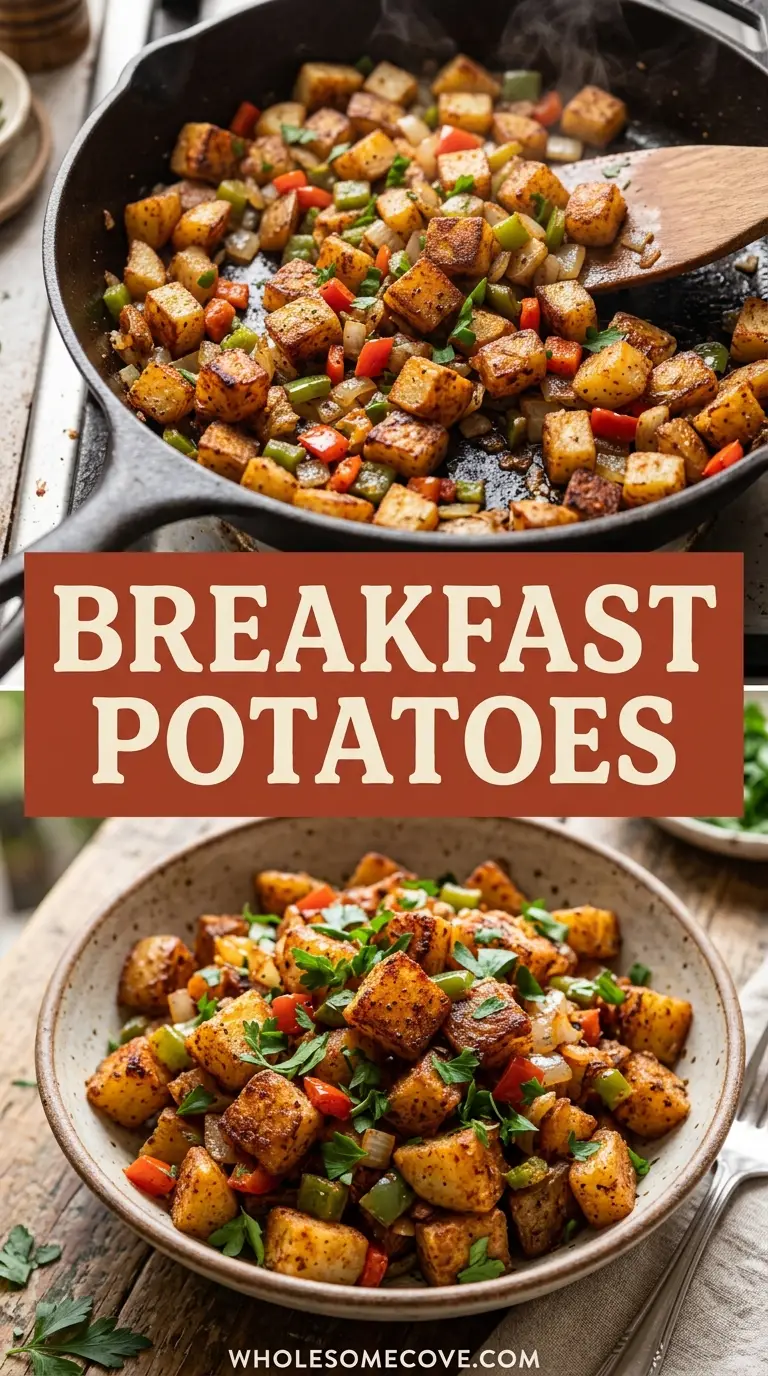
Soggy, pale cubes are what you get when raw potatoes go straight into a skillet. They release steam as they heat, and that steam blocks browning.
This breakfast potatoes recipe starts with a short parboil in salted water. That step seasons the potatoes from the inside and roughs up the surface so it crisps in the pan.
Yukon gold potatoes keep the center creamy while the edges turn deep golden and crackle under a fork. Two pounds (900 g) of potatoes and about 55 minutes will feed four people.
| Quick Recipe Summary | |
|---|---|
| Prep Time | 15 minutes |
| Cook Time | 40 minutes |
| Total Time | 55 minutes |
| Servings | 4 servings |
| Difficulty Level | Easy |
Read Also: Best Potato Recipes
Why You’ll Love This Breakfast Potatoes Recipe
This version keeps the technique simple and the results consistent. Every step has a reason, so the potatoes brown evenly instead of steaming in the pan.
- Crisp outside, creamy inside. The parboil softens the interior while the skillet builds a golden crust on the outside.
- Seasoned all the way through. Salting the boiling water flavors the potato itself, not just the surface.
- Ready in 55 minutes. Most of that time is hands-off while the potatoes boil and then sear undisturbed.
- Feeds four people. Two pounds of potatoes make enough for a family breakfast with eggs and a protein on the side.
- Built from everyday ingredients. Potatoes, an onion, a bell pepper, and a few pantry spices do all the work.
- Colorful and savory. Diced red bell pepper and onion add sweetness and color against the smoky paprika.
- Easy to adapt. Swap in bacon, cheese, or sweet potatoes without changing the core method.
- Reheats well. A hot skillet or oven brings the crust back the next morning.
For a hands-off oven method, see Roasted Potatoes.
Ingredients
Everything here is easy to find at a regular grocery store, and most of it is probably in your pantry already. Weights sit next to cups and spoons so the results stay consistent from batch to batch.
- 2 pounds (900 g) Yukon gold potatoes, scrubbed and cut into ¾-inch (2 cm) cubes, skins left on
- About 2 quarts (2 L) cold water, for parboiling the potatoes
- 1 tablespoon kosher salt, for the boiling water
- 2 tablespoons (30 ml) extra virgin olive oil, for searing the potatoes
- 2 tablespoons (28 g) unsalted butter, added after the potatoes have browned
- 1 medium yellow onion, diced into ½-inch (1.25 cm) pieces (about 1 cup or 150 g)
- 1 large red bell pepper, seeded and diced into ½-inch (1.25 cm) pieces (about 1 cup or 150 g)
- 1 teaspoon smoked paprika, stirred into the spice mix
- 1 teaspoon garlic powder, stirred into the spice mix
- ½ teaspoon freshly ground black pepper, stirred into the spice mix
- ½ teaspoon kosher salt, stirred into the spice mix
- 1 tablespoon finely chopped fresh parsley, sprinkled over the finished potatoes (optional)
For a cheesier side, try: Cheesy Potatoes
Kitchen Equipment Needed
You do not need much for this recipe, but two pieces make a real difference. A heavy skillet and a pot with enough room for the potatoes to boil in a single loose layer matter most.
- 12-inch cast iron skillet for holding steady heat and giving the cubes room to sit in one layer
- 4-quart saucepan for the parboil, large enough to cover the potatoes with an inch of water
- Colander for draining the potatoes quickly and shaking the surfaces rough
- Chef’s knife for cutting evenly sized cubes and diced vegetables
- Large cutting board with enough room to cube two pounds of potatoes without them rolling off
- Stainless steel turner spatula with a thin edge for lifting the crust without tearing it
- Rimmed baking sheet or wire rack for letting the drained potatoes steam dry
- Small bowl for mixing the paprika, garlic powder, pepper, and salt
- Measuring spoons and a liquid measuring cup
Read Also: Air Fryer Cheddar Hash Browns
Recommended Products for This Recipe
These are my personal recommendations, based on what has worked best in my kitchen for this dish. Each one solves a specific problem that tends to show up when making skillet potatoes.
1. Lodge 12-Inch Cast Iron Skillet
Thin pans lose heat the moment cold potatoes hit them, which leads to pale cubes that stick. Cast iron stays hot through the sear, so the crust forms quickly and releases cleanly. The 12-inch size also fits two pounds of cubes in a single layer.
2. Pimentón de la Vera Smoked Paprika
Generic paprika tastes mostly of color and very little else. Spanish smoked paprika is dried over oak, so it adds a real smoky depth without liquid smoke or bacon. A single teaspoon is enough to flavor the whole batch.
3. Kerrygold Pure Irish Unsalted Butter
European-style butter has a higher butterfat content than standard American butter, which means less water to spatter in a hot pan. It browns evenly and gives the onions and peppers a rich, nutty finish. Using unsalted butter also keeps the seasoning in your control.
4. Victorinox Fibrox Pro 8-Inch Chef’s Knife
Cubes of different sizes cook at different rates, so some turn mushy in the boil while others stay raw in the center. A sharp, well-balanced knife makes uniform ¾-inch cubes quick work. The grippy handle also stays secure with wet hands.
5. Nordic Ware Baking Sheet with Wire Rack
Potatoes that go into the pan wet will steam instead of sear. A rack set inside a baking sheet lets air circulate under the cubes while they dry after the boil. It doubles as a roasting setup for the oven variation.
A related recipe is Smashed Potatoes.
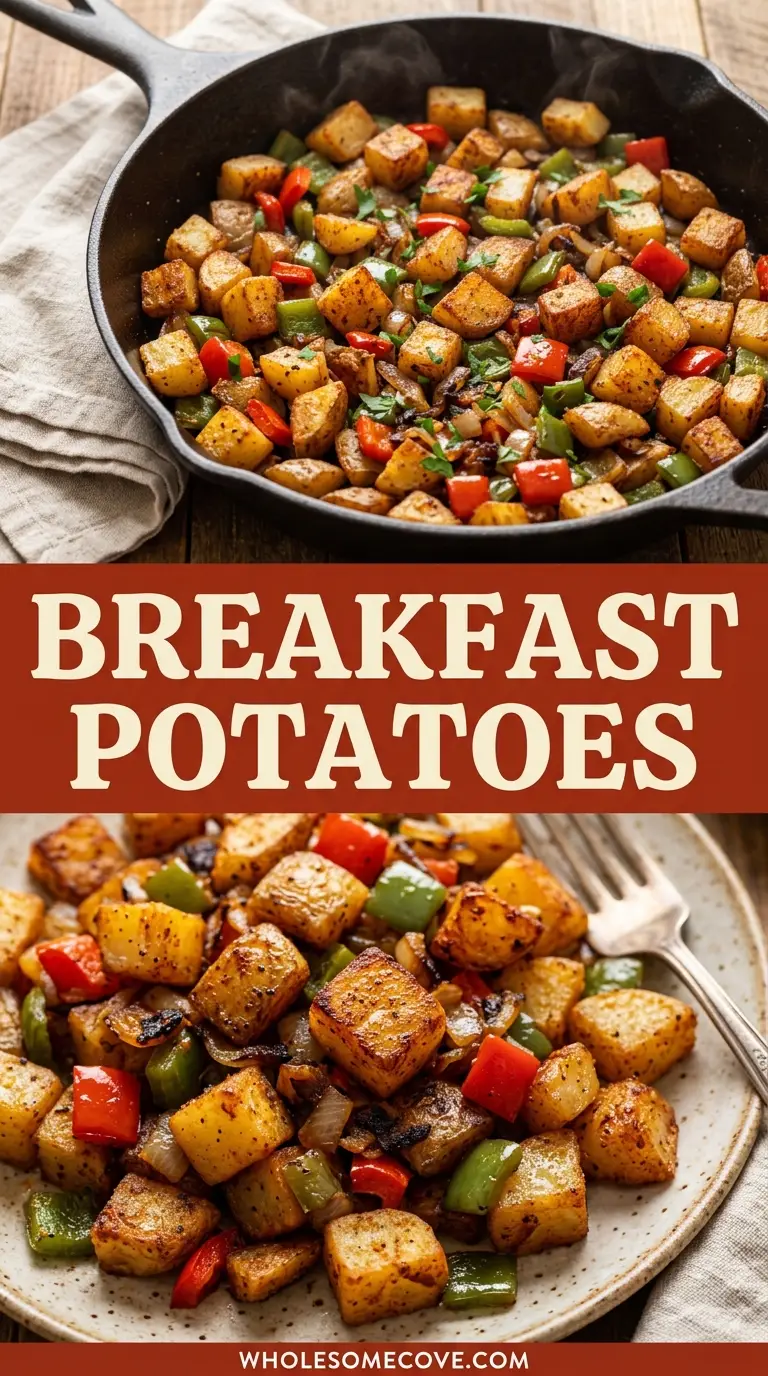
Step-by-Step Instructions: How to Make Breakfast Potatoes
Follow these steps and you’ll have crisp, golden breakfast potatoes in about 55 minutes.
1. Prep the Potatoes and Vegetables
- Scrub the Yukon gold potatoes under cold running water and leave the skins on.
- Cut the potatoes into ¾-inch (2 cm) cubes, keeping them as even as you can so they cook at the same rate.
- Dice the yellow onion and the red bell pepper into ½-inch (1.25 cm) pieces and keep them in a bowl, away from the potatoes.
- In a small bowl, stir together the smoked paprika, garlic powder, black pepper, and ½ teaspoon of kosher salt. Set this spice mix next to the stove.
2. Parboil the Potatoes
- Place the cubes in a 4-quart saucepan and cover them with about 2 quarts (2 L) of cold water, so the water sits about 1 inch above the potatoes.
- Add 1 tablespoon of kosher salt and stir once.
- Bring the water to a boil over high heat, which takes about 8 minutes.
- Reduce the heat to medium-high and cook for 5 to 6 minutes. The potatoes are ready when a knife meets slight resistance in the center and the edges look just a little frayed.
3. Drain and Steam Dry
- Drain the potatoes in a colander and shake it firmly a few times. The bumping scuffs the surfaces, and those rough edges become the crispiest parts.
- Spread the potatoes in a single layer on a rimmed baking sheet or wire rack.
- Let them sit for 3 to 5 minutes, until the surface looks dry and matte instead of wet and shiny.
4. Heat the Skillet
- Set a 12-inch cast iron skillet over medium-high heat for about 2 minutes.
- Add the 2 tablespoons of olive oil and swirl to coat the base.
- Wait until the oil shimmers and flows like water, about 1 minute. Do not add the potatoes before this point.
5. Sear the Potatoes
- Add the potatoes to the skillet in a single layer, shaking the pan gently to spread them out. If they overlap heavily, cook them in two batches.
- Let them cook without stirring for 6 to 7 minutes, until the bottoms are golden brown.
- Flip the cubes with a thin metal spatula and cook for about 5 minutes more, turning occasionally, until most sides have color.
6. Add the Butter, Vegetables, and Seasoning
- Reduce the heat to medium.
- Add the 2 tablespoons of butter, the diced onion, and the diced red bell pepper to the skillet.
- Sprinkle the spice mix over everything and toss to coat.
- Cook for 6 to 8 minutes, stirring every minute or two, until the onion is soft and translucent and the potatoes are crisp and deep golden on most sides.
7. Taste, Garnish, and Serve
- Taste a potato cube and add a pinch more salt if needed.
- Sprinkle the 1 tablespoon of chopped fresh parsley over the top if you are using it.
- Serve immediately, while the crust is at its crispest.
You might also enjoy: Hashbrown Casserole
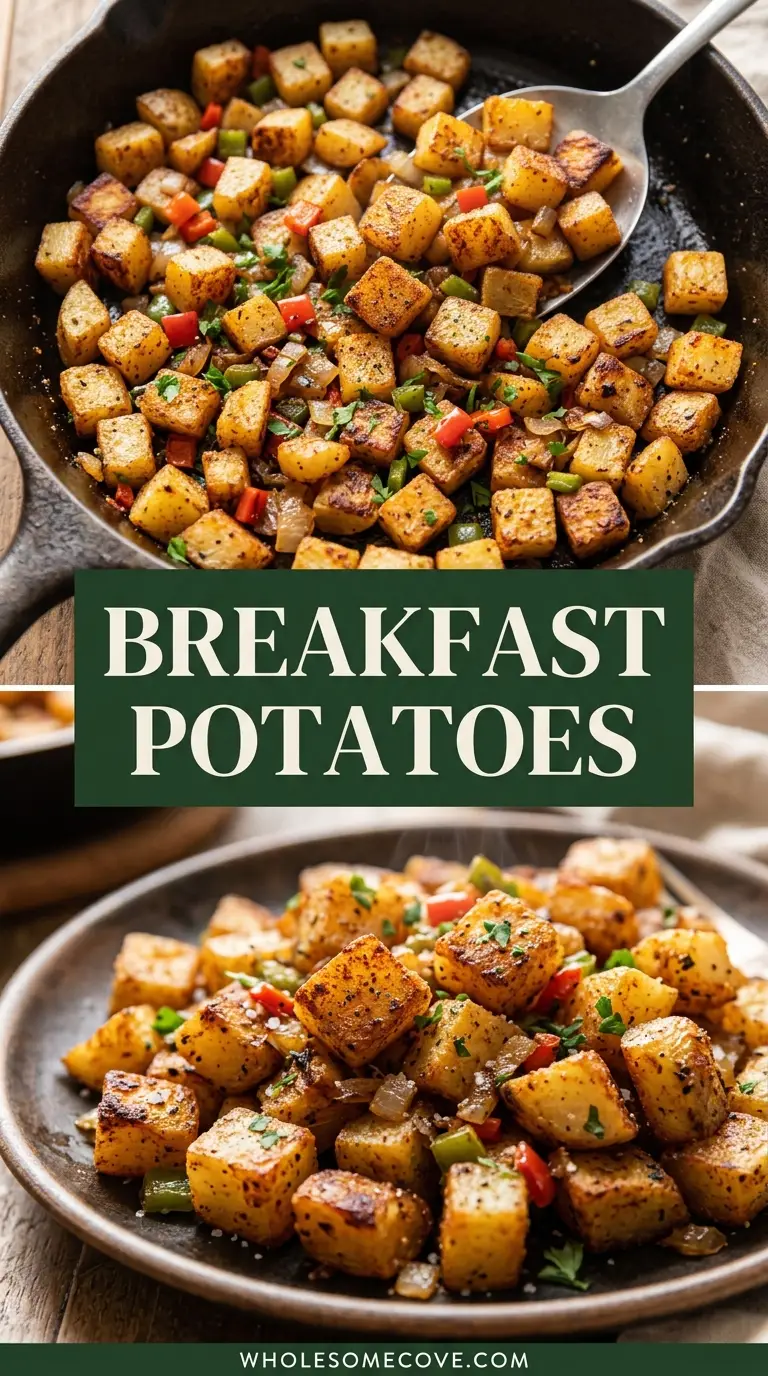
Tips for The Best Breakfast Potatoes
Small details decide whether these potatoes come out crisp or limp. These are the points that matter most.
- Dry the potatoes after boiling. Surface water turns to steam in the pan and softens the crust, so give the cubes a few minutes on a rack.
- Use the biggest skillet you have. Crowded potatoes trap steam, so a 12-inch pan with space between pieces browns far better than a small one.
- Wait for the oil to shimmer. The pan should be hot before the potatoes go in, because a lukewarm pan causes sticking and pale cubes.
- Add the butter after the potatoes brown. I ruined my first batch by melting the butter at the start, and the milk solids burned before the potatoes had any color.
- Leave the cubes alone. Resist stirring during the first 6 to 7 minutes, since a crust needs uninterrupted contact with the hot metal.
- Choose Yukon gold over russet. I’ve found that Yukon golds hold their shape better than russets here, because russets tend to crumble at the edges during the boil.
- Cut evenly. Cubes that vary in size cook at different speeds, which leaves some mushy and others undercooked.
- Keep a rack ready. I keep a wire rack set inside a baking sheet beside the stove for the steam-dry step, because a wet plate or towel traps moisture against the potatoes.
- Add the seasoning late. Smoked paprika scorches over high heat, so it goes in during the final stage when the heat is lower.
- Salt the boiling water generously. It should taste lightly salty, like seawater, so the potato itself is seasoned.
- Adjust the heat as you go. If the cubes brown faster than the centers soften, drop the heat to medium-low and cover the pan for a minute.
- Serve right away. The crust is crispest in the first 10 minutes out of the pan.
Read Also: Potato Side Dish Recipes
What to Serve with Breakfast Potatoes
These potatoes are salty, savory, and a little smoky, so they balance rich, soft, or sweet breakfast foods. Pick one or two items for a casual plate, or build a full brunch spread around them.
- Scrambled Eggs with Cheese for soft curds that contrast with the crisp potato crust
- Fried or poached eggs, where a runny yolk works as a built-in sauce for the cubes
- Crispy bacon, which adds salt and crunch
- Breakfast sausage links or patties for a hearty, protein-rich plate
- Biscuits and Gravy for a full diner-style breakfast
- Easy Pancakes, because the sweet and savory combination with maple syrup works well
- French Toast for a brunch table that covers both sweet and savory
- Avocado Toast for something cool and creamy next to the hot potatoes
- Shakshuka, where the potatoes soak up spiced tomato sauce
- Breakfast Burritos, with a scoop of potatoes folded inside
- Baked Ham sliced thin for a holiday-style brunch
- Fresh fruit such as melon wedges or mixed berries to lighten the plate
- Orange juice, coffee, or mimosas for the drinks
- Hot sauce, ketchup, or sour cream on the side for dipping
For a heartier brunch plate, try: Breakfast Quesadilla
Variations of Breakfast Potatoes
The base method is flexible, and a few changes give you a completely different dish. Each variation below builds on the same parboil-and-sear technique.
- Bacon breakfast potatoes. Cook 4 slices of diced bacon in the skillet first, remove them with a slotted spoon, and sear the potatoes in 2 tablespoons of the rendered fat instead of olive oil. Stir the bacon back in at the end.
- Loaded cheddar potatoes. Sprinkle ½ cup (55 g) of shredded cheddar over the finished potatoes, cover the pan for 1 to 2 minutes until melted, and top with sliced green onions.
- Sausage and potato skillet. Brown 8 ounces (225 g) of breakfast sausage in the pan before the potatoes, then use the rendered fat for searing.
- Sweet potato blend. Replace half of the Yukon golds with sweet potatoes cut to the same size, and shorten the parboil to 4 minutes since they cook faster.
- Spicy breakfast potatoes. Add ¼ teaspoon of cayenne pepper to the spice mix and stir in 1 diced jalapeño with the onion and bell pepper.
- Herb and garlic potatoes. Replace the paprika with 1 teaspoon of dried thyme or rosemary, and add 2 minced garlic cloves during the last 2 minutes of cooking so they don’t burn.
- Potato and egg skillet. Press 4 small wells into the finished potatoes, crack an egg into each, cover the skillet, and cook for 3 to 5 minutes until the whites set.
- Oven method. Toss the parboiled and dried potatoes with the olive oil and spice mix, spread them on a parchment-lined baking sheet, and roast at 425°F (220°C) for 25 to 30 minutes, flipping once. Add the onion, pepper, and butter for the last 12 minutes.
- Air fryer method. Toss the parboiled potatoes with 1 tablespoon of olive oil and the spice mix, then cook at 400°F (200°C) for 15 to 18 minutes, shaking the basket every 5 minutes. Cook the onion and pepper in a skillet with the butter and toss them in at the end.
- Dairy-free version. Use another 2 tablespoons of olive oil in place of the butter, which makes the dish vegan as well.
The same approach works with sweet potatoes, as in Roasted Sweet Potato.
Storage and Reheating
Leftover breakfast potatoes keep well, and with the right reheating method they come back close to fresh. The trick is to protect the crust from trapped moisture.
- Cool first. Let the potatoes cool for no more than 2 hours at room temperature before storing them.
- Refrigerator. Store the potatoes in airtight glass containers with lids for up to 4 days.
- Freezer. Freeze cooled potatoes in a single layer on a tray, then transfer them to a freezer bag for up to 3 months. The parboil helps them freeze without turning mealy.
- Skillet reheating. Heat 1 tablespoon of oil in a skillet over medium-high heat and cook the potatoes for 5 to 7 minutes, turning once or twice. Cast iron brings the crust back better than any other method.
- Oven reheating. Spread the potatoes on a baking sheet and heat at 425°F (220°C) for about 10 minutes.
- Air fryer reheating. Cook at 375°F (190°C) for 5 to 6 minutes, shaking the basket halfway through.
- Microwave reheating. This works in a hurry, but the potatoes will be soft instead of crisp.
- Thaw frozen potatoes first. Move them to the refrigerator overnight, then reheat in a skillet or oven for the best texture.
For another make-ahead potato side, try: Air Fryer Simple Baked Potatoes
Nutritional Facts
The numbers below are estimates for one of four servings, based on the ingredients as written, with the parsley garnish included. Exact values shift with the size of your vegetables and how much oil the potatoes absorb.
| Nutrition per Serving (1 of 4) | |
|---|---|
| Calories | 315 kcal |
| Carbohydrates | 44 g |
| Protein | 5 g |
| Total Fat | 13 g |
| Saturated Fat | 5 g |
| Cholesterol | 15 mg |
| Sodium | 420 mg |
| Potassium | 1,000 mg |
| Fiber | 5 g |
| Sugar | 4 g |
Read Also: Healthy Mashed Potatoes
Health Benefits of Key Ingredients
Potatoes get an unfair reputation, but they bring real nutrients to the plate. The vegetables and seasonings in this dish add more.
- Yukon gold potatoes. They supply potassium, vitamin C, and vitamin B6, and the skins add fiber.
- Resistant starch. Cooked potatoes that cool and are then reheated contain more resistant starch, a type of carbohydrate that digests slowly and feeds gut bacteria.
- Olive oil. It is rich in monounsaturated fat, the kind most often linked to heart-healthy eating patterns.
- Red bell pepper. One cup of chopped red bell pepper provides more than a full day’s vitamin C for most adults, plus vitamin A and carotenoid antioxidants.
- Onion. It contains quercetin, a flavonoid antioxidant, along with fibers that feed beneficial gut bacteria.
- Smoked paprika. Made from dried peppers, it contributes carotenoid pigments and a smoky flavor that lets you use less salt.
- Garlic powder. It delivers the savory flavor of garlic without the sharp bite, and it contains sulfur compounds found in fresh garlic.
- Butter. A small amount adds vitamin A and flavor, and the recipe uses only 2 tablespoons across four servings.
- Fresh parsley. The optional garnish adds vitamin K and a fresh, green note.
For a vegetable-forward option, try: Sweet Potato and Black Bean Bowls
FAQs About Breakfast Potatoes
1. What are the best potatoes for breakfast potatoes?
Yukon gold potatoes are the best choice for this recipe. Their medium starch gives a creamy center and a golden crust, and the thin skin needs no peeling.
Red potatoes also work well and hold their shape. Russets crisp nicely but can crumble at the edges during the boil.
2. Do I have to parboil the potatoes?
No, but the parboil is what separates a crisp crust from a steamed one. Raw cubes take far longer in the skillet and often brown unevenly before the centers soften.
If you skip it, cut the cubes smaller and cover the pan for the first 10 minutes. The result will still be good, just less crisp.
3. Why are my breakfast potatoes soggy?
Surface moisture and a crowded pan are the usual causes. Wet potatoes and overlapping cubes trap steam, which softens the crust.
Dry the potatoes after draining, use a 12-inch skillet, and wait until the oil shimmers before adding them.
4. Can I make breakfast potatoes ahead of time?
Yes. Parboil, drain, and dry the cubes, then refrigerate them in an airtight container for up to 24 hours.
Crisp them in the skillet just before serving. Add the onion and pepper at that point.
5. Can I make breakfast potatoes in the oven or air fryer?
Yes, both work well after the parboil. Roast at 425°F (220°C) for 25 to 30 minutes, or air fry at 400°F (200°C) for 15 to 18 minutes.
Toss or shake the potatoes partway through for even browning. Add the onion and pepper near the end so they don’t scorch.
6. Do I need to peel Yukon gold potatoes?
No. The skins are thin and tender, and they add texture and fiber.
Scrub the potatoes well under running water and trim any green spots or eyes.
7. How do I keep breakfast potatoes from sticking to the pan?
Preheat the skillet and wait for the oil to shimmer before adding the potatoes. Then leave them alone for the first 6 to 7 minutes.
Potatoes release on their own once the crust forms. If a cube still sticks, give it another minute before scraping gently with a thin metal spatula.
A creamier potato dish worth a look is Scalloped Potatoes.
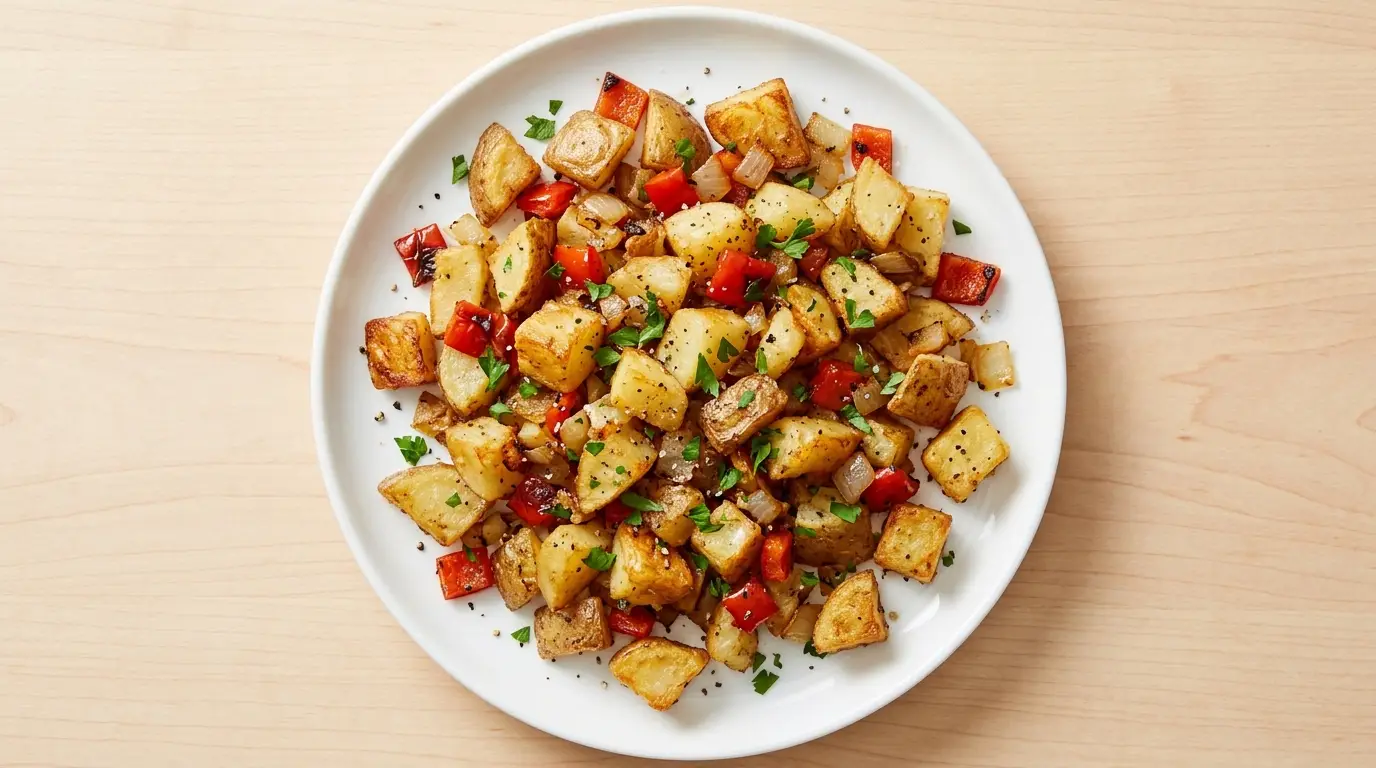
Breakfast Potatoes
Ingredients
- 2 pounds Yukon gold potatoes - 900g, scrubbed and cut into ¾-inch (2 cm) cubes, skins left on
- 2 quarts cold water - 2L, for parboiling the potatoes
- 1 tablespoon kosher salt - for the boiling water
- 2 tablespoons extra virgin olive oil - 30ml, for searing the potatoes
- 2 tablespoons unsalted butter - 28g, added after the potatoes have browned
- 1 medium yellow onion - about 1 cup or 150g, diced into ½-inch (1.25 cm) pieces
- 1 large red bell pepper - about 1 cup or 150g, seeded and diced into ½-inch (1.25 cm) pieces
- 1 teaspoon smoked paprika - stirred into the spice mix
- 1 teaspoon garlic powder - stirred into the spice mix
- ½ teaspoon freshly ground black pepper - stirred into the spice mix
- ½ teaspoon kosher salt - stirred into the spice mix
- 1 tablespoon fresh parsley - finely chopped, sprinkled over the finished potatoes (optional)
Equipment
- 12-inch cast iron skillet - For holding steady heat and giving the cubes room to sit in one layer
- 4-quart saucepan - For the parboil, large enough to cover the potatoes with an inch of water
- Colander - For draining the potatoes quickly and shaking the surfaces rough
- Chef’s knife - For cutting evenly sized cubes and diced vegetables
- Large cutting board - With enough room to cube two pounds of potatoes
- Stainless steel turner spatula - With a thin edge for lifting the crust without tearing it
- Rimmed baking sheet or wire rack - For letting the drained potatoes steam dry
- Small bowl - For mixing the paprika, garlic powder, pepper, and salt
- Measuring spoons and liquid measuring cup
Method
- Scrub the Yukon gold potatoes under cold running water and leave the skins on. Cut into ¾-inch (2 cm) cubes, keeping them as even as possible.
- Dice the yellow onion and red bell pepper into ½-inch (1.25 cm) pieces. In a small bowl, stir together the smoked paprika, garlic powder, black pepper, and ½ teaspoon kosher salt.
- Place the potato cubes in a 4-quart saucepan and cover with about 2 quarts (2 L) cold water, so the water sits about 1 inch above the potatoes. Add 1 tablespoon kosher salt and stir once.
- Bring the water to a boil over high heat, about 8 minutes. Reduce heat to medium-high and cook for 5 to 6 minutes, until a knife meets slight resistance in the center and the edges look just a little frayed.
- Drain the potatoes in a colander and shake it firmly a few times to rough up the surfaces. Spread in a single layer on a rimmed baking sheet or wire rack and let sit for 3 to 5 minutes until dry and matte.
- Set a 12-inch cast iron skillet over medium-high heat for about 2 minutes. Add 2 tablespoons olive oil and swirl to coat. Wait until the oil shimmers and flows like water, about 1 minute.
- Add the potatoes to the skillet in a single layer, shaking gently to spread them out. Cook without stirring for 6 to 7 minutes, until the bottoms are golden brown.
- Flip the cubes with a thin metal spatula and cook for about 5 minutes more, turning occasionally, until most sides have color.
- Reduce heat to medium. Add 2 tablespoons butter, the diced onion, and diced red bell pepper. Sprinkle the spice mix over everything and toss to coat.
- Cook for 6 to 8 minutes, stirring every minute or two, until the onion is soft and translucent and the potatoes are crisp and deep golden on most sides.
- Taste a potato cube and add a pinch more salt if needed. Sprinkle with chopped fresh parsley if using, and serve immediately while the crust is at its crispest.
Nutrition
Notes
- Dry the potatoes after boiling. Surface water turns to steam in the pan and softens the crust, so give the cubes a few minutes on a rack.
- Use the biggest skillet you have. Crowded potatoes trap steam; a 12-inch pan with space between pieces browns far better than a small one.
- Wait for the oil to shimmer. The pan should be hot before the potatoes go in, because a lukewarm pan causes sticking and pale cubes.
- Add the butter after the potatoes brown. Melting butter at the start causes the milk solids to burn before the potatoes have any color.
- Leave the cubes alone. Resist stirring during the first 6 to 7 minutes, since a crust needs uninterrupted contact with the hot metal.
- Choose Yukon gold over russet. Yukon golds hold their shape better than russets, which tend to crumble at the edges during the boil.
- Cut evenly. Cubes that vary in size cook at different speeds, leaving some mushy and others undercooked.
- Add the seasoning late. Smoked paprika scorches over high heat, so it goes in during the final stage when the heat is lower.
- Make ahead: Parboil, drain, and dry the cubes, then refrigerate in an airtight container for up to 24 hours. Crisp in the skillet just before serving.
- Storage: Store leftovers in an airtight container in the refrigerator for up to 4 days. Reheat in a skillet with a little oil over medium-high heat for 5 to 7 minutes to bring back the crust.
Private Notes
Tried this recipe?
Let us know how it was!Final Thoughts
Crisp edges, a creamy center, and sweet peppers in every forkful make these potatoes worth the short parboil. Once you’ve tried the method, it is hard to go back to cooking raw cubes in a pan.
Make a batch this weekend and see how the crust turns out. Leave a comment with your favorite pairing, and share the recipe with someone who needs better breakfast potatoes.
Recommended:
- Twice Baked Potatoes
- Au Gratin Potatoes
- Funeral Potatoes
- Mashed Potatoes
- Sweet Potato Recipes
- Air Fryer French Fries
- Loaded Baked Potato Soup
- Mississippi Mud Potatoes
- Potato Salad