I’ve made a lot of sauces over the years, but my homemade strawberry sauce recipe holds a special place in my kitchen. It all started when I had a huge basket of overripe strawberries from a farmer’s market haul that were just too soft to eat fresh.
Instead of letting them go to waste, I decided to simmer them down with sugar and lemon juice. The result was pure magic.
That first batch was thicker and more flavorful than anything I’d ever bought in a jar. My kids drizzled it over pancakes, my husband spooned it onto vanilla ice cream, and I found myself eating it straight from the spoon when no one was looking.
Now I make this sauce year-round, and it’s become one of those recipes I can’t imagine my kitchen without. The best part is how simple it is—just a handful of ingredients and about 15 minutes of your time.
| Quick Recipe Summary | |
|---|---|
| Prep Time | 5 minutes |
| Cook Time | 15 minutes |
| Total Time | 20 minutes |
| Servings | 2 cups (about 16 tablespoons) |
| Difficulty Level | Easy |
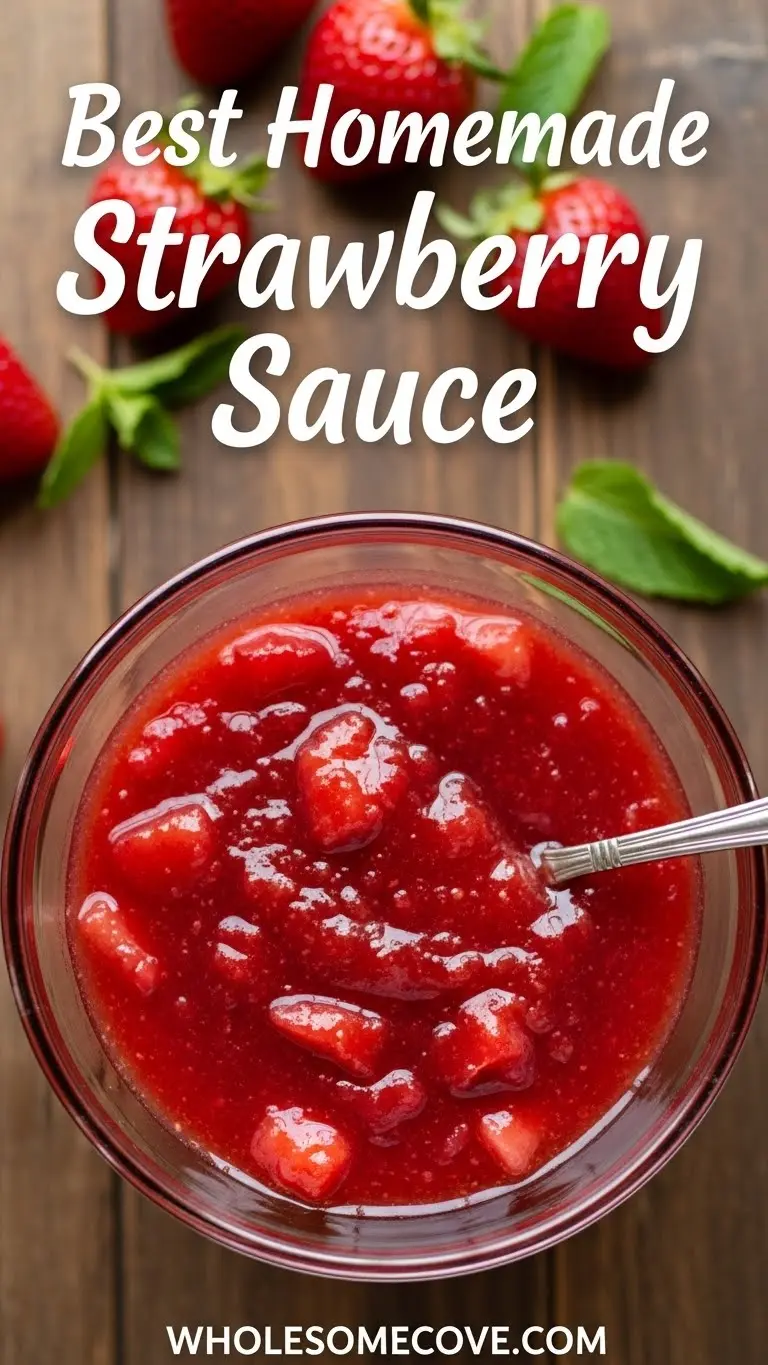
Why You’ll Love This Strawberry Sauce Recipe
This homemade strawberry sauce beats store-bought versions by a mile. The fresh berry flavor is vibrant and sweet without being cloying, and you control exactly how much sugar goes in.
I love that it comes together in one pot with minimal cleanup. You don’t need any fancy equipment or culinary training—just the ability to stir occasionally while it simmers.
Here’s what makes this recipe a winner:
- Incredibly versatile: Drizzle it over pancakes, waffles, ice cream, cheesecake, yogurt, oatmeal, or even pound cake
- All-natural ingredients: No artificial colors, flavors, or preservatives
- Adjustable sweetness: You can dial the sugar up or down based on your berries and preferences
- Works with fresh or frozen berries: Perfect for making any time of year
- Ready in 20 minutes: From start to finish, including cooling time
- Makes your kitchen smell amazing: Seriously, the aroma alone is worth making this
Another favorite sauce: Caramel Sauce Recipe
Ingredients
This strawberry sauce needs just five simple ingredients, most of which you probably already have in your pantry. The quality of your strawberries matters most here—the riper and sweeter they are, the better your sauce will taste.
- 2 pounds (900g) fresh strawberries, hulled and halved
- ½ cup (100g) granulated sugar (adjust based on strawberry sweetness)
- 2 tablespoons (30ml) fresh lemon juice (about half a lemon)
- ¼ cup (60ml) water
- 1 tablespoon (8g) cornstarch (optional, for thicker consistency)
- Pinch of salt (enhances the berry flavor)
Optional additions:
- 1 teaspoon vanilla extract (adds warmth and depth)
- 1 tablespoon balsamic vinegar (brings out the strawberry flavor)
- Zest of one lemon (for extra citrus brightness)
Kitchen Equipment Needed
You don’t need any special tools to make this strawberry sauce, just basic kitchen equipment that handles everyday cooking tasks. Everything can be found in most home kitchens.
- Medium heavy-bottomed saucepan (2-3 quart capacity)
- Wooden spoon or silicone spatula for stirring
- Sharp knife for hulling and cutting strawberries
- Cutting board
- Measuring cups and spoons
- Small bowl for cornstarch slurry (if using)
- Potato masher or fork (optional, for desired consistency)
- Glass storage jars or airtight containers for storing leftover sauce
- Fine-mesh strainer (optional, if you want a smoother sauce)
Recommended Products for This Recipe
After making this strawberry sauce countless times, I’ve found a few products that genuinely make the process easier and the results better. These aren’t necessary, but they’re my personal favorites that I reach for every time.
1. All-Clad Stainless Steel Saucepan
The heavy bottom on this saucepan distributes heat evenly, which prevents hot spots that could burn your strawberries. I’ve used cheaper pans before, and I always ended up with scorched bits on the bottom that gave the sauce a bitter taste.
2. OXO Good Grips Potato Masher
This masher gives you perfect control over the texture of your sauce. I like to leave some chunks of strawberry for a rustic texture, and this tool lets me get exactly the consistency I want without over-processing.
3. Weck Glass Jars with Lids
These beautiful jars are perfect for storing your homemade strawberry sauce in the fridge, and they also make gorgeous gifts. The glass doesn’t absorb odors or stains, so your sauce stays fresh and vibrant.
4. Fine Mesh Strainer
If you prefer a completely smooth sauce without any seeds or pulp, a quality fine-mesh strainer is essential. I usually skip this step because I like the texture, but when I’m making sauce for cheesecake or fancy desserts, I strain it for that silky finish.
Read Also: Cranberry Sauce Recipe
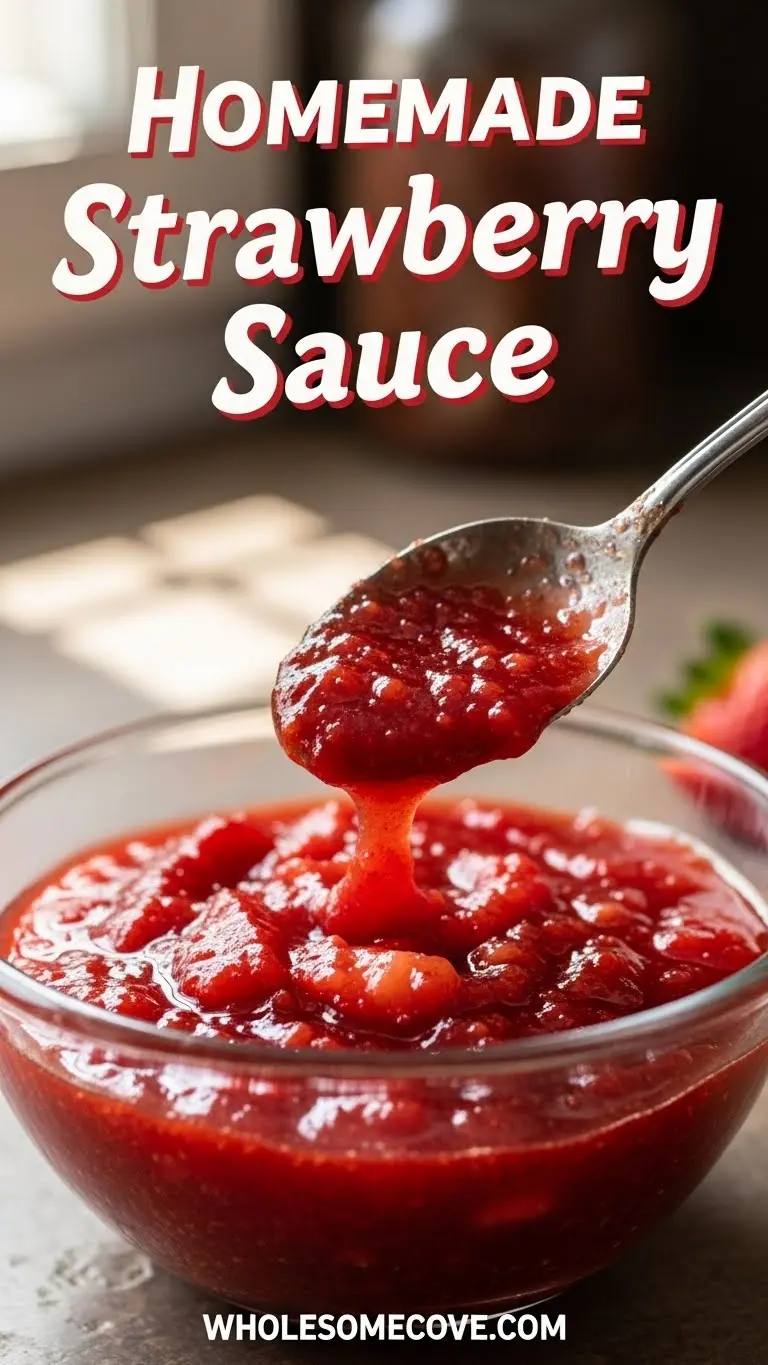
Step-by-Step Instructions: How to Make Strawberry Sauce
Making strawberry sauce is incredibly straightforward, but I’ve learned a few tricks over the years that make all the difference. Follow these detailed steps, and you’ll have perfect sauce every time.
1. Prepare the Strawberries
- Rinse your strawberries under cold water and pat them dry with paper towels
- Hull the strawberries by cutting out the green leaves and white core with a paring knife
- Cut the strawberries in half (or quarters if they’re very large) so they cook down evenly
- Place the prepared berries in your saucepan
- Inspect the berries as you prep them and discard any that have bad spots or mold
2. Add Sugar and Lemon Juice
- Sprinkle the sugar evenly over the strawberries in the saucepan
- Pour the fresh lemon juice over the top
- Add the water to help the initial cooking process
- Toss everything together gently with a wooden spoon so the berries are coated
- Let the mixture sit for 5 minutes to allow the sugar to start drawing out the strawberry juices
3. Cook the Sauce
- Place the saucepan over medium heat
- Stir occasionally as the mixture begins to heat up
- Once the sugar dissolves completely and the berries start releasing their juices, bring the mixture to a gentle simmer
- Reduce the heat to medium-low and let it simmer for 10-15 minutes, stirring every few minutes
- Watch for the berries to break down and the liquid to reduce and thicken slightly
- If foam develops on the surface, skim it off with a spoon
4. Mash for Desired Consistency
- After about 10 minutes of simmering, use a potato masher or fork to mash the strawberries
- For a chunky sauce, mash lightly and leave plenty of berry pieces intact
- For a smoother sauce, mash more thoroughly until most large pieces are broken down
- If you want a completely smooth sauce, use an immersion blender or transfer to a regular blender
- Taste the sauce at this point and add more sugar if needed (remember it will taste slightly less sweet when cold)
5. Thicken (Optional)
- If your sauce isn’t thick enough after simmering, create a cornstarch slurry
- Mix 1 tablespoon cornstarch with 2 tablespoons cold water in a small bowl until smooth
- Stir the slurry into the simmering sauce
- Cook for an additional 2-3 minutes, stirring constantly, until the sauce thickens noticeably
- The sauce will continue to thicken as it cools, so don’t overdo it
6. Cool and Store
- Remove the saucepan from heat and let the sauce cool to room temperature
- As it cools, stir it occasionally to prevent a skin from forming on top
- Once cooled, transfer the sauce to clean glass jars or airtight containers
- Store in the refrigerator for up to 2 weeks
- The sauce will thicken further in the fridge—if it gets too thick, thin it with a tablespoon of water when reheating
You might also enjoy: Peanut Sauce Recipe
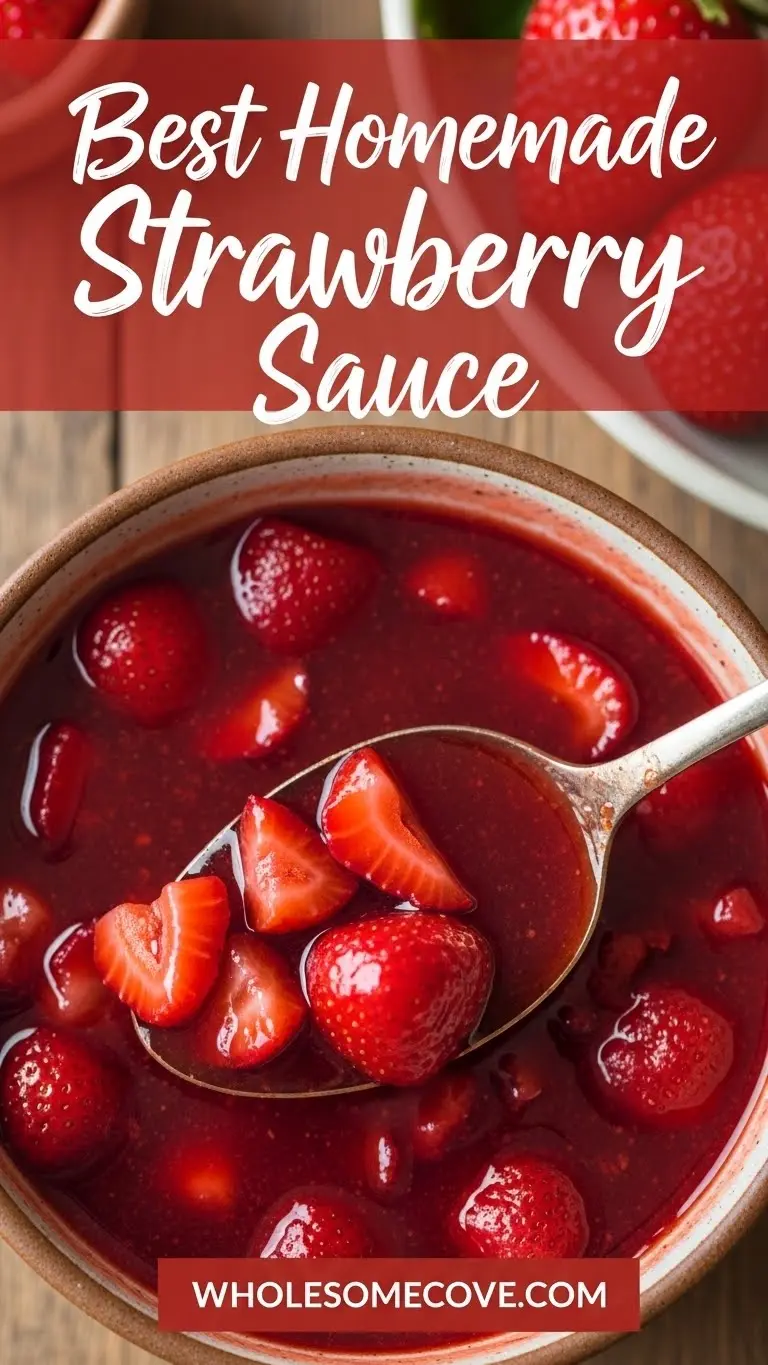
Tips for The Best Strawberry Sauce
I’ve made this sauce so many times that I’ve picked up quite a few tricks along the way. These tips will help you avoid common mistakes and create the most flavorful strawberry sauce possible.
- Choose the ripest strawberries: The sweeter your berries, the less sugar you’ll need and the more intense the flavor will be
- Taste as you go: Strawberries vary wildly in sweetness, so always taste and adjust the sugar before finishing
- Don’t skip the lemon juice: It balances the sweetness and brightens the overall flavor while also helping to preserve the sauce
- Cook low and slow: High heat can cause the sauce to burn on the bottom—patience produces better results
- Stir regularly: This prevents sticking and ensures even cooking throughout
- Consider frozen berries in winter: They’re often picked at peak ripeness and work beautifully in this recipe
- Add vanilla at the end: If using vanilla extract, add it after removing from heat to preserve its delicate flavor
- Make it ahead: The sauce actually tastes better after sitting in the fridge overnight as the flavors meld
- Customize the thickness: Remember you can always thin a too-thick sauce, but you can’t easily thicken one without cornstarch
- Label and date your jars: Homemade sauce doesn’t have preservatives, so tracking when you made it is important
- Warm before serving: Cold sauce is delicious, but gently warming it makes it even more aromatic and pourable
- Save overripe berries: This recipe is perfect for rescuing strawberries that are too soft to enjoy fresh
Serving Suggestions
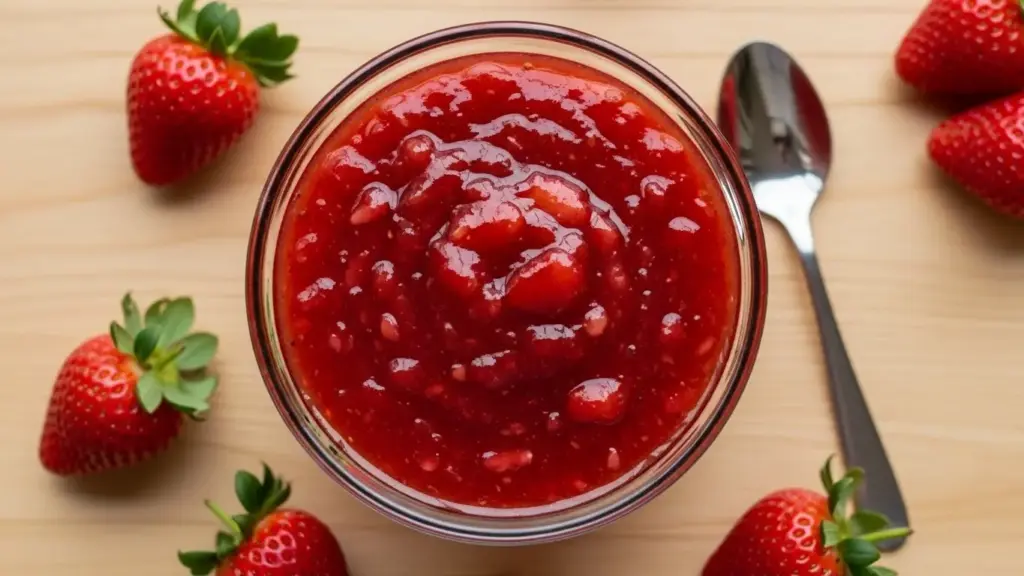
One of my favorite things about strawberry sauce is how many different ways you can enjoy it. I’ve been making this for years, and I still discover new uses for it.
Here are my favorite ways to serve this versatile sauce:
- Breakfast classics: Pour it generously over French Toast, waffles, or pancakes
- Ice cream topper: Drizzle warm sauce over vanilla, chocolate, or strawberry ice cream
- Yogurt parfait: Layer it with Greek yogurt and granola for a simple breakfast or dessert
- Cheesecake sauce: This is hands-down the best topping for plain New York-style cheesecake
- Overnight oats: Stir a spoonful into your Overnight Oats for natural sweetness
- Pound cake glaze: Warm the sauce and pour it over slices of pound cake
- Crepe filling: Spread it inside thin crepes with a dollop of whipped cream
- Smoothie addition: Blend it into your morning smoothie for natural strawberry flavor
- Shortcake: The traditional pairing—spoon it between layers of biscuits with whipped cream
- Cocktail mixer: Add a spoonful to champagne for a strawberry mimosa or stir it into lemonade
- Panna cotta topping: The silky texture pairs beautifully with this Italian dessert
- Thumbprint cookies: Use it as a filling for homemade cookies
Another favorite: Pizza Sauce Recipe
Variations of Strawberry Sauce
Once you master the basic recipe, experimenting with variations is half the fun. I’ve tried dozens of twists over the years, and these are the ones that actually made it into my regular rotation.
- Balsamic strawberry sauce: Add 1-2 tablespoons of balsamic vinegar for a sophisticated, slightly tangy flavor that’s perfect for savory applications
- Mint-infused sauce: Add 4-5 fresh mint leaves while simmering, then remove them before storing
- Mixed berry sauce: Replace half the strawberries with raspberries, blueberries, or blackberries for a complex flavor
- Honey-sweetened version: Substitute honey for half the sugar for a more natural sweetness with floral notes
- Spiced sauce: Add a cinnamon stick or ¼ teaspoon of ground cardamom while cooking
- Orange strawberry sauce: Replace the lemon juice with fresh orange juice and add orange zest
- Boozy sauce: Stir in 2 tablespoons of Grand Marnier, amaretto, or rum after removing from heat
- Vanilla bean sauce: Split a vanilla bean and scrape the seeds into the sauce for intense vanilla flavor
- Sugar-free version: Use a sugar substitute like Stevia or monk fruit sweetener (adjust to taste)
- Chia seed sauce: Stir in 2 tablespoons of chia seeds after cooking for added nutrition and natural thickening
- Rhubarb strawberry sauce: Add 1 cup of chopped rhubarb for a classic tart-sweet combination
- Coconut strawberry sauce: Add 2 tablespoons of coconut cream for a tropical twist
Storage and Reheating
Proper storage keeps your strawberry sauce fresh and delicious for as long as possible. I always make a big batch and store it in multiple containers so I have some ready whenever a craving hits.
Refrigerator storage:
- Transfer cooled sauce to clean, airtight glass jars or containers
- Store in the refrigerator for up to 2 weeks
- Always use a clean spoon when scooping to prevent contamination
- The sauce will thicken considerably when chilled—this is completely normal
Freezer storage:
- Pour sauce into freezer-safe containers, leaving ½ inch of headspace for expansion
- Freeze for up to 3 months for best quality (though it stays safe longer)
- Label containers with the date so you can track freshness
- I like to freeze in small portions (½ cup each) for easy thawing
- Ice cube trays work great for individual portions that you can pop out as needed
Thawing and reheating:
- Thaw frozen sauce overnight in the refrigerator
- For quick thawing, place the sealed container in a bowl of warm water
- Reheat gently in a small saucepan over low heat, stirring frequently
- Microwave in 15-second intervals, stirring between each burst
- Add a tablespoon of water if the sauce has become too thick after refrigeration
- Warmed sauce is perfect for drizzling, while cold sauce works great for spreading
Read Also: Teriyaki Sauce Recipe
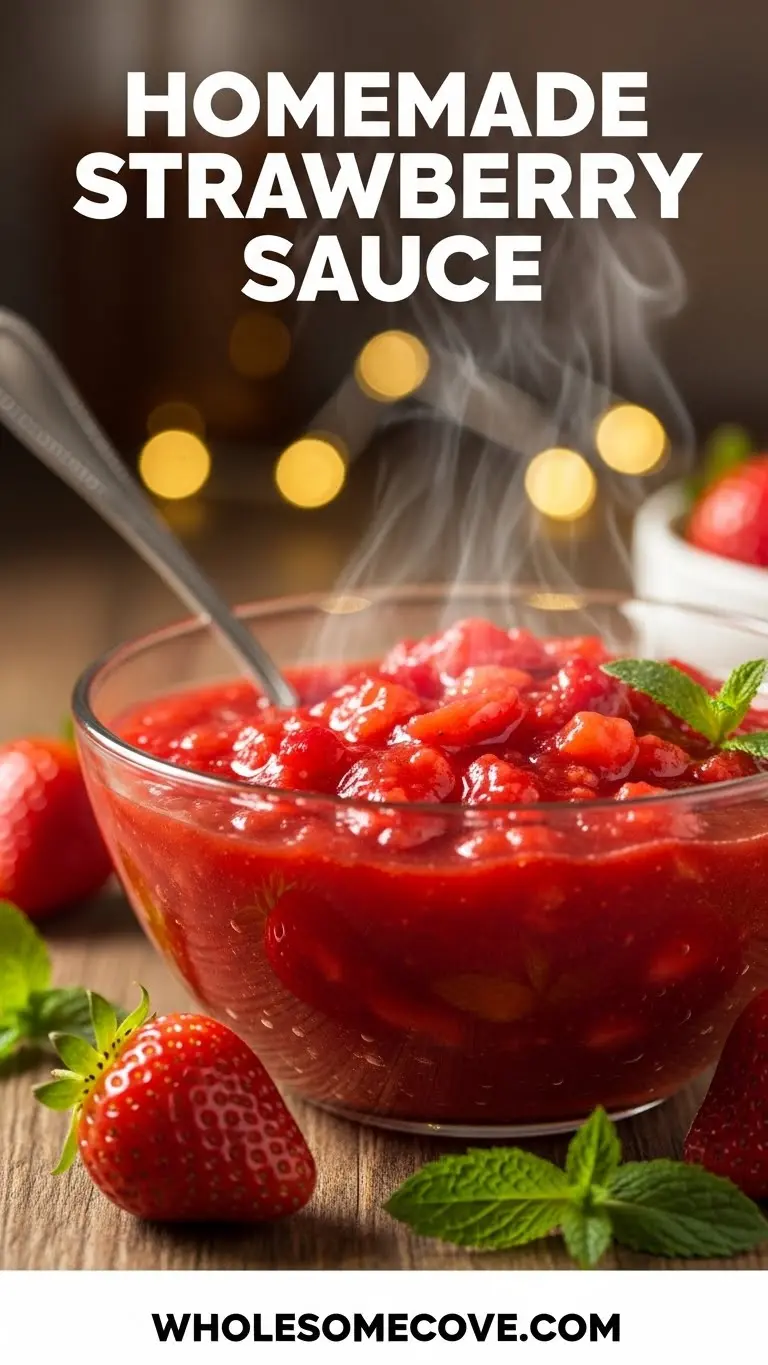
Nutritional Facts
Here’s the approximate nutritional information per 2-tablespoon serving of homemade strawberry sauce:
- Calories: 45
- Total Fat: 0g
- Saturated Fat: 0g
- Cholesterol: 0mg
- Sodium: 5mg
- Total Carbohydrates: 11g
- Dietary Fiber: 1g
- Sugars: 9g
- Protein: 0g
- Vitamin C: 25% of Daily Value
- Manganese: 8% of Daily Value
- Folate: 4% of Daily Value
Note: Nutritional values are estimates and will vary based on the exact ingredients and quantities used. The sugar content includes both natural sugars from the strawberries and added sugar.
Health Benefits of Key Ingredients
While strawberry sauce is definitely a treat, it does offer some nutritional benefits thanks to its star ingredient. Here’s what makes this sauce a little better for you than completely processed alternatives.
Strawberries are nutritional powerhouses packed with good-for-you compounds:
- Rich in antioxidants: Strawberries contain anthocyanins and ellagic acid, which help fight inflammation and oxidative stress in the body
- Excellent source of vitamin C: Just one serving provides a significant portion of your daily vitamin C needs, supporting immune function and skin health
- Heart-healthy: The potassium and antioxidants in strawberries support cardiovascular health and may help lower blood pressure
- Low in calories: Even when sweetened, this sauce is relatively low in calories compared to many dessert toppings
- Digestive support: The fiber in strawberries aids digestion and promotes gut health
- Blood sugar regulation: The fiber content helps slow sugar absorption, preventing rapid blood sugar spikes
- Brain health: Studies suggest the flavonoids in strawberries may help improve cognitive function and memory
- Anti-inflammatory properties: Regular consumption of strawberries has been linked to reduced inflammation markers
FAQs About Strawberry Sauce
1. Can I use frozen strawberries to make this sauce?
Absolutely! Frozen strawberries work wonderfully in this recipe. In fact, they’re often picked at peak ripeness and flash-frozen, which means they can be sweeter than out-of-season fresh berries. Just thaw them first and drain any excess liquid before cooking, or add them frozen and extend the cooking time by about 5 minutes.
2. How can I make my strawberry sauce thicker without cornstarch?
If you prefer to avoid cornstarch, simply simmer the sauce longer to evaporate more liquid—this concentrates the flavors and naturally thickens it. You can also add 1-2 tablespoons of chia seeds, which will gel as the sauce cools. Another option is to use pectin, which is a natural thickener found in fruits.
3. Why is my strawberry sauce bitter?
Bitterness usually comes from overcooking or burning the sauce on the bottom of the pan. Make sure to stir regularly and keep the heat at medium-low. Another cause can be using strawberries that aren’t ripe enough—underripe berries have a tart, sometimes bitter taste that no amount of sugar can fully mask.
4. Can I reduce the sugar in this recipe?
Yes, you can definitely cut back on the sugar, especially if your strawberries are very sweet. Start with ¼ cup of sugar and taste as you go, adding more if needed. Keep in mind that sugar not only sweetens but also helps thicken the sauce and acts as a preservative, so reducing it significantly may result in a thinner sauce with a shorter shelf life.
5. What’s the difference between strawberry sauce and strawberry jam?
The main difference is consistency and sugar content. Jam has much more sugar (usually equal to the amount of fruit) and pectin, which makes it gel firmly enough to spread. Sauce has less sugar, a looser consistency, and is meant for pouring or drizzling rather than spreading.
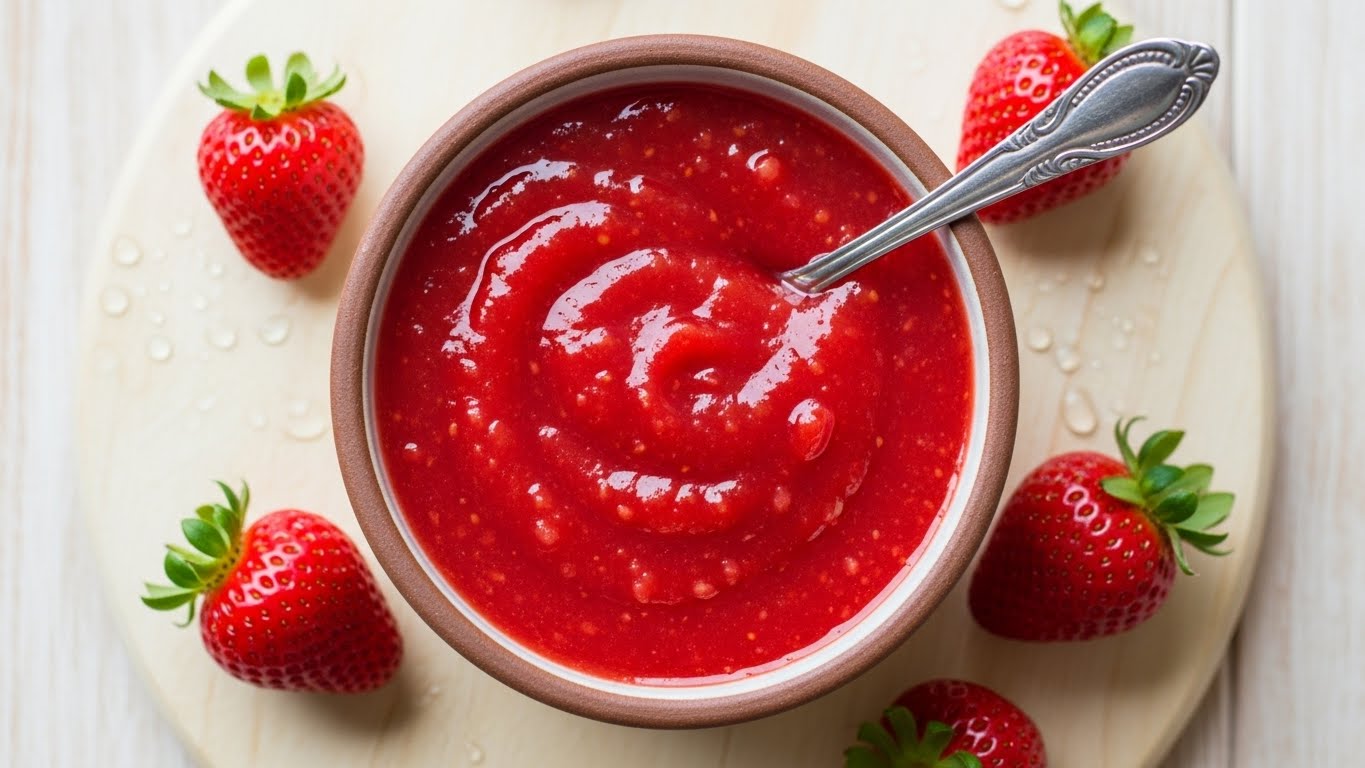
Homemade Strawberry Sauce
Ingredients
- 2 lbs fresh strawberries - 900g, hulled and halved (or quartered if very large)
- ½ cup granulated sugar - 100g; adjust up or down based on strawberry sweetness
- 2 tbsp fresh lemon juice - 30ml, about half a lemon
- ¼ cup water - 60ml
- pinch of salt - Enhances the berry flavor
- 1 tbsp cornstarch - 8g; for thicker consistency — mix with 2 tbsp cold water before adding
- 1 tsp vanilla extract - Add after removing from heat to preserve flavor
- 1 tbsp balsamic vinegar - Brings out the strawberry flavor
- 1 lemon (zest only) - For extra citrus brightness
Equipment
- Medium heavy-bottomed saucepan - 2–3 quart capacity
- Wooden spoon or silicone spatula - For stirring
- Sharp knife - For hulling and cutting strawberries
- Small bowl - For cornstarch slurry (if using)
- Potato masher or fork - (optional) for desired consistency
- Glass storage jars or airtight containers - For storing leftover sauce
- Fine-mesh strainer - (optional) for a smoother, seedless sauce
Method
- Rinse strawberries under cold water, pat dry, then hull and halve them (quarter if very large). Discard any berries with bad spots or mold.
- Place strawberries in the saucepan, then sprinkle sugar evenly over the top, pour in the lemon juice and water, and toss gently to coat. Let sit for 5 minutes to begin drawing out the juices.
- Place saucepan over medium heat, stirring occasionally until sugar dissolves and berries release their juices, then reduce to medium-low and simmer for 10–15 minutes, stirring every few minutes and skimming any foam.
- After about 10 minutes, use a potato masher or fork to mash the berries — lightly for a chunky sauce, more thoroughly for a smoother one, or use an immersion blender for a completely smooth result. Taste and adjust sugar if needed.
- If a thicker sauce is desired, stir in a cornstarch slurry (1 tbsp cornstarch mixed with 2 tbsp cold water) and cook for an additional 2–3 minutes, stirring constantly, until noticeably thickened.
- Remove from heat, stir in vanilla extract if using, and let cool to room temperature, stirring occasionally to prevent a skin from forming. Transfer to airtight glass jars and refrigerate for up to 2 weeks.
Nutrition
Notes
- Use the ripest strawberries you can find — the sweeter the berries, the less sugar you’ll need and the more vibrant the flavor.
- Frozen strawberries work great — they’re often picked at peak ripeness. Thaw and drain excess liquid first, or add frozen and extend cook time by about 5 minutes.
- Don’t skip the lemon juice — it balances the sweetness, brightens the flavor, and acts as a natural preservative.
- Cook low and slow — medium-low heat prevents scorching on the bottom, which can cause bitterness.
- Add vanilla after removing from heat — this preserves its delicate flavor compounds.
- The sauce thickens as it cools — don’t over-thicken while cooking; if it gets too thick in the fridge, thin with a tablespoon of water when reheating.
- Make it ahead — the sauce tastes even better after sitting overnight in the fridge as the flavors meld.
- Freeze in portions — pour into ice cube trays or ½-cup freezer-safe containers and freeze for up to 3 months. Thaw overnight in the fridge or in a bowl of warm water.
- For a sugar-free version — substitute Stevia or monk fruit sweetener to taste; note the sauce may be slightly thinner and have a shorter shelf life.
- Label and date your jars — homemade sauce has no preservatives, so tracking freshness is important. Keeps refrigerated for up to 2 weeks.
Private Notes
Tried this recipe?
Let us know how it was!Final Thoughts
This strawberry sauce recipe has become one of my most-used kitchen staples. It transforms simple breakfasts into something special and turns everyday desserts into restaurant-quality treats.
The best part is knowing exactly what goes into it—no artificial ingredients, no mysterious additives, just pure strawberry goodness. I hope this recipe brings as much joy to your kitchen as it has to mine.
Give it a try this week and let me know how it turns out! Drop a comment below with your favorite way to use homemade strawberry sauce, or share a photo if you make it.
Recommended:
- Stir Fry Sauce Recipe
- Burger Sauce Recipe
- Bechamel Sauce Recipe
- Cheese Sauce Recipe
- Buffalo Sauce Recipe
- Cocktail Sauce Recipe
- Yum Yum Sauce Recipe
- Tzatziki Sauce Recipe
- Enchilada Sauce Recipe
- BBQ Sauce Recipe