I grew up thinking spaghetti sauce only came from a jar. That changed one Sunday afternoon when my Italian neighbor, Mrs. Antonelli, invited me over and showed me how she made her family’s traditional sauce.
The smell of garlic and tomatoes simmering on her stove was intoxicating. I watched as she added fresh basil from her garden and tasted the sauce repeatedly, adjusting the seasoning with the confidence of someone who had made this a thousand times.
When I finally tasted her homemade spaghetti sauce recipe, I couldn’t believe the difference. It was rich, complex, and deeply flavorful in a way that jarred sauce never could be.
I went home that day determined to recreate what I’d learned. My first attempt was too acidic because I didn’t add sugar to balance the tomatoes. The second time, I added too much oregano and it overpowered everything else.
But by the third try, I had it down. Now, years later, this sauce is what my family requests for every special occasion, and I’ve stopped buying jarred sauce altogether.
| Quick Recipe Summary | |
|---|---|
| Prep Time | 15 minutes |
| Cook Time | 45 minutes |
| Total Time | 1 hour |
| Servings | 6 cups (about 8 servings) |
| Difficulty Level | Easy |
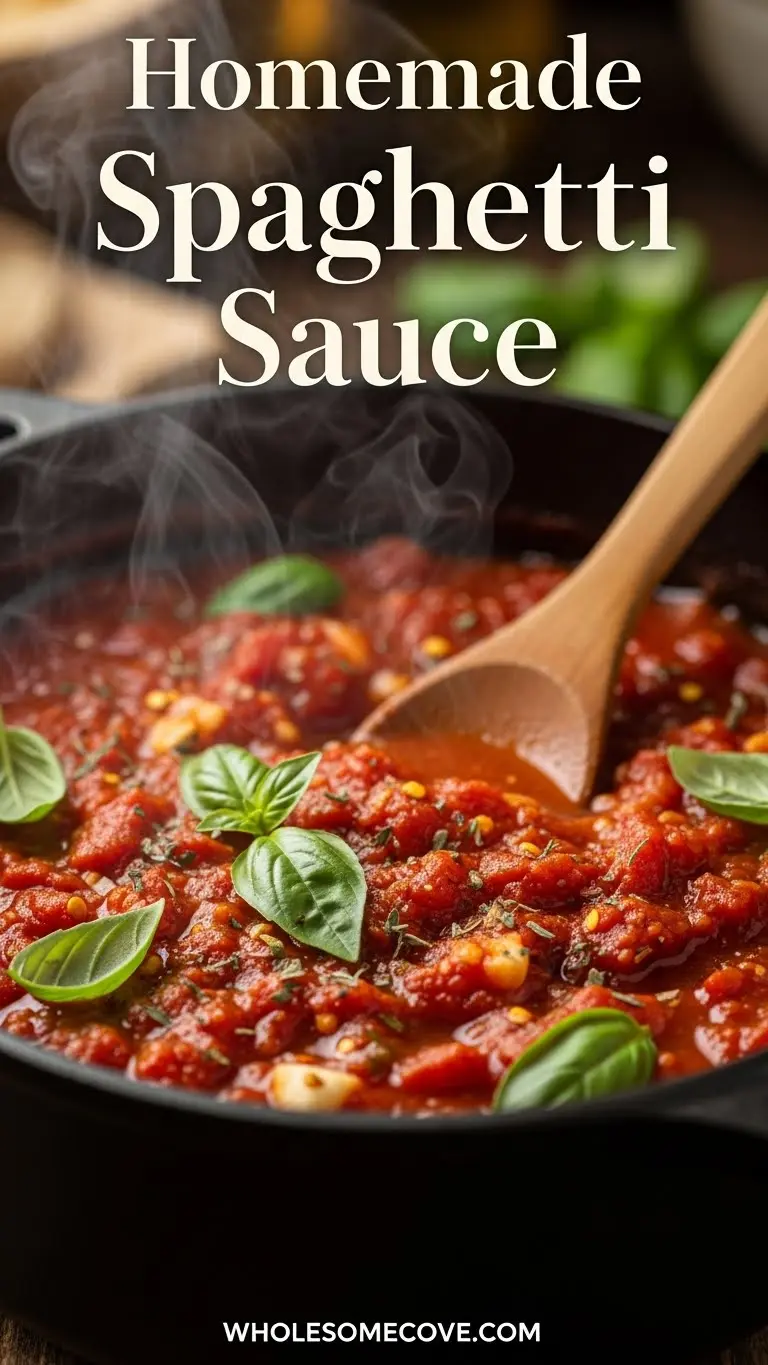
Why You’ll Love This Spaghetti Sauce Recipe
This homemade sauce transforms ordinary pasta night into something special. The flavors are deep and authentic, reminiscent of what you’d find in a traditional Italian grandmother’s kitchen.
Unlike store-bought versions that taste flat and overly sweet, this sauce has layers of flavor that develop as it simmers. The fresh herbs and garlic create an aroma that fills your entire home.
Here’s what makes this recipe stand out:
- Incredible depth of flavor: The combination of San Marzano tomatoes, fresh herbs, and slow simmering creates a complex, restaurant-quality sauce
- Customizable to your taste: You can adjust the sweetness, spice level, and herb ratios to match your preferences perfectly
- Budget-friendly: Making sauce from scratch costs a fraction of what premium jarred sauces cost, and you’ll get much better results
- Freezer-friendly: Double the batch and freeze portions for quick weeknight meals when you need them
- Healthier option: You control exactly what goes in, with no preservatives, excess sugar, or mystery ingredients
- Impressive yet simple: It looks and tastes like you spent hours in the kitchen, but the active cooking time is minimal
This pairs beautifully with my chicken spaghetti recipe for a complete Italian-inspired meal.
Ingredients
This sauce relies on quality ingredients that come together to create something greater than the sum of their parts. The secret is using the best tomatoes you can find and letting them shine.
For the Sauce Base:
- 2 tablespoons olive oil (30 ml)
- 1 medium yellow onion, finely diced (about 1 cup/150g)
- 6 cloves garlic, minced (about 2 tablespoons)
- 2 cans (28 oz/794g each) crushed tomatoes (preferably San Marzano)
- 1 can (6 oz/170g) tomato paste
- 1/2 cup (120 ml) dry red wine (optional but recommended)
- 1 tablespoon sugar (12g) or honey (21g)
- 2 teaspoons dried basil (2g)
- 2 teaspoons dried oregano (2g)
- 1 teaspoon dried thyme (1g)
- 1/2 teaspoon red pepper flakes (1g), or to taste
- 2 bay leaves
- Salt and black pepper to taste
- 1/4 cup (10g) fresh basil leaves, chopped
- 2 tablespoons (8g) fresh parsley, chopped
Optional Add-Ins:
- 1 pound (450g) Italian sausage, removed from casings
- 1/2 pound (225g) ground beef
- 1/4 cup (60 ml) heavy cream for a creamier sauce
- 2 tablespoons balsamic vinegar for added depth
Kitchen Equipment Needed
Having the right tools makes this recipe even easier to prepare. You don’t need anything fancy, just good quality basics that will last.
Here’s what you’ll need:
- Large heavy-bottomed pot or Dutch oven (at least 5-6 quarts/4.7-5.7 liters)
- Wooden spoon or silicone spatula for stirring
- Sharp chef’s knife for chopping
- Cutting board
- Measuring cups and spoons
- Immersion blender (optional, for a smoother sauce)
- Ladle for serving
- Storage containers or freezer bags for leftovers
Recommended Products for This Recipe
After making this sauce countless times, I’ve found a few products that genuinely make a difference in the final result. These aren’t necessary, but they’ll elevate your sauce from good to exceptional.
1. Cento San Marzano Certified Peeled Tomatoes
San Marzano tomatoes from the volcanic soil near Mount Vesuvius have a naturally sweet flavor and lower acidity that makes them perfect for sauce. I crush them by hand for a chunkier texture, and the difference from regular canned tomatoes is night and day.
2. Le Creuset Enameled Cast Iron Dutch Oven
This pot distributes heat so evenly that you’ll never have hot spots that burn your sauce. The heavy lid traps moisture perfectly, and the enamel coating means the acidity from tomatoes won’t react with the pot. I’ve had mine for over a decade and it still looks brand new.
3. Breville Control Grip Immersion Blender
If you prefer a smoother sauce, this immersion blender lets you control the texture right in the pot without transferring hot liquid to a traditional blender. The ergonomic grip makes it easy to use, and cleanup takes seconds.
4. Colavita Extra Virgin Olive Oil
Since olive oil is the foundation of this sauce, using a quality one matters. Colavita has a fruity, peppery flavor that enhances the other ingredients without being overpowering. It’s reasonably priced for the quality you get.
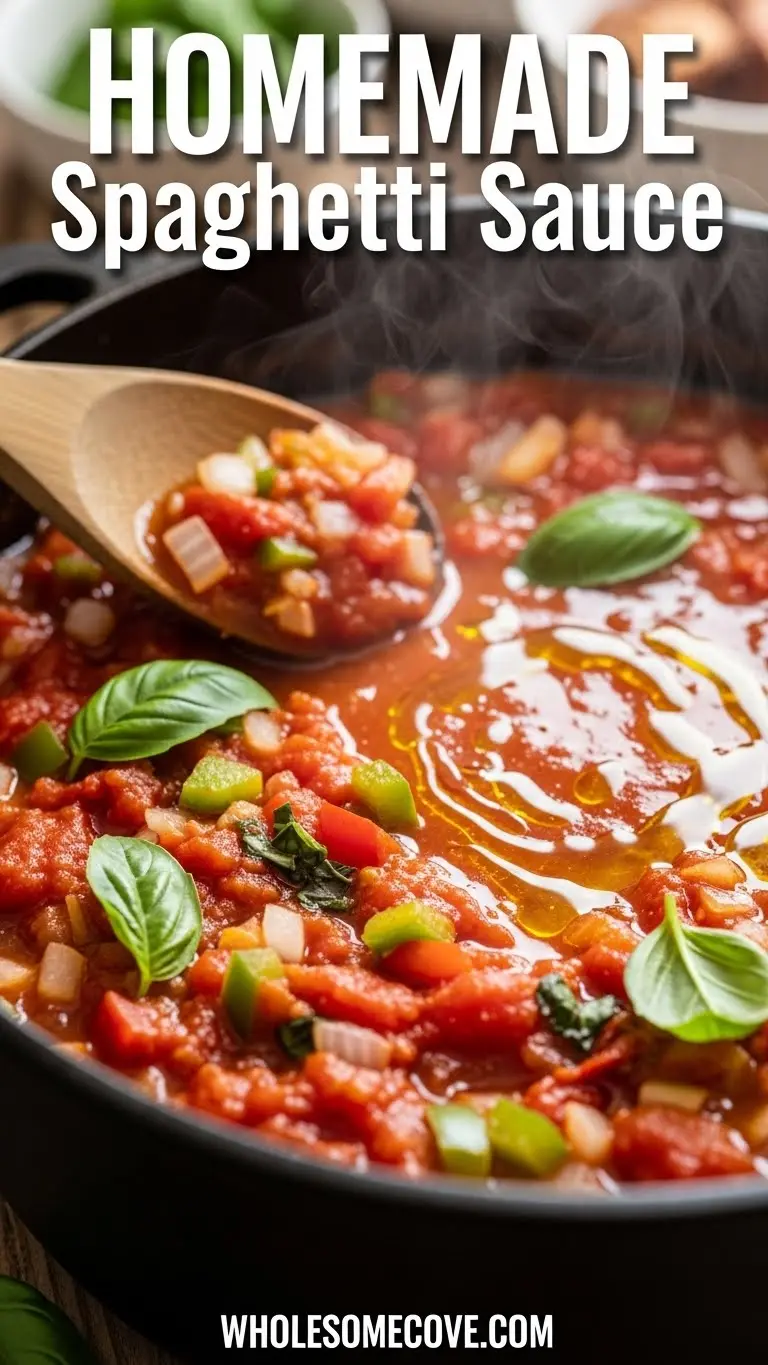
Step-by-Step Instructions: How to Make Spaghetti Sauce
Follow these detailed steps for a foolproof sauce every time. The key is patience and letting the flavors develop through slow simmering.
1. Prepare Your Ingredients
- Dice the onion into small, uniform pieces (about 1/4 inch/6mm) so they cook evenly and blend into the sauce
- Mince the garlic finely, but don’t use a garlic press as it can make the flavor bitter when cooked
- Chop the fresh basil and parsley, keeping them separate from the dried herbs
- If using meat, have it ready at room temperature for even cooking
- Open all your canned tomatoes and have them nearby so you can add them quickly once the aromatics are ready
Another favorite: Marinara Sauce Recipe
2. Sauté the Aromatics
- Heat the olive oil in your large pot over medium heat until it shimmers but doesn’t smoke (about 2 minutes)
- Add the diced onion and cook, stirring occasionally, until it becomes translucent and soft (about 5-7 minutes)
- Don’t rush this step by using high heat, as you want the onions to sweeten without browning
- Add the minced garlic and cook for just 1 minute, stirring constantly, until fragrant but not browned
- If the garlic starts to turn golden, your heat is too high and it may become bitter
3. Add the Tomato Base
- Stir in the tomato paste and cook for 2-3 minutes, stirring frequently, until it darkens slightly and smells sweet
- This step is crucial because it removes the raw, metallic taste from the tomato paste
- Pour in the wine (if using) and scrape up any brown bits from the bottom of the pot with your wooden spoon
- Let the wine simmer for 2-3 minutes until it reduces by about half and the alcohol smell dissipates
- Add the crushed tomatoes, stirring well to incorporate everything
- Fill one of the empty tomato cans about 1/3 full with water, swish it around to get all the tomato residue, and add it to the pot
4. Season the Sauce
- Add the dried basil, oregano, thyme, red pepper flakes, and bay leaves to the pot
- Stir in the sugar (or honey), which balances the natural acidity of the tomatoes
- Season with 1 teaspoon of salt and 1/2 teaspoon of black pepper to start
- Stir everything together thoroughly and taste the sauce (careful, it’s hot!)
- Remember that the flavors will concentrate as the sauce simmers, so don’t over-salt at this stage
You might also enjoy: Lasagna Recipe
5. Simmer to Perfection
- Bring the sauce to a gentle boil over medium-high heat, then immediately reduce to low
- The sauce should barely bubble, with just a few small bubbles breaking the surface
- Partially cover the pot with the lid slightly askew to allow steam to escape
- Simmer for at least 30-45 minutes, stirring every 10 minutes to prevent sticking
- As it cooks, the sauce will thicken and the color will deepen to a rich, dark red
- If the sauce becomes too thick, add water 1/4 cup at a time until you reach your desired consistency
- If it’s too thin, continue simmering uncovered until it reduces
6. Add Fresh Herbs and Final Adjustments
- After the sauce has simmered, remove and discard the bay leaves
- Taste the sauce and adjust the seasoning, adding more salt, pepper, or sugar as needed
- Stir in the fresh basil and parsley, which add a bright, fresh note to the deep flavors
- Let the sauce simmer for 5 more minutes to allow the fresh herbs to infuse
- For a smoother sauce, use an immersion blender to puree it to your desired consistency
- If adding cream, stir it in now and heat through for just 2-3 minutes without boiling
7. Serve or Store
- Ladle the hot sauce over your cooked pasta of choice, tossing to coat evenly
- Reserve some pasta cooking water to thin the sauce if needed when tossing with pasta
- Garnish with freshly grated Parmesan cheese and additional fresh basil
- For storage, let the sauce cool completely before transferring to containers
- Leave about 1 inch of headspace if freezing to allow for expansion
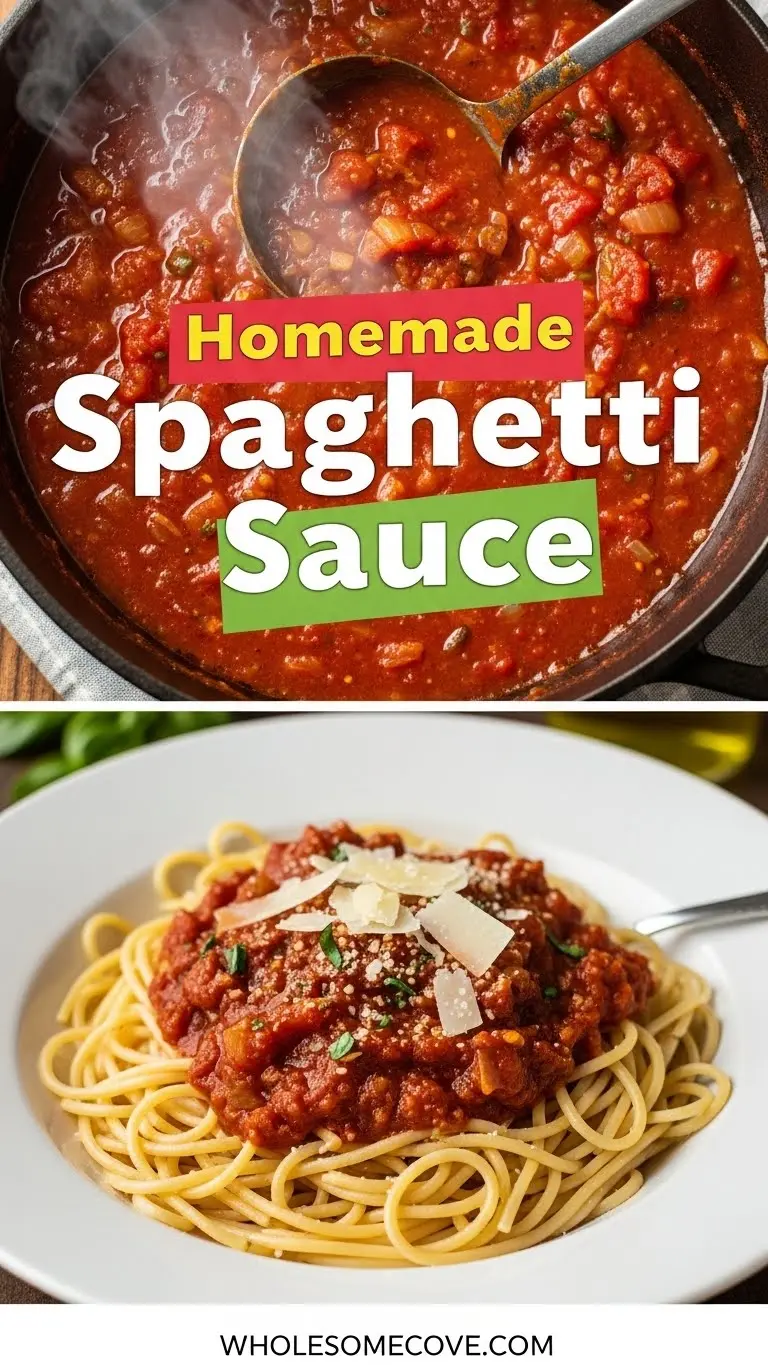
Tips for The Best Spaghetti Sauce
Over the years, I’ve learned some tricks that make a real difference in the final result. These tips will help you avoid common mistakes and create the best sauce possible.
- Use quality tomatoes: San Marzano tomatoes are worth the extra cost because they’re naturally sweeter and less acidic, which means better flavor and less need for sugar
- Don’t skip the sugar: Even a small amount balances the acidity of tomatoes and brings out their natural sweetness without making the sauce taste sweet
- Low and slow wins: Rushing the simmer means the flavors won’t meld properly; give it at least 30 minutes for the best results
- Taste as you go: Your palate is the best guide, so taste the sauce multiple times during cooking and adjust seasonings gradually
- Add pasta water: When tossing the sauce with pasta, add 1/4 to 1/2 cup of starchy pasta cooking water to help the sauce cling to the noodles
- Fresh herbs at the end: Add fresh basil and parsley in the last few minutes to preserve their bright, fresh flavor rather than cooking them down
- Let it rest: If time allows, let the finished sauce sit for 15-20 minutes off the heat before serving, which allows the flavors to settle
- Brown the tomato paste: Cooking the tomato paste until it darkens removes the tinny taste and adds depth to the sauce
- Use a heavy pot: A thin pot will have hot spots that can cause the sauce to scorch; invest in a good quality heavy-bottomed pot or Dutch oven
- Season in stages: Add salt at the beginning and at the end so you can control the final seasoning without over-salting
Read Also: Stuffed Shells Recipe
Serving Suggestions
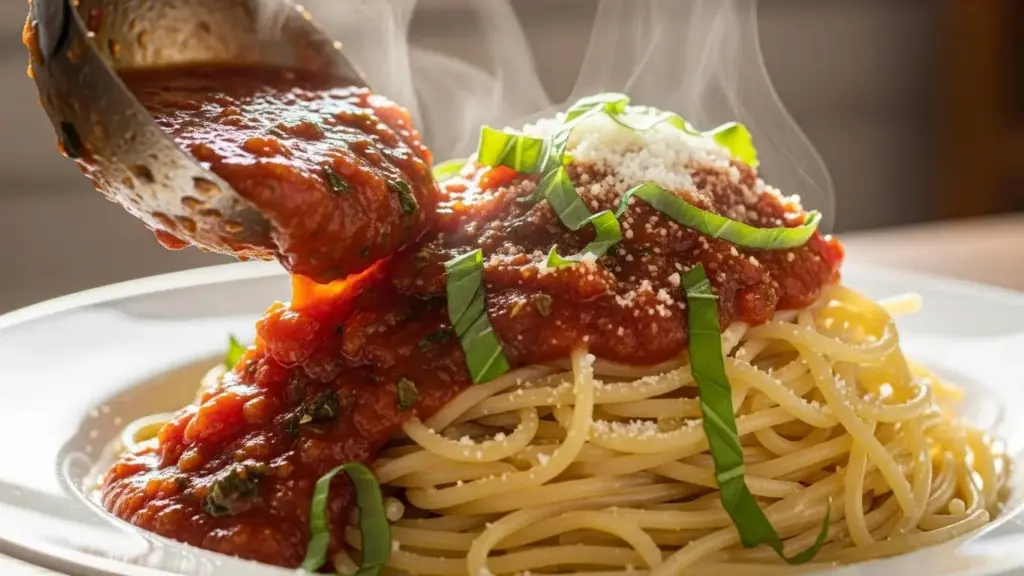
This versatile sauce works with so much more than just spaghetti. I’ve used it in countless ways over the years, and it always delivers.
Here are my favorite ways to serve it:
- Classic spaghetti: Toss with al dente spaghetti or your favorite long pasta, topped with freshly grated Parmesan and torn basil
- Baked pasta dishes: Use as the base for lasagna, baked ziti, or stuffed shells for comfort food at its finest
- Pizza sauce: Spread on pizza dough before adding toppings for a homemade pizza that rivals any pizzeria
- Meatball sub: Simmer Swedish meatballs in the sauce and serve on crusty bread with melted mozzarella
- Chicken or eggplant Parmesan: Pour over breaded cutlets, top with cheese, and bake until bubbly
- Shakshuka base: Use as the tomato base for shakshuka, adding eggs in the last few minutes
- Soup starter: Thin with broth to create a base for Italian wedding soup or minestrone
- Bread dipper: Serve warm in a bowl with crusty bread for dipping as an appetizer
Variations of Spaghetti Sauce
Once you master the basic recipe, these variations will keep things interesting. Each one changes the character of the sauce in a delicious way.
- Arrabbiata style: Double the red pepper flakes and add 1/4 teaspoon of cayenne pepper for a spicy kick that’ll clear your sinuses
- Vodka sauce: Stir in 1/4 cup of vodka along with the wine and finish with 1/2 cup of heavy cream for a luxurious, restaurant-style sauce
- Meat sauce (Bolognese style): Brown 1 pound of ground beef or Italian sausage before adding the onions, then proceed with the recipe
- Puttanesca: Add 1/2 cup of chopped Kalamata olives, 2 tablespoons of capers, and 4 anchovy fillets for a briny, complex flavor
- Roasted garlic: Replace raw garlic with a whole head of roasted garlic, squeezed from the skins and mashed into the sauce
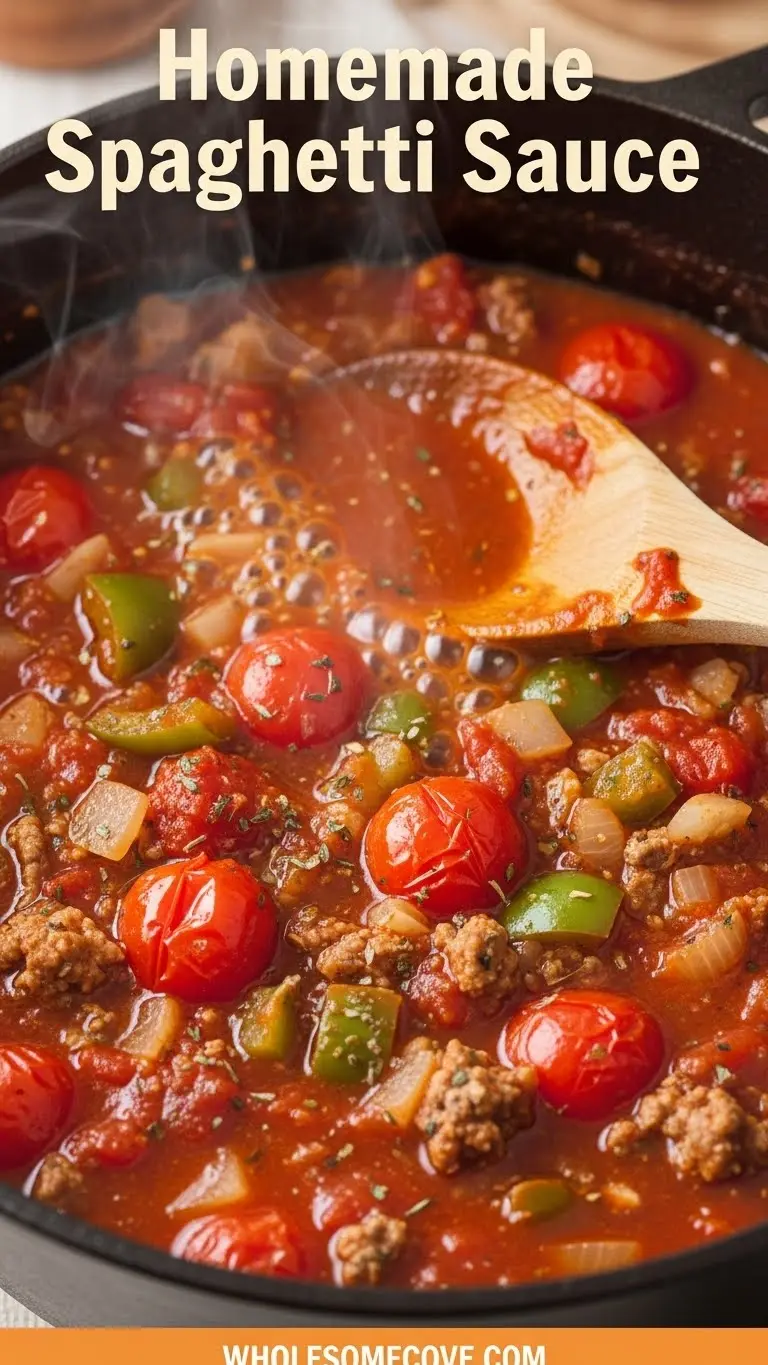
- Vegetable loaded: Add diced bell peppers, mushrooms, and zucchini when you sauté the onions for extra nutrition and texture
- White wine version: Use white wine instead of red for a lighter, brighter sauce that pairs well with seafood pasta
- Creamy tomato: Blend in 4 ounces of cream cheese or mascarpone at the end for an ultra-creamy, decadent sauce
- Spicy Italian sausage: Remove casings from hot Italian sausage links, brown the meat, and simmer in the sauce for hearty flavor
- Mushroom marinara: Sauté 8 ounces of sliced cremini mushrooms until golden before adding the tomatoes for an earthy, umami-rich sauce
For a lighter option, try: Creamy Tomato Basil Soup Recipe
Storage and Reheating
Proper storage means you can enjoy this sauce for weeks or even months. I always make a double batch so I have some ready in the freezer.
Follow these guidelines for the best results:
- Refrigerator: Store cooled sauce in airtight containers for up to 5 days in the fridge
- Freezer: Freeze in portion-sized containers or heavy-duty freezer bags for up to 3 months
- Freezer tip: Freeze flat in zip-top bags for easy stacking and faster thawing
- Label everything: Write the date and contents on each container so you know what you have
- Thawing: Move frozen sauce to the fridge 24 hours before using, or thaw in the microwave on defrost setting
- Reheating on stovetop: Transfer to a pot over medium-low heat, stirring occasionally until heated through (about 10 minutes)
- Reheating in microwave: Use a microwave-safe bowl, cover with a damp paper towel, and heat in 1-minute intervals, stirring between each
- Add liquid if needed: If the sauce thickens too much during storage, stir in a splash of water, wine, or pasta cooking water when reheating
- Freeze in ice cube trays: Pour sauce into ice cube trays, freeze until solid, then transfer cubes to a freezer bag for perfectly portioned servings
- Don’t refreeze: Once thawed, use the sauce within 3-4 days and don’t refreeze it
Nutritional Facts
Per serving (approximately 3/4 cup or 180ml of sauce):
- Calories: 110
- Total Fat: 5g
- Saturated Fat: 0.7g
- Cholesterol: 0mg
- Sodium: 380mg
- Total Carbohydrates: 15g
- Dietary Fiber: 4g
- Sugars: 9g
- Protein: 3g
- Vitamin A: 15% DV
- Vitamin C: 25% DV
- Calcium: 6% DV
- Iron: 10% DV
Note: Nutritional values are approximate and will vary based on specific ingredients used and portion sizes. Values increase significantly if adding meat or cream.
Health Benefits of Key Ingredients
This sauce isn’t just delicious, it’s also packed with nutrients that support your health. Each ingredient brings something valuable to the table.
Tomatoes are rich in lycopene, a powerful antioxidant that’s been linked to heart health and may reduce the risk of certain cancers. Cooking tomatoes actually increases the bioavailability of lycopene, making this sauce even more nutritious than raw tomatoes.
Garlic has antimicrobial and immune-boosting properties, and it may help lower blood pressure and cholesterol levels. The allicin compound in garlic is released when it’s crushed or chopped, giving you maximum health benefits.
Olive oil provides heart-healthy monounsaturated fats and anti-inflammatory compounds. Extra virgin olive oil is particularly rich in polyphenols, which act as antioxidants in your body.
Basil contains essential oils with anti-inflammatory and antibacterial properties. It’s also a good source of vitamin K, which is important for bone health and blood clotting.
Oregano is one of the most antioxidant-rich herbs, with compounds that may have antimicrobial effects. It also adds depth of flavor without any calories or sodium.
Onions are rich in quercetin, an antioxidant that may support immune function and reduce inflammation. They also contain prebiotic fiber that feeds beneficial gut bacteria.
FAQs About Spaghetti Sauce
1. Can I use fresh tomatoes instead of canned?
Yes, you can use fresh tomatoes, but canned tomatoes actually work better for sauce. Canned tomatoes are picked and processed at peak ripeness, giving you consistent flavor year-round. If using fresh, you’ll need about 4-5 pounds of ripe Roma or San Marzano tomatoes, which you should blanch, peel, and crush before using.
2. Why is my sauce bitter?
Bitterness usually comes from burnt garlic, over-concentrated tomato paste, or seeds and skins in the tomatoes. Make sure you don’t let the garlic brown, cook the tomato paste just until it darkens slightly, and use quality canned tomatoes. Adding a pinch of sugar can also balance any bitterness.
3. How can I make my sauce thicker?
The best way to thicken sauce is to simmer it uncovered for longer, allowing excess moisture to evaporate. You can also add more tomato paste (start with 2 tablespoons), or simmer the sauce with the lid off for the last 15-20 minutes. Avoid adding flour or cornstarch, as they’ll change the texture and flavor.
4. Can I make this sauce in a slow cooker?
Absolutely! Sauté the onions and garlic in a pan first to develop flavor, then transfer everything to your slow cooker. Cook on low for 6-8 hours or high for 3-4 hours. The longer cooking time will create an even richer, more developed flavor than stovetop simmering.
5. Is it necessary to add sugar to tomato sauce?
While not absolutely necessary, sugar (or a pinch of baking soda) helps balance the natural acidity of tomatoes and brings out their sweetness. Start with the amount in the recipe and adjust to taste. Some premium canned tomatoes are naturally sweet enough that you might need less sugar or none at all.
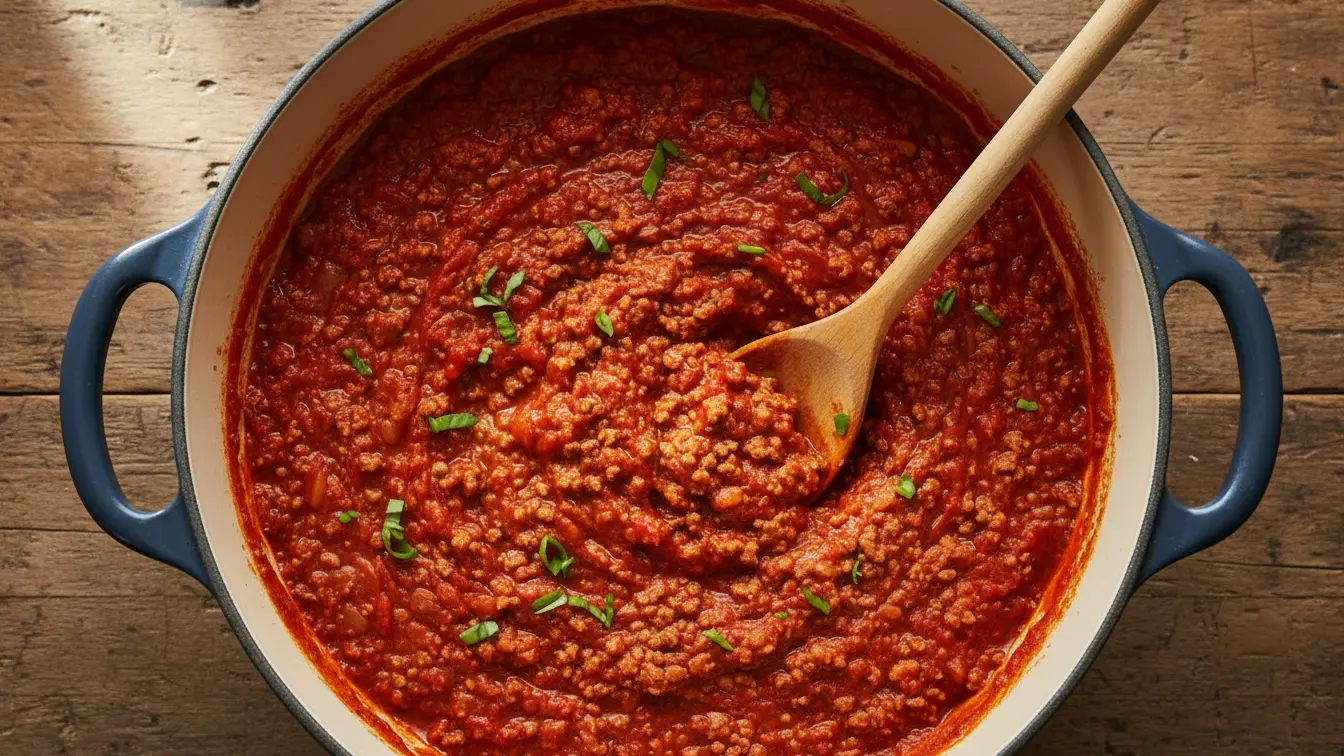
Homemade Spaghetti Sauce
Ingredients
- 2 tablespoons olive oil - 30 ml
- 1 medium yellow onion - about 1 cup or 150g, finely diced
- 6 cloves garlic - about 2 tablespoons, minced
- 2 cans crushed tomatoes - 28 oz or 794g each, preferably San Marzano
- 1 can tomato paste - 6 oz or 170g
- 1/2 cup dry red wine - 120 ml, optional but recommended
- 1 tablespoon sugar or honey - 12g sugar or 21g honey
- 2 teaspoons dried basil - 2g
- 2 teaspoons dried oregano - 2g
- 1 teaspoon dried thyme - 1g
- 1/2 teaspoon red pepper flakes - 1g, or to taste
- 2 bay leaves
- salt and black pepper - to taste
- 1/4 cup fresh basil leaves - 10g, chopped
- 2 tablespoons fresh parsley - 8g, chopped
- 1 pound Italian sausage - 450g, removed from casings
- 1/2 pound ground beef - 225g
- 1/4 cup heavy cream - 60 ml, for a creamier sauce
- 2 tablespoons balsamic vinegar - 30 ml, for added depth
Equipment
- Large heavy-bottomed pot or Dutch oven - at least 5-6 quarts/4.7-5.7 liters
- Immersion blender - optional, for smoother sauce
Method
- Dice the onion into small uniform pieces (about 1/4 inch), mince the garlic finely, chop the fresh herbs, and open all canned tomatoes.
- Heat olive oil in large pot over medium heat until shimmering. Add diced onion and cook 5-7 minutes until translucent, then add garlic and cook 1 minute until fragrant.
- Stir in tomato paste and cook 2-3 minutes until darkened. Pour in wine, scrape bottom of pot, and simmer 2-3 minutes until reduced by half. Add crushed tomatoes and 1/3 can of water.
- Add dried basil, oregano, thyme, red pepper flakes, bay leaves, sugar, 1 teaspoon salt, and 1/2 teaspoon black pepper. Stir thoroughly and taste.
- Bring to gentle boil, then reduce to low heat. Partially cover and simmer 30-45 minutes, stirring every 10 minutes. Add water if too thick, or simmer uncovered if too thin.
- Remove bay leaves, taste and adjust seasoning. Stir in fresh basil and parsley, simmer 5 more minutes. Use immersion blender for smoother texture if desired, and add cream if using.
- Ladle hot sauce over cooked pasta, adding reserved pasta water to thin if needed. Garnish with Parmesan and fresh basil, or let cool completely before storing.
Nutrition
Notes
- San Marzano tomatoes are worth the investment – they’re naturally sweeter and less acidic than regular canned tomatoes
- Don’t skip the sugar; it balances acidity and brings out natural tomato sweetness without making the sauce taste sweet
- Low and slow is key – give the sauce at least 30 minutes of simmering for flavors to meld properly
- Add 1/4 to 1/2 cup of starchy pasta cooking water when tossing with pasta to help sauce cling to noodles
- Brown the tomato paste until it darkens to remove the tinny taste and add depth to the sauce
- Store in airtight containers in refrigerator for up to 5 days, or freeze for up to 3 months
- Freeze in portion-sized containers or flat in zip-top bags for easy stacking and faster thawing
- Make a double batch – this sauce freezes beautifully and is perfect for quick weeknight meals
- For meat sauce, brown 1 pound of Italian sausage or ground beef before adding the onions
- Let finished sauce rest 15-20 minutes off heat before serving to allow flavors to settle
Private Notes
Tried this recipe?
Let us know how it was!Final Thoughts
Making your own spaghetti sauce from scratch is one of those kitchen skills that pays dividends for years to come. Once you taste the difference between this homemade version and store-bought sauce, there’s no going back.
The beauty of this recipe is its flexibility. You can make it exactly as written for a classic, crowd-pleasing sauce, or use it as a starting point for your own signature version. I encourage you to experiment with different herbs, add-ins, and seasonings until you find your perfect combination.
Give this recipe a try this week and let me know how it turns out! I’d love to hear about any variations you come up with or how your family enjoys it. Drop a comment below with your thoughts, and don’t forget to share this recipe with anyone who could use a great homemade sauce in their life.
Recommended:
- Lasagna Soup Recipe
- Chicken Parmesan Recipe
- Pasta Fagioli Recipe
- Zuppa Toscana Recipe
- Italian Wedding Soup Recipe
- Authentic Italian Tiramisu Recipe
- Chicken Gnocchi Soup Recipe
- Meatloaf Recipe
- Sloppy Joe Recipe
- Butternut Squash Gnocchi Recipe