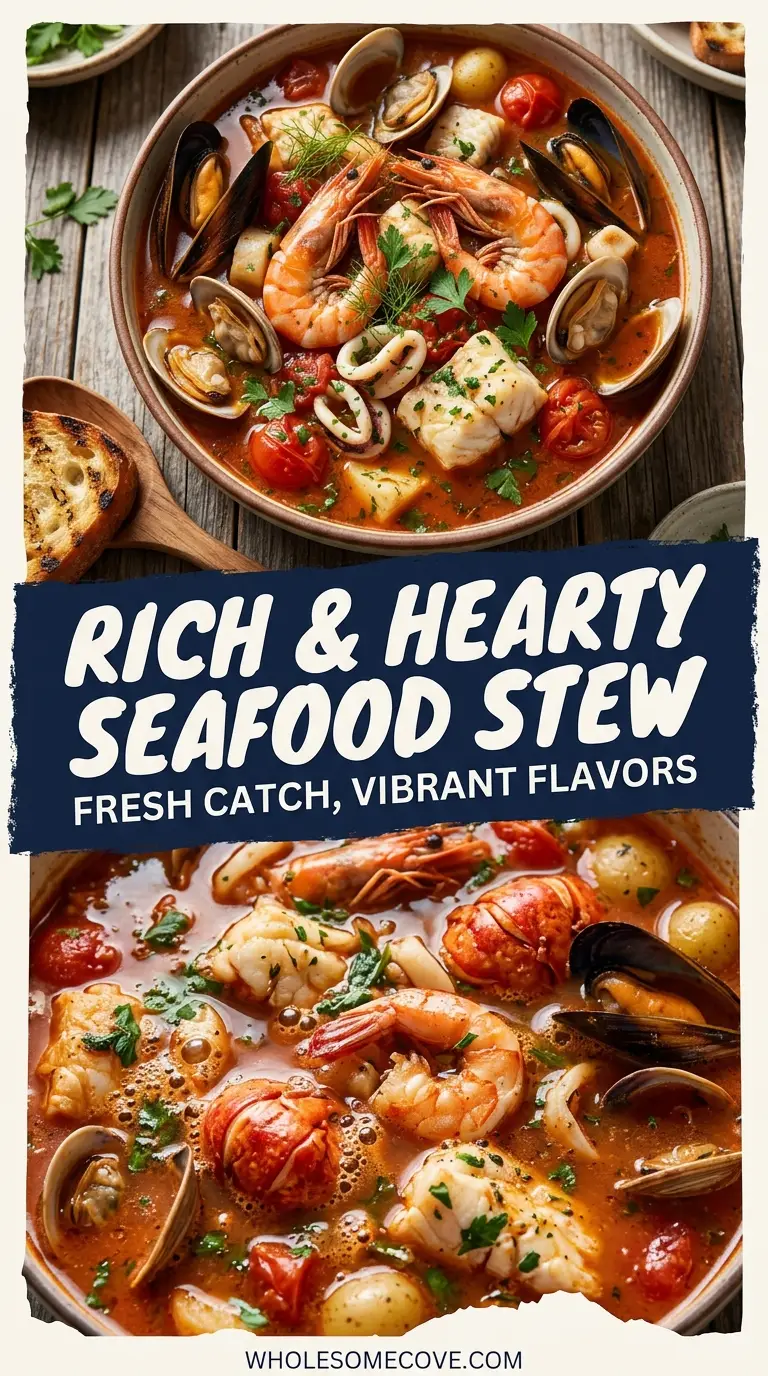
This seafood stew recipe is the San Francisco classic known as cioppino, a tomato and white wine broth loaded with clams, mussels, shrimp, scallops, and firm white fish. The broth turns deep and briny after just 25 minutes of simmering, and the whole thing comes together in one pot in about an hour.
Most home versions go wrong in one spot: everything gets dumped in at once, so the shrimp turn rubbery while the clams are still shut. The fix is adding each type of seafood in stages, so nothing overcooks.
Fennel and a splash of dry white wine are what separate a flat tomato base from one that actually tastes like the coast. You get five kinds of seafood in a single pot, ready for crusty sourdough to soak up every last spoonful.
| Quick Recipe Summary | |
|---|---|
| Prep Time | 20 minutes |
| Cook Time | 40 minutes |
| Total Time | 60 minutes |
| Servings | 6 servings |
| Difficulty Level | Intermediate |
For another cozy bowl in the same family, see Seafood Chowder.
Why You’ll Love This Seafood Stew Recipe
This is the kind of meal that looks like it came from a waterfront restaurant but only dirties one pot. The broth does most of the heavy lifting, and the seafood needs just ten minutes at the end.
Here is why it earns a spot in your rotation:
- One pot, one hour. The tomato base simmers while you prep the seafood, so active time stays low.
- Five kinds of seafood. Clams, mussels, shrimp, scallops, and white fish give you a mix of textures in every bowl.
- Fully adaptable. Cioppino was born from whatever fishermen had left over, so you can swap in crab, calamari, or salmon based on what looks freshest.
- Make-ahead friendly. The broth can be built a day or two in advance, which turns dinner into a ten-minute job.
- Naturally gluten-free. Nothing in the pot needs flour, so it suits most diets when served with the right bread on the side.
- A showpiece for guests. Bringing the whole pot to the table, shells and all, always gets a reaction.
Read Also: New England Clam Chowder
Ingredients
The seafood is the star, but the broth is where the flavor lives. Buy the freshest shellfish you can find, and let your fishmonger know what you are making so they can point you to what came in that day.
For the broth:
- 1/4 cup (60 ml) extra-virgin olive oil
- 1 large fennel bulb, cored and thinly sliced, fronds reserved for garnish
- 1 medium yellow onion, finely chopped
- 1 celery stalk, finely chopped
- 4 cloves garlic, thinly sliced
- 1 teaspoon red pepper flakes
- 3 tablespoons tomato paste
- 1 cup (240 ml) dry white wine, such as sauvignon blanc or pinot grigio
- 1 can (28 oz / 800 g) crushed tomatoes
- 3 cups (720 ml) seafood stock or fish stock
- 1 cup (240 ml) clam juice
- 1 bay leaf
- 1 teaspoon dried oregano
- 1/2 teaspoon salt, plus more to taste
- 1/2 teaspoon freshly ground black pepper
For the seafood:
- 1 lb (450 g) littleneck clams, scrubbed
- 1 lb (450 g) mussels, scrubbed and debearded
- 1 lb (450 g) firm white fish such as cod or halibut, cut into 1.5-inch (4 cm) pieces
- 3/4 lb (340 g) large shrimp, peeled and deveined
- 3/4 lb (340 g) sea scallops, side muscle removed
To serve:
- 1/4 cup (15 g) fresh parsley, chopped
- 1 lemon, cut into wedges
- Crusty sourdough bread
You might also enjoy: Same Day Sourdough Bread
Kitchen Equipment Needed
You do not need anything specialized here, but a wide, heavy pot makes a real difference. It gives the seafood room to cook in a single layer instead of piling up.
- A large Dutch oven or heavy stockpot, at least 7 quarts
- A sharp chef’s knife
- A wooden spoon for stirring the base
- A fine mesh strainer for rinsing shellfish
- A ladle for serving
- Large serving bowls, the wider and shallower the better
- A cutting board
For a different one-pot seafood dish, see Fish Chowder.
Recommended Products for This Recipe
These are the tools and ingredients I reach for every time I make this stew. Each one solves a specific problem I ran into along the way.
1. Enameled Cast Iron Dutch Oven
A thin pot scorches the tomato paste before it has a chance to caramelize, which leaves the broth tasting raw. A heavy enameled Dutch oven holds steady heat so the base builds slowly and evenly, and it is wide enough to lay the fish and scallops flat.
2. San Marzano Crushed Tomatoes
I tested this stew with three different canned tomatoes and the San Marzano style won every time. They are less acidic and naturally sweeter, so the broth needs far less adjusting at the end.
3. Bottled Clam Juice
Clam juice is the shortcut to a broth that actually tastes like the sea when you cannot find good fresh seafood stock. A single bottle deepens the whole pot, and it keeps in the pantry for whenever the craving hits.
4. Seafood Stock
Store-bought seafood stock gives you a briny backbone without simmering shells for an hour. I keep a couple of cartons on hand specifically so this stew can happen on a weeknight.
5. Wide Shallow Serving Bowls
Deep bowls bury the shells and make the clams hard to reach. Wide, shallow bowls show off all that seafood and give you room to pile the empty shells on the rim as you go.
Read Also: Oyster Stew
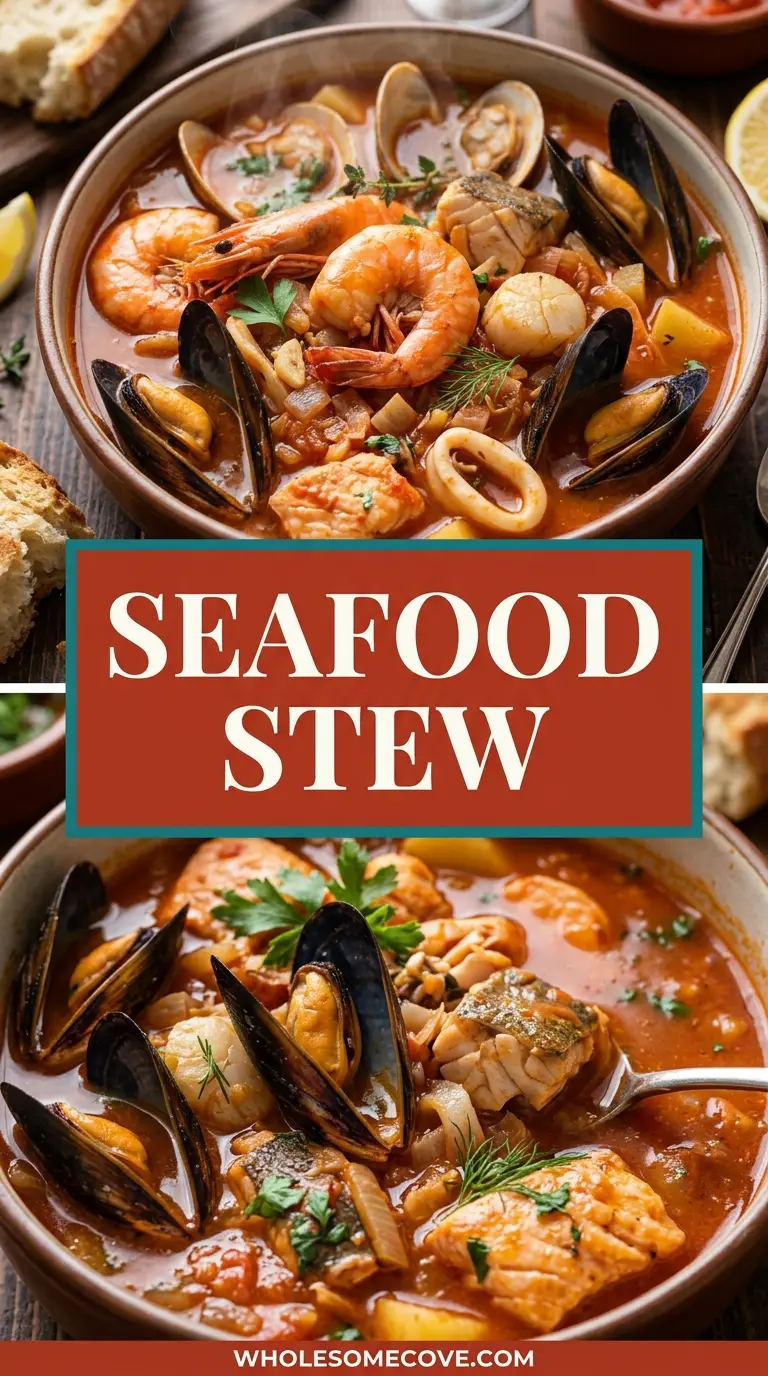
Step-by-Step Instructions: How to Make Seafood Stew
Follow these steps and you’ll have a restaurant-worthy pot of seafood stew ready in about an hour.
Step 1: Prep and Clean the Shellfish
- Scrub the clams and mussels under cold running water to remove any grit from the shells.
- Pull the beards off the mussels by tugging them toward the hinge, then discard any beards.
- Tap any open clams or mussels against the counter. If they do not close within a minute, throw them out.
- Soak the clams in a bowl of cold water for 20 minutes so they spit out any sand, then rinse and set aside.
- Pat the fish, shrimp, and scallops dry, and keep everything cold in the fridge until you are ready to add it.
Step 2: Build the Aromatic Base
- Heat the olive oil in a large Dutch oven over medium heat until it shimmers.
- Add the sliced fennel, onion, and celery, and cook for 8 to 10 minutes, stirring now and then, until soft and translucent.
- Add the sliced garlic and red pepper flakes, and cook for 1 minute until fragrant. Do not let the garlic brown, since it turns bitter.
- Stir in the tomato paste and cook for 1 to 2 minutes, until it deepens in color. This step is what gives the broth its rich, roasted backbone.
Step 3: Deglaze and Simmer the Broth
- Pour in the white wine and scrape up any browned bits stuck to the bottom of the pot.
- Let the wine simmer for 3 to 4 minutes, until it reduces by about half.
- Add the crushed tomatoes, seafood stock, clam juice, bay leaf, oregano, salt, and black pepper.
- Bring the broth to a gentle boil, then lower the heat and simmer uncovered for 25 minutes so the flavors blend and the broth thickens slightly.
- Taste and adjust the salt and pepper. The broth should taste bold on its own, since the seafood will mellow it.
Step 4: Add the Clams and Mussels
- Increase the heat to bring the broth to a steady simmer.
- Add the clams first, cover the pot, and cook for 3 minutes.
- Add the mussels, cover again, and cook for another 2 to 3 minutes, until the shells start to open.
- Discard any clams or mussels that stay tightly shut after cooking.
Step 5: Add the Fish, Shrimp, and Scallops
- Nestle the fish pieces into the broth, spacing them out so they cook evenly.
- Add the shrimp and scallops around the fish.
- Cover the pot and cook for 5 minutes, until the fish flakes, the shrimp turn pink, and the scallops are opaque.
- Do not stir hard, or the fish will fall apart. Gently shake the pot instead to settle everything into the broth.
Step 6: Finish and Serve
- Remove and discard the bay leaf.
- Taste the broth one last time and adjust the seasoning if needed.
- Ladle the stew into wide bowls, giving each one a mix of every kind of seafood.
- Scatter chopped parsley and reserved fennel fronds over the top, and add a lemon wedge to each bowl.
- Serve right away with plenty of crusty sourdough on the side.
For a heartier cold-weather bowl, see Beef Stew.
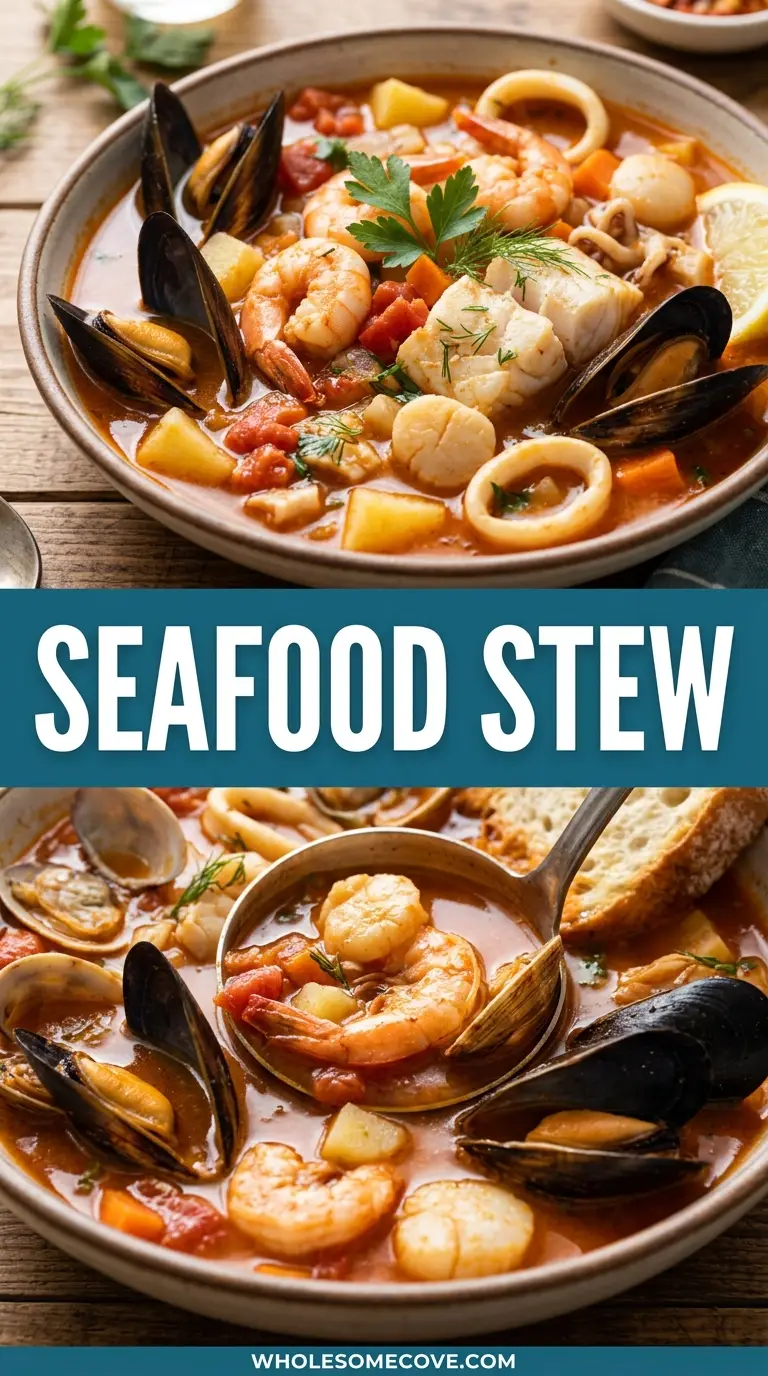
Tips for The Best Seafood Stew
Great cioppino comes down to timing and freshness more than any single ingredient. These are the details that consistently make the difference.
- Buy the freshest seafood you can. It should smell clean and briny like the ocean, never fishy. Fresh seafood is what makes or breaks this dish.
- Add the seafood in stages. Clams and mussels need the most time, fish and shrimp the least. Dumping it all in at once guarantees something overcooks.
- Do not overcook the shellfish. The first batch I made turned rubbery because I let the pot simmer a full extra ten minutes after the shrimp went in. Pull the pot the moment the shrimp are pink.
- Salt the broth before the seafood goes in. The clams and mussels release briny liquid, so season the base to taste first, then adjust lightly at the end.
- Do not skip the fennel. I once made a batch with just onion and the broth tasted flat by comparison. The fennel adds a gentle sweetness that plain onion cannot.
- Choose a wine you would drink. A dry white you enjoy sipping works far better than anything labeled “cooking wine,” which tends to be oversalted.
- Cut the fish into even chunks. Pieces around 1.5 inches hold their shape and cook at the same rate as the shrimp.
You might also enjoy: Manhattan Clam Chowder
What to Serve with Seafood Stew
Seafood stew is a full meal on its own, but the right sides turn it into a spread worth lingering over. The broth is the main event, so most pairings exist to soak it up or balance its richness.
Here are the pairings I come back to most:
- Crusty sourdough bread. The classic partner. You need something sturdy to mop up every drop of broth, and a good loaf is worth the effort.
- Garlic bread. For a bolder, buttery option that stands up to the tomato broth.
- A crisp green salad. Something light with a lemony vinaigrette cuts through the richness of the stew.
- Roasted asparagus. A simple green side that does not compete with the seafood.
- Corn on the Cob. Sweet corn is a natural match for briny shellfish, especially in late summer.
- Broccoli Salad. A crunchy, make-ahead side that balances the soft textures in the bowl.
- Mediterranean Quinoa Salad. A heartier grain salad if you want to stretch the meal further.
- A dry white wine. Pour the same bottle you cooked with, or a crisp sauvignon blanc.
- Lemon wedges. A last squeeze of acid at the table brightens the whole bowl.
Read Also: Lobster Rolls
Variations of Seafood Stew
The beauty of cioppino is that it was never meant to be rigid. Fishermen built it from whatever the day gave them, so you should feel free to make it your own.
- Crab cioppino. Add split Dungeness crab legs along with the clams for the most traditional San Francisco version.
- Lobster stew. Nestle in lobster tails first and simmer for 2 minutes before the other seafood for a special-occasion upgrade.
- Add calamari. Stir in sliced squid rings during the last 2 minutes so they stay tender instead of turning chewy.
- Salmon version. Swap the white fish for salmon chunks if you like a richer, more pronounced fish flavor.
- Spicier broth. Double the red pepper flakes or add a pinch of cayenne for real heat.
- Non-alcoholic. Replace the wine with extra seafood stock plus a splash of white wine vinegar for brightness.
- Brothier soup. Add another cup of stock if you prefer more liquid to spoon up with bread.
- Extra vegetables. Stir in diced carrots or a green bell pepper with the aromatics for more body.
For another seafood twist, see Salmon Chowder.
Storage and Reheating
Seafood is best eaten fresh, but leftovers keep well for a short window if you handle them right. The key is treating the shellfish gently so it does not turn tough on the second day.
- Refrigerate: Store leftovers in an airtight container for up to 2 days. Remove the clams and mussels from their shells before storing to save space.
- Make ahead: The broth can be made 1 to 2 days in advance and kept in the fridge. Reheat it to a simmer, then add the fresh seafood just before serving.
- Freezing the broth: The tomato base alone freezes well for up to 3 months. Freeze it before any seafood has been added, then thaw and add fresh seafood when you cook.
- Do not freeze with seafood: Cooked shellfish turns rubbery and watery once frozen and thawed, so freeze the broth only.
- Reheat gently: Warm leftovers on the stove over low heat just until hot. High heat overcooks the seafood a second time and toughens it.
- Avoid the microwave: It heats unevenly and tends to make shrimp and scallops rubbery.
Read Also: Shrimp Chowder
Nutritional Facts
The values below are estimates per serving, based on six servings and not including bread served on the side.
| Nutrient | Amount Per Serving |
|---|---|
| Calories | 410 kcal |
| Protein | 48 g |
| Carbohydrates | 18 g |
| Fat | 13 g |
| Saturated Fat | 2 g |
| Fiber | 4 g |
| Sugar | 8 g |
| Cholesterol | 215 mg |
| Sodium | 1450 mg |
For a lighter tomato-based bowl, see Tomato Soup.
Health Benefits of Key Ingredients
Beyond tasting like a coastal vacation, this stew is genuinely good for you. The mix of seafood and vegetables delivers lean protein and a wide range of nutrients in a single bowl.
- White fish (cod, halibut): A lean source of protein that is low in fat and rich in B vitamins, which support energy and nerve function.
- Shrimp: High in protein and selenium, an antioxidant mineral, while staying very low in calories.
- Clams and mussels: Among the best food sources of vitamin B12 and iron, which support red blood cell production.
- Scallops: Provide protein and magnesium with almost no saturated fat.
- Tomatoes: Rich in lycopene, an antioxidant linked to heart health, which becomes more available to the body when tomatoes are cooked.
- Fennel: Offers fiber and vitamin C, plus compounds that may aid digestion.
- Garlic: Contains allicin, a compound studied for its immune-supporting and anti-inflammatory properties.
- Olive oil: Supplies heart-healthy monounsaturated fats that help the body absorb the fat-soluble nutrients in the dish.
For another nutrient-dense seafood option, see Salmon Patties.
FAQs About Seafood Stew
1. What is the difference between cioppino and bouillabaisse?
Both are seafood stews, but they come from different places and taste distinct. Cioppino is Italian-American from San Francisco with a tomato and wine base.
Bouillabaisse is French from Provence and is built on a fish broth with saffron and a smaller amount of tomato. Cioppino leans richer and tangier, while bouillabaisse is more aromatic and delicate.
2. What seafood is best for seafood stew?
A mix of textures is what makes the dish work. Clams, mussels, shrimp, scallops, and firm white fish like cod or halibut are the classic combination.
The real rule is freshness over any specific type. Use whatever looks best at the market, since cioppino was designed to adapt to the day’s catch.
3. Can I make seafood stew ahead of time?
You can and should make the broth ahead, but not the seafood. The tomato base actually improves after a day in the fridge as the flavors settle.
Add the fresh seafood only when you are ready to serve. It cooks in about ten minutes, so there is no benefit to cooking it early.
4. How do I know when the seafood is done?
Each type gives you a clear visual cue. Clams and mussels open their shells, shrimp turn pink and curl, and scallops and fish turn opaque.
Pull the pot from the heat the moment these signs appear. Overcooked seafood turns rubbery fast, so err on the side of slightly underdone.
5. Why won’t my clams or mussels open?
Shellfish that stay shut after cooking were likely dead before they went in the pot. Always discard any that do not open, since they are not safe to eat.
You can avoid this by tapping each one before cooking. If an open shell does not close when tapped, throw it out beforehand.
6. Can I use frozen seafood?
Yes, frozen seafood works well and is often flash-frozen at peak freshness. Thaw it completely in the fridge and pat it very dry before adding it to the pot.
Excess water from frozen seafood can dilute the broth. Draining and drying it thoroughly keeps the flavor concentrated.
For another comforting bowl, see French Onion Soup.
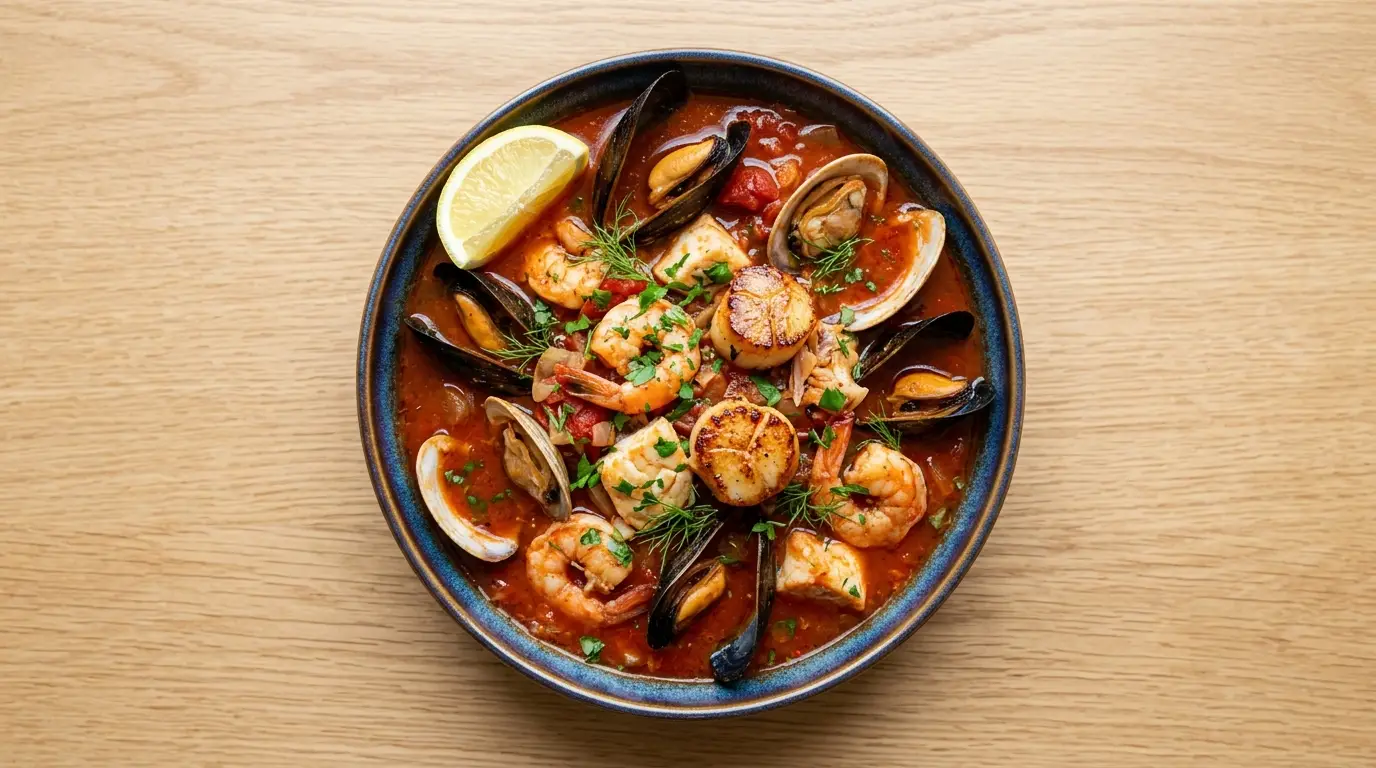
Seafood Stew
Ingredients
- 1/4 cup extra-virgin olive oil - 60 ml
- 1 large fennel bulb - cored and thinly sliced, fronds reserved for garnish
- 1 medium yellow onion - finely chopped
- 1 stalk celery - finely chopped
- 4 cloves garlic - thinly sliced
- 1 teaspoon red pepper flakes
- 3 tablespoons tomato paste
- 1 cup dry white wine - 240 ml, such as sauvignon blanc or pinot grigio
- 1 can crushed tomatoes - 28 oz / 800 g
- 3 cups seafood stock - 720 ml, or fish stock
- 1 cup clam juice - 240 ml
- 1 bay leaf
- 1 teaspoon dried oregano
- 1/2 teaspoon salt - plus more to taste
- 1/2 teaspoon freshly ground black pepper
- 1 lb littleneck clams - 450 g, scrubbed
- 1 lb mussels - 450 g, scrubbed and debearded
- 1 lb firm white fish - 450 g, such as cod or halibut, cut into 1.5-inch (4 cm) pieces
- 3/4 lb large shrimp - 340 g, peeled and deveined
- 3/4 lb sea scallops - 340 g, side muscle removed
- 1/4 cup fresh parsley - 15 g, chopped
- 1 lemon - cut into wedges
- crusty sourdough bread - for serving
Equipment
- Large Dutch oven or heavy stockpot - at least 7 quarts
- Wooden spoon - for stirring the base
- Fine-mesh strainer - for rinsing shellfish
- Ladle - for serving
- Large serving bowls - wide and shallow preferred
Method
- Scrub the clams and mussels under cold running water to remove any grit from the shells.
- Pull the beards off the mussels by tugging them toward the hinge, then discard any beards.
- Tap any open clams or mussels against the counter. If they do not close within a minute, throw them out.
- Soak the clams in a bowl of cold water for 20 minutes so they spit out any sand, then rinse and set aside.
- Pat the fish, shrimp, and scallops dry, and keep everything cold in the fridge until you are ready to add it.
- Heat the olive oil in a large Dutch oven over medium heat until it shimmers.
- Add the sliced fennel, onion, and celery, and cook for 8 to 10 minutes, stirring now and then, until soft and translucent.
- Add the sliced garlic and red pepper flakes, and cook for 1 minute until fragrant. Do not let the garlic brown, since it turns bitter.
- Stir in the tomato paste and cook for 1 to 2 minutes, until it deepens in color. This step is what gives the broth its rich, roasted backbone.
- Pour in the white wine and scrape up any browned bits stuck to the bottom of the pot.
- Let the wine simmer for 3 to 4 minutes, until it reduces by about half.
- Add the crushed tomatoes, seafood stock, clam juice, bay leaf, oregano, salt, and black pepper.
- Bring the broth to a gentle boil, then lower the heat and simmer uncovered for 25 minutes so the flavors blend and the broth thickens slightly.
- Taste and adjust the salt and pepper. The broth should taste bold on its own, since the seafood will mellow it.
- Increase the heat to bring the broth to a steady simmer.
- Add the clams first, cover the pot, and cook for 3 minutes.
- Add the mussels, cover again, and cook for another 2 to 3 minutes, until the shells start to open.
- Discard any clams or mussels that stay tightly shut after cooking.
- Nestle the fish pieces into the broth, spacing them out so they cook evenly.
- Add the shrimp and scallops around the fish.
- Cover the pot and cook for 5 minutes, until the fish flakes, the shrimp turn pink, and the scallops are opaque.
- Do not stir hard, or the fish will fall apart. Gently shake the pot instead to settle everything into the broth.
- Remove and discard the bay leaf.
- Taste the broth one last time and adjust the seasoning if needed.
- Ladle the stew into wide bowls, giving each one a mix of every kind of seafood.
- Scatter chopped parsley and reserved fennel fronds over the top, and add a lemon wedge to each bowl.
- Serve right away with plenty of crusty sourdough on the side.
Nutrition
Notes
- Buy the freshest seafood you can. It should smell clean and briny like the ocean, never fishy.
- Add the seafood in stages. Clams and mussels need the most time, fish and shrimp the least.
- Do not overcook the shellfish. Pull the pot the moment the shrimp are pink.
- Salt the broth before the seafood goes in. The clams and mussels release briny liquid, so season the base to taste first, then adjust lightly at the end.
- Do not skip the fennel. It adds a gentle sweetness that plain onion cannot.
- Choose a dry white wine you would drink. Avoid anything labeled “cooking wine,” which tends to be oversalted.
- Cut the fish into even 1.5-inch chunks so they hold their shape and cook at the same rate as the shrimp.
- Make the broth 1 to 2 days ahead and refrigerate. Reheat to a simmer, then add fresh seafood just before serving.
- The tomato base alone freezes well for up to 3 months. Freeze before adding any seafood.
- Store leftovers in an airtight container for up to 2 days. Remove clams and mussels from their shells before storing. Reheat gently on the stove over low heat; avoid the microwave.
Private Notes
Tried this recipe?
Let us know how it was!Final Thoughts
This seafood stew looks impressive enough for a celebration but comes together in one pot on an ordinary weeknight. Once you learn to add the seafood in stages, it becomes almost foolproof.
Grab the freshest shellfish you can find and a good loaf of sourdough, and you are most of the way there. The broth forgives a lot, and the payoff is a bowl that tastes like the coast.
If you make this recipe, I would love to hear how it turned out. Leave a comment below and share it with a fellow seafood lover.
Recommended:
- Fish Chowder
- Seafood Chowder
- Irish Stew
- Lamb Stew
- Roasted Tomato Soup
- Lobster Rolls
- Salmon Croquettes Soul Food
- Garlic Parmesan Sauce
- Chicken Stew