
The single thing that makes or breaks this kimchi stew recipe is the age of your kimchi. Fresh, crisp kimchi will leave you with a thin, bland pot, while overripe and sour kimchi is what gives the broth its deep, tangy backbone.
That funky, almost pickled aroma that fills the kitchen as the kimchi hits the hot oil is the sign you’re on the right track. It smells sharp and savory before a single cup of stock goes in.
This is the classic pork belly and tofu version, the one served bubbling in a stone pot across Korea. It comes together in about 35 minutes with roughly ten ingredients, most of which live in a Korean pantry year round.
The pork fat melts slowly into the broth as it simmers, and that richness is what balances the acidity of the kimchi. Skip the fat and you lose the whole point of the dish.
| Quick Recipe Summary | |
|---|---|
| Prep Time | 10 minutes |
| Cook Time | 25 minutes |
| Total Time | 35 minutes |
| Servings | 3 servings |
| Difficulty Level | Easy |
For another cozy bowl in this style, a related recipe is Seafood Stew.

Why You’ll Love This Kimchi Stew Recipe
This is weeknight cooking that tastes like it took all day. One pot, about 35 minutes, and a short ingredient list stand between you and a deeply savory dinner.
Here is what makes it worth adding to your rotation:
- It uses up sour kimchi. When your kimchi has passed the point of a fresh side dish, this stew is exactly where it belongs. The older and tangier it gets, the better the broth tastes.
- The broth does the heavy lifting. Anchovy stock plus kimchi brine builds a savory, layered base without a long list of seasonings.
- It’s genuinely fast. With store bought kimchi and quick anchovy stock, you can have it simmering in under 15 minutes of active work.
- Pork belly makes it rich. The rendered fat gives the stew body and a silky mouthfeel that leaner cuts can’t match.
- It reheats beautifully. Like most stews, the flavor deepens overnight, so leftovers are arguably better than the first bowl.
- It’s easy to adapt. Swap the pork for canned tuna, spam, or extra tofu and mushrooms, and it still works.
Read Also: Cowboy Stew
Ingredients
The star here is well fermented, sour napa cabbage kimchi, so start with that and build around it. Everything else supports the kimchi rather than competing with it.
Here is what you’ll need for 3 servings:
- 8 oz (225 g) sour, well fermented napa cabbage kimchi, cut into bite sized pieces, plus ¼ cup (60 ml) of the kimchi brine from the jar
- 8 oz (225 g) skinless pork belly, sliced into thin bite sized pieces
- 1 tablespoon toasted sesame oil
- ½ medium yellow onion, thinly sliced
- 3 cloves garlic, minced
- 1 tablespoon gochugaru (Korean red pepper flakes), adjust to taste
- 1 teaspoon gochujang (Korean chili paste)
- 1 teaspoon doenjang (Korean fermented soybean paste), optional but recommended
- 2 cups (480 ml) anchovy stock (or water in a pinch)
- 1 teaspoon Korean soup soy sauce (guk ganjang) or regular soy sauce
- 1 teaspoon sugar, to balance the sourness
- 14 oz (400 g) block firm tofu, sliced into ½ inch (1 cm) thick pieces
- 2 green onions, sliced, whites and greens separated
For a make it simple option, dissolvable anchovy stock tablets work well when you don’t have time to simmer stock from scratch.
For a lighter take, you might also enjoy: Oyster Stew
Kitchen Equipment Needed
You don’t need specialty gear for this one. A single heavy pot does most of the work, though a traditional Korean stone pot makes for a dramatic tableside presentation.
Here is the short list:
- A heavy bottomed pot or Dutch oven (2 to 3 quart capacity) or a Korean earthenware pot (ttukbaegi)
- A sharp chef’s knife for slicing pork, tofu, and vegetables
- A cutting board
- A wooden spoon or spatula for stir frying the kimchi and pork
- A fine mesh strainer if you’re making anchovy stock from scratch
- Measuring spoons and cups
A related recipe is Lamb Stew.
Recommended Products for This Recipe
These are the items I keep reaching for when I make this stew. Each one solved a specific problem I ran into, so I’m passing them along.
1. Ttukbaegi Korean Earthenware Pot
A regular saucepan cools the moment it leaves the stove, but this clay pot holds heat so the stew keeps bubbling at the table for several minutes. It also lets you go from stovetop to serving without dirtying a second dish.
2. Gochugaru (Korean Red Pepper Flakes)
Generic chili flakes turn the broth muddy and harsh, which is why the first few times I subbed them the stew tasted one note. Real gochugaru gives a clean, fruity heat and that signature red color without overwhelming the kimchi.
3. Dried Anchovies for Stock
Water alone leaves the broth flat, and I could never figure out why my early batches lacked depth until I switched to a proper anchovy stock. A handful of these simmered with kelp builds the savory base that carries the whole dish.
4. Doenjang (Korean Fermented Soybean Paste)
A spoonful of this rounds out the sharpness of very sour kimchi and adds a savory floor the broth otherwise misses. It’s the ingredient that made my stew taste closer to what I’d get at a Korean restaurant.
5. Korean Soup Soy Sauce (Guk Ganjang)
Regular soy sauce darkens the broth more than you want, while this lighter, saltier soup soy sauce seasons without muddying the color. A single teaspoon sharpens all the other flavors.
You’ll find more inspiration in Irish Stew.
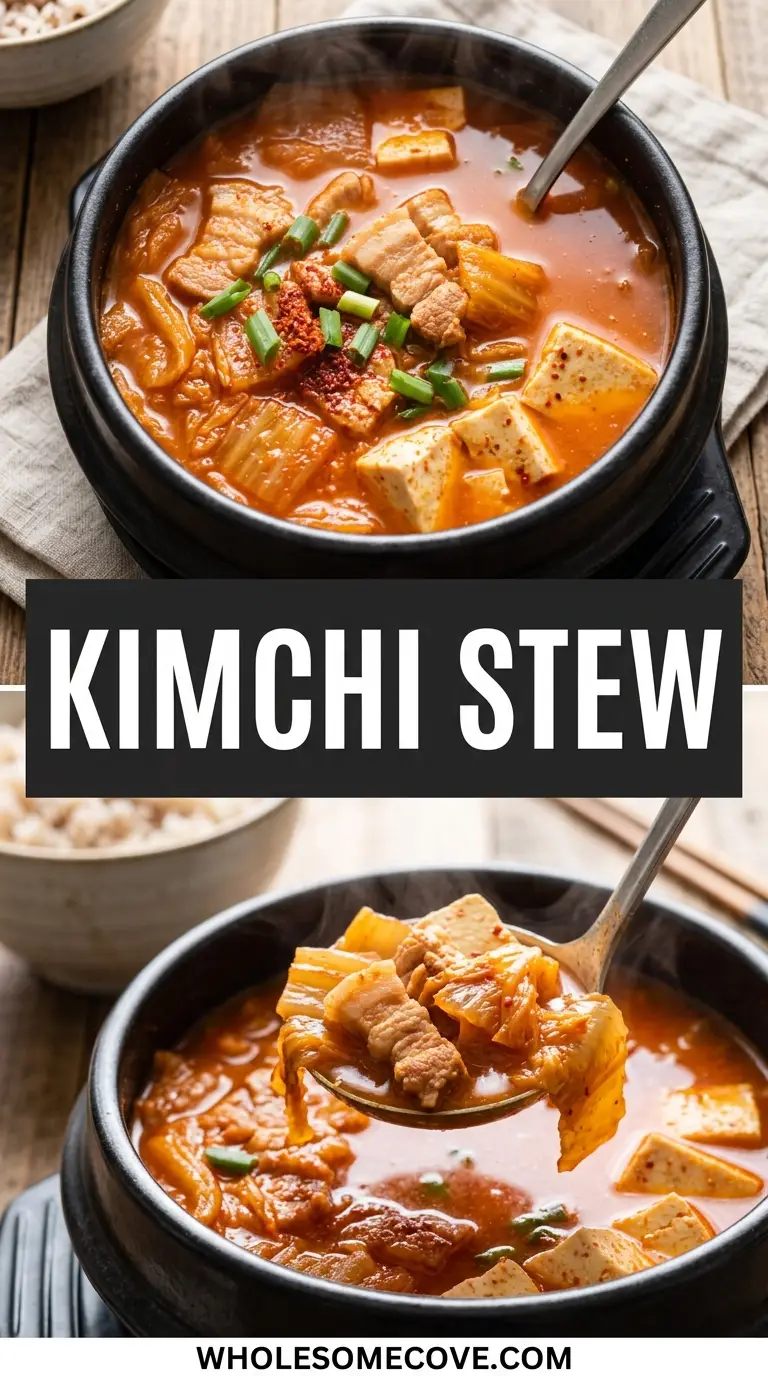
Step-by-Step Instructions: How to Make Kimchi Stew
Follow these steps and you’ll have a rich, bubbling kimchi stew ready in about half an hour.
1. Prep All Your Ingredients
- Slice the pork belly into thin, bite sized pieces so it cooks quickly and renders its fat evenly.
- Cut the sour kimchi into bite sized pieces and set it aside along with ¼ cup (60 ml) of the brine from the jar.
- Slice the tofu into ½ inch (1 cm) thick pieces, thinly slice the onion, mince the garlic, and separate the green onion whites from the greens.
2. Render the Pork
- Set your pot over medium high heat and add 1 tablespoon toasted sesame oil.
- Add the sliced pork belly and cook, stirring, for 4 to 5 minutes until the fat starts to render and the edges brown.
- This step builds the savory, fatty base that the rest of the stew relies on, so don’t rush it.
3. Stir Fry the Kimchi
- Add the chopped kimchi, sliced onion, and green onion whites to the pot with the pork.
- Stir fry everything together for about 5 minutes, until the kimchi softens and takes on a slightly caramelized edge.
- Cooking the kimchi at this stage deepens its flavor and takes the raw bite off the onion.
4. Bloom the Seasonings
- Push the pork and kimchi to one side and add the minced garlic, gochugaru, gochujang, and doenjang to the pot.
- Stir the pastes and spices in the oil for about 1 minute until fragrant, then mix everything together.
- Blooming the spices this way releases their color and aroma into the fat before any liquid goes in.
5. Add the Liquid and Simmer
- Pour in 2 cups (480 ml) anchovy stock and the ¼ cup (60 ml) kimchi brine you set aside.
- Stir in the soup soy sauce and sugar, then bring the pot to a boil.
- Reduce the heat to a steady simmer and cook uncovered for 15 minutes so the flavors meld and the broth reduces slightly.
6. Add the Tofu
- Gently lay the sliced tofu into the simmering broth, nestling the pieces so they’re mostly submerged.
- Simmer for another 5 minutes to heat the tofu through without breaking it apart.
- Taste the broth and adjust with a pinch more sugar if it’s too sour, or a splash more soy sauce if it needs salt.
7. Finish and Serve
- Scatter the green onion greens over the top and turn off the heat.
- Serve the stew piping hot straight from the pot with a bowl of steamed white rice on the side.
- Let it sit for a minute before diving in, since the broth stays scorching hot for a while.
A similar approach works in Venison Stew.

Tips for The Best Kimchi Stew
Small choices make a big difference in a dish this simple. These are the details that separate a flat pot from a restaurant worthy one.
Keep these in mind:
- Use the sourest kimchi you have. Well fermented, tangy kimchi is the number one factor in a flavorful stew. Fresh kimchi will taste bland here.
- Don’t drain the kimchi brine. That funky, acidic juice is packed with flavor, so add it to the pot rather than rinsing it away.
- Render the pork properly. I used to add the stock too early, before the pork fat had rendered, and the broth always turned out thin. Letting the fat melt out first fixed it completely.
- Balance the sour with sugar. A teaspoon of sugar tames aggressive acidity without making the stew taste sweet.
- Choose fatty pork. Pork belly beats leaner cuts because the melted fat gives the broth its signature richness.
- Simmer, don’t boil hard. A gentle simmer melds the flavors, while a violent boil can make the pork tough and break up the tofu.
- Add tofu last. Tofu only needs a few minutes to heat through, and adding it early risks it falling apart.
For a different approach, see Chicken Stew.
What to Serve with Kimchi Stew
Kimchi stew is built to be shared with rice and a spread of small sides. The Korean table treats it as the centerpiece surrounded by banchan, so the pairings lean savory, cool, and crunchy to balance the heat.
Here are the pairings that work best:
- Steamed white rice. The non negotiable partner. A bowl of plain rice soaks up the spicy broth and cools the palate between bites.
- Basmati Rice. If you want a fragrant alternative to short grain rice, this fluffy option holds up well against the bold broth.
- A cold cucumber side. Crisp, lightly seasoned cucumber cuts through the richness and adds a refreshing crunch.
- A simple green salad. A light, vinegary salad balances the heavy, savory stew.
- Pan fried fish or grilled mackerel. A little grilled protein rounds out the meal in true Korean fashion.
- Steamed eggs. Soft, savory steamed eggs are a soothing contrast to the spice.
- Rolled omelette. A mild egg side is a classic banchan that tempers the heat.
- Seasoned spinach or bean sprouts. Light vegetable banchan add color and freshness to the spread.
You might also enjoy: Beef Stew
Variations of Kimchi Stew
Once you’ve got the base method down, the protein and add ins are yours to play with. Every Korean household seems to have its own take, and all of these are legitimate directions.
Try one of these spins:
- Tuna kimchi stew (chamchi jjigae). Swap the pork for a can of tuna, added with the broth. It’s fast, budget friendly, and popular for camping.
- Spam kimchi stew. Add sliced spam near the end since it’s precooked. The salty, savory bites are a comfort food favorite.
- Beef kimchi stew. Use thinly sliced beef in place of pork for a different but equally rich broth.
- Vegan kimchi stew. Skip the meat, use vegan kimchi and vegetable stock, and load up on extra tofu, mushrooms, and vegetables.
- Budae jjigae (army stew). Turn it into the hearty fusion stew with spam, hot dogs, instant noodles, and a slice of American cheese.
- Mushroom heavy version. Add enoki, shiitake, or king oyster mushrooms for extra body and an earthy note.
- Extra tofu version. Double the tofu and cut back on meat for a lighter, protein packed bowl.
For more recipes in this style, check out Pork Stew.
Storage and Reheating
This stew is a strong candidate for making ahead, since the flavor only improves with a night in the fridge. A few simple habits keep it tasting fresh.
Here’s how to store and reheat it:
- Refrigerate: Cool the stew, then store it in an airtight container in the fridge for up to 3 days.
- Freeze: Freeze for up to 1 month in a freezer safe container. For the best texture, remove the tofu before freezing since it turns spongy when frozen.
- Add fresh tofu later: If you froze the stew without tofu, simply add fresh slices while reheating.
- Reheat on the stovetop: Warm the stew in a pot over medium heat until it comes back to a gentle simmer, which brings the flavors back to life better than a microwave.
- Microwave option: For a single bowl, microwave in 1 minute bursts, stirring between each, until piping hot throughout.
- Refresh the flavor: A splash of water or stock loosens the broth if it thickened in the fridge, and a pinch of gochugaru wakes it back up.
Read Also: Brunswick Stew
Nutritional Facts
Values below are estimated per serving, based on 3 servings made with pork belly and firm tofu. Actual numbers will vary with your specific kimchi, pork cut, and portion size.
| Nutrient | Amount per Serving |
|---|---|
| Calories | 420 kcal |
| Total Fat | 32 g |
| Saturated Fat | 11 g |
| Cholesterol | 40 mg |
| Sodium | 1250 mg |
| Total Carbohydrates | 12 g |
| Fiber | 3 g |
| Sugar | 5 g |
| Protein | 22 g |
Another option worth trying is Lentil Soup.
Health Benefits of Key Ingredients
Beyond the bold flavor, this stew brings together several ingredients with real nutritional value. The fermented components in particular are worth highlighting.
Here’s what the key ingredients offer:
- Kimchi: As a fermented food, kimchi delivers probiotics that support gut health, along with antioxidant and anti-inflammatory properties from its vegetables and spices.
- Tofu: A solid plant based protein that’s also a good source of calcium and iron, adding substance without heaviness.
- Garlic: Contains compounds linked to immune support and cardiovascular health, and it deepens the savory flavor of the broth.
- Green onions: Add vitamins A, C, and K along with a fresh, mild bite.
- Gochugaru: Korean red pepper flakes contain capsaicin, which gives the heat and is associated with metabolism support.
- Onion: Brings fiber and antioxidants, and its natural sugars mellow and sweeten the broth as it cooks.
For a comforting follow up, a related recipe is Chicken Soup.
FAQs About Kimchi Stew
1. Can I use fresh kimchi instead of sour kimchi?
You can, but the stew won’t taste the same. Fresh kimchi lacks the deep, tangy sourness that gives the broth its character.
If your kimchi isn’t sour enough, leave the jar at room temperature for a day or two to speed up fermentation. In a pinch, a small splash of vinegar helps, though it won’t fully replace real aged kimchi.
2. What kind of pork is best for kimchi stew?
Pork belly is the traditional and most popular choice. Its high fat content melts into the broth and makes it rich and satisfying.
If you prefer something leaner, pork shoulder works too. You can also substitute thinly sliced beef, canned tuna, or spam.
3. How do I make kimchi stew less spicy?
Cut back on the gochugaru and gochujang, or leave the gochugaru out entirely. The kimchi itself still provides plenty of flavor.
Adding a bit more tofu and a touch of sugar also mellows the heat. A side of plain rice helps cool things down as you eat.
4. Can I make kimchi stew vegetarian or vegan?
Yes, and it’s a common variation. Skip the pork and anchovy stock, and use vegetable stock plus vegan kimchi instead.
Load the pot with extra tofu, mushrooms, and vegetables for body. Make sure your kimchi is made without fish sauce or shrimp if you’re keeping it fully plant based.
5. Why is my kimchi stew bland?
The most common culprit is kimchi that isn’t fermented enough. Bland, fresh kimchi produces a flat, watery broth.
A weak broth base can also be the issue, so use anchovy stock rather than plain water. Adding the kimchi brine and a spoonful of doenjang builds back the savory depth.
6. Do I have to use anchovy stock?
It’s strongly recommended for the most authentic flavor, but not strictly required. Anchovy stock gives the broth a savory backbone that water can’t match.
If you’re short on time, anchovy stock tablets or dashi are good shortcuts. Water will work in a real pinch, though the flavor will be noticeably lighter.
For another quick bowl, you might also enjoy: Egg Drop Soup
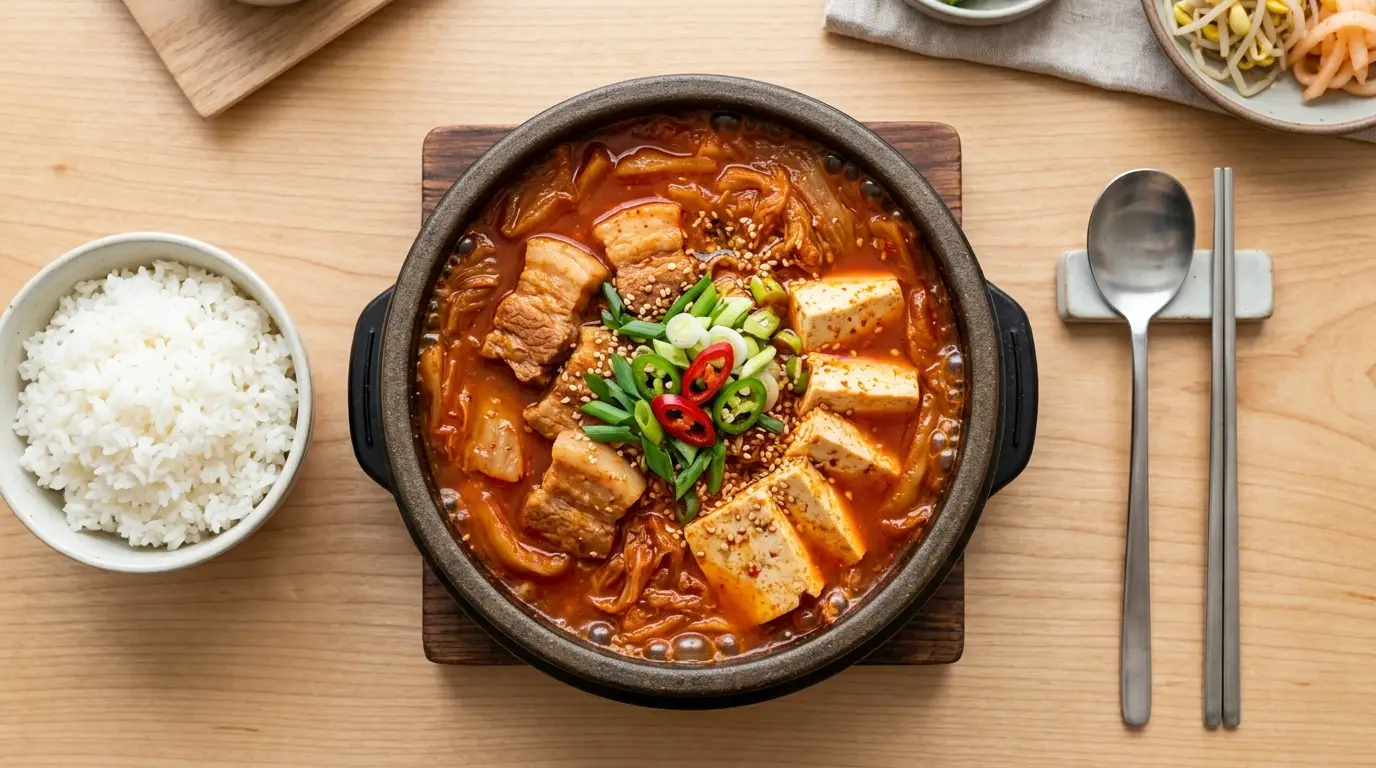
Kimchi Stew
Ingredients
- 8 oz sour napa cabbage kimchi - 225 g, well fermented, cut into bite sized pieces, plus ¼ cup (60 ml) kimchi brine from the jar
- 8 oz skinless pork belly - 225 g, sliced into thin bite sized pieces
- 1 tablespoon toasted sesame oil - 15 ml
- ½ medium yellow onion - thinly sliced
- 3 cloves garlic - minced
- 1 tablespoon gochugaru - Korean red pepper flakes, adjust to taste
- 1 teaspoon gochujang - Korean chili paste
- 1 teaspoon doenjang - Korean fermented soybean paste, optional but recommended
- 2 cups anchovy stock - 480 ml, or water in a pinch
- 1 teaspoon Korean soup soy sauce - guk ganjang, or regular soy sauce
- 1 teaspoon sugar - to balance the sourness
- 14 oz firm tofu - 400 g block, sliced into ½ inch (1 cm) thick pieces
- 2 green onions - sliced, whites and greens separated
- steamed white rice - for serving
Equipment
- Heavy-bottomed pot or Dutch oven - 2 to 3 quart capacity, or a Korean earthenware pot (ttukbaegi)
- Chef’s knife - Sharp, for slicing pork, tofu, and vegetables
- Wooden spoon or spatula - For stir frying the kimchi and pork
- Fine-mesh strainer - Optional, if making anchovy stock from scratch
Method
- Slice the pork belly into thin, bite sized pieces. Cut the sour kimchi into bite sized pieces and set aside with ¼ cup (60 ml) of the brine. Slice the tofu into ½ inch (1 cm) thick pieces, thinly slice the onion, mince the garlic, and separate the green onion whites from the greens.
- Set your pot over medium high heat and add 1 tablespoon toasted sesame oil. Add the sliced pork belly and cook, stirring, for 4 to 5 minutes until the fat starts to render and the edges brown.
- Add the chopped kimchi, sliced onion, and green onion whites to the pot with the pork. Stir fry everything together for about 5 minutes, until the kimchi softens and takes on a slightly caramelized edge.
- Push the pork and kimchi to one side and add the minced garlic, gochugaru, gochujang, and doenjang to the pot. Stir the pastes and spices in the oil for about 1 minute until fragrant, then mix everything together.
- Pour in 2 cups (480 ml) anchovy stock and the ¼ cup (60 ml) kimchi brine you set aside. Stir in the soup soy sauce and sugar, then bring the pot to a boil. Reduce the heat to a steady simmer and cook uncovered for 15 minutes so the flavors meld and the broth reduces slightly.
- Gently lay the sliced tofu into the simmering broth, nestling the pieces so they’re mostly submerged. Simmer for another 5 minutes to heat the tofu through without breaking it apart. Taste the broth and adjust with a pinch more sugar if it’s too sour, or a splash more soy sauce if it needs salt.
- Scatter the green onion greens over the top and turn off the heat. Serve the stew piping hot straight from the pot with a bowl of steamed white rice on the side. Let it sit for a minute before diving in, since the broth stays scorching hot for a while.
Nutrition
Notes
- Use the sourest, most well fermented kimchi you have. Fresh kimchi will taste bland here. Leave the jar at room temperature for a day or two to speed up fermentation if needed.
- Don’t drain the kimchi brine. That funky, acidic juice is packed with flavor, so add it to the pot rather than rinsing it away.
- Render the pork properly. Let the fat melt out before adding liquid, or the broth will turn out thin.
- Balance the sour with sugar. A teaspoon of sugar tames aggressive acidity without making the stew taste sweet.
- Choose fatty pork. Pork belly beats leaner cuts because the melted fat gives the broth its signature richness. Pork shoulder works as a leaner option.
- Simmer, don’t boil hard. A gentle simmer melds the flavors, while a violent boil can make the pork tough and break up the tofu.
- Add tofu last. Tofu only needs a few minutes to heat through, and adding it early risks it falling apart.
- Storage: Refrigerate in an airtight container for up to 3 days, or freeze for up to 1 month. Remove tofu before freezing since it turns spongy.
- Reheat on the stovetop over medium heat until it comes back to a gentle simmer. Add fresh tofu slices if you froze the stew without it.
- Variations: Swap pork for canned tuna (chamchi jjigae), spam, beef, or extra tofu and mushrooms. For vegan, use vegan kimchi and vegetable stock. For budae jjigae, add spam, hot dogs, instant noodles, and American cheese.
Private Notes
Tried this recipe?
Let us know how it was!Final Thoughts
Kimchi stew proves that a handful of humble ingredients can turn into something deeply satisfying. Once you’ve made it with properly sour kimchi, you’ll understand why it’s a staple in Korean homes.
Give it a try the next time your kimchi has gone too tangy for a side dish. It might just become your go to comfort food for chilly evenings.
If you make this stew, I’d love to hear how it turned out. Leave a comment below and share it with a friend who loves a good spicy bowl.
Recommended:
- French Onion Beef Stew
- Crockpot Beef Stew
- Seafood Chowder
- Zuppa Toscana
- Lasagna Soup
- Tomato Soup
- Beef Barley Soup
- Sausage Tortellini Soup
- Chicken Gnocchi Soup