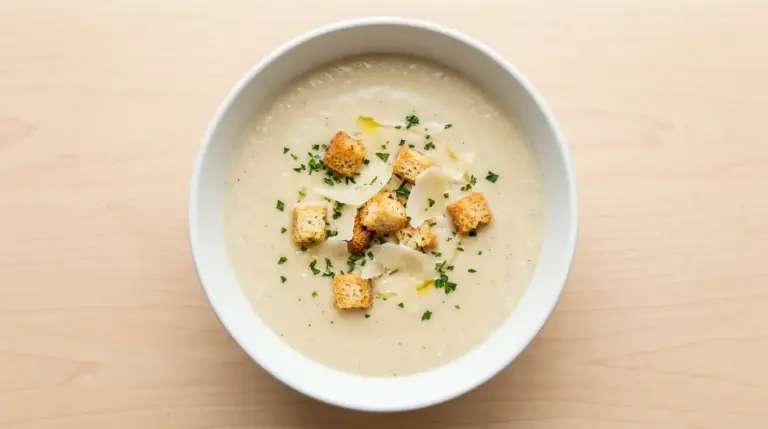
Parsnips boiled in plain water taste dull, which is why plenty of parsnip soup ends up flat.
This parsnip soup recipe sweats the onion and parsnips in butter first, which draws out their nutty sweetness before any stock goes in.
Six medium parsnips, ½ cup of heavy cream, and a little nutmeg make about six cups of soup thick enough to coat a spoon.
A squeeze of lemon at the end keeps all that sweetness from turning heavy. Everything cooks in one pot, and an immersion blender does the rest.
| Quick Recipe Summary | |
|---|---|
| Prep Time | 15 minutes |
| Cook Time | 40 minutes |
| Total Time | 55 minutes |
| Servings | 6 servings (about 6 cups) |
| Difficulty Level | Easy |
You might also enjoy: Carrot Ginger Soup Recipe
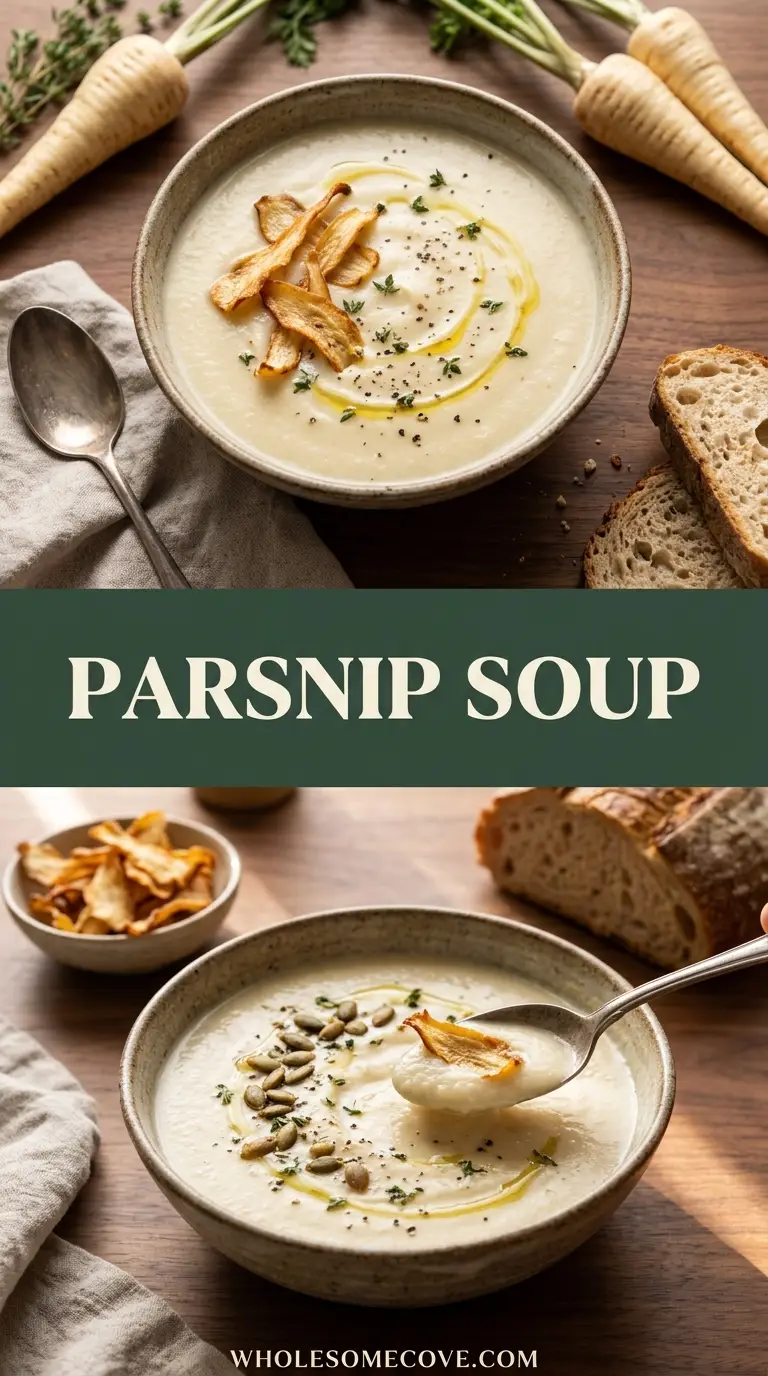
Why You’ll Love This Parsnip Soup Recipe
This version rewards a little care at the start and almost none after that. Here is what you get from one pot.
- Sweet and nutty, never flat. Sweating the parsnips in butter before the stock goes in builds far more flavor than boiling them.
- Silky without a roux. Parsnips are starchy, so they thicken the soup on their own once blended. No flour or potato is needed.
- Ready in 55 minutes. That is 15 minutes of prep and 40 minutes of cooking, almost all of it hands-off simmering.
- Six generous servings. The recipe makes about six cups, which is one cup per bowl.
- A balanced finish. Nutmeg adds warmth, and a tablespoon of lemon juice keeps the sweetness in check.
- Easy to adapt. Chicken stock works in place of vegetable stock, and coconut milk can replace the cream.
- Freezer friendly. The soup holds well in the freezer for up to three months when frozen before the cream goes in.
Read Also: Roasted Butternut Squash Soup Recipe is another sweet, velvety option.
Ingredients
Everything here is easy to find at a regular grocery store. Look for firm, smooth parsnips of medium size, because oversized roots tend to have woody centers.
For the soup:
- 2 tablespoons (28 g) unsalted butter
- 1 large yellow onion (about 10 oz / 285 g), chopped into ½-inch (1.25 cm) pieces
- 2 celery stalks (about 3 oz / 85 g), chopped into ½-inch (1.25 cm) pieces
- 3 garlic cloves, minced (about 1 tablespoon)
- 1½ pounds (680 g) parsnips (about 6 medium), weighed before peeling, then peeled and cut into 1-inch (2.5 cm) pieces
- 4 cups (950 ml) low-sodium vegetable stock
- 2 sprigs fresh thyme, or ½ teaspoon dried thyme
- 1 dried bay leaf
- ¼ teaspoon freshly grated whole nutmeg
- 1 teaspoon kosher salt, divided, plus more to taste
- ½ teaspoon freshly ground black pepper
- ½ cup (120 ml) heavy cream
- 1 tablespoon (15 ml) fresh lemon juice (from about ½ lemon)
- Up to ½ cup (120 ml) hot water, for thinning if needed
For serving:
- 1 tablespoon (15 ml) extra virgin olive oil, for drizzling
- 1 tablespoon finely chopped fresh parsley or chives
- Extra freshly ground black pepper, to taste
Read Also: Sweet Potato Soup Recipe
Kitchen Equipment Needed
You do not need much for this soup. A heavy pot and something to blend with cover almost everything.
- A Dutch oven or heavy-bottomed soup pot (5 to 6 quarts / 4.7 to 5.7 L): A thick base keeps the onions from scorching while they soften.
- An immersion blender: It blends right in the pot, so there is no hot soup to transfer.
- A countertop blender (optional): Use it instead of the immersion blender if you want the smoothest possible texture.
- A chef’s knife: A sharp 8-inch (20 cm) blade makes quick work of dense parsnips.
- A vegetable peeler: Parsnip skin is tough, so a sharp peeler matters.
- A cutting board: Choose a large one so the cut parsnips have room to sit.
- Measuring cups and spoons: Needed for the stock, cream, nutmeg, and salt.
- A wooden spoon or heat-safe spatula: For stirring and scraping the bottom of the pot.
- A fine grater or rasp: Freshly grated nutmeg tastes warmer than the pre-ground kind.
- A ladle: For filling blender jars and serving bowls without drips.
- Airtight containers: Pick ones that hold about 1 cup (240 ml) each for easy freezing.
For another smooth, blended option, try: Potato Leek Soup Recipe
Recommended Products for This Recipe
These are the tools and pantry items I would point you toward if you want this soup to turn out better. Each one fixes a specific problem that shows up when making puréed soup.
1. Le Creuset Enameled Cast Iron Dutch Oven
Thin pots create hot spots, and hot spots turn sweating onions brown and bitter before the parsnips even go in. Enameled cast iron holds steady, low heat, so the onion softens evenly and the soup stays pale and sweet.
2. Cuisinart Smart Stick Immersion Blender
Moving hot soup into a countertop blender is the messiest part of any puréed soup. A stick blender goes straight into the pot and, with a minute or two of blending, gets parsnips smooth enough to feel creamy on the tongue.
3. Microplane Classic Zester and Grater
Pre-ground nutmeg loses its aroma quickly, and this soup relies on only ¼ teaspoon to add warmth. A fine rasp grater turns a whole nutmeg into a fluffy dusting that blends into the soup instead of sitting in it as grit.
4. Better Than Bouillon Organic Vegetable Base
Weak stock is the quiet reason many parsnip soups taste like cooked parsnip and little else. A concentrated vegetable base lets you control the strength and the salt, and the jar keeps for weeks in the fridge.
Another way to turn root vegetables into a hearty pot is the Kale and Sweet Potato Soup Recipe.

Step-by-Step Instructions: How to Make Parsnip Soup
Follow these steps and you will have a smooth, creamy pot of parsnip soup on the table in about 55 minutes.
1. Prep the Parsnips
- Weigh the parsnips before peeling. You need 1½ pounds (680 g), which is about six medium roots.
- Trim off the stem end and the thin tapered tip of each parsnip.
- Peel each parsnip with a vegetable peeler until no brown skin remains. Skin that is left on can taste bitter and leave flecks in the soup.
- Halve each parsnip lengthwise. If the top end is thicker than about 1½ inches (4 cm) across, quarter it lengthwise and cut away the pale, fibrous core with a paring knife.
- Cut the parsnips into 1-inch (2.5 cm) pieces. Keep the pieces roughly the same size so they all turn tender at the same time.
2. Prep the Aromatics and Liquids
- Chop the onion and celery into ½-inch (1.25 cm) pieces and keep them together in one pile.
- Mince the garlic and keep it separate. It goes in later, because garlic that cooks too long turns bitter.
- Measure the 4 cups (950 ml) of stock, the ½ cup (120 ml) of cream, and the ½ cup (120 ml) of hot water, and have them within reach.
- Squeeze about ½ lemon to get 1 tablespoon (15 ml) of juice, and set it aside with the cream.
- Grate the ¼ teaspoon of nutmeg and measure out the salt and pepper.
3. Sweat the Onion and Celery
- Set a large Dutch oven or heavy pot over medium heat and add the 2 tablespoons (28 g) of butter.
- When the butter has melted and the foaming settles, add the onion, celery, and ½ teaspoon of the salt.
- Cook for 6 to 8 minutes, stirring often, until the vegetables are soft and translucent.
- Keep the heat at medium. The onion should soften without browning, which keeps the soup pale and the flavor clean.
4. Add the Garlic and Parsnips
- Stir in the minced garlic and cook for 30 seconds, just until it smells fragrant.
- Add all the parsnips and stir until every piece is coated in butter.
- Cook for 4 to 5 minutes, stirring occasionally, until the parsnips look glossy and smell sweet. Do not let them brown heavily.
5. Add the Stock and Seasonings
- Pour in the 4 cups (950 ml) of stock and scrape the bottom of the pot with a wooden spoon.
- Add the thyme sprigs (or ½ teaspoon dried thyme), the bay leaf, the remaining ½ teaspoon of salt, the ½ teaspoon of black pepper, and the ¼ teaspoon of nutmeg.
- Raise the heat to high and bring the soup to a boil, then reduce the heat to low so it simmers gently.
6. Simmer Until Very Tender
- Partially cover the pot and simmer for 18 to 20 minutes.
- Test a piece of parsnip with a fork. It should slide in with no resistance and crush easily against the side of the pot.
- If the parsnips are still firm, simmer for 5 more minutes and test again.
- Remove the pot from the heat. Fish out the thyme stems and the bay leaf and discard them.
7. Blend Until Completely Smooth
- For an immersion blender, submerge the head fully before turning it on. Blend for 2 to 3 minutes, moving it up and down and around the pot, until no lumps remain.
- For a countertop blender, ladle the soup into the jar in batches. Fill it no more than halfway, remove the center cap from the lid, and cover the opening with a folded kitchen towel.
- Check the thickness. If the soup is thicker than you like, stir in hot water a few tablespoons at a time, up to ½ cup (120 ml) total.
8. Add the Cream and Lemon
- Return the soup to the pot if you used a countertop blender, and set it over low heat.
- Stir in the ½ cup (120 ml) of heavy cream and warm the soup for 2 to 3 minutes. Do not let it boil once the cream is in.
- Remove the pot from the heat and stir in the 1 tablespoon (15 ml) of lemon juice.
- Taste the soup and adjust with more salt, pepper, or nutmeg if it needs it.
9. Serve
- Ladle the soup into warm bowls.
- Drizzle each bowl with about ½ teaspoon of olive oil, using the 1 tablespoon (15 ml) total.
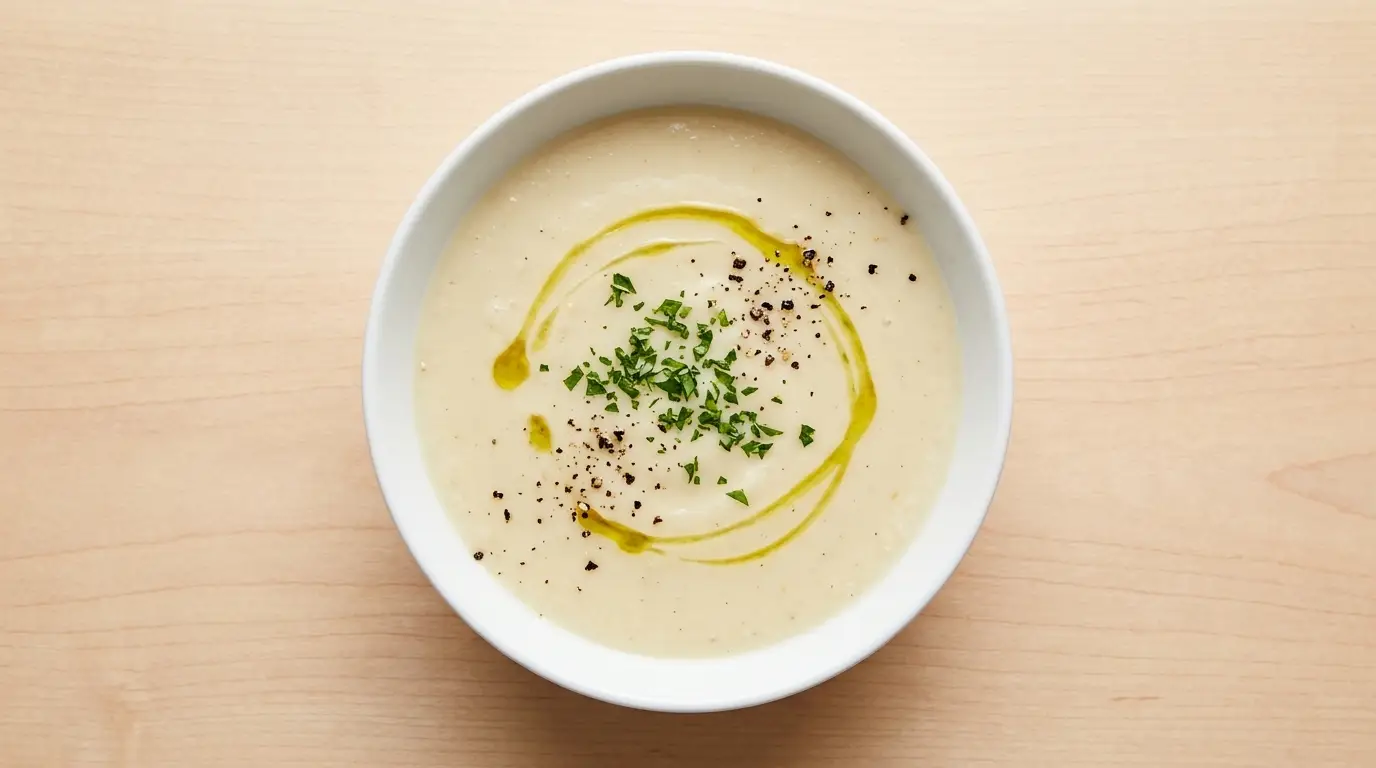
- Sprinkle with the chopped parsley or chives and finish with a few grinds of black pepper.
Read Also: Creamy Tomato Basil Soup Recipe
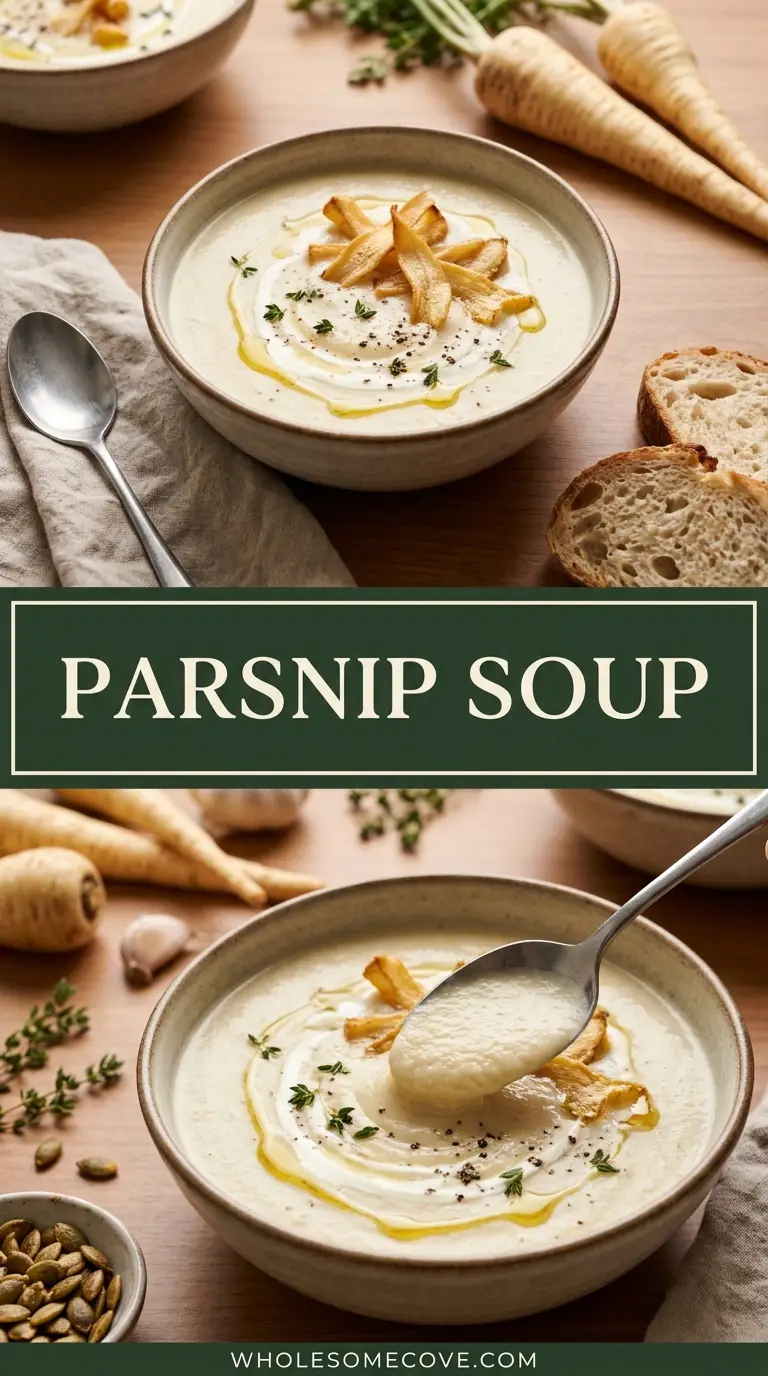
Tips for The Best Parsnip Soup
A few small habits separate a silky pot of parsnip soup from a gritty or bitter one.
- Buy medium parsnips. Firm, smooth roots are sweeter and more tender, while very large ones can have woody, bitter cores.
- Core only the thick ones. Cook’s Illustrated found that cores are not noticeable in a puréed soup, though a few tasters picked up slight bitterness, so cut them out only from fat top ends.
- Peel fully. The skin is tough and slightly bitter, and it leaves specks in the finished soup.
- Use butter, not oil, to sweat the onion. I’ve found that butter gives a rounder base than olive oil here, so I save the olive oil for drizzling at the end.
- Keep the heat at medium. Browned onions add a roasted note that competes with the clean sweetness of the parsnips.
- Cook the garlic for 30 seconds only. Garlic that scorches turns the whole pot bitter.
- Cut the parsnips evenly. Pieces of the same size finish together, so no hard bits survive the blender.
- Add liquid slowly. A soup that is too thin is harder to fix than one that is too thick, so thin it a few tablespoons at a time.
- Blend longer than you think you need to. Two to three extra minutes makes the soup noticeably silkier, and a pass through a fine-mesh sieve makes it restaurant smooth.
- Respect the blender jar. My first countertop blend sprayed hot soup out of the lid because I filled the jar past halfway, so now I fill it halfway at most and vent the lid under a towel.
- Season after blending. Taste again once the cream and lemon are in, since both change the balance of salt and sweetness.
- Choose your stock with care. Low-sodium stock lets you control the salt, and chicken stock works if you are not cooking for vegetarians.
Also worth a look: Pumpkin Soup Recipe
What to Serve with Parsnip Soup
Parsnip soup is rich and gently sweet, so it pairs best with something crisp, tangy, or hearty. A little contrast on the plate keeps each spoonful interesting.
- Crusty bread or a baguette: Tear off pieces to soak up the last of the soup.
- Dinner Rolls: Soft, buttery rolls suit the velvety texture.
- Sourdough Focaccia: Its salty, olive oil-rich crust is a good match for the sweetness of parsnips.
- Grilled cheese sandwich: Sharp cheddar on toasted bread is a classic soup partner.
- Chickpea Salad Sandwich: The tangy filling balances the creamy soup for a light lunch.
- Ham and Cheese Sliders: Small, savory sandwiches turn a bowl of soup into a full meal.
- Roast Chicken: Serve a small bowl of soup as a starter before the main course.
- Pork Tenderloin with Roasted Root Vegetables: A natural follow-up for a cozy dinner centered on root vegetables.
- A green salad with lemon vinaigrette: The acid and crunch cut through the richness.
- A dry white wine: A crisp Sauvignon Blanc or an unoaked Chardonnay works well with the cream and nutmeg.
For a savory, onion-forward alternative, see the French Onion Soup Recipe.
Variations of Parsnip Soup
The base recipe is flexible, and a few simple changes give you very different bowls.
- Curried Parsnip Soup: Stir in 1 tablespoon of curry powder with the garlic, and swap the cream for ½ cup (120 ml) of canned coconut milk.
- Parsnip and Apple Soup: Add 2 peeled, chopped apples with the parsnips. Tart apples such as Granny Smith balance the sweetness well.
- Carrot and Parsnip Soup: Replace 8 ounces (225 g) of the parsnips with the same weight of chopped carrots for a brighter color and extra sweetness.
- Roasted Parsnip Soup: Roast the cut parsnips with 1 tablespoon of olive oil at 400°F (200°C) for 25 to 30 minutes. Add them to the softened onions with the stock and simmer for 10 minutes.
- Parmesan Parsnip Soup: Stir ½ cup (50 g) of finely grated Parmesan into the hot soup along with the cream for a savory, nutty depth.
- Dairy-Free Parsnip Soup: Use olive oil instead of butter and full-fat coconut milk instead of cream.
- Spiced Parsnip Soup: Add 1 teaspoon of ground cumin with the garlic and finish each bowl with a pinch of red pepper flakes.
- Lighter Parsnip Soup: Replace the heavy cream with ½ cup (120 ml) of whole milk or half-and-half.
- Parsnip Chip Topping: Fry one thinly sliced parsnip in 2 tablespoons (30 ml) of oil over medium-high heat for about 5 minutes, then drain on paper towels and scatter on top.
Another good pot of soup: Roasted Garlic Soup Recipe
Storage and Reheating
Parsnip soup keeps well, and the flavor often improves after a night in the fridge. Cool it before storing, and keep the cream in mind if you plan to freeze it.
- Refrigerator: Cool the soup for 30 minutes, then store it in an airtight container for up to 4 days. Refrigerate within 2 hours of cooking.
- Thickening in the fridge: Parsnip starch sets as the soup chills, so I keep a little stock on hand to loosen it when reheating.
- Freezer: Freeze the soup for up to 3 months. I freeze it in 1-cup (240 ml) portions before adding the cream, then stir in a spoonful of cream while reheating, since cream can separate after thawing.
- Freezer headspace: Leave about 1 inch (2.5 cm) of space at the top of each container so the soup can expand.
- Thawing: Thaw frozen soup overnight in the refrigerator rather than on the counter.
- Stovetop reheating: Warm the soup in a saucepan over medium-low heat for 8 to 10 minutes, stirring often, and add a splash of stock or water if it is too thick.
- Microwave reheating: Heat a covered bowl in 90-second bursts at 50 percent power, stirring between each one.
- Avoid boiling: Once cream is in the soup, keep it at a gentle steam so it does not curdle.
- Make ahead: Prepare the soup through the blending step up to 2 days ahead, then add the cream and lemon when you reheat it.
Lentils make another soup that suits batch cooking, as in the Lentil and Vegetable Soup Recipe.
Nutritional Facts
These values are approximate estimates for one 1-cup serving, based on low-sodium vegetable stock and the full amounts of butter, cream, and olive oil. Actual numbers vary with the brands and ingredients you use.
| Nutrition per Serving (1 cup) | |
|---|---|
| Calories | 245 kcal |
| Total Fat | 14 g |
| Saturated Fat | 8 g |
| Cholesterol | 38 mg |
| Sodium | 400 mg |
| Total Carbohydrates | 27 g |
| Dietary Fiber | 6 g |
| Sugars | 8 g |
| Protein | 3 g |
Read Also: Asparagus Soup Recipe
Health Benefits of Key Ingredients
Most of the nutrition in this soup comes from the vegetables. Here is what each main ingredient contributes.
- Parsnips: A cup of raw sliced parsnips provides about 6 grams of fiber, according to USDA data. They also supply vitamin C, folate, and potassium.
- Onion: Onions contain fructans, a type of fiber that feeds beneficial gut bacteria. They also add flavor without adding much fat or sodium.
- Garlic: Garlic contains sulfur compounds that give it its sharp aroma. It adds a lot of flavor in small amounts, which helps keep the salt low.
- Celery: Celery is mostly water and adds a little vitamin K and potassium. It also rounds out the savory base of the soup.
- Olive oil: Extra virgin olive oil is rich in monounsaturated fat, the kind found in a Mediterranean-style diet. A small drizzle adds fruity flavor to each bowl.
- Lemon juice: Lemon juice contributes a small amount of vitamin C. Its acidity also brightens the soup so you can use less salt.
- Thyme: Fresh thyme adds aroma and a small amount of vitamins and minerals. It lets the soup taste complex without extra ingredients.
- Heavy cream and butter: These add richness, along with fat-soluble vitamins such as vitamin A. They are also the main sources of saturated fat, so the lighter variation above is a simple swap.
For a tomato-based option, try: Roasted Tomato Soup Recipe
FAQs About Parsnip Soup
1. Why does my parsnip soup taste bitter?
Bitterness usually comes from a woody core in large parsnips, leftover skin, or garlic that browned too far. Cut out thick cores, peel fully, and cook the garlic for only 30 seconds.
A small splash of lemon juice also softens any bitterness that remains.
2. Do I need to peel parsnips for soup?
Yes, peel them. Parsnip skin is tough and slightly bitter, and it leaves flecks in the finished soup.
A sharp vegetable peeler takes only a minute or two for six parsnips.
3. Do I need to remove the core of a parsnip?
Only from thick, mature parsnips. The core is fibrous, but it blends away in a puréed soup.
Cook’s Illustrated found no texture difference in puréed soup, but a few tasters noticed slight bitterness from the cores.
4. Can I freeze parsnip soup?
Yes, for up to three months. For the best texture, freeze the soup before stirring in the cream.
Thaw it overnight in the fridge, reheat it gently, and stir in the cream at the end.
5. How do I make parsnip soup thicker or thinner?
To thicken, simmer it uncovered for 5 to 10 minutes. To thin it, stir in hot water a few tablespoons at a time.
Add liquid slowly, since a soup that is too thin is harder to fix than one that is too thick.
6. Can I make parsnip soup dairy-free or vegan?
Yes. Swap the butter for olive oil, use vegetable stock, and replace the cream with full-fat coconut milk.
Coconut milk adds a faint sweetness that suits parsnips well.
7. What does parsnip soup taste like?
Parsnips taste sweet and nutty with a mild peppery edge. Cooking brings out the sweetness, and roasting deepens it further.
The soup tastes a bit like carrot soup, but earthier and more buttery.
8. Can I roast the parsnips before making the soup?
Yes, roasting gives a deeper, caramelized flavor. Toss the cut parsnips with olive oil and roast at 400°F (200°C) for 25 to 30 minutes.
Add them to the softened onions, pour in the stock, and simmer for 10 minutes before blending.
More ideas built on humble vegetables are collected in Potato Soup Recipes.
Parsnip Soup
Ingredients
- 2 tablespoons unsalted butter - 28 g
- 1 large yellow onion - about 10 oz / 285 g, chopped into ½-inch (1.25 cm) pieces
- 2 stalks celery - about 3 oz / 85 g, chopped into ½-inch (1.25 cm) pieces
- 3 cloves garlic - minced, about 1 tablespoon
- 1½ pounds parsnips - 680 g, about 6 medium, weighed before peeling, then peeled and cut into 1-inch (2.5 cm) pieces
- 4 cups low-sodium vegetable stock - 950 ml
- 2 sprigs fresh thyme - or ½ teaspoon dried thyme
- 1 dried bay leaf
- ¼ teaspoon whole nutmeg - freshly grated
- 1 teaspoon kosher salt - divided, plus more to taste
- ½ teaspoon freshly ground black pepper
- ½ cup heavy cream - 120 ml
- 1 tablespoon fresh lemon juice - 15 ml, from about ½ lemon
- ½ cup hot water - 120 ml, for thinning if needed
- 1 tablespoon extra virgin olive oil - 15 ml, for drizzling
- 1 tablespoon fresh parsley or chives - finely chopped
- freshly ground black pepper - extra, to taste
Equipment
- Dutch oven or heavy-bottomed soup pot - 5 to 6 quarts / 4.7 to 5.7 L
- Countertop blender - (optional)
- Chef’s knife - 8-inch (20 cm) blade
- Cutting board - large
- Wooden spoon or heat-safe spatula
- Fine grater or rasp
- Airtight containers - about 1 cup (240 ml) each for freezing
Method
- Weigh the parsnips before peeling (1½ pounds / 680 g, about six medium roots). Trim the stem end and thin tip, peel fully until no brown skin remains, halve lengthwise, and cut away the fibrous core from any top ends thicker than about 1½ inches (4 cm). Cut into 1-inch (2.5 cm) pieces.
- Chop the onion and celery into ½-inch (1.25 cm) pieces and keep together. Mince the garlic and keep separate. Measure the stock, cream, and hot water; squeeze 1 tablespoon (15 ml) lemon juice; grate the nutmeg and measure the salt and pepper.
- Melt the 2 tablespoons (28 g) butter in a large Dutch oven over medium heat. Add the onion, celery, and ½ teaspoon of the salt and cook for 6 to 8 minutes, stirring often, until soft and translucent without browning.
- Stir in the garlic and cook for 30 seconds until fragrant. Add all the parsnips, stir to coat in butter, and cook for 4 to 5 minutes until glossy and sweet-smelling, without letting them brown heavily.
- Pour in the 4 cups (950 ml) stock and scrape the bottom of the pot. Add the thyme, bay leaf, remaining ½ teaspoon salt, ½ teaspoon black pepper, and ¼ teaspoon nutmeg. Bring to a boil, then reduce the heat to a gentle simmer.
- Partially cover and simmer for 18 to 20 minutes until a parsnip piece slides easily off a fork; simmer 5 more minutes if still firm. Remove from the heat and fish out the thyme stems and bay leaf.
- Blend with an immersion blender for 2 to 3 minutes until no lumps remain, or ladle in batches into a countertop blender filled no more than halfway, venting the lid under a towel. Thin with hot water a few tablespoons at a time, up to ½ cup (120 ml), if too thick.
- Return the soup to the pot over low heat if needed. Stir in the ½ cup (120 ml) heavy cream and warm for 2 to 3 minutes without boiling. Remove from the heat, stir in the 1 tablespoon (15 ml) lemon juice, and adjust salt, pepper, or nutmeg to taste.
- Ladle into warm bowls. Drizzle each with about ½ teaspoon olive oil, sprinkle with chopped parsley or chives, and finish with a few grinds of black pepper.
Nutrition
Notes
- Buy firm, smooth medium parsnips; oversized roots tend to have woody, bitter cores.
- Peel parsnips fully — the skin is tough, slightly bitter, and leaves flecks in the soup.
- Core only the thick top ends; the core blends away in a puréed soup but can add slight bitterness.
- Keep the heat at medium while sweating the onion so it softens without browning, which keeps the soup pale and sweet.
- Cook the garlic for only 30 seconds — scorched garlic turns the whole pot bitter.
- Blend longer than you think you need to (2 to 3 minutes); a pass through a fine-mesh sieve makes it restaurant smooth.
- Thin the soup a few tablespoons at a time, since a too-thin soup is harder to fix than a too-thick one.
- For freezing, freeze in 1-cup portions before adding the cream (up to 3 months), then stir in cream while reheating.
- Make ahead: prepare through the blending step up to 2 days ahead, then add cream and lemon when reheating.
- Dairy-free/vegan: swap butter for olive oil and cream for full-fat coconut milk.
Private Notes
Tried this recipe?
Let us know how it was!Final Thoughts
Parsnip soup is proof that a plain root vegetable can taste far more interesting than its looks suggest. Once you have the method down, it takes very little effort.
Give this recipe a try and tell me how it turns out in the comments. If you share it with friends, I would love to hear which variation they pick.
Recommended:
- Minestrone Soup Recipe
- Corn Chowder Recipe
- Beef Barley Soup Recipe
- Chicken Soup Recipe
- Panera Broccoli Cheddar Soup Recipe
- Cabbage Soup Recipe
- Miso Soup Recipe
- Cream of Chicken Soup Recipe
- Zuppa Toscana Recipe
- Italian Wedding Soup Recipe