
This miso soup recipe gets its depth from a homemade dashi, not from the miso alone.
Kombu and bonito flakes steep into a clear, pale golden broth that tastes of the sea and faint smoke before a single spoonful of miso goes in.
Most homemade versions go wrong in two places.
The kombu gets boiled, which turns the broth slimy and bitter, or the miso gets boiled, which flattens its fragrance.
This version avoids both by heating the kombu slowly and whisking the miso in off the heat. It uses seven ingredients, water included, and makes four 1-cup servings in 30 minutes.
| Quick Recipe Summary | |
|---|---|
| Prep Time | 10 minutes |
| Cook Time | 20 minutes |
| Total Time | 30 minutes |
| Servings | 4 servings (about 1 cup each) |
| Difficulty Level | Easy |
For another quick, brothy soup built from a few pantry staples, see Egg Drop Soup.

Why You’ll Love This Miso Soup Recipe
The broth is made from scratch with only kombu and katsuobushi, so it tastes clean and layered instead of salty and flat.
Everything else goes in at the end and needs almost no cooking.
- Seven ingredients, water included: Kombu, bonito flakes, wakame, soft tofu, scallions, and miso do all the work.
- Ready in 30 minutes: Ten of those minutes are hands-off steeping while you cut the tofu and scallions.
- One saucepan and one strainer: Cleanup takes about two minutes.
- Easy to scale: The ratio is 1 cup of dashi and 1 tablespoon of miso per serving, so doubling or halving is simple.
- Easy to adapt: Swap the bonito for dried shiitake and the whole bowl becomes vegan.
- Light but satisfying: One bowl has about 5 grams of protein from the tofu and miso, and it works as a starter or a small lunch.
- Made ahead in parts: The dashi keeps in the refrigerator, so a bowl on a weeknight takes about 10 minutes.
You might also enjoy: Avgolemono Soup
Ingredients
Miso soup has two parts, the dashi and the finishing ingredients. Most of these are sold in the Asian aisle of a large grocery store, at a Japanese market, or online.
For the dashi (makes about 4 cups):
- 4 cups (950 ml) cold water
- 1 piece dried kombu, about 4 × 4 inches (10 × 10 cm), roughly ⅓ ounce (10 g)
- 1 cup (about 10 g) lightly packed katsuobushi (dried bonito flakes)
For the miso soup:
- 4 cups (950 ml) dashi, from above
- 1 tablespoon (about 3 g) dried cut wakame
- 7 ounces (200 g) soft or silken tofu, cut into ½-inch (about 1 cm) cubes
- 3 to 4 tablespoons (55 to 70 g) white miso paste, added 3 tablespoons first, then tasted
- 2 scallions, thinly sliced (about ¼ cup or 25 g)
Do not wipe the white powder off the kombu. That powder is natural glutamate, and it is a large part of the flavor.
A Japanese brand of miso gives the cleanest taste. Check the label, because some miso already contains dashi.
That kind makes a saltier, more savory soup, so start with 2 tablespoons and add more only after tasting.
Read Also: Bone Broth Soup Recipe
Kitchen Equipment Needed
This recipe needs very little equipment, but the right strainer matters more than anything else on the list.
- Small saucepan: A 2 to 3 quart (2 to 3 liter) pot with a light-colored interior lets you see the tiny bubbles that signal when to pull the kombu.
- Fine-mesh strainer: It catches every bonito flake so the dashi stays clear, and it doubles as a miso strainer in a pinch.
- Kitchen shears: Dried kombu is stiff, and shears cut it into clean pieces without crushing the surface.
- Ladle: A small ladle works for dissolving the miso and for serving.
- Liquid measuring cup: The strainer rests on top while you pour the dashi through.
- Japanese soup bowls: Small bowls hold about 1 cup and keep the soup warm while you drink it.
- Small mixing bowl: It holds the wakame while it rehydrates.
- Chopsticks or a small whisk: Either one works for pushing the miso through the strainer.
- Cutting board and sharp knife: The tofu and scallions both need clean, thin cuts.
Another option worth trying is Carrot Ginger Soup.
Recommended Products for This Recipe
These are my personal recommendations, chosen because each one fixes a specific problem that shows up when making miso soup at home. None of them is required, but a couple make a noticeable difference.
1. Hikari Organic White Miso
Cheap, generic miso tends to taste sharply salty with very little sweetness behind it. Hikari’s white miso is milder and slightly sweet, so it sits behind the dashi instead of covering it, and the paste dissolves smoothly.
2. Rishiri Kombu
Thin, bargain kombu gives a weak broth that tastes like very little. Rishiri kombu is thick and clean tasting, and one 4-inch piece produces a dashi with real depth and no fishy edge.
3. Yamaki Bonito Flakes
Stale bonito flakes smell dusty and make a dull broth. Fresh, thinly shaved flakes steep fast and give the dashi its faint smoky note, and the smaller bags stay fresher once opened.
4. Miso Muddler and Strainer
Whisking miso straight into the pot left small lumps no matter how long I stirred, and a muddler fixed that. The strainer holds the paste above the soup, and the muddler presses it through as a smooth cream.
5. Kayanoya Dashi Packs
On nights with no time for homemade dashi, these packets steep like tea bags and taste far closer to real dashi than powder does. They already contain bonito, kombu, and a little salt, so use a little less miso when you use them.
For a heartier bowl, try: Lentil Soup
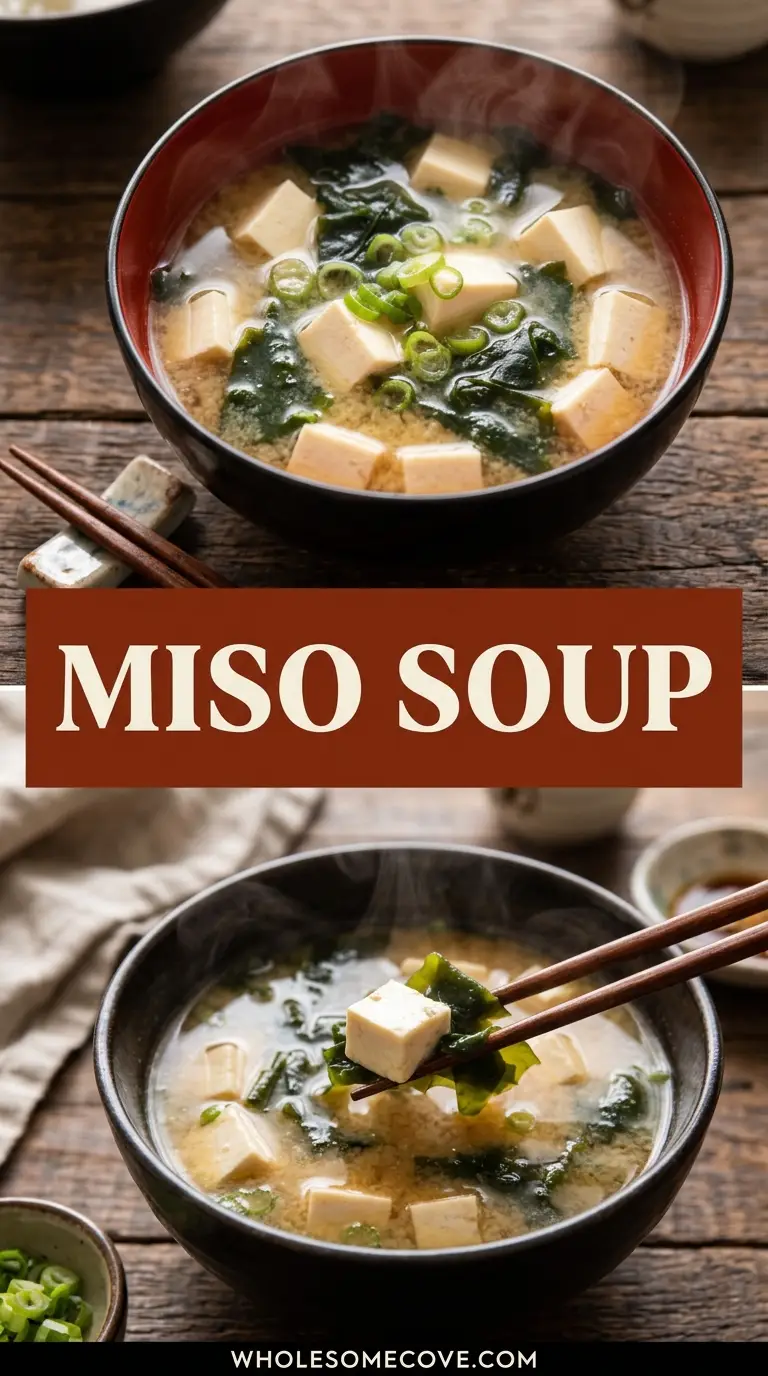
Step-by-Step Instructions: How to Make Miso Soup
Follow these steps in order and the soup comes together without any guesswork.
1. Prep the Finishing Ingredients
- Place 1 tablespoon dried wakame in a small bowl and cover it with cold water by at least 1 inch (2.5 cm). It expands to roughly ten times its dry size, so use more water than seems necessary.
- Thinly slice 2 scallions, using both the white and green parts, until you have about ¼ cup. Set them aside.
- Cut 7 ounces (200 g) soft or silken tofu into ½-inch (about 1 cm) cubes. Keep the tofu in a bowl or on a plate and handle it gently.
- Leave the wakame to soak while the dashi cooks. It needs about 10 minutes.
2. Heat the Kombu Slowly
- Pour 4 cups (950 ml) cold water into a small saucepan and add the 4 × 4 inch (10 × 10 cm) piece of kombu. Do not wipe the surface.
- Set the pan over medium heat and bring it up slowly, about 8 to 10 minutes.
- Watch for tiny bubbles forming on the bottom of the pan and rising off the kombu. Pull the kombu out just before the water reaches a boil.
- I ruined my first pot by walking away while the kombu came to a boil, and the broth turned slimy and bitter. If that happens, start again, because it cannot be fixed.
- Discard the kombu or save it for another use, such as simmering into a second, weaker dashi.
3. Steep the Bonito Flakes
- Bring the kombu water back to a gentle simmer over medium heat.
- Add 1 cup (about 10 g) lightly packed bonito flakes and let the pot simmer for about 1 minute.
- Turn off the heat and let the flakes sit undisturbed until they sink to the bottom, about 10 minutes.
- Do not stir. Stirring clouds the broth.
4. Strain the Dashi
- Set a fine-mesh strainer over a liquid measuring cup or a medium bowl.
- Pour the dashi through the strainer in one steady stream. Let it drain without pressing on the flakes, because squeezing them makes the dashi taste fishy and slightly bitter.
- Discard the flakes. You should have close to 4 cups (950 ml) of golden dashi. If you are short, top it up with a splash of water.
- Rinse the saucepan and return the dashi to it.
5. Warm the Tofu and Wakame
- Set the saucepan over medium heat and bring the dashi to a gentle simmer, with small bubbles at the edges and no rolling boil.
- Drain the soaked wakame and add it to the pot. It needs no real cooking, only a minute or two to warm through.
- Silken tofu breaks apart if the soup is stirred hard, so slide it in with a spoon and stir only once.
- Simmer for 1 to 2 minutes, just until the tofu is warm, then turn the heat to the lowest setting.
6. Dissolve the Miso Off the Heat
- Turn off the heat entirely. Boiling miso destroys its aroma and flattens the flavor.
- Place 3 tablespoons of white miso in a fine-mesh strainer or a ladle, and hold it just under the surface of the soup.
- Press the paste through the strainer with chopsticks or a small whisk, adding a little hot dashi from the pot as you go, until the miso melts completely into the broth.
- Taste the soup. If you want a deeper, saltier flavor, add the fourth tablespoon (about 18 g) the same way and taste again.
7. Add the Scallions and Serve
- Stir in the sliced scallions and give the soup one gentle stir.
- Ladle it into warm bowls right away, making sure each serving gets tofu, wakame, and scallions.
- Serve immediately. Miso soup tastes best within minutes of being finished, while the fragrance is still strong.
Read Also: Tomato Egg Drop Soup Recipe
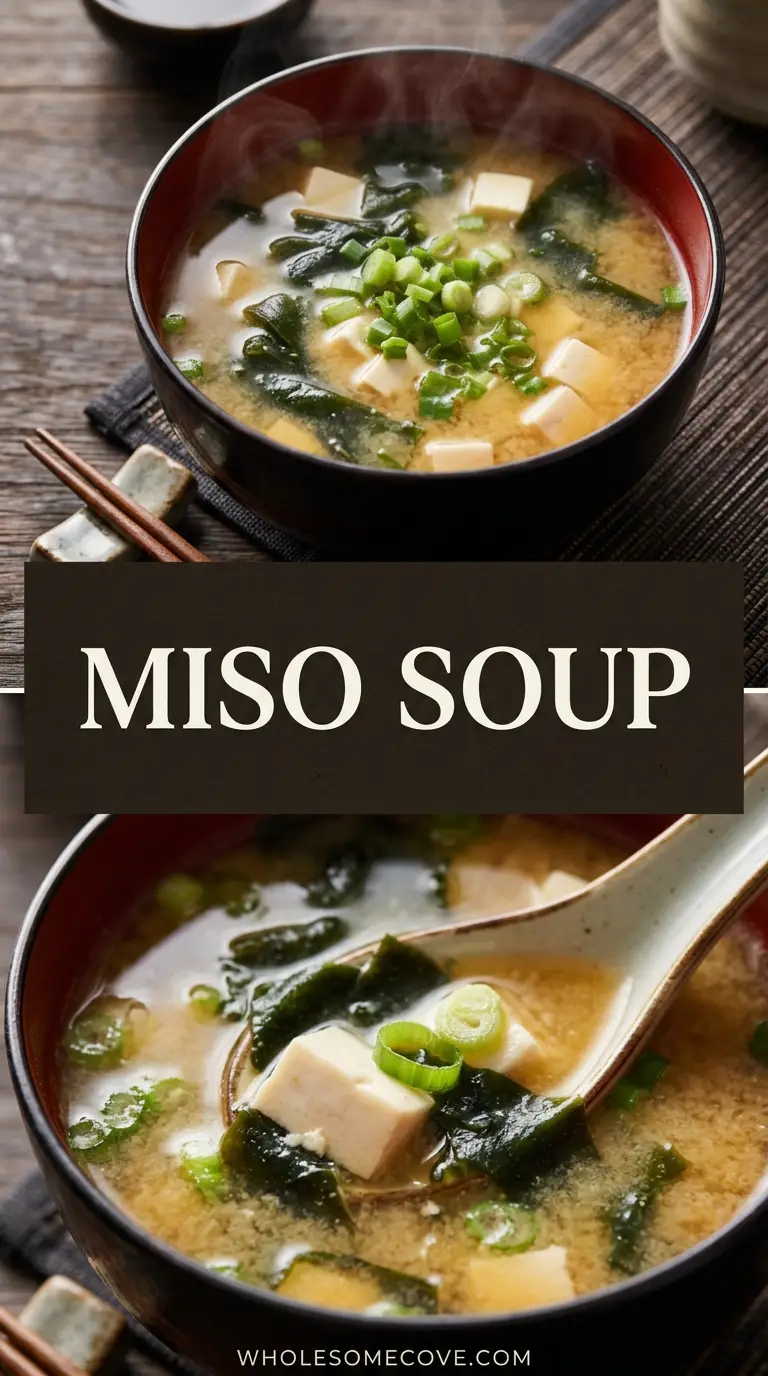
Tips for The Best Miso Soup
Small details decide whether this soup tastes like a restaurant bowl or like salty water. These are the ones that matter most.
- Never boil the kombu: Bring it up slowly and remove it before the water boils. A rolling boil makes the broth slimy and bitter.
- Never boil the miso: Add it off the heat. High heat dulls the fragrance and, in unpasteurized miso, kills the live cultures.
- Strain the miso instead of stirring it in: Pressing it through a strainer removes lumps and leaves a smooth, even broth.
- Start with 3 tablespoons and taste: Miso brands vary a lot in saltiness, so measure low and finish by taste.
- Choose white miso for a clean flavor: I’ve found white miso works better than red in this version because it ferments for a shorter time, so the dashi stays in front. Red miso is bolder and saltier, and it suits cold weather and heavier add-ins.
- Mix two misos for more depth: Equal parts white and red give a rounder flavor without being too strong.
- Do not skip the soak for the wakame: Dry wakame added straight to the pot swells unevenly and tastes chewy. Soak it in cold water for about 10 minutes first.
- Cut the tofu with a wet knife: Wiping the blade between cuts helps the cubes stay intact.
- Stir gently before serving: Miso settles to the bottom of a pot as it sits, so one gentle stir right before ladling keeps every bowl even.
- Warm the bowls: A cold bowl cools the soup quickly, and it should be eaten hot.
- Do not add extra salt: Both miso and bonito are already salty. Taste first, and adjust with another spoonful of miso instead of salt.
- Taste the dashi before adding miso: It should taste faintly savory and slightly briny on its own. If it tastes weak, steep it a few more minutes or use a larger piece of kombu next time.
A similar quick-simmer approach works in Easy Chicken Noodle Soup.
What to Serve with Miso Soup
In Japan, miso soup is rarely a meal on its own. It sits beside rice and a main dish, and the salty, savory broth balances the sweetness of grilled or simmered foods.
You can also serve it as a light starter or a small lunch with rice balls.
- Steamed short-grain rice: A bowl of plain rice is the traditional partner, and the soup cleans the palate between bites.
- Onigiri (Japanese rice balls): Filled with salmon or pickled plum, they turn the soup into a quick lunch.
- Teriyaki Grilled Chicken: The sweet, glossy glaze contrasts well with the savory broth.
- Air Fryer Salmon: Simple, flaky fish is a classic pairing, and a squeeze of lemon works with the miso.
- Healthy Fried Rice: A rice dish next to a light soup makes an easy dinner for a busy night.
- Tofu and Veggie Stir-Fry with Brown Rice: The vegetables and tofu match the soup’s mild, plant-forward flavor.
- Air Fryer Sesame Pork Skewers: The nutty sesame and charred edges stand up well to the salty broth.
- Asian Chicken Lettuce Cups: Fresh, crunchy cups offset the warm soup.
- Japanese cucumber salad: Thin cucumber slices dressed with rice vinegar and sesame add a cool, tangy contrast.
- Tonkatsu: A crisp pork cutlet and a bowl of miso soup is a common set meal in Japan.
- Green tea: Hot or cold, it is the standard drink with a Japanese meal.
For a plant-forward side, try: Cauliflower Fried Rice with Tofu
Variations of Miso Soup
The base recipe is the most common version in Japan and in restaurants abroad, with tofu, wakame, and scallions. Once you have it down, these swaps change the soup without changing the method.
- Vegan miso soup: Skip the bonito flakes and steep 3 or 4 dried shiitake mushrooms with the kombu. The shiitake gives a deep, earthy broth with no fish.
- Daikon and aburaage: Simmer thin half-moons of daikon in the dashi for 5 to 6 minutes, then add strips of fried tofu pouch (aburaage). This is one of the most popular home versions in Japan.
- Clam miso soup: Simmer small clams in the dashi until they open, then add the miso off the heat. Discard any that stay shut.
- Mushroom miso soup: Add enoki, shimeji, or sliced shiitake to the dashi and simmer for about 3 minutes before the tofu goes in.
- Spinach or bok choy: Drop in a handful of baby spinach or chopped bok choy for the last minute, so it wilts but stays bright.
- Egg miso soup: Slowly pour a beaten egg into the simmering dashi in a thin stream before adding the miso, for soft ribbons like egg drop soup.
- Noodle miso soup: Add cooked udon or soba to each bowl, then ladle the hot soup over the top. This turns it into a full meal.
- Pork and vegetable (tonjiru style): Simmer thin pork belly with carrot, burdock, and potato, then finish with miso for a heartier, stew-like bowl.
- Spicy miso soup: Stir a small spoonful of chili oil or a few drops of toasted sesame oil into each bowl at the table.
- Red or mixed miso: Use red or an equal blend of red and white for a darker, saltier, more robust soup.
Read Also: Mushroom Wild Rice Soup Recipe
Storage and Reheating
Miso soup is at its best the moment it is made. The dashi, though, stores well, so it is worth thinking of this as two separate parts.
- Refrigerate leftover soup within 4 hours: Let it cool to room temperature, then keep it in an airtight container for up to 2 days.
- Store the dashi separately for the fastest weeknight soup: Cool it and refrigerate it in an airtight jar for up to 3 days.
- Freeze the dashi, not the finished soup: Frozen tofu turns spongy and miso loses aroma. Pour the cooled dashi into ice cube trays or a freezer container and freeze for up to 1 month.
- Reheat gently over low heat: Warm the soup just until it steams. Never let it boil, because the miso flavor fades quickly.
- Add fresh scallions after reheating: The green slices wilt and lose their bite in the fridge.
- Stir before reheating: The miso settles in the container, so give it a gentle stir as it warms.
- Thaw dashi in the refrigerator: Then bring it to a simmer and add the miso, tofu, and wakame as usual.
- Keep miso paste in the refrigerator: An opened tub keeps for many months when it is sealed and pressed flat.
- Keep the kombu and bonito dry: Store both in a sealed bag in a cool pantry, and squeeze out the air after each use.
I keep a tray of frozen dashi cubes in the freezer just for this soup, and four cubes plus a tablespoon of miso make a quick single bowl.
A related recipe is Kale and Sweet Potato Soup.
Nutritional Facts
These values are approximate and are based on 4 servings of about 1 cup each, made with 4 tablespoons of white miso. Exact numbers vary with the brand of miso and tofu.
| Nutrition per Serving (approximate) | |
|---|---|
| Calories | 70 kcal |
| Protein | 5 g |
| Carbohydrates | 5 g |
| Fat | 3 g |
| Fiber | 1 g |
| Sugar | 1 g |
| Sodium | 700 mg |
For another light, brothy option, try: Lemon Chicken Soup
Health Benefits of Key Ingredients
Miso soup is light in calories, but each ingredient brings something specific. Sodium is the one thing to watch, and it is covered at the end of the list.
- Miso: Made from fermented soybeans, it adds protein and a savory depth that makes the soup feel substantial. Some miso is unpasteurized and contains live cultures, so check the label, and remember that boiling destroys them.
- Kombu: This kelp supplies the glutamate that gives dashi its savory taste. It is also very high in iodine, so anyone with a thyroid condition should ask a doctor how much seaweed is right for them.
- Katsuobushi: The bonito flakes contribute inosinate, a compound that amplifies the umami of the glutamate in kombu. The pairing is the reason dashi tastes so much richer than either ingredient alone.
- Wakame: This seaweed adds minerals such as iodine, calcium, and magnesium, along with a silky texture for almost no calories.
- Tofu: It provides plant protein, and tofu set with calcium sulfate also contributes calcium. Soft tofu keeps the soup light.
- Scallions: The green tops supply vitamin K and a little vitamin C, plus a fresh, sharp bite.
- Sodium: Miso is salty, and a single serving has roughly 700 mg. If you watch your salt intake, use 3 tablespoons of miso instead of 4 and skip any added soy sauce.
Read Also: Lentil and Vegetable Soup Recipe
FAQs About Miso Soup
1. What does miso soup taste like?
Miso soup tastes savory, lightly salty, and rich in umami, with a faint sweetness from the miso and a gentle sea flavor from the kombu and bonito.
White miso is mild and slightly sweet. Red miso is deeper, saltier, and sharper.
2. Which miso is best for miso soup?
White miso (shiro) is the best starting point because it is mild and lets the dashi come through. Yellow miso sits in the middle and works just as well.
Red miso (aka) makes a bolder, saltier soup. Many cooks blend white and red in equal parts.
3. Can I make miso soup without dashi?
Yes, though the flavor will be less layered. Instant dashi granules or dashi packets are the closest shortcut.
For a vegan version, steep kombu and dried shiitake in the water instead of using bonito. Plain vegetable broth also works, but the soup will taste noticeably different.
4. Why shouldn’t you boil miso soup?
Boiling dulls the aroma of miso and can change its flavor, so the soup tastes flat. It also destroys the live cultures in unpasteurized miso.
Add the miso after the heat is off, and warm leftovers gently.
5. Is miso soup healthy?
It is low in calories and gives you some protein from the tofu and miso, along with minerals from the seaweed.
The main drawback is sodium, at roughly 700 mg per serving here.
If you are limiting salt, use less miso and enjoy it as a small starter.
6. Why does my miso soup look cloudy or separated?
Miso is a suspension of fermented soybean paste, so a little settling is normal. If it separates, stir gently right before serving.
A very cloudy broth usually means the bonito flakes were stirred or squeezed during straining.
7. Can I reheat miso soup?
Yes, but gently. Warm it over low heat until it steams, and do not let it boil.
The soup tastes best fresh, so reheating the dashi and adding fresh miso gives a better result than reheating a finished pot several times.
8. How much miso should I use per serving?
A good starting ratio is 1 tablespoon of miso for every 1 cup of dashi.
Taste after the first 3 tablespoons in this recipe, then add the fourth if you want a stronger soup.
Brands differ in saltiness, so tasting matters more than strict measuring.
For a creamier spoonful, try: Potato Leek Soup
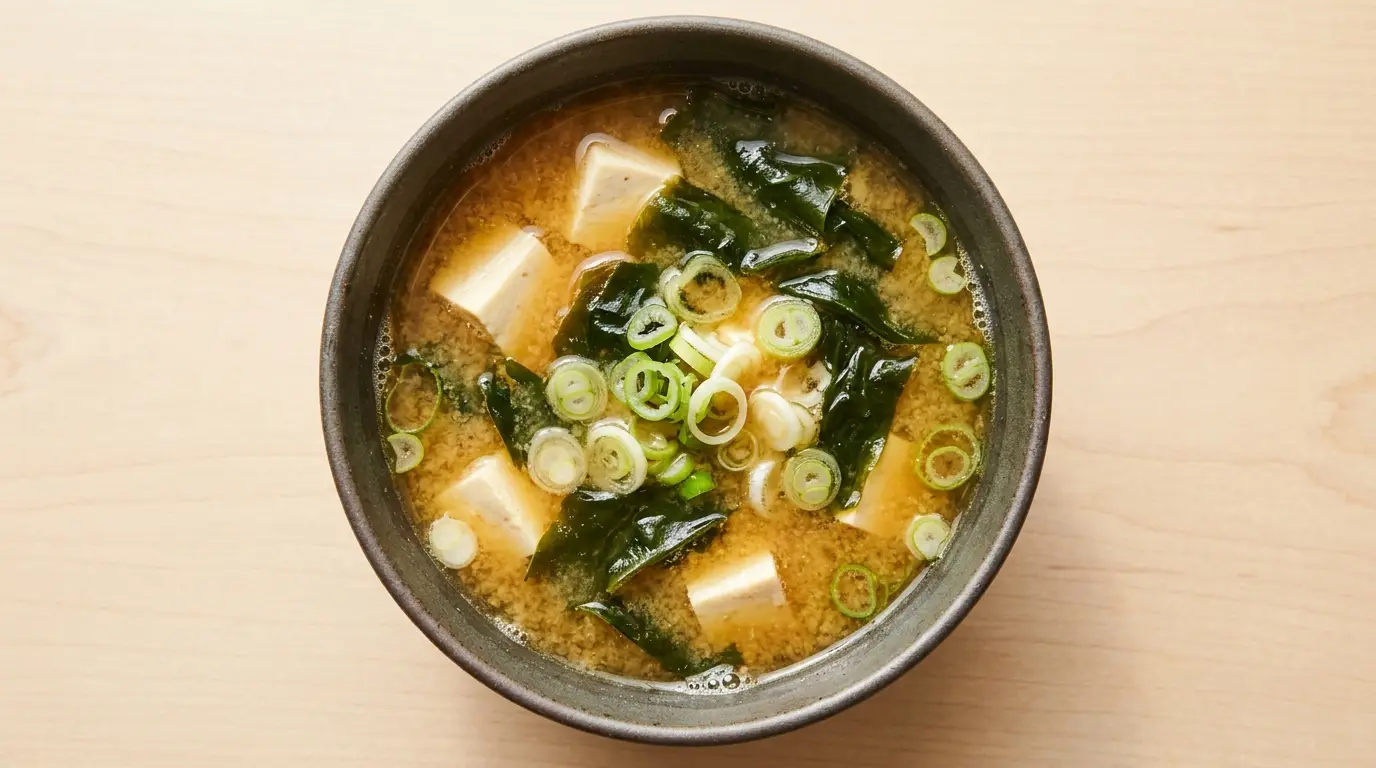
Miso Soup
Ingredients
- 4 cups cold water - 950 ml
- 1 piece dried kombu - about 4 × 4 inches (10 × 10 cm), roughly ⅓ ounce (10 g); do not wipe off the white powder
- 1 cup katsuobushi (dried bonito flakes) - about 10 g, lightly packed
- 4 cups dashi - 950 ml, from above
- 1 tablespoon dried cut wakame - about 3 g
- 7 ounces soft or silken tofu - 200 g, cut into ½-inch (about 1 cm) cubes
- 3 to 4 tablespoons white miso paste - 55 to 70 g; add 3 tablespoons first, then taste
- 2 scallions - thinly sliced, about ¼ cup or 25 g, using both white and green parts
Equipment
- Small saucepan - 2 to 3 quart (2 to 3 liter) pot with a light-colored interior
- Fine-mesh strainer - Catches every bonito flake so the dashi stays clear
- Kitchen shears - For cutting stiff dried kombu into clean pieces
- Ladle - Small ladle for dissolving miso and serving
- Liquid measuring cup - Strainer rests on top while pouring dashi through
- Japanese soup bowls - Small bowls that hold about 1 cup each
- Small mixing bowl - Holds the wakame while it rehydrates
- Chopsticks or a small whisk - For pushing the miso through the strainer
- Cutting board and sharp knife - For clean, thin cuts of tofu and scallions
Method
- Place the dried wakame in a small bowl, cover with cold water by at least 1 inch, and soak about 10 minutes. Thinly slice the scallions and cut the tofu into ½-inch cubes.
- Pour cold water into a small saucepan, add the kombu without wiping it, and bring up slowly over medium heat for 8 to 10 minutes. Pull the kombu out just before the water boils.
- Bring the kombu water back to a gentle simmer, add the bonito flakes, and simmer about 1 minute. Turn off the heat and let the flakes sink undisturbed for about 10 minutes without stirring.
- Pour the dashi through a fine-mesh strainer in one steady stream without pressing on the flakes. Discard the flakes, rinse the saucepan, and return the dashi to it.
- Bring the dashi to a gentle simmer, add the drained wakame, and slide in the tofu with a spoon, stirring only once. Simmer 1 to 2 minutes until warm, then turn heat to lowest setting.
- Turn off the heat entirely. Place 3 tablespoons of miso in a fine-mesh strainer or ladle held just under the surface, and press it through with chopsticks or a small whisk until fully dissolved. Taste and add the fourth tablespoon if desired.
- Stir in the sliced scallions with one gentle stir. Ladle into warm bowls right away, making sure each serving gets tofu, wakame, and scallions, and serve immediately.
Notes
- Never boil the kombu: bring it up slowly and remove it before the water boils, or the broth turns slimy and bitter and cannot be fixed.
- Never boil the miso: add it off the heat to preserve its aroma and the live cultures in unpasteurized miso.
- Strain the miso instead of stirring it in to remove lumps and leave a smooth, even broth.
- Start with 3 tablespoons of miso and taste before adding more, since brands vary a lot in saltiness.
- White miso gives the cleanest flavor; for more depth, blend equal parts white and red miso.
- Soak the wakame in cold water for about 10 minutes before using; dry wakame added straight to the pot swells unevenly and tastes chewy.
- For vegan miso soup, skip the bonito and steep 3 or 4 dried shiitake mushrooms with the kombu.
- Store leftover soup in an airtight container in the refrigerator for up to 2 days, or freeze the dashi separately for up to 1 month.
- Reheat gently over low heat just until steaming, and add fresh scallions after reheating.
- Keep miso paste refrigerated, and store kombu and bonito in a sealed bag in a cool pantry.
Private Notes
Tried this recipe?
Let us know how it was!Final Thoughts
A good bowl of miso soup is quiet and simple, and it depends on two small habits: heat the kombu slowly, and keep the miso off the boil.
Once those become automatic, the soup takes less than half an hour and tastes like it came from a Japanese kitchen.
Make a batch of dashi this week and try it with tofu, wakame, and scallions.
Leave a comment with your favorite add-in, and share the recipe with someone who needs a fast, warm bowl.
Recommended:
- Minestrone Soup
- Pumpkin Soup
- Tomato Soup
- Creamy Tomato Basil Soup
- Roasted Butternut Squash Soup
- Sweet Potato Soup
- Asparagus Soup
- Chicken Wild Rice Soup
- Cabbage Roll Soup