This chickpea and spinach curry recipe is one of those weeknight meals that manages to feel both effortless and deeply satisfying. It is an Indian-inspired one-pot dish built on a fragrant tomato and spice base, brought together with creamy coconut milk, hearty canned chickpeas, and a generous handful of fresh spinach.
Popularized across South Asian cooking as a variation of chana masala, this version is widely loved for its bold, warming spices and naturally vegan ingredients. You can have it on the table in under 35 minutes, making it a reliable go-to when you want a nutritious, flavour-packed dinner without a long list of prep work.
| Quick Recipe Summary | |
|---|---|
| Prep Time | 10 minutes |
| Cook Time | 25 minutes |
| Total Time | 35 minutes |
| Servings | 4 servings |
| Difficulty Level | Easy |
For another hearty, plant-based bowl the whole family will love, try: Lentil and Vegetable Soup

Why You’ll Love This Chickpea and Spinach Curry Recipe
This is the kind of recipe that earns a permanent spot in your weekly rotation after the very first bite. It delivers big restaurant-quality flavour using nothing but everyday pantry staples and simple fresh ingredients.
Here is exactly what makes it so special:
- It is genuinely quick. From chopping board to table in 35 minutes with minimal active effort.
- One pot, minimal washing up. The entire dish comes together in a single large pan or pot.
- Vegan and naturally gluten-free. No substitutions needed, it works for a wide range of dietary needs right out of the gate.
- Packed with plant-based protein and fibre. Chickpeas are a nutritional powerhouse, and combined with spinach, this meal is genuinely filling.
- The spice level is completely adjustable. Dial it up with extra chili or keep it mild and family-friendly.
- Leftovers taste even better. The flavours deepen overnight, making this a great meal-prep option.
- Budget-friendly. Canned chickpeas, canned tomatoes, and a handful of spices make this one of the most affordable meals you can make.
- Versatile serving options. Fantastic with basmati rice, naan bread, or even on its own as a thick stew.
- Beginner-friendly technique. No special skills required, just a bit of stirring and patience while the sauce simmers.
Read Also: Sweet Potato and Black Bean Bowls
Ingredients
You only need a handful of simple ingredients to make this curry, and most of them are likely already sitting in your pantry. Fresh ginger and garlic are worth buying fresh for the best flavour, but all the other basics are easy store-cupboard finds.
- 2 tablespoons (30 ml) neutral oil, such as sunflower or vegetable oil
- 1 large yellow onion, finely diced (about 1 cup / 150 g)
- 4 garlic cloves, minced
- 1 tablespoon (15 g) fresh ginger, finely grated or minced
- 1 green chili, finely chopped (optional, for added heat)
- 1 teaspoon ground cumin
- 1 teaspoon ground coriander
- 1 teaspoon ground turmeric
- 1 teaspoon garam masala, divided (plus extra to finish)
- 1/2 teaspoon chili powder (or to taste)
- 1 can (14 oz / 400 g) crushed or diced tomatoes
- 1 tablespoon (15 g) tomato paste
- 2 cans (15 oz / 425 g each) chickpeas, drained and rinsed
- 1 can (13.5 oz / 400 ml) full-fat coconut milk
- 1/2 cup (120 ml) low-sodium vegetable stock
- 5 oz (140 g) fresh baby spinach, roughly chopped (or 3 oz / 85 g frozen spinach, thawed and squeezed dry)
- 1 teaspoon salt, plus more to taste
- 1/2 teaspoon black pepper
- Juice of half a lemon (about 1 tablespoon / 15 ml)
- Small handful of fresh cilantro (coriander), for garnish
- Cooked basmati rice or naan bread, to serve
This recipe pairs naturally with my basmati rice for a complete, satisfying meal.
Kitchen Equipment Needed
You do not need any special equipment for this recipe. A good-quality pan and a sharp knife are the main tools required.
- Large deep skillet or sauté pan (at least 12 inches / 30 cm), or a Dutch oven
- Wooden spoon or silicone spatula
- Sharp chef’s knife
- Cutting board
- Fine grater or microplane (for fresh ginger)
- Garlic press or small grater (for garlic)
- Measuring spoons and measuring cups
- Can opener
- Colander or fine mesh strainer (for draining and rinsing chickpeas)
- Ladle (for serving)
- Small bowl (to measure out spices before cooking, optional but helpful)
Read Also: Healthy Cabbage Skillet with Quinoa and Chickpeas
Recommended Products for This Recipe
I have made this curry dozens of times and these are the products that genuinely make a difference. Whether it is the quality of your spices or your cookware, the right tools and ingredients elevate this dish significantly.
1. Garam Masala by Frontier Co-op (Organic)
Good garam masala is the backbone of this curry, and the difference between a fresh, fragrant blend and a stale supermarket jar is enormous. This organic blend from Frontier Co-op has a well-balanced, aromatic depth that lifts the whole dish. I have been using it for years and it makes every curry noticeably better.
2. Lodge Enameled Cast Iron Dutch Oven
A heavy-bottomed Dutch oven is worth its weight in gold for curry. It distributes heat evenly so your aromatics sauté without scorching, and the deep sides make stirring in the spinach effortless. Lodge’s enameled cast iron is a brilliant option that is far more affordable than European brands, and it will last decades with proper care.
3. Better Than Bouillon Vegetable Base
The liquid component of a curry matters more than most people realise. A high-quality vegetable base like Better Than Bouillon adds a layer of savoury depth to the sauce that plain water simply cannot replicate. A small spoonful dissolved in hot water gives you a rich, flavourful stock in seconds.
4. OXO Good Grips Box Grater with Microplane
Fresh ginger and garlic make all the difference in this recipe, and a sharp microplane or fine grater box makes the job quick and fuss-free. Grating ginger on a fine surface rather than mincing it releases far more flavour into the sauce. The OXO Good Grips version is sturdy and comfortable to use.
I learned so much about balancing spice blends while testing my tandoori chicken, and many of those same techniques apply perfectly here.
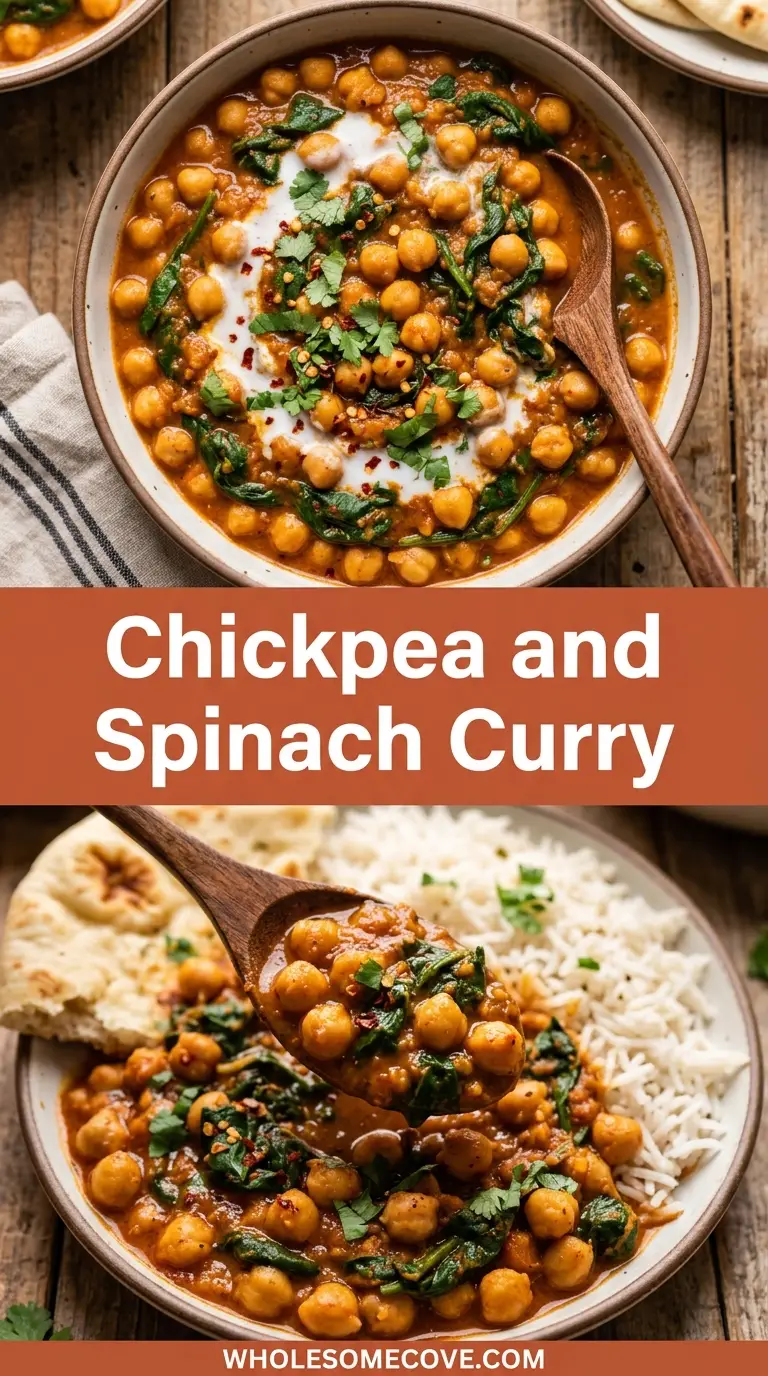
Step-by-Step Instructions: How to Make Chickpea and Spinach Curry
Follow these simple steps and you will have a beautiful, fragrant chickpea and spinach curry ready in about 35 minutes.
Step 1: Sauté the Onion
- Heat 2 tablespoons (30 ml) of oil in a large deep skillet or Dutch oven over medium heat.
- Once the oil shimmers, add the finely diced onion.
- Cook, stirring occasionally, for 7 to 8 minutes until the onion is soft, translucent, and beginning to turn golden at the edges.
- Do not rush this step. Properly softened onion forms the flavour foundation of the entire curry, so give it the time it needs.
Step 2: Add the Aromatics
- Add the minced garlic, grated ginger, and chopped green chili (if using) to the pan.
- Stir everything together and cook for 1 to 2 minutes, stirring constantly, until fragrant.
- The garlic should smell toasty and sweet, not burned. If it begins to darken too quickly, lower the heat slightly.
Step 3: Toast the Spices
- Add the ground cumin, ground coriander, ground turmeric, half the garam masala (1/2 teaspoon), and chili powder directly to the pan.
- Stir well to coat the onion and aromatics completely with the spice mixture.
- Cook for 1 to 2 minutes, stirring continuously, until the spices deepen in colour slightly and smell richly fragrant.
- This step, known as blooming the spices, unlocks fat-soluble flavour compounds and is key to a complex, well-developed curry base.
Step 4: Add Tomatoes and Tomato Paste
- Add the tomato paste to the pan and stir it into the spiced onion mixture. Cook for 1 minute.
- Pour in the can of crushed or diced tomatoes and stir everything together.
- Season with 1 teaspoon of salt and 1/2 teaspoon of black pepper.
- Bring to a gentle simmer and cook for 5 minutes, stirring occasionally, until the sauce thickens slightly and the oil begins to separate around the edges. This is a sign the tomato base is cooked through.
Step 5: Add the Chickpeas and Liquid
- Add both drained and rinsed cans of chickpeas to the pan.
- Pour in the full-fat coconut milk and the vegetable stock.
- Stir everything together gently so the chickpeas are fully coated in the sauce.
- Raise the heat to bring the curry to a bubbling simmer, then reduce to medium-low.
- Cook uncovered for 10 minutes, stirring occasionally, until the sauce reduces and thickens to your liking. If you prefer a thicker curry, use the back of a spoon to gently mash a portion of the chickpeas against the side of the pan.
Step 6: Wilt in the Spinach
- Add the chopped fresh baby spinach to the pan in two or three batches, stirring between each addition.
- Allow the spinach to wilt into the curry over 2 to 3 minutes. It will reduce dramatically in volume.
- If using frozen spinach, make sure it has been fully thawed and any excess water squeezed out before adding it.
Step 7: Finish and Taste
- Stir in the remaining 1/2 teaspoon of garam masala. Adding it at the end preserves its fresh, floral top notes.
- Squeeze in the juice of half a lemon and stir to combine.
- Taste the curry and adjust salt, lemon, or chili to your preference.
- Remove from the heat and garnish generously with fresh cilantro.
Step 8: Serve
- Ladle the curry into bowls over fluffy cooked basmati rice, or serve alongside warm naan bread.
- Offer extra fresh cilantro, a wedge of lemon, and a drizzle of coconut cream at the table if you like.
You might also enjoy: Cauliflower Fried Rice with Tofu
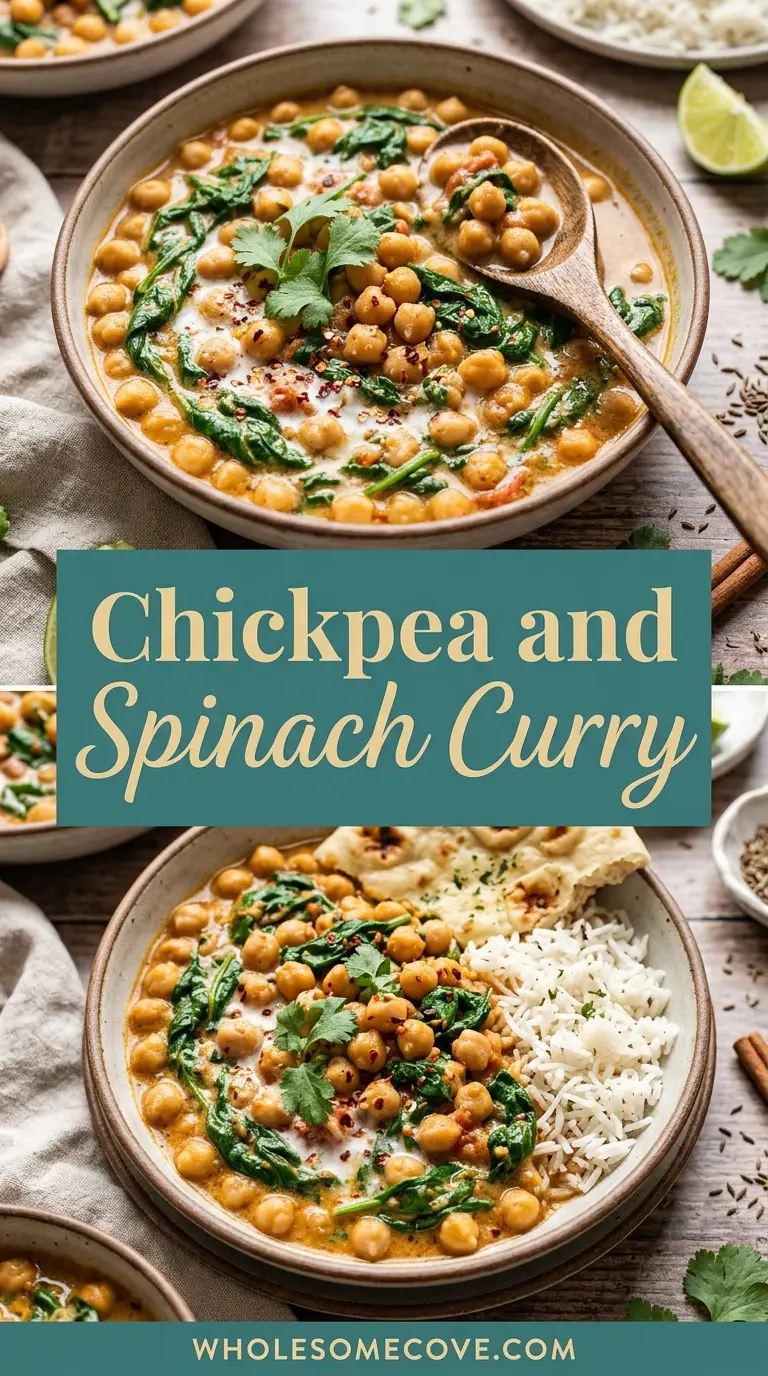
Tips for The Best Chickpea and Spinach Curry
A few small details separate a good chickpea curry from a brilliant one. Over many rounds of making this dish, I have picked up the techniques that really move the needle.
- Do not skip toasting the spices. Dry-frying your spice mixture in the hot oil for a couple of minutes unlocks flavours you simply cannot get otherwise. It is the single most impactful step in the entire recipe.
- Use full-fat coconut milk. Low-fat coconut milk produces a watery, thin sauce that does not have the same creamy body. Full-fat is the way to go, every single time.
- Add garam masala in two stages. Half goes in with the other spices at the beginning to build base flavour, and the other half goes in at the very end to add a fresh, aromatic top note. This technique makes a real difference.
- Let the onion properly caramelise. Seven to eight minutes feels long, but golden, jammy onion adds a natural sweetness that balances the acidity of the tomatoes beautifully.
- Mash some chickpeas for a creamier texture. Using the back of a spoon to crush roughly a quarter of the chickpeas against the side of the pan creates a naturally thicker, more luscious sauce.
- Taste and adjust at the end. Different canned tomato brands vary in acidity. A pinch of sugar can round out an overly sharp sauce, or a little extra lemon juice can brighten a flat one.
- Let it rest before serving. Even five minutes off the heat allows the flavours to settle and deepen. The curry tastes noticeably better after a short rest.
- Fresh ginger beats powdered every time. Grated fresh ginger has a brightness and warmth that ground ginger simply does not replicate in a dish like this.
- Rinse your chickpeas thoroughly. Rinsing removes the starchy liquid from the can and allows the chickpeas to absorb the curry sauce more effectively.
- Season in layers. Add a pinch of salt when the onions go in, another when the tomatoes go in, and taste again at the end. Layering seasoning builds a much more rounded flavour than a single large addition.
Read Also: Lentil Soup
What to Serve with Chickpea and Spinach Curry
This curry is a complete, satisfying meal on its own, but the right accompaniments take it to a whole other level. From simple grains to crisp breads, here are my favourite ways to serve it.
- Basmati rice: The classic pairing. Fluffy, long-grain basmati soaks up the sauce beautifully and adds a neutral backdrop for the spiced curry.
- Garlic naan: Soft, pillowy naan is wonderful for scooping up every last drop of the sauce. Warmed in a pan with a little butter, it is hard to beat.
- Brown rice: A heartier, nuttier option that adds extra fibre to an already nutritious meal.
- Quinoa: A great gluten-free, high-protein base that pairs surprisingly well with bold curry flavours.
- Cauliflower rice: A low-carb alternative that keeps the meal light without sacrificing satisfaction.
- Plain yogurt or raita: A dollop of cooling yogurt on top cuts through the heat and adds a lovely creamy contrast. Stir in cucumber and mint for a quick raita.
- Mango chutney: Sweet and tangy chutney alongside the curry is a classic Indian restaurant combination worth recreating at home.
- Pickled red onions: A quick pickle adds brightness and acidity that plays beautifully against the rich, creamy sauce.
- Papadums: Crisp, light papadums are an ideal accompaniment for texture contrast alongside a saucy curry.
- Fresh salad: A simple cucumber, tomato, and red onion salad with a squeeze of lemon provides a refreshing counterpoint to the warm, spiced curry.
- Roasted vegetables: Crispy roasted cauliflower or sweet potato make excellent sides to round out a bigger spread.
You might also enjoy: Mediterranean Quinoa Salad with Grilled Chicken
Variations of Chickpea and Spinach Curry
Once you have the base recipe down, there are so many delicious directions you can take it. Here are some of my favourite variations to keep things interesting.
- Potato and chickpea curry (Aloo Chana): Add 2 medium diced potatoes (about 300 g / 10 oz) alongside the tomatoes and cook until tender. This makes the dish even heartier and more filling.
- Coconut-free version: Skip the coconut milk entirely and use an extra half cup of vegetable stock instead. The result is a lighter, more traditional chana masala-style curry with a clear tomato and spice base.
- Extra creamy version: Stir a couple of tablespoons of cashew cream or a spoonful of almond butter into the sauce just before adding the spinach. It creates a wonderfully rich, restaurant-style texture.
- Spicy chickpea curry: Add a full teaspoon of chili powder plus two teaspoons of finely chopped fresh red chili for a fiery, bold version. A handful of curry leaves fried in the oil at the very beginning also adds an incredible South Indian fragrance.
- Tomato-free version: Replace the canned tomatoes with an extra can of coconut milk and a tablespoon of white wine vinegar for acidity. The result is a pale, creamy, mildly spiced curry with a very different character.
- Lentil and chickpea curry: Add half a cup (100 g) of red lentils at the same time as the chickpeas. They cook down into the sauce, thickening it naturally and adding extra protein.
- Slow cooker version: After sautéing the aromatics and spices on the stove, transfer everything to a slow cooker and cook on low for 6 to 8 hours or high for 3 to 4 hours. Add the spinach and coconut milk in the final 30 minutes.
- Butternut squash and chickpea curry: Cube and roast a small butternut squash (about 400 g / 14 oz) until golden, then stir it in with the chickpeas. The natural sweetness of the squash is a gorgeous contrast to the savoury spices.
- Kale instead of spinach: Swap the spinach for roughly torn curly kale. Kale holds its texture better in the sauce and adds a slightly earthier, more robust flavour. Add it a couple of minutes earlier than you would spinach.
- Chickpea tikka masala: Add a teaspoon of smoked paprika and an extra tablespoon of tomato paste to the base, and finish with a splash of heavy cream (or coconut cream) for a tikka masala-inspired version.
I love serving this with a bowl of kale and sweet potato soup when I am cooking for a crowd.
Storage and Reheating
Chickpea and spinach curry stores exceptionally well, and the flavours only improve after a day in the fridge. Here is everything you need to know about keeping it fresh.
- Refrigerator: Allow the curry to cool completely before transferring to an airtight container. It keeps in the fridge for up to 4 days. The spinach may darken slightly but the flavour is unaffected.
- Freezer: This curry freezes beautifully. Portion it into freezer-safe containers or resealable bags and freeze for up to 3 months. For best results, freeze it without the rice and cook fresh rice when serving.
- Thawing: Transfer frozen curry to the refrigerator the night before you plan to eat it. Allow it to thaw overnight for the best texture.
- Reheating on the stovetop (preferred method): Pour the curry into a saucepan over medium-low heat. Add a splash of water or vegetable stock to loosen the sauce if it has thickened during storage. Stir gently and heat for 5 to 7 minutes until piping hot throughout.
- Reheating in the microwave: Transfer a portion to a microwave-safe bowl. Cover loosely with a lid or microwave-safe plate to prevent splattering. Heat on full power for 2 to 3 minutes, stirring halfway through, until heated evenly.
- Do not refreeze: Once thawed, do not refreeze the curry. Reheat only what you need.
- Meal prep tip: This recipe doubles easily. Make a double batch on a Sunday and you have four ready-made meals for the week. The curry improves in flavour as it sits, making it one of the best dishes for meal prepping.
You might also enjoy: Healthy Fried Rice
Nutritional Facts
| Nutritional Facts (Per Serving, approx. 1.5 cups / 360 g, without rice) | |
|---|---|
| Calories | 380 kcal |
| Total Fat | 18 g |
| Saturated Fat | 11 g |
| Carbohydrates | 44 g |
| Dietary Fibre | 11 g |
| Sugars | 9 g |
| Protein | 14 g |
| Sodium | 620 mg |
| Iron | 6 mg (33% DV) |
| Vitamin C | 22 mg (24% DV) |
| Calcium | 120 mg (12% DV) |
Nutritional values are estimates based on standard ingredient amounts. Actual values may vary depending on specific brands and portion sizes.
Read Also: Creamed Spinach
Health Benefits of Key Ingredients
This curry is not just satisfying, it is genuinely nourishing. Each key ingredient brings a meaningful nutritional contribution to the bowl.
- Chickpeas: One of the richest plant-based sources of protein and fibre, chickpeas support digestive health, help stabilise blood sugar levels, and promote a lasting feeling of fullness. They are also an excellent source of manganese, folate, and phosphorus.
- Spinach: Spinach is loaded with iron, vitamin K, vitamin A, and folate. It is one of the most nutrient-dense leafy greens available, and its antioxidants, including lutein and zeaxanthin, support eye health and help protect against cellular damage.
- Coconut milk: While high in saturated fat, the medium-chain triglycerides (MCTs) in coconut milk are metabolised differently from other fats and may support energy levels. Coconut milk also contains lauric acid, which has antimicrobial and anti-inflammatory properties.
- Turmeric: The active compound curcumin in turmeric is one of the most studied natural anti-inflammatories. Regular consumption is linked to reduced inflammation, improved brain function, and antioxidant protection.
- Ginger: Fresh ginger is well established for its digestive benefits. It can reduce nausea, support gut motility, and has powerful anti-inflammatory and antioxidant effects.
- Garlic: Garlic contains allicin, a compound with proven antimicrobial and cardiovascular benefits. Regular garlic consumption is associated with lower blood pressure and improved immune function.
- Tomatoes: Canned tomatoes are an excellent source of lycopene, a powerful antioxidant linked to reduced risk of heart disease and certain cancers. The lycopene in cooked tomatoes is actually more bioavailable than in raw tomatoes.
- Cumin: Beyond adding warmth and depth to the flavour of this curry, cumin has been shown to support digestion, reduce bloating, and may have anti-diabetic properties due to its effect on blood sugar regulation.
I love incorporating dishes like this one into a broader healthy cooking routine. Check out my easy healthy dinner recipes for family for more inspiration.
FAQs About Chickpea and Spinach Curry
1. Can I use dried chickpeas instead of canned?
Yes, absolutely. Soak 1 cup (200 g) of dried chickpeas in plenty of cold water overnight, then drain and simmer in fresh water for 1 to 1.5 hours until fully tender. Use roughly 3 cups (500 g) of cooked chickpeas in place of the two cans. Dried chickpeas have a slightly firmer texture and arguably better flavour, though the time investment is significantly greater than opening a can.
2. Is this curry very spicy?
As written, the curry is mildly to moderately spicy, with the heat coming primarily from the chili powder and optional green chili. It is very easy to adjust. For a mild version, halve the chili powder and skip the fresh chili entirely. For a hot version, double the chili powder, add extra fresh chili, or stir in a teaspoon of cayenne pepper.
3. Can I make this curry without coconut milk?
Yes, you can. The coconut milk adds creaminess and a subtle sweetness, but the curry still works without it. Replace the coconut milk with an extra half cup (120 ml) of vegetable stock for a lighter, more traditional tomato-based version. You could also use a tablespoon of plain yogurt stirred in at the end for a small amount of creaminess without the coconut flavour.
4. Can I add other vegetables to this curry?
Definitely. This recipe is very flexible. Diced sweet potato, cubed butternut squash, cauliflower florets, frozen peas, or sliced bell peppers all work beautifully. Add harder vegetables like sweet potato alongside the chickpeas so they have enough time to cook through. Softer vegetables like peas or peppers can go in with the spinach in the final few minutes.
5. How do I stop the curry from being too watery?
The most effective fix is to cook the curry uncovered at a steady simmer for a longer period. Each additional 5 minutes of uncovered simmering will reduce the sauce noticeably. Mashing a quarter of the chickpeas with a spoon also thickens the sauce naturally. If you need a quick fix, a small paste of cornstarch mixed with cold water (1 teaspoon cornstarch to 2 teaspoons water) stirred in during the final few minutes will thicken things up fast.
For more plant-based meal ideas, you might also enjoy: Chickpea Salad
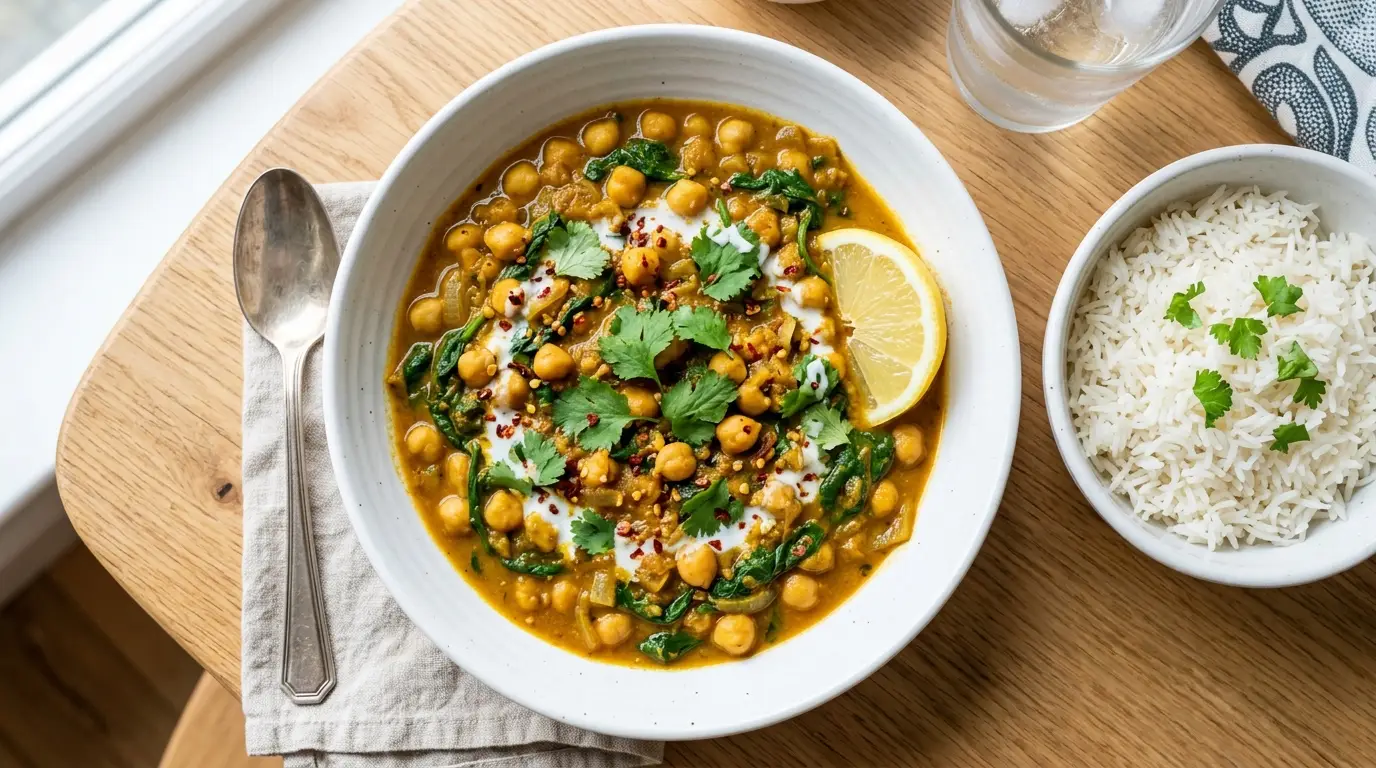
Chickpea and Spinach Curry
Ingredients
- 2 tablespoons neutral oil - 30 ml; sunflower or vegetable oil
- 1 large yellow onion - about 1 cup or 150 g, finely diced
- 4 garlic cloves - minced
- 1 tablespoon fresh ginger - 15 g, finely grated or minced
- 1 green chili - optional, finely chopped, for added heat
- 1 teaspoon ground cumin
- 1 teaspoon ground coriander
- 1 teaspoon ground turmeric
- 1 teaspoon garam masala - divided — half added with spices, half stirred in at the end
- 1/2 teaspoon chili powder - or to taste
- 1 can (14 oz) crushed or diced tomatoes - 400 g
- 1 tablespoon tomato paste - 15 g
- 2 cans (15 oz each) chickpeas - 425 g each; drained and rinsed
- 1 can (13.5 oz) full-fat coconut milk - 400 ml
- 1/2 cup low-sodium vegetable stock - 120 ml
- 5 oz fresh baby spinach - 140 g, roughly chopped; or 3 oz / 85 g frozen spinach, thawed and squeezed dry
- 1 teaspoon salt - plus more to taste
- 1/2 teaspoon black pepper
- 1/2 lemon - juiced; about 1 tablespoon or 15 ml
- fresh cilantro - small handful, for garnish
- cooked basmati rice or naan bread - to serve
Equipment
- Large deep skillet or sauté pan (12 inches / 30 cm) - Or a Dutch oven
- Dutch oven - Optional alternative to skillet
- Fine grater or microplane - For fresh ginger
- Garlic press or small grater - For garlic
- Measuring spoons and measuring cups
- Colander or fine mesh strainer - For draining and rinsing chickpeas
- Ladle - For serving
- Small bowl - Optional — for pre-measuring spices before cooking
Method
- Heat 2 tablespoons of oil in a large deep skillet or Dutch oven over medium heat. Add the finely diced onion and cook, stirring occasionally, for 7 to 8 minutes until soft, translucent, and lightly golden at the edges.
- Add the minced garlic, grated ginger, and chopped green chili (if using) to the pan. Cook for 1 to 2 minutes, stirring constantly, until fragrant and toasty.
- Add the ground cumin, coriander, turmeric, half the garam masala (1/2 teaspoon), and chili powder. Stir well to coat the onion mixture and cook for 1 to 2 minutes until the spices deepen in colour and smell richly fragrant.
- Stir in the tomato paste and cook for 1 minute, then pour in the canned tomatoes. Season with 1 teaspoon of salt and 1/2 teaspoon of black pepper, and simmer for 5 minutes until the sauce thickens slightly and oil begins to separate around the edges.
- Add both drained cans of chickpeas, the full-fat coconut milk, and vegetable stock, then stir to combine. Bring to a bubbling simmer and cook uncovered over medium-low heat for 10 minutes, stirring occasionally, until the sauce reduces and thickens to your liking.
- Add the chopped baby spinach in two or three batches, stirring between each addition. Allow it to wilt into the curry over 2 to 3 minutes.
- Stir in the remaining 1/2 teaspoon of garam masala and the lemon juice. Taste and adjust salt, lemon, or chili to your preference, then remove from the heat.
- Garnish generously with fresh cilantro and serve over fluffy basmati rice or alongside warm naan bread.
Nutrition
Notes
- Toast your spices in the hot oil for the full 1 to 2 minutes — this single step unlocks the most flavour and is the key to a complex, deeply spiced curry base.
- Always use full-fat coconut milk. Low-fat versions produce a thin, watery sauce that lacks the creamy body this curry needs.
- Add garam masala in two stages: half with the other spices at the start to build base flavour, and the second half at the very end to preserve its fresh, floral top notes.
- For a thicker sauce, mash roughly a quarter of the chickpeas against the side of the pan with the back of a spoon — this naturally thickens the gravy without any starch.
- To make it coconut-free, replace the coconut milk with an additional 1/2 cup (120 ml) of vegetable stock for a lighter, tomato-forward version similar to traditional chana masala.
- Leftovers store in an airtight container in the refrigerator for up to 4 days and taste even better the next day as the flavours deepen.
- To freeze, cool completely and portion into freezer-safe containers. Freeze for up to 3 months and thaw overnight in the refrigerator before reheating gently on the stovetop with a splash of water.
- Fresh ginger gives a brightness that ground ginger cannot replicate in this dish — use fresh whenever possible.
- Feel free to add other vegetables: diced sweet potato or cauliflower florets go in with the chickpeas, while frozen peas or sliced bell peppers can be stirred in with the spinach at the end.
- If using dried chickpeas instead of canned, soak 1 cup (200 g) overnight and simmer until tender (about 1 to 1.5 hours), then use approximately 3 cups (500 g) cooked in place of the two cans.
Private Notes
Tried this recipe?
Let us know how it was!Final Thoughts
This chickpea and spinach curry recipe is proof that wholesome, flavour-packed food does not have to be complicated or time-consuming. The combination of fragrant spices, creamy coconut milk, and hearty chickpeas makes it genuinely crave-worthy every time.
Give this recipe a go this week and see for yourself. If you try it, leave a comment below and let me know how it turned out. I would love to hear your variations and serving ideas!
Recommended:
- Brown Basmati Rice
- Summer Vegetable Stir Fry
- Healthy Hummus
- Tofu and Veggie Stir Fry with Brown Rice
- Beef and Broccoli Stir Fry
- Grilled Vegetable Skewers
- Tuna and White Bean Salad
- Eggplant Parmesan with Zucchini
- Spinach Smoothie
- Healthy Shepherd’s Pie