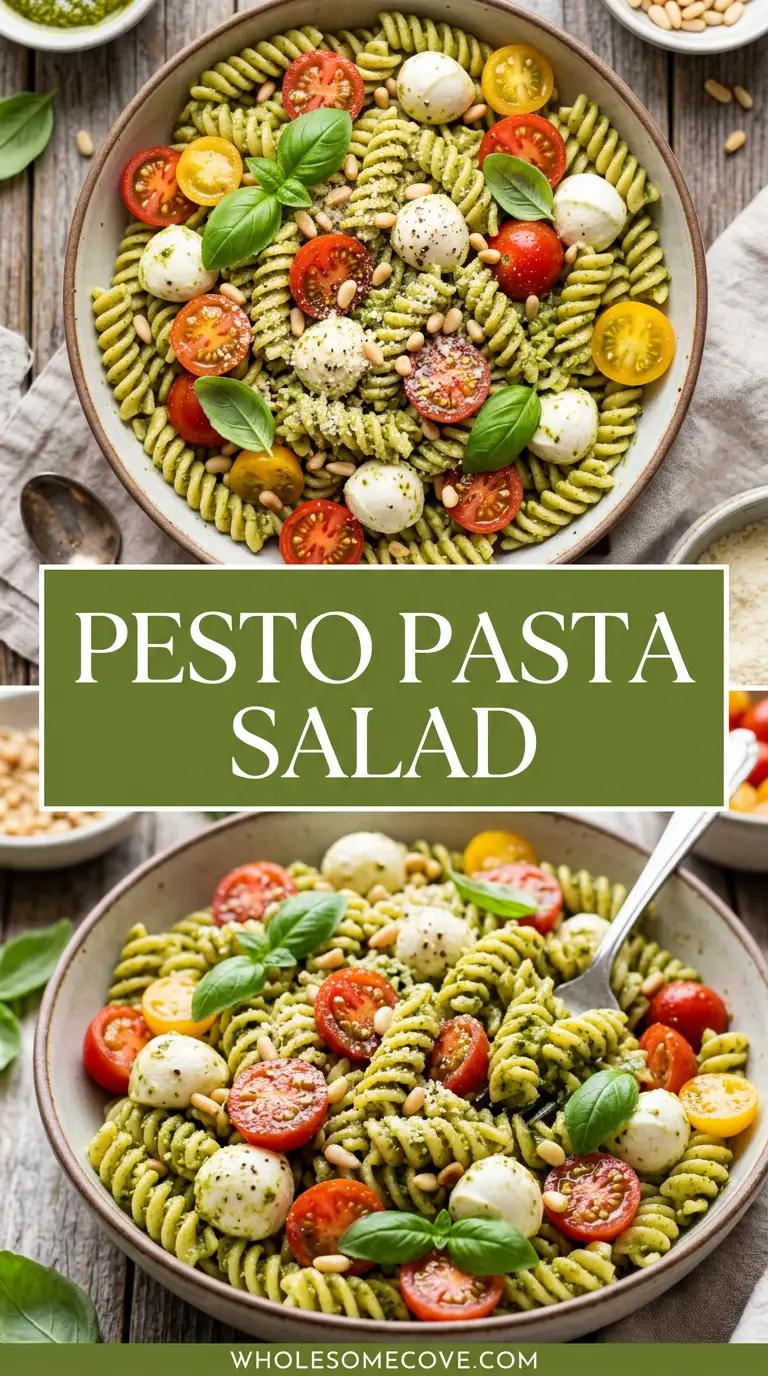
Pesto pasta salad earns its spot at the potluck table because it needs almost nothing beyond a pot of pasta and a jar of good basil pesto. This pesto pasta salad recipe pulls together in thirty minutes total, and the trick that keeps it from turning dry by the time you serve it is a small spoonful of mayonnaise stirred into the pesto itself.
Basil pesto naturally breaks and turns oily once it sits on chilled pasta, and that thin layer of mayo binds the oil back into the sauce so every noodle stays coated instead of pooling at the bottom of the bowl.
Toasted pine nuts, halved cherry tomatoes, and torn bocconcini round it out for a dish that holds its texture for hours, not just the first ten minutes off the stove.
| Quick Recipe Summary | |
|---|---|
| Prep Time | 20 minutes |
| Cook Time | 10 minutes |
| Total Time | 30 minutes |
| Servings | 8 servings |
| Difficulty Level | Easy |
You might also enjoy: Classic Pasta Salad
Why You’ll Love This Pesto Pasta Salad Recipe
This is the kind of dish you can throw together on a weeknight or scale up for a backyard cookout without changing a single step. It uses one pot, one bowl, and about twelve ingredients you can find at any regular grocery store.
- Comes together in half an hour. The pasta is the only thing that needs actual cooking, and everything else is just chopping and stirring.
- Tastes better the longer it sits. Unlike leafy green salads, this one improves as the pasta soaks up the pesto over an hour or two in the fridge.
- Feeds a crowd without effort. One batch serves eight, and it doubles easily for larger gatherings.
- Travels well. It holds up in a cooler or on a buffet table far longer than a mayo-based salad without pesto’s protective oil layer to keep it moist.
- Flexible with what you have. Store-bought pesto works just as well as homemade when you’re short on time, and the mix-ins are easy to swap based on what’s in the fridge.
- Naturally vegetarian. With no meat in the base recipe, it’s an easy side to bring when you’re not sure about everyone’s dietary preferences.
I borrowed this trick from my Pesto Recipe: toasting the pine nuts in a dry skillet for two minutes before adding them makes a noticeably bigger difference in flavor than adding them raw.
Ingredients
Everything here is easy to find in a regular grocery store, and most of it can be prepped while the pasta water comes to a boil. None of it requires a special trip to a specialty market, though the ingredient notes below will point you toward the versions that make the biggest difference in flavor.
- 1 pound (450g) rotini or fusilli pasta
- ¾ cup (180ml) basil pesto, homemade or store-bought
- 2 cups (300g) cherry or grape tomatoes, halved
- 8 ounces (225g) fresh mozzarella bocconcini, halved if large
- ⅓ cup (45g) pine nuts, toasted
- ½ cup (60g) thinly sliced red onion
- ¼ cup (10g) fresh basil leaves, torn, plus extra for garnish
- 2 tablespoons (30ml) extra virgin olive oil
- 1 tablespoon (15ml) fresh lemon juice, from about half a lemon
- 2 tablespoons (30g) mayonnaise, optional, for extra creaminess
- ¼ cup (25g) grated Parmesan cheese
- Kosher salt and freshly ground black pepper, to taste
Kitchen Equipment Needed
None of this requires specialty equipment. A well-stocked home kitchen already has most of it, and none of the pieces below are single-use gadgets you’ll only pull out for this one recipe.
- Large stockpot for boiling the pasta
- Colander for draining
- Large mixing bowl for tossing the salad
- Cutting board and chef’s knife
- Small dry skillet for toasting the pine nuts
- Measuring cups and spoons
- Citrus juicer or reamer
- Wooden spoon or rubber spatula for tossing
Recommended Products for This Recipe
These are products I’ve actually used while testing and remaking this recipe, and each one solves a specific problem I ran into.
1. Rana Refrigerated Basil Pesto
Shelf-stable jarred pesto tends to taste flat and overly oily once it’s tossed with warm pasta. The refrigerated version has a brighter, fresher basil flavor that’s much closer to homemade, and it saves the ten minutes a food processor batch would take.
2. Terrasoul Superfoods Pine Nuts
Pre-toasted or stale pine nuts from the bulk bin at the grocery store are often rancid without any obvious smell until you bite into one. Buying a sealed bag from a dedicated source keeps them fresh enough that toasting brings out a real buttery flavor instead of a bitter one.
3. Microplane Premium Zester and Grater
Pre-shredded Parmesan from a bag has an anti-caking coating that keeps it from melting smoothly into the pesto. A microplane turns a block of Parmesan into a fine, fluffy shred that dissolves right into the warm pasta instead of clumping.
4. Pyrex Glass Meal Prep Containers with Lids
Pesto stains plastic containers a dull green after a few uses and the smell lingers even after washing. Glass containers with snap lids clean up completely and keep the salad’s basil flavor from tasting stale the next day.
I learned this technique while perfecting my Healthy Homemade Pesto: the fresher your pesto is, the less you need to season the finished salad with extra salt.
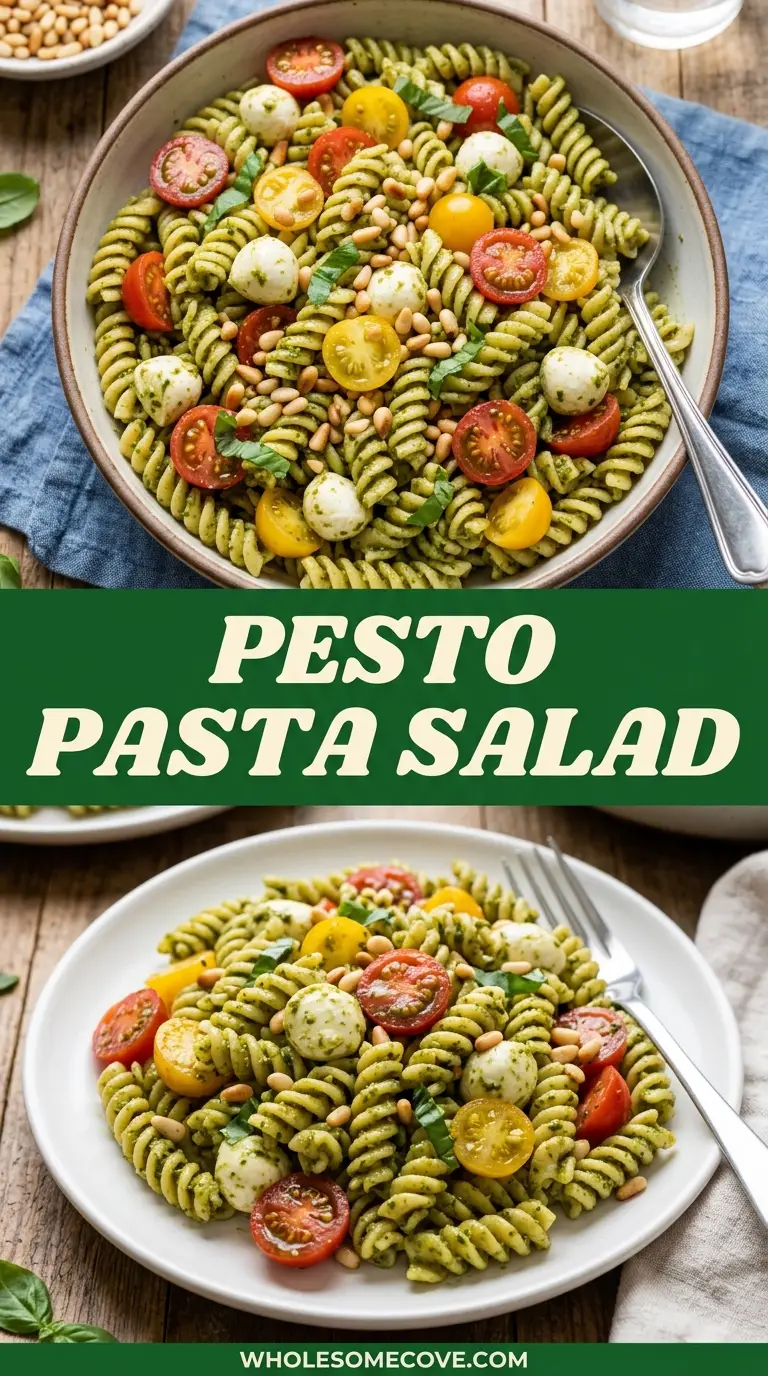
Step-by-Step Instructions: How to Make Pesto Pasta Salad
Follow these simple steps and you’ll have a delicious pesto pasta salad ready in no time.
1. Toast the Pine Nuts
- Place the pine nuts in a small, dry skillet over medium-low heat.
- Toast for 2 to 3 minutes, shaking the pan often, until they turn light golden and smell nutty.
- Immediately transfer the pine nuts to a small plate to stop the cooking, since they can go from toasted to burnt in seconds once removed from the heat.
2. Cook the Pasta
- Bring a large pot of generously salted water to a rolling boil, using about 1 tablespoon of salt per 4 quarts (3.8 liters) of water.
- Add the rotini or fusilli and cook according to the package directions until al dente, usually 9 to 11 minutes, stirring occasionally so the pieces don’t stick together.
- Reserve about ½ cup (120ml) of the starchy pasta water in a small cup before draining, since you may need it later to loosen the salad.
- Drain the pasta in a colander and rinse briefly under cool water to stop the cooking and bring the temperature down, then let it sit uncovered for about 5 minutes so any remaining steam can escape.
3. Prepare the Mix-Ins
- While the pasta cooks, halve the cherry tomatoes and set them aside in a small bowl.
- Halve the mozzarella bocconcini if the pieces are larger than a grape.
- Thinly slice the red onion and tear the fresh basil leaves by hand rather than cutting them, since tearing prevents the edges from bruising and turning dark.
4. Make the Pesto Dressing
- In a small bowl, whisk together the basil pesto, olive oil, lemon juice, and mayonnaise (if using) until smooth and fully combined.
- Taste the dressing and adjust with a pinch of salt if your pesto is on the milder side.
5. Toss the Pasta with the Dressing
- Transfer the drained, slightly cooled pasta to a large mixing bowl.
- Pour the pesto dressing over the pasta and toss thoroughly with a wooden spoon or spatula until every piece is coated.
- If the salad looks dry or the pesto is clinging unevenly, add the reserved pasta water one tablespoon at a time until the sauce loosens up.
6. Fold in the Remaining Ingredients
- Add the halved cherry tomatoes, mozzarella bocconcini, sliced red onion, and torn basil to the bowl.
- Gently fold everything together with the spatula, using a scooping motion from the bottom of the bowl rather than stirring, so the tomatoes and mozzarella stay intact.
- Sprinkle in the grated Parmesan and fold once more to distribute it evenly throughout the salad rather than leaving it clumped in one spot.
7. Season and Finish
- Taste the salad and season with kosher salt and freshly ground black pepper as needed.
- Scatter the toasted pine nuts over the top along with a few extra torn basil leaves for garnish.
- Serve immediately at room temperature, or chill for at least 30 minutes for the flavors to settle.
I borrowed this trick from my Caprese Pasta Salad: rinsing the pasta under cool water right after draining keeps the mozzarella from melting when it hits the noodles.
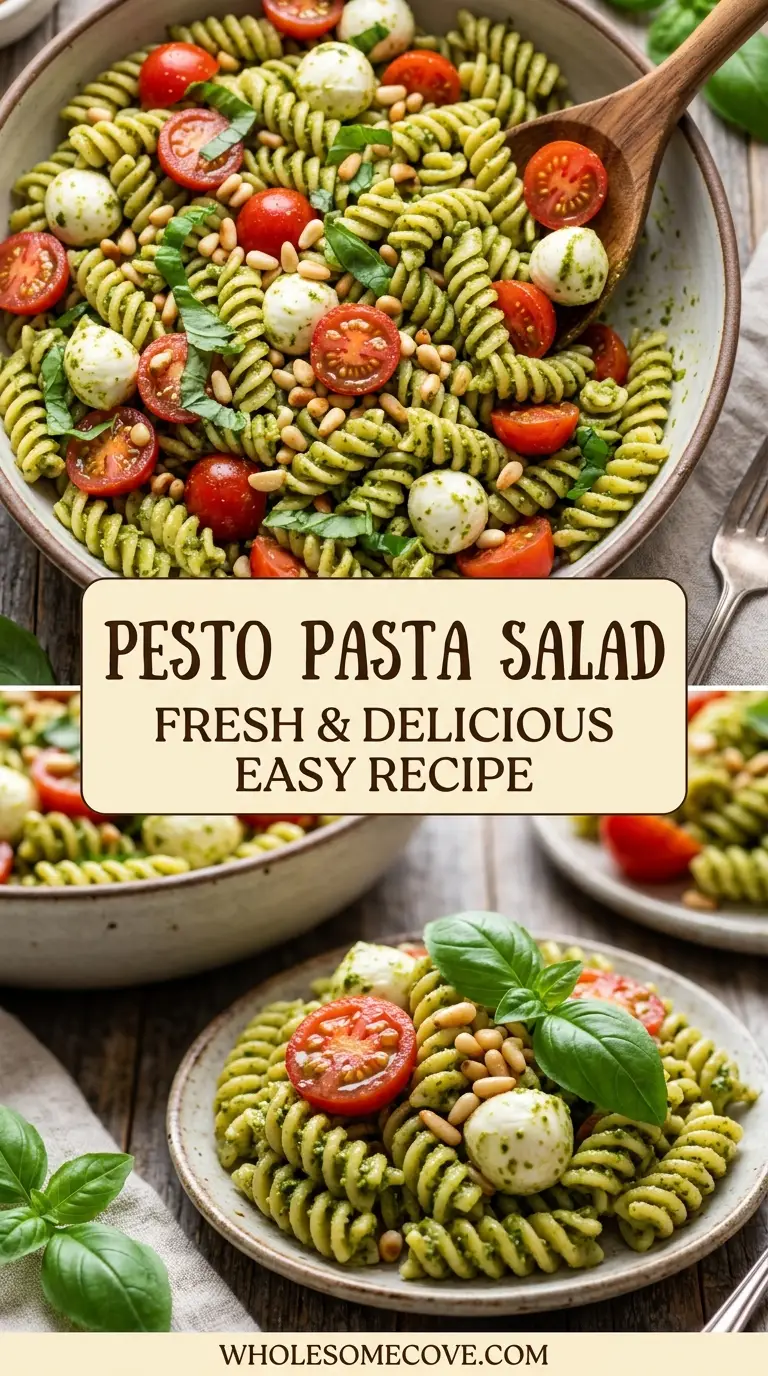
Tips for The Best Pesto Pasta Salad
A few small details separate a good pesto pasta salad from a great one, and most of them come down to timing and temperature.
- Salt the pasta water generously. It should taste like the sea, since this is your only real chance to season the pasta itself from the inside.
- Don’t skip cooling the pasta before dressing it. Tossing pesto with piping-hot pasta cooks the basil and dulls its bright green color within minutes.
- Toast the pine nuts separately from everything else. Adding them raw skips the flavor payoff that toasting brings out.
- Hold back some pasta water. It’s the easiest fix for a salad that looks dry after sitting in the fridge.
- Tear basil instead of chopping it. A knife bruises the leaves and turns the cut edges brown within an hour.
- Add delicate ingredients last. Folding in mozzarella and tomatoes at the very end keeps them intact instead of breaking down into the dressing.
- Bring it to room temperature before serving if chilled. Cold olive oil in the pesto can turn slightly cloudy and stiff straight out of the fridge.
- Use a pasta shape with ridges or curls. Rotini, fusilli, and farfalle all trap more pesto in their grooves than a smooth shape like penne.
- Slice the mozzarella and tomatoes to a similar size as the pasta shape. A bocconcini ball that’s much larger than a piece of rotini makes every bite uneven, so halving or quartering larger pieces keeps the ratios consistent.
I ruined my first few batches by dressing the pasta while it was still steaming, which left the pesto broken and oily by the time it cooled. Letting the pasta sit for five minutes uncovered before tossing fixed it completely.
Try this next: Tortellini Pasta Salad
What to Serve with Pesto Pasta Salad
This salad is substantial enough to serve on its own for lunch, but it also works as a side dish alongside just about any grilled or roasted protein. Its bright, herby flavor pairs especially well with foods that have a bit of char or smokiness to balance it out.
- Grilled proteins like Grilled Lemon Herb Chicken or Teriyaki Grilled Chicken
- Grilled Salmon with Dill Sauce for a lighter, seafood-forward pairing
- Lemon Garlic Shrimp Over Couscous if you want to keep the meal centered on seafood
- A simple green salad or Watermelon Feta Salad with Mint for something cool and refreshing on the side
- Warm, crusty garlic bread for scooping up any leftover pesto in the bowl
- Caprese Stuffed Avocados as a light starter that echoes the same tomato and basil flavors
- A cup of Creamy Tomato Basil Soup for a cozy pairing on a cooler evening
- Iced tea, sparkling lemonade, or a chilled dry white wine to round out a warm-weather meal
You might also enjoy: Greek Pasta Salad
Variations of Pesto Pasta Salad
Once you’ve made the base recipe a few times, it’s easy to build on it depending on what you have on hand or what the meal calls for.
- Add protein. Grilled chicken, shrimp, or canned white beans turn this side dish into a full meal.
- Swap the cheese. Try small cubes of provolone or crumbled feta in place of the mozzarella for a sharper flavor.
- Make it dairy-free. Skip the mozzarella and Parmesan and use a dairy-free pesto to keep the dish plant-based.
- Change the greens. Stir in a few handfuls of baby spinach or arugula along with the basil for extra volume and a slightly peppery bite.
- Go spicy. A pinch of red pepper flakes or a few slices of pickled jalapeño adds a sharp contrast to the herby pesto.
- Use a different pesto. Sun-dried tomato pesto or a walnut pesto both work well if you want a change from classic basil.
- Add crunch. Chopped roasted red peppers, sliced cucumber, or blanched green beans all add texture without changing the core flavor.
- Make it a picnic salad. Add drained artichoke hearts and sliced kalamata olives for a more Mediterranean-leaning version.
- Boost the greens further. A large handful of baby kale or shredded Brussels sprouts adds volume and a slightly bitter contrast that balances the richness of the pesto.
Read Also: Italian Pasta Salad
Storage and Reheating
Pesto pasta salad is a make-ahead dish by nature, and it holds up well in the fridge for several days when stored properly.
- Refrigerate in an airtight container for up to 4 days.
- Stir before serving. The pesto tends to settle at the bottom, so give the salad a good toss before plating leftovers.
- Revive dry leftovers with a small drizzle of olive oil or a splash of water, stirred in a tablespoon at a time.
- Serve cold or at room temperature. This salad isn’t meant to be reheated, since warming it can wilt the basil and separate the pesto.
- Freezing isn’t recommended. The mozzarella and tomatoes both turn watery and mealy once thawed.
- Keep the pine nuts separate if prepping ahead. Adding them just before serving keeps them crunchy instead of soggy.
- Bring leftovers out of the fridge about 15 minutes before eating. The olive oil in the pesto firms up when cold, and a short rest at room temperature loosens it back to its original texture.
You might also enjoy: Chicken Caesar Pasta Salad
Nutritional Facts
| Nutrition Per Serving (1 of 8) | |
|---|---|
| Calories | 385 kcal |
| Carbohydrates | 41g |
| Protein | 13g |
| Fat | 19g |
| Saturated Fat | 5g |
| Cholesterol | 18mg |
| Sodium | 410mg |
| Fiber | 3g |
| Sugar | 4g |
Nutritional values are estimates and will vary based on the specific brands and quantities used.
I found this recipe pairs well with my Tuna Pasta Salad if you’re planning a spread with a couple of pasta salad options side by side.
Health Benefits of Key Ingredients
Beyond tasting good, several ingredients in this salad bring genuine nutritional value to the table.
- Basil: Contains antioxidants like vitamin K and essential oils that have been studied for their anti-inflammatory properties.
- Extra virgin olive oil: A source of monounsaturated fats, the same type of fat associated with heart health in the Mediterranean diet.
- Cherry tomatoes: Rich in vitamin C and lycopene, an antioxidant linked to cell protection.
- Pine nuts: Provide plant-based protein along with magnesium and zinc, two minerals often lacking in a typical diet.
- Mozzarella: A good source of calcium and protein, particularly when made from part-skim milk.
- Parmesan cheese: Naturally lower in lactose than many cheeses and packed with calcium in small quantities.
- Garlic (in the pesto): Contains allicin, a compound associated with immune support when garlic is fresh.
- Whole grain pasta option: Swapping in a whole grain pasta adds fiber and slows the digestion of the dish’s carbohydrates.
Read Also: BLT Pasta Salad
FAQs About Pesto Pasta Salad
1. Can I make pesto pasta salad ahead of time?
Yes, this salad actually improves after an hour or two in the fridge as the pasta absorbs more of the pesto. Just hold off on adding the pine nuts until right before serving so they stay crunchy.
2. Why did my pesto turn brown?
Basil oxidizes quickly once it’s cut or blended and exposed to air, which causes the color to dull from bright green to olive or brown. Adding a splash of lemon juice or a small handful of baby spinach to the pesto helps slow this process down.
3. Can I use store-bought pesto instead of homemade?
Absolutely, and refrigerated pesto from the deli case tends to taste fresher than the shelf-stable jarred version. If the pesto tastes flat, a squeeze of fresh lemon juice usually brings it back to life.
4. What pasta shape works best for pesto pasta salad?
Short shapes with ridges or curls, like rotini, fusilli, or farfalle, hold onto the pesto better than smooth shapes like penne or macaroni. Avoid long noodles like spaghetti, since they tend to clump together once dressed and chilled.
5. How do I keep the pasta salad from drying out in the fridge?
Reserve some of the starchy pasta cooking water before draining and stir a tablespoon or two into the salad whenever it looks dry. A light drizzle of olive oil works as a backup if you didn’t save any pasta water.
You might also enjoy: Pasta House Salad
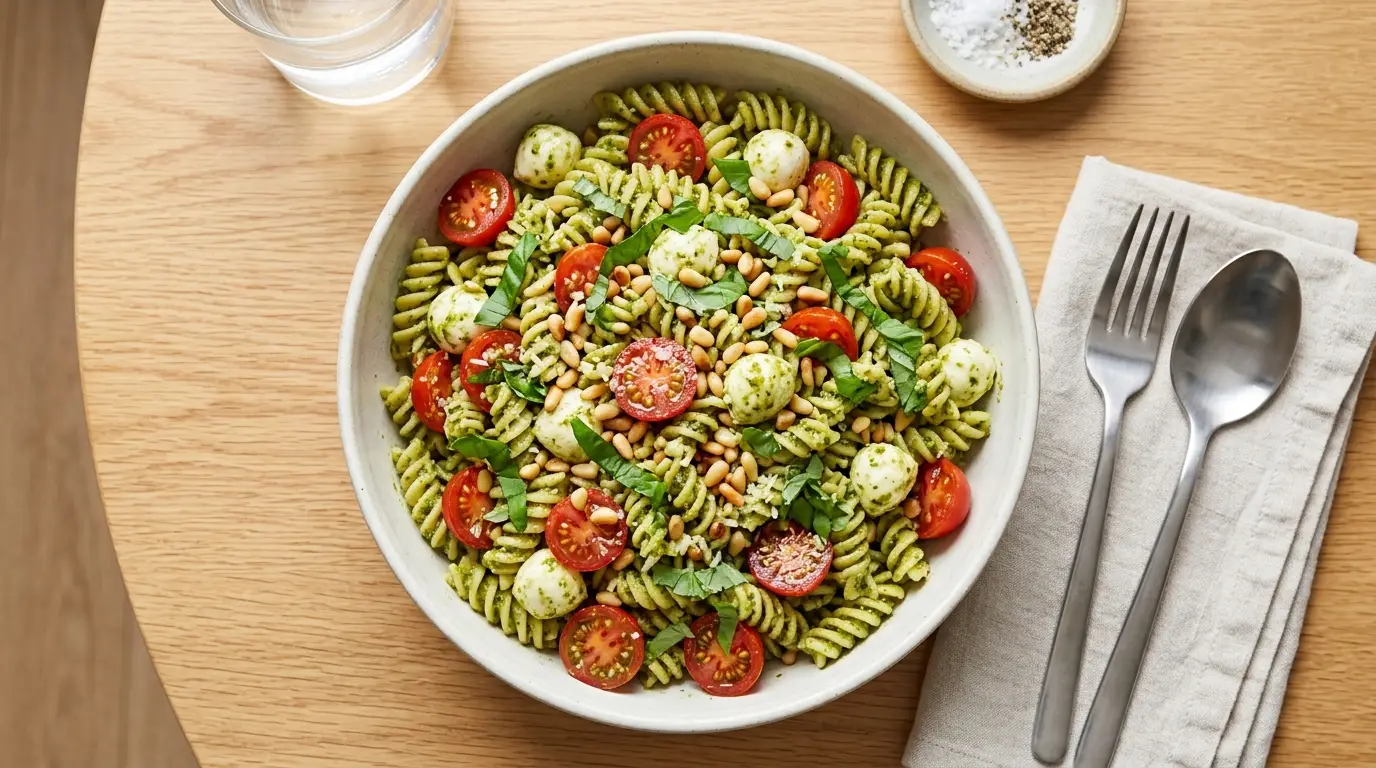
Pesto Pasta Salad
Ingredients
- 1 pound rotini or fusilli pasta - 450g
- ¾ cup basil pesto - 180ml, homemade or store-bought
- 2 cups cherry or grape tomatoes - 300g, halved
- 8 ounces fresh mozzarella bocconcini - 225g, halved if large
- ⅓ cup pine nuts - 45g, toasted
- ½ cup red onion - 60g, thinly sliced
- ¼ cup fresh basil leaves - 10g, torn, plus extra for garnish
- 2 tablespoons extra virgin olive oil - 30ml
- 1 tablespoon fresh lemon juice - 15ml, from about half a lemon
- 2 tablespoons mayonnaise - 30g, optional, for extra creaminess
- ¼ cup grated Parmesan cheese - 25g
- Kosher salt - to taste
- black pepper - freshly ground, to taste
Equipment
- Large stockpot - For boiling pasta
- Small dry skillet - For toasting pine nuts
- Wooden spoon or rubber spatula - For tossing
Method
- Toast pine nuts in a dry skillet over medium-low heat for 2-3 minutes until golden and fragrant. Transfer to a plate immediately.
- Cook pasta in generously salted boiling water until al dente. Reserve ½ cup of pasta water, then drain and rinse briefly under cool water. Let sit for 5 minutes.
- While pasta cooks, halve the tomatoes and mozzarella (if large). Thinly slice red onion and tear basil leaves.
- In a small bowl, whisk together pesto, olive oil, lemon juice, and mayonnaise (if using) until smooth.
- Transfer cooled pasta to a large bowl and pour dressing over it. Toss until evenly coated, adding reserved pasta water if needed to loosen.
- Gently fold in tomatoes, mozzarella, red onion, and basil. Sprinkle with Parmesan and fold once more to combine.
- Season with salt and pepper to taste. Garnish with toasted pine nuts and extra basil leaves. Serve immediately or chill for 30 minutes.
Nutrition
Notes
- Salt the pasta water generously. It should taste like the sea to season the pasta from within.
- Don’t skip cooling the pasta. Tossing hot pasta with pesto will cook the basil and dull its color.
- Toast pine nuts separately. This brings out a buttery flavor that raw nuts lack.
- Save some pasta water. Stir in a tablespoon or two if the salad looks dry after chilling.
- Tear basil instead of chopping. This prevents bruising and keeps the edges from turning dark.
- Add delicate ingredients last. Fold in mozzarella and tomatoes at the end to keep them intact.
- Bring to room temperature before serving if chilled. Cold olive oil can become cloudy and stiff.
- Use a pasta shape with ridges. Rotini, fusilli, and farfalle trap more pesto than smooth shapes.
- Slice mix-ins to a similar size. Halve or quarter larger mozzarella balls to keep bites consistent.
- Store in an airtight container in the fridge for up to 4 days. Stir before serving leftovers.
Private Notes
Tried this recipe?
Let us know how it was!Final Thoughts
This pesto pasta salad recipe is one of those dishes that earns a permanent spot in the regular rotation once you’ve made it a couple of times.
It comes together fast, travels well, and holds its flavor for days in the fridge. Give it a try for your next potluck or weeknight dinner, and let me know in the comments how you made it your own.
Recommended:
- Coleslaw
- Broccoli Salad
- Potato Salad
- Shrimp Macaroni Salad
- Ono Hawaiian Macaroni Salad
- Mediterranean Quinoa Salad with Grilled Chicken
- Zucchini Noodles with Pesto and Shrimp Bowls
- Garlic Parmesan Sauce
- Lobster Rolls
- Avocado Toast