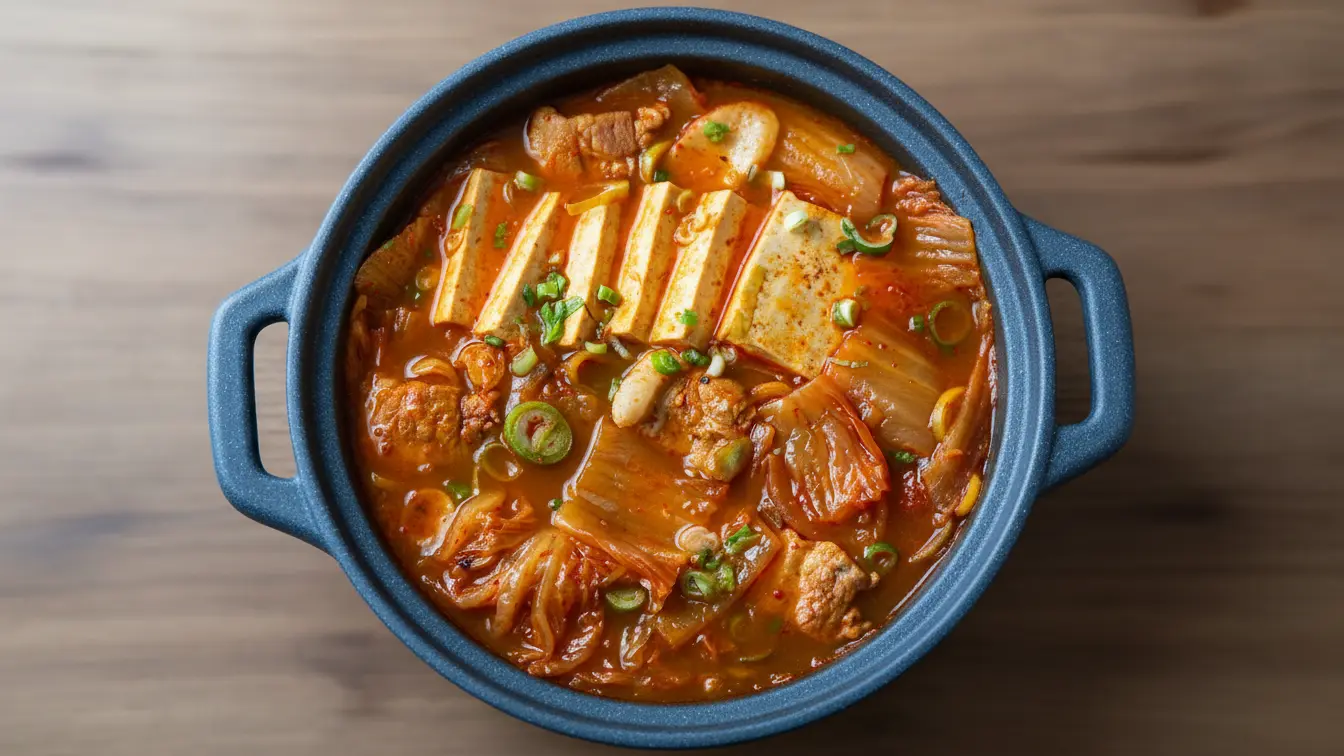
Kimchi Jjigae (Kimchi Stew)

Kimchi jjigae is the ultimate Korean comfort food — a deeply flavorful, spicy stew built on well-fermented kimchi, tender pork belly, silky tofu, and a rich, tangy broth. Ready in just 45 minutes, this one-pot meal delivers bold, complex layers of flavor that taste like they simmered all day. It's budget-friendly, packed with probiotics, and tastes even better the next day.
Equipment
- Heavy-bottomed pot or Dutch oven - 3–4 quart capacity
- Sharp knife
- Cutting board
- Wooden spoon - For stirring
- Measuring cups and spoons
- Ladle - For serving
- Korean earthenware pot (ttukbaegi) - (optional) For traditional presentation
- Slotted spoon - (optional)
- Fine-mesh strainer - (optional) If making anchovy stock
Ingredients
For the Stew Base
- 2 cups aged kimchi - 300g, roughly chopped; well-fermented (3–4+ weeks) for best flavor
- 0.5 cup kimchi juice - 120ml, reserved from the kimchi jar
- 8 oz pork belly or pork shoulder - 225g, thinly sliced about 1/4 inch (6mm) thick
- 14 oz medium-firm tofu - 400g, 1 block, cubed into 1-inch pieces
- 1 medium onion - sliced into thin half-moons
- 3 cloves garlic - minced
- 1 tbsp gochugaru (Korean red pepper flakes) - plus more to taste
- 1 tbsp gochujang (Korean red pepper paste)
- 2 tsp soy sauce - use low-sodium to reduce salt
- 1 tbsp sesame oil
- 4 cups water or anchovy stock - 960ml; anchovy stock adds extra depth
- 2 green onions - chopped, white and green parts separated
- 1 tsp sugar - optional, to balance acidity
- salt - to taste
Optional Add-ins
- 1 cup mushrooms - sliced; shiitake or oyster recommended
- 1 small zucchini - sliced
- 0.5 cup Korean rice cakes (tteok)
- 1 egg per serving - cracked directly onto stew surface before serving
- cooked rice noodles - add during last few minutes of cooking
Instructions
- Roughly chop the kimchi into 2-inch pieces and reserve the kimchi juice. Slice pork into thin strips, cube tofu and pat dry, mince garlic, slice onion, and chop green onions, keeping white and green parts separate.
- Heat sesame oil in a pot over medium-high heat and cook pork for 4–5 minutes until mostly cooked through. Add garlic and white parts of green onion, stir 30 seconds, then add onion and cook 2–3 minutes until softened.
- Add chopped kimchi and reserved kimchi juice; stir to coat. Cook 5–6 minutes until kimchi caramelizes slightly, then stir in gochugaru, gochujang, and soy sauce until evenly combined.
- Pour in water or anchovy stock and bring to a boil over high heat, then reduce to medium-low and simmer uncovered for 15–20 minutes. Taste and adjust with sugar (if too sour) or more gochugaru (for more heat).
- Gently add tofu cubes and any optional vegetables (mushrooms, zucchini, rice cakes) to the simmering stew. Cook 5 minutes until tofu is heated through and vegetables are tender; season with salt if needed.
- Turn off heat and top with the green parts of the green onions (and a cracked egg per bowl if using, letting residual heat cook it). Ladle into bowls and serve immediately with steamed white rice.
Notes
- Use well-fermented kimchi: Kimchi fermented for at least 3–4 weeks gives the best tangy depth. Fresh kimchi won't deliver the same complexity.
- Don't skip the kimchi juice: The liquid from the jar is packed with flavor and probiotics — it's essential to the broth.
- Sauté kimchi before adding liquid: Cooking the kimchi with the pork first caramelizes it and develops deeper, more complex flavor.
- Use fatty pork: Pork belly or shoulder with visible fat creates a richer, silkier broth as the fat renders during cooking.
- Add tofu at the end: Adding tofu too early causes it to break apart — wait until the last 5 minutes to keep cubes intact.
- Reduce sourness: If the stew is too sour (from very fermented kimchi), stir in 1–2 tsp sugar or add a splash more water to balance it.
- Boost depth with anchovy stock: Simmer dried anchovies and kelp in water for 10 minutes, strain, and use in place of plain water for extra umami.
- Make it vegetarian: Omit pork, use vegetable broth, and ensure your kimchi is free of fish sauce or shrimp paste.
- Storage: Refrigerate in an airtight container for up to 5 days. Freeze (without tofu) for up to 3 months; add fresh tofu when reheating.
- Tastes better the next day: Flavors deepen overnight — make a big batch and enjoy leftovers all week.
Nutrition
Serving: 1BowlCalories: 320kcalCarbohydrates: 12gProtein: 22gFat: 21gSaturated Fat: 7gPolyunsaturated Fat: 4gMonounsaturated Fat: 8gCholesterol: 45mgSodium: 1240mgPotassium: 480mgFiber: 3gSugar: 6gVitamin A: 15IUVitamin C: 35mgCalcium: 12mgIron: 18mg
Tried this recipe?Let us know how it was!