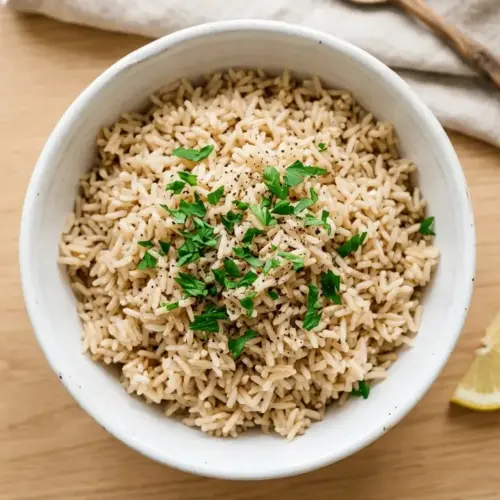
Brown Basmati Rice

This brown basmati rice recipe delivers perfectly fluffy, separate grains with a warm, nutty aroma every single time. The secret is a simple three-step method: rinse, soak, and resist lifting the lid. Whether you serve it alongside a rich curry, a saucy stir-fry, or simply with a drizzle of ghee, this wholesome whole grain makes an ideal base for countless meals and comes together with almost no active effort.
Equipment
- Fine mesh strainer or sieve - For rinsing the rice without losing grains
- Mixing bowl - Medium or large, for soaking the rice
- Heavy-bottomed saucepan with tight-fitting lid - 2-quart / 1.9L capacity recommended
- Measuring cups and spoons - For accurate water and salt measurements
- Kitchen timer - For tracking soaking and cooking times
- Fork - For fluffing the rice after resting
- Clean kitchen towel - Placed over pot during the resting step to absorb excess steam
- Rice cooker - Optional; use the brown rice setting if available
Ingredients
- 1 cup brown basmati rice - 190g / 6.7 oz; choose a reputable brand with long, unbroken grains
- 2 cups water - 480ml; cold, filtered water preferred
- 1/2 tsp salt - 2.5g; added to the cooking water before boiling
- 1 tsp ghee or olive oil - 5ml; optional, but helps separate the grains and adds richness
For Soaking
- cold water - Enough to submerge rice by at least 2 inches / 5cm in the bowl
Instructions
- Place 1 cup of brown basmati rice in a fine mesh strainer and rinse under cold running water, gently moving the grains with your hand, until the water runs mostly clear (about 30–60 seconds). Transfer the rinsed rice to a medium mixing bowl.
- Cover the rinsed rice with cold water by at least 2 inches (5cm) and let it soak for 15–20 minutes at room temperature, then drain through the fine mesh strainer — do not rinse again after soaking.
- Add 2 cups (480ml) of fresh cold water, ½ tsp salt, and the optional ghee or olive oil to a heavy-bottomed saucepan, then add the drained soaked rice without stirring.
- Place the saucepan over medium-high heat without the lid and bring to a full rolling boil, watching closely to prevent overflow — this takes about 5–7 minutes.
- As soon as the water reaches a full boil, reduce the heat to the lowest possible setting, immediately cover with the tight-fitting lid, and simmer for 30 minutes without lifting the lid.
- After 30 minutes, tilt the pot slightly to check if any liquid pools at the bottom; if so, replace the lid and cook for another 3–5 minutes until all water is fully absorbed.
- Remove the pot from heat, place a clean dry kitchen towel over the opening, and replace the lid on top of the towel; let the rice rest undisturbed for 10 minutes to absorb residual steam.
- Remove the lid and towel, then use a fork to gently fluff the rice by lifting and turning from the bottom; taste, adjust salt if needed, and serve immediately.
Notes
- Don't skip the soak: Even 15 minutes of soaking softens the bran layer and dramatically improves texture. Rice that hasn't been soaked often has dense, uneven grains.
- Keep the heat truly low: During simmering, you want the faintest possible simmer with almost no audible bubbling. Active bubbling throughout means the heat is too high and can scorch the bottom.
- Never lift the lid during cooking: Steam is what finishes the rice. Every time the lid comes off, you extend cooking time unpredictably and risk uneven results.
- Use the kitchen towel trick: Placing a dry towel under the lid during the rest period absorbs steam that would otherwise condense and fall back onto the rice, keeping the grains dry and distinct.
- Measure water accurately: The difference between 2 cups and 2¼ cups of water is enough to turn fluffy rice gummy. Use a liquid measuring cup and measure at eye level.
- Toast for extra nuttiness (optional): After draining the soaked rice, add it to the dry saucepan over medium heat and stir for 1–2 minutes before adding water to deepen the flavor.
- Add whole spices for Indian-style rice: Drop 1 bay leaf, 3 crushed cardamom pods, and a 1-inch cinnamon stick into the cooking water before boiling; remove before serving.
- Storage: Cool completely within 1 hour, then refrigerate in an airtight container for up to 5 days, or freeze in portioned bags for up to 3 months.
- Reheating: Sprinkle 1–2 tablespoons of water over refrigerated rice, cover loosely with a damp paper towel, and microwave on high for 1–2 minutes; or warm on the stovetop with 2 tablespoons of water per cup of rice over low heat.
- Leftover idea: Day-old cold brown basmati makes excellent fried rice — the pre-cooked, chilled grains separate beautifully in a hot wok or skillet.
Nutrition
Serving: 1ServingCalories: 185kcalCarbohydrates: 38gProtein: 4gFat: 2gSaturated Fat: 1gPolyunsaturated Fat: 0.4gMonounsaturated Fat: 0.5gCholesterol: 3mgSodium: 300mgPotassium: 115mgFiber: 2gCalcium: 2mgIron: 5mg
Tried this recipe?Let us know how it was!