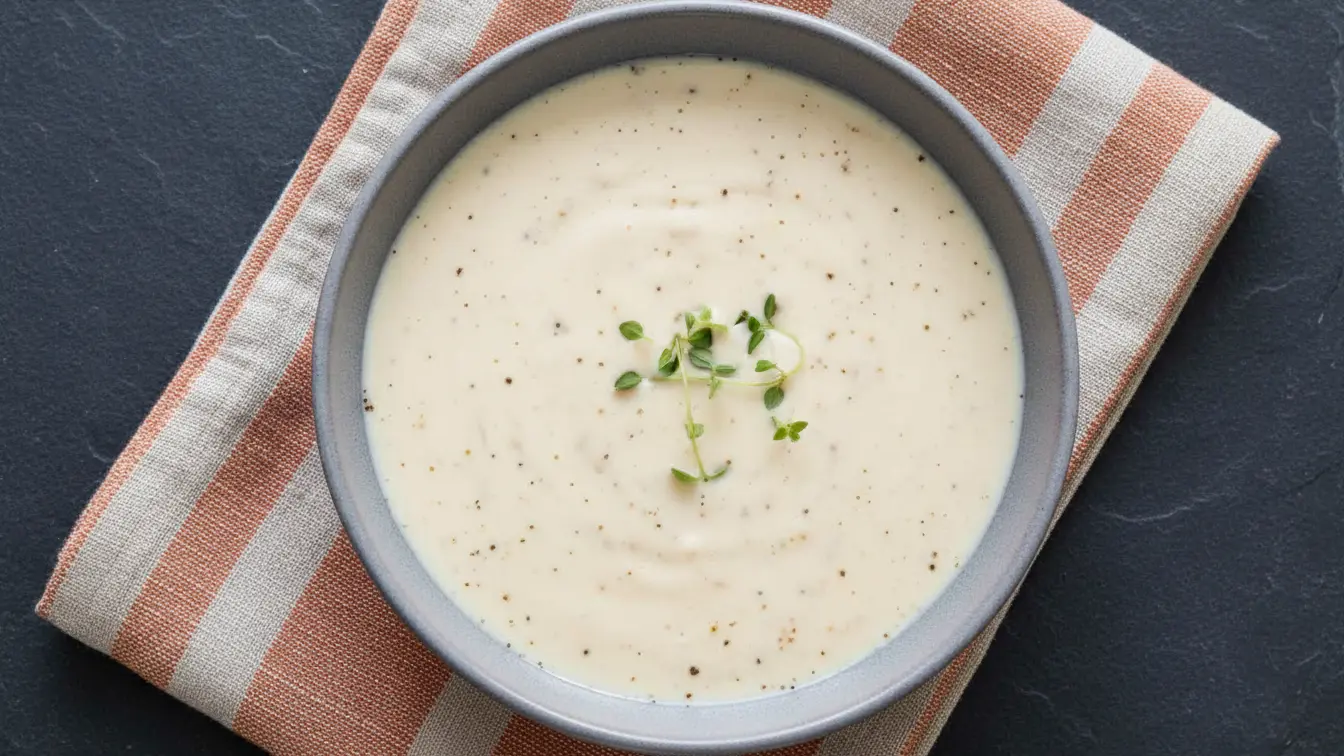
Bechamel Sauce

This classic French bechamel sauce is a silky, velvety white sauce made from just butter, flour, and whole milk — one of the five French mother sauces and the foundation of countless beloved dishes. Mastered in just 15 minutes, it transforms mac and cheese, lasagna, gratins, and more into something truly restaurant-quality. Once you learn the simple whisking technique, this foolproof sauce becomes second nature.
Equipment
- Heavy-bottomed saucepan - 2-quart capacity; prevents hot spots and scorching
- Wire whisk - Balloon whisk preferred for best lump prevention
- Measuring cups and spoons
- Wooden spoon or heat-resistant spatula - For scraping bottom and corners of pan
- Small bowl - Optional — for mixing roux using alternative method
- Fine-mesh strainer - Optional — insurance against any rogue lumps
Ingredients
- 4 tablespoons unsalted butter - 57g; European-style butter recommended for extra richness
- 4 tablespoons all-purpose flour - 32g; use a light hand when measuring
- 2 cups whole milk - 480ml; do not substitute low-fat versions
- 1/2 teaspoon salt
- 1/4 teaspoon white pepper
Optional
- freshly grated nutmeg - Pinch; traditional French touch that adds warmth and depth
- 1 bay leaf - Infuses subtle herbal notes during cooking; remove before serving
Instructions
- Pour milk into a microwave-safe container or small saucepan and heat until warm to the touch (100–110°F / 38–43°C). If using a bay leaf, add it to the milk now and let it steep while you make the roux.
- Melt butter in a heavy-bottomed saucepan over medium heat, then add all the flour at once and whisk vigorously to form a smooth paste. Cook the roux for 2–3 minutes, whisking constantly, until it smells slightly nutty and remains pale blonde in color.
- Remove the bay leaf from the warmed milk, then add about 1/4 cup of milk to the roux while whisking continuously — the mixture will seize into a thick paste, which is normal. Keep whisking and adding milk in 1/4-cup increments until it loosens, then add the remaining milk in larger 1/2-cup additions, whisking fully between each.
- Add the salt, white pepper, and nutmeg (if using), then bring the sauce to a gentle simmer over medium heat, whisking frequently. Reduce heat to low and simmer 3–5 minutes until the sauce coats the back of a spoon and a finger-drawn line holds its shape.
- For a thinner sauce, whisk in additional warm milk 2 tablespoons at a time; for a thicker sauce, simmer a few minutes longer. If any lumps remain, press the sauce through a fine-mesh strainer before using.
Notes
- Warm your milk every time: Adding cold milk to hot roux is the primary cause of stubborn lumps — don't skip this step.
- Don't rush the roux: Cooking the butter-flour paste for a full 2–3 minutes removes the raw flour taste that ruins otherwise perfect sauce.
- Whisk constantly during milk addition: This is the most critical stage — stay focused and don't walk away.
- Use a heavy-bottomed pan: Thin pans create hot spots that scorch the sauce before you realize it.
- Scrape the corners: Occasionally use a spatula to reach spots the whisk misses at the bottom and edges of the pan.
- Freshly grate your nutmeg: Pre-ground nutmeg has almost no flavor compared to fresh — the difference is dramatic.
- Mornay sauce variation: Stir in 1/2 cup grated Gruyère and 2 tablespoons Parmesan for a rich cheese sauce perfect for gratins.
- Storage: Press plastic wrap directly onto the surface of cooled sauce and refrigerate for up to 3–4 days, or freeze in portions for up to 3 months.
- Reheating: Warm gently over low heat, whisking in a splash of warm milk to restore silky consistency. Use 50% power in the microwave in 30-second intervals if reheating that way.
- Non-dairy option: Unsweetened soy milk works best as a dairy-free substitute; avoid almond milk as it's too thin.
Nutrition
Serving: 1ServingCalories: 165kcalCarbohydrates: 10gProtein: 4gFat: 12gSaturated Fat: 7.5gPolyunsaturated Fat: 0.5gMonounsaturated Fat: 3gCholesterol: 35mgSodium: 320mgPotassium: 180mgSugar: 6gVitamin A: 10IUCalcium: 15mgIron: 2mg
Tried this recipe?Let us know how it was!