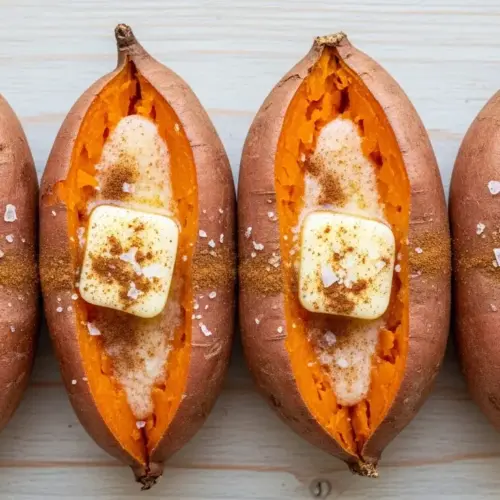
Baked Sweet Potatoes

These perfectly baked sweet potatoes come out of the oven with irresistibly crispy, salty skin and a fluffy, caramelized interior every single time. With just five minutes of prep and a handful of pantry staples, you get a naturally sweet, deeply nourishing side dish — or a full meal with the right toppings — that works for everything from weeknight dinners to holiday tables.
Equipment
- Rimmed baking sheet (half sheet pan)
- Aluminum foil or parchment paper - For easy cleanup
- Fork or paring knife - For piercing the potatoes
- Pastry brush - Or use your hands to apply oil
- Instant-read kitchen thermometer - (optional) For checking doneness — look for 210°F / 99°C
- Sharp knife - For slicing open the potatoes before serving
Ingredients
- 4 medium sweet potatoes - about 8 oz / 225g each, scrubbed clean — Beauregard or Jewel variety preferred
- 1 tablespoon olive oil - or avocado oil
- 1/2 teaspoon kosher salt
- 1/4 teaspoon black pepper - optional
Classic Sweet Toppings (optional)
- 2 tablespoons unsalted butter - 28g; about 1/2 tablespoon per potato
- 2 tablespoons brown sugar - or honey
- 1/2 teaspoon ground cinnamon
- flaky sea salt - pinch, for finishing
Savory Toppings (optional)
- sour cream - or Greek yogurt
- shredded cheddar cheese
- chives - chopped; or green onions
- bacon - cooked and crumbled
Instructions
- Preheat your oven to 400°F (200°C) and position the rack in the center. Allow the oven to fully preheat for 15–20 minutes before placing the potatoes inside.
- Scrub each sweet potato thoroughly under cold running water using a vegetable brush, then pat completely dry with paper towels. Dry skin is essential for a crispy result.
- Use a fork to poke each potato 8–10 times all over, going about 1/2 inch (1.25 cm) deep. This allows steam to escape and prevents the potato from bursting in the oven.
- Rub 1 tablespoon of olive oil all over each potato, including the ends, then sprinkle evenly with 1/2 teaspoon kosher salt and black pepper if using. The oil helps the skin crisp up and the salt seasons it beautifully.
- Line a rimmed baking sheet with foil or parchment paper and place the potatoes directly on it, spaced at least 1–2 inches apart. Do NOT wrap in foil — leave them fully uncovered for crispy skin.
- Bake for 45–60 minutes until a fork slides into the thickest part with zero resistance, or an instant-read thermometer reads 210°F (99°C). Check in 5-minute intervals if unsure.
- Remove from the oven and rest for 5 minutes, then cut a lengthwise slit two-thirds through each potato followed by a crosswise cut to create a cross opening. Press the ends inward to push the flesh upward.
- For sweet: add butter, brown sugar or honey, cinnamon, and flaky sea salt. For savory: add sour cream, shredded cheddar, chives, and crumbled bacon. Serve immediately while hot.
Notes
- Do NOT wrap sweet potatoes in foil before baking — foil traps steam and produces soft, wet skin. Leave them uncovered for crispy, caramelized skin.
- Always dry the potato skin completely before applying oil. Moisture prevents crispiness.
- Choose similarly sized potatoes so they all finish baking at the same time. A large potato can take 15–20 minutes longer than a small one.
- The internal temperature for a perfectly done sweet potato is 210°F (99°C). At this temperature, the starches have fully converted to sugars and the interior will be fluffy, not starchy.
- Use kosher salt rather than table salt on the skin. It adheres better and creates a more flavorful, properly seasoned crust.
- For the sweetest flavor, look for Beauregard or Jewel variety sweet potatoes with deep orange flesh.
- Leftovers keep in an airtight container in the refrigerator for up to 5 days. Reheat in the oven at 350°F (175°C) for 15–20 minutes, or in the air fryer at 380°F (195°C) for 5–8 minutes for the crispiest skin.
- To freeze, cool completely, wrap individually in plastic wrap, and freeze for up to 3 months. Thaw overnight in the refrigerator before reheating.
- You can also microwave sweet potatoes in a pinch: poke all over, microwave on high for 5 minutes, flip, then microwave another 3–5 minutes. The skin won't be crispy but the flesh will be tender.
- The sticky caramelized liquid that oozes onto your baking sheet is completely normal — it's just the natural sugars cooking off. Line your pan for easy cleanup.
Nutrition
Serving: 1medium sweet potatoCalories: 180kcalCarbohydrates: 34gProtein: 3gFat: 3.5gSaturated Fat: 0.5gPolyunsaturated Fat: 0.4gMonounsaturated Fat: 2.4gSodium: 310mgPotassium: 540mgFiber: 5gSugar: 7gVitamin A: 769IUVitamin C: 35mgCalcium: 4mgIron: 6mg
Tried this recipe?Let us know how it was!