Growing up, Sunday mornings at my grandmother’s house always started the same way. The smell of sizzling bacon would wake me before sunrise, and I’d pad into her warm kitchen to find her standing over a cast iron skillet, stirring a rich, tangy tomato gravy recipe that would become the centerpiece of our breakfast feast.
She’d pile hot biscuits high on our plates, then ladle that gorgeous red gravy over top, the bacon-infused sauce soaking into every flaky layer. That’s comfort food at its finest, and it’s a tradition I’ve carried into my own kitchen.
| Quick Recipe Summary | |
|---|---|
| Prep Time | 10 minutes |
| Cook Time | 20 minutes |
| Total Time | 30 minutes |
| Servings | 6 servings |
| Difficulty Level | Easy |
If you’re a fan of hearty Southern gravies, this hamburger gravy recipe is another must-try classic.

Why You’ll Love This Tomato Gravy Recipe
This tomato gravy hits all the right notes. It’s smoky from the bacon drippings, tangy from the tomatoes, and rich from a proper roux that gives it that velvety texture you crave.
I learned early on that the secret is cooking the bacon until it’s genuinely crispy, not just cooked. Those rendered drippings carry so much flavor that every spoonful tastes like a warm Southern hug.
The best part? This recipe uses simple pantry staples you probably already have on hand. No fancy ingredients, no complicated techniques, just honest-to-goodness home cooking that feeds both body and soul.
- Budget-friendly comfort – Uses affordable canned tomatoes and basic ingredients most folks keep stocked
- Incredibly versatile – Serves beautifully over biscuits, grits, rice, meatloaf, or even fried eggs
- Quick weekday meal – Ready in 30 minutes from start to finish, perfect for busy mornings or easy dinners
- Deeply satisfying – The combination of smoky bacon, tangy tomatoes, and rich roux creates layers of flavor
- Make-ahead friendly – Tastes even better the next day after the flavors have melded together
Read Also: Sausage Gravy Recipe
Ingredients
This traditional tomato gravy requires just a handful of simple ingredients. I’ve tried countless variations over the years, but I keep coming back to this classic combination because it just works.
- 8 slices thick-cut bacon (about 8 oz/225g)
- 1/4 cup all-purpose flour (30g)
- 1 can (28 oz/794g) crushed tomatoes
- 1 cup low-sodium chicken broth (240ml)
- 1/2 cup whole milk or heavy cream (120ml)
- 1 tablespoon sugar (12g)
- 1 teaspoon kosher salt (6g), or to taste
- 1/2 teaspoon black pepper (1g)
- 1/4 teaspoon garlic powder (0.5g), optional
For another classic Southern sauce, you might enjoy this mushroom gravy recipe.
Kitchen Equipment Needed
You really don’t need much to make this tomato gravy. I always reach for my grandmother’s cast iron skillet because it distributes heat so evenly, but any heavy-bottomed skillet will work beautifully.
- Large cast iron skillet or heavy-bottomed skillet (12-inch/30cm)
- Wire whisk
- Wooden spoon for stirring
- Sharp knife and cutting board
- Measuring cups and spoons
- Small bowl for mixing flour slurry
- Slotted spoon for removing bacon
Recommended Products for This Recipe
After making tomato gravy more times than I can count, I’ve found a few products that genuinely make a difference in the final result.
1. Lodge Cast Iron Skillet
My grandmother swore by her cast iron skillet, and now I understand why. The even heat distribution means your roux cooks perfectly without hot spots, and the natural nonstick surface (when properly seasoned) makes cleanup surprisingly easy. This workhorse pan will last you a lifetime and actually improves with use.
2. San Marzano Crushed Tomatoes
While any canned crushed tomatoes work, San Marzano tomatoes have a naturally sweeter flavor and lower acidity that makes the gravy taste richer. I started using these after a trip to an Italian market, and I noticed the difference immediately. They’re worth the extra dollar or two.
3. OXO Good Grips Balloon Whisk
A good whisk is essential for making a smooth roux without lumps. This one has comfortable handles that don’t tire out your wrist, and the balloon shape is perfect for getting into the corners of your skillet. I’ve tried cheaper whisks, but they always bend or the wires come loose.
4. Better Than Bouillon Chicken Base
I keep this concentrated chicken base in my fridge instead of boxed broth because it has so much more flavor. A small jar lasts for months, and you can control the strength by adjusting how much you use. It makes a noticeable difference in the depth of flavor in this gravy.
Another favorite pairing for biscuits is biscuits and gravy.
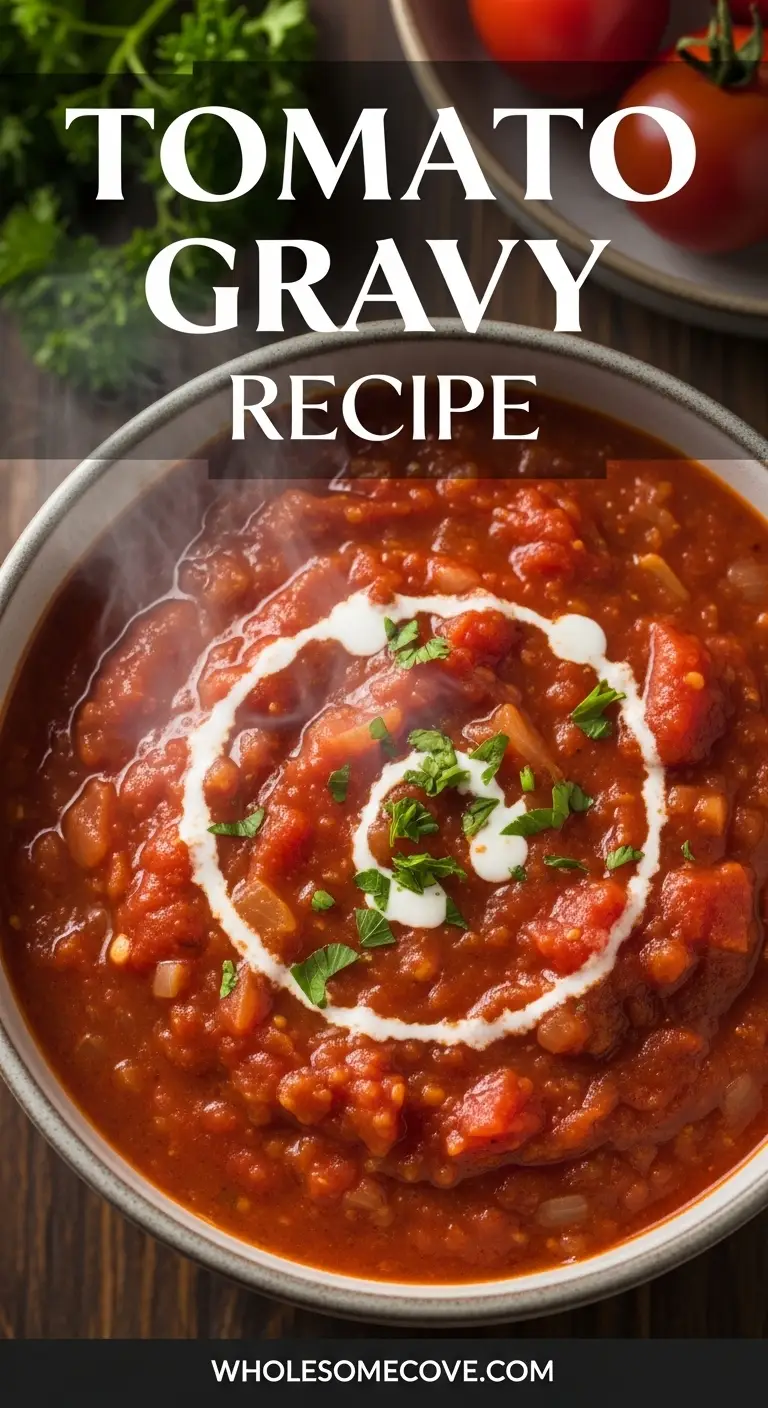
Step-by-Step Instructions: How to Make Tomato Gravy
Making tomato gravy is straightforward, but there are a few key moments where technique really matters. I’ll walk you through each step so your gravy turns out perfect every time.
1. Cook the Bacon
- Cut your bacon slices into 1/2-inch (1.3cm) pieces using a sharp knife.
- Place the bacon pieces in a cold cast iron skillet or heavy-bottomed pan, then turn the heat to medium.
- Cook the bacon, stirring occasionally, until it’s deeply golden and crispy, about 8-10 minutes.
- Use a slotted spoon to transfer the cooked bacon to a paper towel-lined plate, leaving all those precious drippings in the skillet.
- You should have about 3-4 tablespoons (45-60ml) of bacon fat in the pan. If you have more, pour off the excess and save it in a jar for another use. If you have less, add a tablespoon or two of butter to make up the difference.
2. Make the Roux
- Keep the heat at medium and add the 1/4 cup (30g) flour directly to the hot bacon drippings in the skillet.
- Immediately begin whisking the flour into the fat, scraping the bottom of the pan to incorporate all those flavorful browned bits.
- Continue whisking constantly for 2-3 minutes until the mixture turns a light tan color and smells nutty, almost like toasted bread.
- This step is crucial. You want to cook the flour enough to eliminate that raw flour taste, but not so much that it darkens to brown. Watch it carefully and keep whisking.
3. Add the Liquids
- Slowly pour in the 1 cup (240ml) chicken broth while whisking constantly to prevent lumps from forming.
- The mixture will bubble and thicken immediately. Keep whisking until completely smooth.
- Add the entire 28 oz (794g) can of crushed tomatoes with all their juices.
- Stir in the 1/2 cup (120ml) milk or heavy cream, the 1 tablespoon (12g) sugar, 1 teaspoon (6g) kosher salt, 1/2 teaspoon (1g) black pepper, and 1/4 teaspoon (0.5g) garlic powder if using.
- Use your wooden spoon to scrape any bits stuck to the bottom or sides of the skillet.
4. Simmer and Thicken
- Bring the gravy to a gentle boil over medium heat, stirring frequently.
- Once it’s bubbling, reduce the heat to low and let it simmer uncovered for 10-12 minutes.
- Stir every couple of minutes to prevent sticking and to help it thicken evenly.
- The gravy is ready when it coats the back of a spoon and has a consistency similar to thick pasta sauce.
- If it gets too thick, thin it with a splash of chicken broth or water. If it’s too thin, let it simmer a few more minutes.
5. Finish and Serve
- Taste the gravy and adjust the seasoning with more salt, pepper, or a pinch of sugar if needed.
- Stir in half of the reserved crispy bacon pieces, saving the rest for garnish.
- Remove the skillet from heat and let it rest for 2-3 minutes to let the flavors meld.
- Serve the tomato gravy hot, spooned generously over split biscuits, with the remaining bacon crumbled on top.
- For extra richness, add a pat of butter to each serving just before adding the gravy.
You might also enjoy trying chicken gravy recipe for another flavorful option.

Tips for The Best Tomato Gravy
After years of making this recipe, I’ve learned a few tricks that take tomato gravy from good to absolutely incredible. These tips come from both my own kitchen experiments and wisdom passed down from my grandmother.
- Don’t skimp on the bacon quality – Thick-cut bacon with good marbling renders more flavorful drippings than thin, lean bacon. The fat is where all that smoky magic comes from.
- Watch your roux temperature – If your skillet is too hot, the flour will burn before it can thicken properly. Medium heat gives you the control you need for a perfect golden roux.
- Use quality canned tomatoes – Not all canned tomatoes are created equal. Look for San Marzano or fire-roasted varieties for deeper flavor. I avoid brands with added citric acid when possible.
- Let the sugar balance the acidity – That tablespoon of sugar isn’t there to make the gravy sweet. It cuts through the natural acidity of tomatoes and rounds out the flavor beautifully.
- Stir frequently while simmering – Tomato-based gravies love to stick and scorch on the bottom. Give it a good stir every 2-3 minutes to prevent burning.
- Adjust consistency before serving – Gravy thickens as it cools, so make it slightly thinner than you want it while it’s hot. You can always simmer it longer if needed.
- Save your bacon drippings – I keep a jar in my fridge with leftover bacon fat from breakfast. It’s liquid gold for recipes like this and stays good for months.
- Don’t rush the simmer – Those 10-12 minutes aren’t just about thickening. They allow the flavors to develop and meld together into something greater than the sum of their parts.
For a complete breakfast spread, pair this with breakfast potatoes.
What to Serve with Tomato Gravy
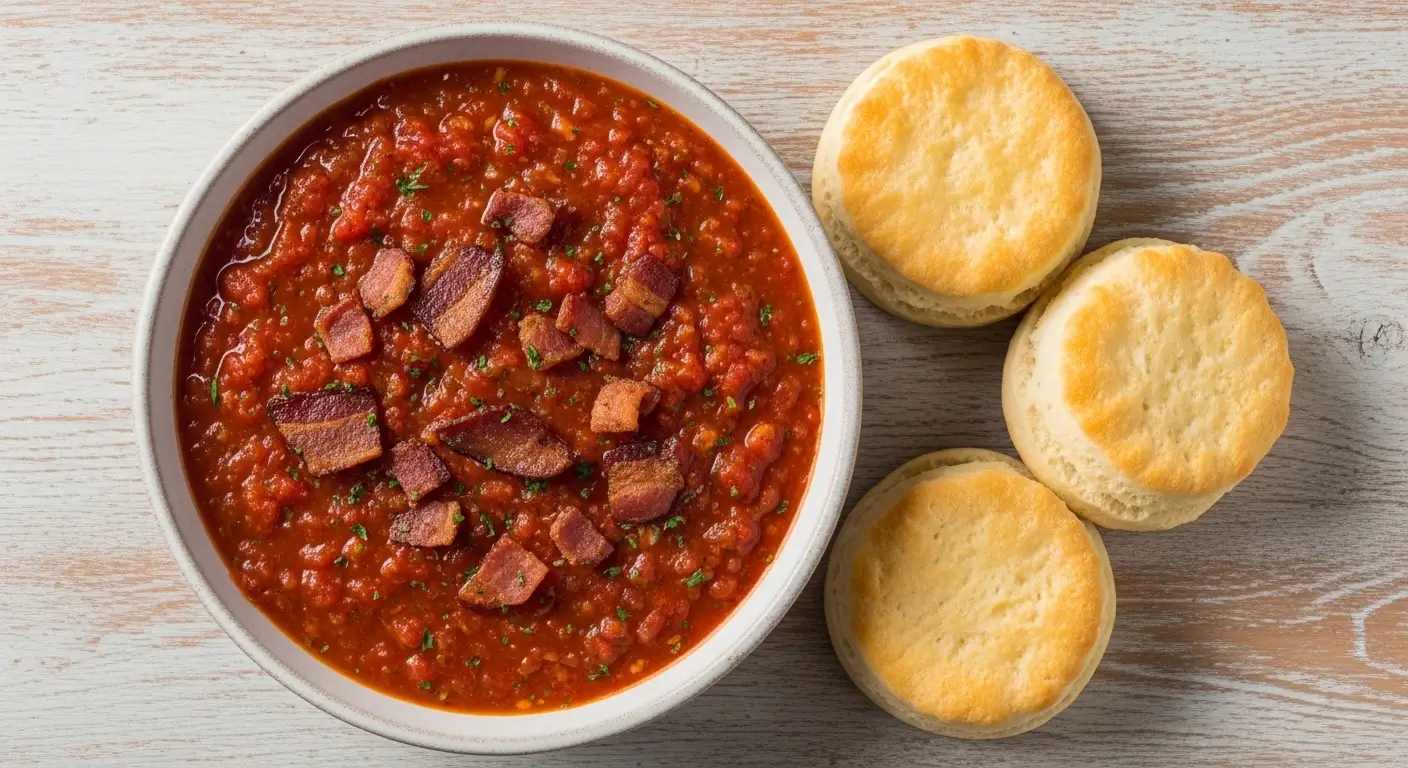
My favorite way to enjoy tomato gravy is the traditional Southern method, but it’s surprisingly versatile. I’ve served it at breakfast, lunch, and dinner with equal success.
- Hot buttermilk biscuits – The classic pairing. Split them while they’re still warm so the gravy soaks into all those flaky layers.
- Smashed Potatoes – Pour this over crispy smashed potatoes for a hearty side dish.
- Creamy cheese grits – A match made in Southern heaven. The smooth grits and tangy gravy create the most comforting bowl.
- Over-easy or poached eggs – Break that yolk and let it mingle with the tomato gravy for a breakfast that’ll stick to your ribs.
- White rice – This is how my grandmother often served it for supper. Simple, filling, and deeply satisfying.
- Meatloaf slices – Skip the traditional brown gravy and try this instead. The acidity cuts through the richness of the meat perfectly.
- Roasted Potatoes – Those crispy edges soak up the gravy beautifully.
- Country fried steak – Another Southern classic combo that never disappoints.
- Crispy cornbread – Crumble it into your bowl and pour the gravy over. My grandfather ate it this way every Sunday.
- Scrambled eggs – Fold the gravy right into soft scrambled eggs for a one-bowl breakfast.
Variations of Tomato Gravy
While I love the traditional version, tomato gravy is wonderfully adaptable. Here are some variations I’ve tried over the years that have become favorites in their own right.
- Sausage tomato gravy – Brown 1 pound (450g) of breakfast sausage instead of bacon. The spices in the sausage add a whole different flavor profile.
- Creamy version – Increase the cream to 1 cup (240ml) and reduce the chicken broth to 1/2 cup (120ml) for an ultra-rich, velvety gravy.
- Fresh tomato gravy – During summer when tomatoes are at their peak, use 4-5 large fresh tomatoes, peeled and diced, instead of canned. You’ll need to simmer it a bit longer.
- Spicy kick – Add 1/4 teaspoon (0.5g) of red pepper flakes or a diced jalapeño when you add the tomatoes. My husband loves this version.
- Italian-inspired – Stir in 1 teaspoon (1g) of dried basil and 1/2 teaspoon (0.5g) of dried oregano for an herby twist.
- Onion and garlic version – Sauté 1 diced onion and 3 minced garlic cloves in the bacon drippings before adding the flour. This adds wonderful depth.
- Vegetarian adaptation – Use 1/4 cup (60ml) of olive oil instead of bacon drippings and vegetable broth instead of chicken broth. It won’t have that smoky depth, but it’s still delicious.
- Southern breakfast bowl – Layer grits, scrambled eggs, and tomato gravy in a bowl, then top with shredded cheddar and scallions.
If you enjoy gravy variations, you’ll also love turkey gravy.
Storage and Reheating
One of the things I love about tomato gravy is how well it keeps. In fact, it often tastes even better the next day after the flavors have had time to really get to know each other.
- Refrigerator storage – Let the gravy cool completely to room temperature, then transfer it to an airtight container. It will keep in the refrigerator for up to 5 days.
- Freezer storage – Freeze tomato gravy in freezer-safe containers or heavy-duty freezer bags for up to 3 months. I like to freeze it in 2-cup portions for easy reheating.
- Reheating on the stovetop – Pour the gravy into a saucepan over medium-low heat. Stir frequently as it warms, adding a splash of chicken broth or water if it’s too thick. Heat until steaming hot, about 5-7 minutes.
- Microwave reheating – Place gravy in a microwave-safe bowl and heat in 1-minute intervals, stirring between each interval, until heated through. Add liquid as needed to restore the consistency.
- From frozen – You can reheat frozen gravy directly on the stovetop over low heat, stirring often, or thaw it overnight in the refrigerator first for faster reheating.
- Avoid repeated reheating – Only reheat the amount you plan to eat. Repeated cooling and reheating can affect both texture and food safety.
- Stir before serving – Tomato gravy can separate slightly during storage. A good stir while reheating brings it right back together.
Another hearty gravy you might enjoy is brown gravy.
Nutritional Facts
Per serving (based on 6 servings, approximately 2/3 cup or 160ml each):
- Calories: 215
- Total Fat: 14g
- Saturated Fat: 5g
- Cholesterol: 25mg
- Sodium: 620mg
- Total Carbohydrates: 15g
- Dietary Fiber: 2g
- Sugars: 7g
- Protein: 8g
- Vitamin A: 8% DV
- Vitamin C: 15% DV
- Calcium: 6% DV
- Iron: 8% DV
Note: Nutritional information is calculated based on the ingredients listed and is an approximation. Actual values may vary based on specific brands used and portion sizes.
For more sauce options, check out tomato sauce recipe.
Health Benefits of Key Ingredients
While tomato gravy is definitely a comfort food, it actually contains several ingredients with genuine nutritional benefits. I was pleasantly surprised when I learned more about what’s in this humble dish.
- Tomatoes are packed with lycopene – This powerful antioxidant has been linked to heart health and may help reduce the risk of certain cancers. Cooked tomatoes actually have more bioavailable lycopene than raw ones.
- Bacon provides B vitamins – Yes, bacon! While it’s high in fat, it’s also a source of B vitamins, particularly B12, which supports energy metabolism and nervous system health.
- Garlic powder offers allicin – This compound has anti-inflammatory and antimicrobial properties. Even in small amounts, garlic adds health benefits along with flavor.
- Black pepper enhances nutrient absorption – The piperine in black pepper has been shown to increase the absorption of other beneficial compounds, including the lycopene from tomatoes.
- Chicken broth supports gut health – Homemade or quality store-bought broth contains minerals and compounds that may support digestive health and provide anti-inflammatory benefits.
You might also enjoy roasted tomato soup for another tomato-based comfort dish.
FAQs About Tomato Gravy
1. Can I make tomato gravy without bacon?
Absolutely. While bacon drippings give this gravy its signature smoky flavor, you can substitute with 3-4 tablespoons (45-60ml) of butter or olive oil. I’ve done this many times when making it for vegetarian friends. The texture will be just as good, though the flavor will be milder and less smoky.
You might want to add a pinch of smoked paprika to compensate for the missing smokiness. It’s not quite the same, but it works beautifully in a pinch.
2. Why is my tomato gravy too thin?
The most common cause is not simmering it long enough. Tomato gravy needs that full 10-12 minutes of gentle simmering to thicken properly. If yours is still thin after that time, try one of these fixes: continue simmering for another 5 minutes, or mix 1 tablespoon (8g) of cornstarch with 2 tablespoons (30ml) of cold water and stir it in.
Let it cook for another minute or two and it should thicken right up. Also, remember that gravy thickens significantly as it cools, so don’t judge the consistency while it’s piping hot.
3. Can I use fresh tomatoes instead of canned?
Yes, fresh tomatoes work wonderfully, especially during summer when they’re at their peak. You’ll need about 4-5 large ripe tomatoes (roughly 2 pounds or 900g). Peel them by scoring the bottom with an X, blanching in boiling water for 30 seconds, then shocking in ice water.
The skins will slip right off. Dice them and use them just like you would canned. Keep in mind that fresh tomatoes have more water content, so you may need to simmer the gravy a bit longer to reach the right consistency.
4. How do I keep my gravy from tasting too acidic?
Sugar is your friend here. The tablespoon of sugar in this recipe isn’t there to make it sweet, but to balance the natural acidity in tomatoes. If your gravy still tastes too tangy after adding the sugar, try adding another teaspoon.
You can also add a pinch of baking soda (about 1/4 teaspoon or 1g), which neutralizes acidity, though I prefer the sugar method. Some brands of canned tomatoes are more acidic than others, so you may need to adjust based on what you’re using.
5. What’s the difference between tomato gravy and marinara sauce?
Great question! While both are tomato-based, they’re quite different. Marinara is typically thinner, heavily seasoned with Italian herbs like basil and oregano, and often includes garlic and onions. It’s designed to coat pasta.
Tomato gravy, on the other hand, is thickened with a roux (flour and fat), giving it a much thicker, creamier consistency. It’s less aggressively seasoned, letting the tomato and bacon flavors shine through, and it’s meant to be spooned over biscuits, rice, or grits rather than pasta.
Check out giblet gravy for another Southern gravy variation.

Southern Tomato Gravy
Ingredients
- 8 slices thick-cut bacon - about 8 oz or 225g
- 1/4 cup all-purpose flour - 30g
- 1 can crushed tomatoes - 28 oz or 794g
- 1 cup low-sodium chicken broth - 240ml
- 1/2 cup whole milk or heavy cream - 120ml
- 1 tablespoon sugar - 12g
- 1 teaspoon kosher salt - 6g, or to taste
- 1/2 teaspoon black pepper - 1g
- 1/4 teaspoon garlic powder - 0.5g, optional
Equipment
- Large cast iron skillet or heavy-bottomed skillet - 12-inch or 30cm
- Wire whisk
- Wooden spoon - For stirring
- Sharp knife
- Cutting board
- Measuring cups
- Measuring spoons
- Small bowl - For mixing flour slurry (optional)
- Slotted spoon - For removing bacon
Method
- Cut bacon into 1/2-inch pieces and cook in a cold skillet over medium heat for 8-10 minutes until crispy. Transfer bacon to a paper towel-lined plate, leaving 3-4 tablespoons of drippings in the skillet.
- Add flour to the hot bacon drippings and whisk constantly for 2-3 minutes until the mixture turns light tan and smells nutty. This creates the roux base for your gravy.
- Slowly pour in chicken broth while whisking constantly to prevent lumps. Add crushed tomatoes, milk, sugar, salt, pepper, and garlic powder, then scrape any bits from the bottom of the skillet.
- Bring to a gentle boil, then reduce heat to low and simmer uncovered for 10-12 minutes, stirring every couple of minutes until gravy thickens to coat the back of a spoon.
- Taste and adjust seasoning, then stir in half the reserved bacon. Let rest for 2-3 minutes and serve hot over biscuits, grits, or rice, garnished with remaining bacon.
Nutrition
Notes
- Use thick-cut bacon with good marbling for the most flavorful drippings. Thin bacon won’t render enough fat.
- Watch the roux carefully – medium heat is key. Too hot and the flour burns; too cool and it won’t develop proper flavor.
- San Marzano or fire-roasted tomatoes add deeper flavor than standard canned tomatoes.
- The sugar balances the acidity of tomatoes, not to make it sweet. Adjust to taste based on your tomato brand.
- Stir frequently during simmering to prevent sticking and scorching on the bottom of the pan.
- Gravy thickens as it cools, so make it slightly thinner than desired while hot.
- Store leftovers in an airtight container in the refrigerator for up to 5 days or freeze for up to 3 months.
- Reheat gently on the stovetop, adding a splash of broth or water if needed to restore consistency.
- For a vegetarian version, use olive oil instead of bacon drippings and vegetable broth instead of chicken broth.
- Add red pepper flakes or diced jalapeño for a spicy kick.
Private Notes
Tried this recipe?
Let us know how it was!Final Thoughts
There’s something deeply satisfying about making a pot of tomato gravy from scratch. It connects me to my grandmother’s kitchen, to Sunday mornings filled with laughter and the clatter of dishes, to a time when food was simple but made with love.
This tomato gravy recipe has fed my family through countless breakfasts, comforted us on hard days, and brought smiles to the faces of friends who’d never tried it before. I hope it becomes a treasured recipe in your kitchen too.
Give it a try this weekend and let me know how it turns out. I’d love to hear if you serve it over biscuits, grits, or discover your own favorite way to enjoy it.
Recommended:
- Chocolate Gravy Recipe
- Cheese Sauce Recipe
- Bechamel Sauce Recipe
- Tomato Soup Recipe
- Chicken Soup Recipe
- Beef Stew Recipe
- Chicken Stew Recipe
- Au Gratin Potatoes Recipe
- Twice Baked Potatoes Recipe
- Scalloped Potatoes Recipe