
I’ll be honest with you: this sausage lentil soup recipe wasn’t born from a carefully planned menu or some fancy cooking inspiration. It started on a particularly cold January evening when I opened my pantry to find a bag of lentils I’d bought months ago with good intentions, and some Italian sausage that needed to be used up.
Fast forward three years, and this soup has become my go-to comfort meal. I’ve made it at least fifty times, tweaked it endlessly, and served it to everyone from skeptical toddlers to my pickiest mother-in-law (who now asks for the recipe every time she visits).
The magic of this dish isn’t just in how it tastes. It’s in how forgiving it is, how it fills your kitchen with the most incredible aroma, and how it somehow tastes even better the next day.
| Quick Recipe Summary | |
|---|---|
| Prep Time | 15 minutes |
| Cook Time | 45 minutes |
| Total Time | 60 minutes |
| Servings | 8 servings |
| Difficulty Level | Easy |
If you love hearty soups, you’ll also want to try my Lentil Soup Recipe for a vegetarian version.

Why You’ll Love This Sausage Lentil Soup Recipe
This isn’t just another soup recipe to add to your collection. This is the kind of meal that makes you feel like you’ve got your life together, even when you absolutely don’t.
First off, it’s ridiculously affordable. Lentils are one of the cheapest proteins you can buy, and when you combine them with sausage, you get this incredibly satisfying, protein-packed meal that feeds a crowd without breaking the bank.
Here’s what makes this recipe truly special:
- It’s practically foolproof: I’ve made this when distracted by crying babies, barking dogs, and ringing phones. The beauty of lentils is that they’re incredibly forgiving and don’t require the precision that some other legumes demand.
- One-pot wonder: Everything cooks in a single large Dutch oven, which means minimal cleanup. On busy weeknights, this is worth its weight in gold.
- Freezer-friendly: Double the batch and freeze half. Future you will be incredibly grateful when you can pull out a container of homemade soup on a hectic evening.
- Nutrition powerhouse: Lentils are loaded with fiber, iron, and plant-based protein. Combined with the vegetables and sausage, you’re getting a well-rounded meal in one bowl.
- Customizable heat level: Use mild Italian sausage for kid-friendly soup, or spicy sausage when you want a kick. I’ve done it both ways depending on who’s coming to dinner.
- Budget-friendly: This entire pot costs less than ordering takeout for two people, yet it feeds eight generously.
Another favorite comfort soup in my rotation is Zuppa Toscana.
Ingredients
When I first started making this soup, I tried to get fancy with exotic lentil varieties and artisan sausages. Here’s what I learned: simple, quality ingredients work best.
The key is using good Italian sausage because it provides most of the flavor foundation for the soup. Everything else just builds on that base.
For the Soup Base:
- 1 pound (450g) Italian sausage (mild or spicy, casings removed)
- 1 tablespoon olive oil
- 1 large yellow onion, diced (about 1½ cups or 200g)
- 3 medium carrots, diced (about 1½ cups or 180g)
- 3 celery stalks, diced (about 1 cup or 120g)
- 4 garlic cloves, minced
- 1½ cups (300g) dried green or brown lentils, rinsed and picked over
- 1 can (14.5 oz or 411g) diced tomatoes with their juice
- 6 cups (1.4 liters) low-sodium chicken broth
- 2 cups (475ml) water
- 2 bay leaves
- 1 teaspoon dried thyme
- 1 teaspoon dried oregano
- ½ teaspoon smoked paprika
- ¼ teaspoon red pepper flakes (optional, for heat)
- Salt and black pepper to taste
- 2 cups (60g) fresh spinach or kale, roughly chopped
- 2 tablespoons fresh lemon juice
- Fresh parsley for garnish (optional)
Pro ingredient tips from my kitchen:
- On lentils: I’ve tested this with red lentils, green lentils, and brown lentils. Red lentils break down too much and make the soup mushy. Stick with green or brown for the best texture.
- Sausage matters: I prefer removing the casings and breaking the sausage into small pieces. This distributes the flavor throughout the soup better than sliced rounds.
- Fresh vs. dried herbs: While I typically call for dried herbs in this recipe for convenience, if you have fresh thyme and oregano, use triple the amount. The flavor is brighter and more complex.
- Greens flexibility: I alternate between spinach and kale depending on what’s in my fridge. Spinach wilts faster and has a milder flavor, while kale holds up better and adds a slight bitterness that I actually love.
You might also enjoy: Italian Wedding Soup Recipe
Kitchen Equipment Needed
You really don’t need much for this recipe, which is part of its beauty. I’ve made versions of this soup in various kitchens, from my tiny apartment galley to my current setup, and the basics remain the same.
Here’s what you’ll need:
- Large Dutch oven or heavy-bottomed pot (6-8 quart capacity): This is your workhorse. I use my Dutch oven for the even heat distribution, but a good stockpot works too.
- Wooden spoon or sturdy spatula: For breaking up the sausage and stirring
- Sharp knife: For chopping all those vegetables
- Cutting board: Preferably a large one to prep everything at once
- Measuring cups and spoons: For accurate measurements
- Ladle: For serving
- Fine-mesh strainer: For rinsing the lentils
Equipment notes from experience:
- A 6-quart Dutch oven is the perfect size. Anything smaller and you’ll struggle with the volume once everything’s added.
- Don’t skip rinsing your lentils in a fine-mesh strainer. I learned this the hard way when I found a small pebble in my soup once. Not fun.
- If you don’t have a Dutch oven, use your largest heavy-bottomed pot. The heavy bottom prevents burning when you’re browning the sausage.
Recommended Products for This Recipe
After making this soup countless times and testing different tools and ingredients, I’ve found a few products that genuinely make the process easier and the results better.
These aren’t just random recommendations. These are the items I actually use in my own kitchen for this recipe.
1. Le Creuset Enameled Cast Iron Dutch Oven
This Dutch oven changed my soup game completely. The even heat distribution means the sausage browns perfectly without burning, and the lentils cook uniformly throughout. I’ve had mine for six years and it still looks nearly new. The enameled interior makes cleanup so much easier than traditional cast iron, especially with a soup that has tomatoes in it.
2. Bob’s Red Mill Green Lentils
I’ve tested at least a dozen different lentil brands, and Bob’s Red Mill consistently delivers the cleanest lentils with minimal debris. They also cook evenly, which means no more discovering some lentils are still crunchy while others have turned to mush. The resealable bag is convenient for storage too.
3. Immersion Blender
While this soup is traditionally chunky, I sometimes use my immersion blender to partially blend it for my kids who prefer a smoother texture. Just a few pulses creates this creamy base while still leaving plenty of texture from the sausage and vegetables. It’s also perfect for pureeing just one or two portions if you have picky eaters at your table.
4. Pacific Foods Organic Low-Sodium Chicken Broth
The quality of your broth matters more than you’d think. This organic broth has a clean, rich flavor that doesn’t taste artificial or overly salty. Since broth makes up the majority of the soup’s liquid base, using a good one elevates the entire dish. I always keep several cartons in my pantry.
5. Microplane Zester/Grater
While not essential, this tool makes mincing garlic incredibly easy and creates a finer mince than knife work alone. The finer the garlic, the more evenly its flavor distributes through the soup. I also use mine for zesting lemons, which adds a bright note to the finished soup.
For another hearty Italian-inspired soup, check out Pasta Fagioli Recipe.

Step-by-Step Instructions: How to Make Sausage Lentil Soup
I’m going to walk you through this exactly the way I make it, including all the little details that recipe cards usually leave out. These are the things that made the difference between my mediocre first attempts and the soup I make today.
1. Prepare Your Ingredients (Mise en Place)
Before you turn on the stove, get everything ready. I learned this the hard way after burning garlic because I was still chopping vegetables.
- Dice your onion into roughly ¼-inch pieces. They don’t need to be perfect, but aim for uniform size so they cook evenly.
- Cut your carrots and celery into similar-sized pieces. I like a small dice (about ¼ inch) because they cook faster and blend better into the soup.
- Mince your garlic. If you’re using a Microplane, grate it directly over your pot when ready. If using a knife, mince it finely.
- Rinse your lentils in a fine-mesh strainer under cold water. As you rinse, pick through them and remove any debris or shriveled lentils you find. Give them a good shake to drain excess water.
- If using sausage links, remove the casings by slicing lengthwise down one side and peeling away the casing. Discard the casings.
- Measure out your broth, water, and spices so they’re ready to go.
- Roughly chop your spinach or kale. For spinach, I just give it a rough chop. For kale, remove the tough stems first.
Why this matters: Having everything prepped means you can focus on cooking techniques rather than rushing to chop something while your garlic burns. Trust me on this one.
2. Brown the Sausage
This step builds the flavor foundation for your entire soup. Don’t rush it.
- Heat your Dutch oven over medium-high heat. Let it heat for about 2 minutes before adding anything.
- Add the tablespoon of olive oil and swirl to coat the bottom of the pot.
- Add the sausage meat. If using links with casings removed, break it up with your wooden spoon as it cooks.
- Let the sausage brown for about 2 minutes without stirring. This develops that delicious caramelized crust that adds depth to the soup.
- Break up the sausage into smaller pieces (about ½ to 1 inch) and continue cooking, stirring occasionally, until it’s browned all over, about 6-8 minutes total.
- Don’t drain the fat unless there’s an excessive amount (more than 2 tablespoons). That fat carries flavor and will help cook your vegetables in the next step.
Temperature check: Your sausage should be deeply browned with crispy edges in spots. If it’s pale or gray, your heat wasn’t high enough. The browning (called the Maillard reaction) creates complex flavors you can’t replicate any other way.
Common mistake I made: I used to cook the sausage over medium heat to avoid splatter. The result was steamed, gray meat with no flavor development. Medium-high heat is your friend here.
3. Sauté the Aromatics
This is where your kitchen starts to smell absolutely incredible.
- Reduce heat to medium. If your pot seems dry after cooking the sausage, add another teaspoon of olive oil.
- Add the diced onion to the pot with the browned sausage. Stir well to coat the onion in the fat and sausage drippings.
- Cook the onion for about 5 minutes, stirring occasionally, until it’s softened and beginning to turn translucent. You want it to have a slight golden color in spots.
- Add the carrots and celery. Stir everything together and cook for another 4-5 minutes. The vegetables should soften slightly and the celery should lose its raw brightness.
- Push the vegetables to the sides of the pot to create a well in the center. Add the minced garlic to this well along with a small drizzle of olive oil if the pot seems dry.
- Cook the garlic for just 30-60 seconds, stirring constantly. You want it fragrant but not browned. Burnt garlic is bitter, and it’ll affect the whole soup.
Deglazing trick: If you notice brown bits stuck to the bottom of your pot (called fond), don’t worry. You’ll use those in the next step for extra flavor.
For a lighter soup option, try my Asparagus Soup Recipe.
4. Add the Lentils and Tomatoes
Now we’re building the soup proper.
- Add your rinsed and drained lentils directly to the pot. Stir them in with the vegetables and sausage.
- Pour in the canned diced tomatoes with all their juice. The acid in the tomatoes will help deglaze any brown bits stuck to the bottom of the pot.
- Use your wooden spoon to scrape up any browned bits from the bottom of the pot. These bits are pure flavor and will dissolve into your soup.
- Stir everything together until the lentils and vegetables are evenly distributed.
Lentil note: Don’t worry if the lentils seem like a lot. They’ll absorb liquid and expand as they cook, but not as dramatically as dried beans.
5. Add Liquids and Seasonings
This is where your soup really comes together.
- Pour in the chicken broth and water. The liquid should cover the lentils and vegetables by about 1 inch. If it doesn’t, add a bit more water.
- Add the bay leaves, dried thyme, dried oregano, and smoked paprika. If using red pepper flakes, add them now.
- Season with 1 teaspoon of salt and ½ teaspoon of black pepper. You’ll adjust this later, but starting with some seasoning helps develop flavor as the soup cooks.
- Stir everything together well, making sure the lentils aren’t clumped together on the bottom.
- Increase heat to high and bring the soup to a boil. This usually takes about 8-10 minutes.
Watching for the boil: You’ll see small bubbles forming around the edges first, then gradually more vigorous bubbling. Once you see a steady stream of bubbles breaking the surface, you’ve reached a boil.
6. Simmer Until Lentils Are Tender
This is the hands-off part, but it’s crucial for developing flavor and getting the lentils to the perfect texture.
- Once the soup reaches a boil, reduce heat to medium-low. You want a gentle simmer, where you see occasional bubbles breaking the surface but not a rolling boil.
- Partially cover the pot with a lid, leaving it slightly ajar. This allows steam to escape while preventing too much liquid from evaporating.
- Simmer for 35-40 minutes, stirring every 10 minutes or so. This prevents lentils from settling and sticking to the bottom.
- Check the lentils at 30 minutes. They should be tender but not mushy. Bite into one to test. It should be creamy inside with no chalky center but still hold its shape.
- If the soup becomes too thick during cooking, add more water or broth ½ cup at a time. The soup should be brothy but substantial.
- If the lentils aren’t tender at 35 minutes, continue simmering and check every 5 minutes. Cooking time can vary based on lentil age and variety.
Texture preferences: Some people like their lentils very soft and almost dissolving into the soup. Others (like me) prefer them tender but intact. Start checking at 30 minutes and cook to your preference.
Liquid levels: The soup will thicken as it sits. I usually make mine slightly brothier than I ultimately want, knowing it’ll thicken up. You can always add more liquid but can’t take it away.
If you love soup season, don’t miss my Taco Soup Recipe.
7. Final Seasoning and Adding Greens
The last few minutes are crucial for balancing flavors and adding brightness.
- Once your lentils are tender, taste the soup. This is important. Add more salt if needed, usually another ½ to 1 teaspoon. Remember, lentils can absorb a lot of salt.
- Add additional black pepper to taste. I usually add another ¼ teaspoon at this stage.
- Remove and discard the bay leaves. Fish them out with a spoon or tongs. They’ve done their job.
- Stir in the chopped spinach or kale. For spinach, it’ll wilt in about 1-2 minutes. For kale, give it about 3-4 minutes to soften.
- Turn off the heat.
- Stir in the fresh lemon juice. This is a game-changer. The acid brightens all the flavors and balances the richness of the sausage. Don’t skip this step.
Taste and adjust: This is your chance to make the soup perfect. Too bland? More salt. Too rich? Another squeeze of lemon. Want more heat? Add a pinch of red pepper flakes. Not enough depth? A splash more oregano or a pinch of fennel seeds if you have them.
8. Rest and Serve
Patience at the finish line makes a difference.
- Let the soup rest off heat for 5-10 minutes before serving. This allows the flavors to meld and the soup to thicken slightly.
- Ladle into bowls.
- Garnish with fresh parsley if desired. I like the pop of color and fresh flavor.
- Serve with crusty bread for dipping or a side salad for a complete meal.
Make-ahead note: This soup tastes even better the next day after all the flavors have had time to develop overnight. If making ahead, add the greens and lemon juice when reheating rather than when first cooking.

Tips for The Best Sausage Lentil Soup
These are the lessons I’ve learned from making this soup more times than I can count. Some came from happy accidents, others from complete failures that taught me what not to do.
Cooking tips:
- Don’t salt your lentils at the beginning: I used to add all my salt when starting the soup, and my lentils would take forever to cook and sometimes stay tough. Salt early in cooking can toughen lentil skins. Add most of your salt toward the end.
- Use a mix of water and broth: All broth makes the soup too salty and rich. The water balances it out and lets the sausage flavor shine through.
- Brown your sausage deeply: This is where most of your flavor comes from. Those caramelized, crispy bits are what separate good soup from great soup.
- Simmer, don’t boil: A hard boil can break down the lentils too much and make the vegetables mushy. Keep it at a gentle simmer.
- Stir occasionally but not constantly: Too much stirring breaks up the lentils and vegetables. Every 10 minutes is plenty.
Ingredient tips:
- Old lentils take longer to cook: If your lentils are sitting in your pantry for more than a year, they’ll take longer to soften. Buy fresh lentils for the best results.
- Sausage variety matters: I’ve made this with sweet Italian sausage, spicy Italian sausage, and even chicken sausage. Each brings a different character. My favorite is a mix of half mild and half spicy.
- Fresh vs. canned tomatoes: While I call for canned diced tomatoes, you can use fresh tomatoes when they’re in season. Use about 2 cups of diced fresh tomatoes, but you’ll need to cook them longer to break down.
- Bone broth upgrade: If you want to make this soup even more nutritious, substitute bone broth for regular chicken broth. The collagen adds body and health benefits.
Storage and prep tips:
- Prep vegetables ahead: I often chop my onions, carrots, and celery the night before and store them in the fridge in a container. Makes weeknight cooking much faster.
- Cook lentils to just under done if freezing: If you’re planning to freeze the soup, cook the lentils until just barely tender. They’ll soften more when you reheat.
- Freeze in portions: I use 2-cup containers for individual servings and 4-cup containers for family portions. Label with the date.
Serving suggestions:
- Add a drizzle of olive oil: A good quality extra virgin olive oil drizzled over each bowl adds richness and a peppery note.
- Top with Parmesan: While not traditional, a sprinkle of grated Parmesan cheese adds a salty, umami punch that’s delicious.
- Serve with good bread: This soup begs for crusty bread to soak up every last drop. My favorite is a warm baguette or some of my Homemade Biscuit Recipe.
What to Serve with Sausage Lentil Soup

This soup is hearty enough to be a meal on its own, but I love pairing it with complementary sides that add different textures and flavors to the meal.
After making this countless times for family dinners, these are the pairings that consistently get the best response.
Bread options:
- Crusty bread or baguette: This is non-negotiable in my house. We tear off chunks and dip them directly into the soup. The contrast of crispy crust and soft interior is perfect.
- Homemade Biscuits: Warm, buttery biscuits are amazing with this soup. They’re more substantial than crackers but less formal than bread.
- Dinner Rolls: Soft rolls are great for soaking up the broth, and kids especially love them.
- Garlic bread: If you want to make this meal feel extra special, whip up some garlic bread. The garlic complements the Italian sausage beautifully.
Salad pairings:
- Simple green salad: A mix of crisp lettuce, cucumber, and tomatoes with a light vinaigrette cuts through the richness of the soup.
- Broccoli Salad: The crunch and slight sweetness balance the savory soup perfectly.
- Caesar salad: The creamy, garlicky dressing pairs wonderfully with the Italian flavors in the soup.
Other sides:
- Deviled Eggs: These are great for a crowd and add protein if you want to stretch the meal further.
- Roasted vegetables: Simple roasted vegetables like Brussels sprouts or carrots add another layer of vegetables to the meal.
- Avocado Toast: This might sound odd, but the creaminess of avocado is a nice contrast to the soup’s texture.
For special occasions: When I serve this for guests, I put out a platter of Pigs in a Blanket as an appetizer. They’re playful, delicious, and complement the sausage theme.
Variations of Sausage Lentil Soup
One of my favorite things about this recipe is how adaptable it is. I’ve made dozens of variations over the years, and here are the ones that worked best.
Protein swaps:
- Italian Chicken Sausage: For a lighter version, use chicken sausage instead of pork. The flavor is slightly milder but still delicious. I sometimes use this when cooking for health-conscious friends.
- Turkey Sausage: Another lighter option. I recommend using spicy turkey sausage because it has more flavor than mild.
- Chorizo: For a Spanish twist, use chorizo instead of Italian sausage. Add smoked paprika and serve with crusty bread.
- Plant-based sausage: I’ve successfully made this with plant-based Italian sausage for vegetarian guests. Use vegetable broth instead of chicken broth.
- No sausage, extra vegetables: Skip the sausage entirely and double the vegetables. Add more garlic and herbs to compensate for the missing flavor. Use vegetable broth.
Vegetable additions:
- Add potatoes: Dice 2 medium potatoes and add them when you add the lentils. They make the soup more filling and add creaminess.
- Include bell peppers: Diced red or yellow bell peppers add sweetness and color. Add them with the carrots and celery.
- Use fresh tomatoes: In summer, substitute 2 cups of diced fresh tomatoes for canned. They’ll add a brighter, fresher flavor.
- Add mushrooms: Sliced mushrooms bring an earthy, umami quality. Sauté them with the onions.
- Include zucchini: Diced zucchini added in the last 10 minutes of cooking adds texture without getting mushy.
Flavor variations:
- Moroccan-inspired: Add 1 teaspoon cumin, ½ teaspoon cinnamon, and ¼ teaspoon turmeric. Use lamb sausage if you can find it.
- Smoky version: Increase the smoked paprika to 1 tablespoon and add a diced smoked ham hock. The soup becomes incredibly rich and smoky.
- Curry twist: Add 2 tablespoons curry powder and use coconut milk instead of some of the broth. Finish with fresh cilantro instead of parsley.
- Mediterranean style: Use lamb sausage, add 1 teaspoon of dried mint, and finish with crumbled feta cheese on top.
Texture modifications:
- Creamy version: Use an immersion blender to puree about half the soup after the lentils are cooked. This creates a creamy base while keeping some chunks. I do this when serving to younger kids.
- Thicker soup: Use red lentils instead of green or brown. They’ll break down and thicken the soup naturally.
- Brothier version: Add an extra 2 cups of broth or water for a more soup-like consistency rather than stew-like.
Special diet adaptations:
- Low-sodium: Use no-salt-added broth and canned tomatoes. Control the salt yourself and add it gradually to taste.
- Dairy-free: This recipe is naturally dairy-free, which is great. Just skip the Parmesan cheese garnish or use nutritional yeast.
- Gluten-free: This soup is naturally gluten-free. Just be careful if serving with bread or crackers.
- Keto-friendly: Substitute cauliflower rice for the lentils and use full-fat Italian sausage. It’s not the same, but it captures the spirit of the dish.
- Whole30 compliant: Use compliant Italian sausage (no sugar), omit the bay leaves if they’re not compliant, and use bone broth.
For another versatile soup recipe, try my Chicken Gnocchi Soup Recipe.
Storage and Reheating
One of the best things about this soup is how well it stores. In fact, I intentionally make extra because leftover sausage lentil soup is a weekday lunch lifesaver.
Refrigerator storage:
- Let the soup cool to room temperature before storing. I usually let it sit on the counter for about an hour, stirring occasionally to help it cool evenly.
- Transfer to airtight containers. I prefer glass containers because they don’t absorb odors.
- Store in the refrigerator for up to 5 days.
- The soup will thicken considerably as it sits. This is normal. The lentils continue to absorb liquid even when cold.
- When reheating refrigerated soup, add ¼ to ½ cup of water or broth to thin it back to your desired consistency.
Freezer storage:
- This soup freezes beautifully, which is why I often double the recipe.
- Cool the soup completely before freezing.
- Portion into freezer-safe containers or heavy-duty freezer bags. I like using both quart-size containers (for family meals) and pint-size containers (for individual portions).
- Leave about an inch of headspace if using containers, as the soup will expand when frozen.
- Label with the date and contents. Frozen soup all looks the same after a few weeks.
- Freeze for up to 3 months.
- For best results, freeze without the greens and lemon juice. Add these when reheating for the freshest flavor.
Reheating instructions:
- From refrigerator: Transfer to a pot and reheat over medium-low heat, stirring occasionally, until heated through (about 10-15 minutes). Add liquid if needed to reach desired consistency.
- From freezer: Thaw overnight in the refrigerator, then reheat as above. Or, if you’re in a hurry, you can reheat from frozen. Place the frozen soup in a pot with ¼ cup water, cover, and heat over low until thawed enough to stir, then heat through.
- Microwave option: Transfer individual portions to microwave-safe bowls. Cover and microwave on high for 2-3 minutes, stirring halfway through. Add more time as needed until steaming hot.
- Slow cooker method: Perfect for feeding a crowd. Transfer thawed soup to a slow cooker and heat on low for 2-3 hours or until heated through. Add extra broth to prevent over-thickening.
Storage tips from experience:
- The flavors deepen and improve after a day or two in the fridge. I actually prefer this soup on day two.
- If the soup becomes too thick after storing, don’t be afraid to add water. Start with ¼ cup at a time until you reach the consistency you want.
- Frozen soup sometimes separates slightly when reheated. A good stir brings it back together.
- I keep single-serve portions in my freezer for emergency lunches. They’re like healthy, homemade TV dinners.

Nutritional Facts
Nutrition facts are approximate and per serving based on 8 servings total. These values will vary based on the specific brands and exact amounts of ingredients you use.
Per serving (approximately 1½ cups):
- Calories: 385
- Total Fat: 16g
- Saturated Fat: 5g
- Trans Fat: 0g
- Cholesterol: 45mg
- Sodium: 820mg
- Total Carbohydrates: 38g
- Dietary Fiber: 14g
- Sugars: 5g
- Protein: 24g
- Vitamin A: 85% DV
- Vitamin C: 15% DV
- Calcium: 8% DV
- Iron: 35% DV
Nutritional highlights:
- High in protein: With 24g of protein per serving, this soup is incredibly satisfying and will keep you full for hours.
- Excellent source of fiber: The 14g of fiber per serving is more than half your daily needs. This aids digestion and helps maintain stable blood sugar.
- Rich in iron: Lentils are one of the best plant-based sources of iron, which is essential for energy and healthy blood cells.
- Low in saturated fat: Despite containing sausage, this soup is relatively low in saturated fat compared to many comfort foods.
- Packed with vegetables: Each serving provides multiple servings of vegetables, contributing to your daily nutrient needs.
Dietary considerations:
- This soup is naturally dairy-free and can be made gluten-free (it already is unless you use certain sausages with fillers).
- It’s high in sodium, primarily from the sausage and broth. To reduce sodium, use no-salt-added broth and low-sodium sausage.
- Moderate in calories considering how filling it is. It’s a complete meal in a bowl.
- Rich in complex carbohydrates from lentils, which provide sustained energy.
For those tracking macros: This soup has a fairly balanced macro profile, leaning slightly toward carbohydrates and protein. It’s appropriate for most balanced eating plans.
Another nutritious soup option is my Bone Broth Soup Recipe.
Health Benefits of Key Ingredients
I’m not a nutritionist, but I’ve done my research on why this soup makes me feel so good after eating it. Here’s what makes sausage lentil soup more than just comfort food.
Lentils – The nutritional powerhouse:
- Lentils are among the most nutrient-dense legumes you can eat. They’re loaded with plant-based protein, fiber, and essential minerals like iron, folate, and magnesium.
- The high fiber content (about 8g per half cup cooked) supports digestive health, helps maintain stable blood sugar levels, and keeps you feeling full longer. This is why this soup is so satisfying even hours after eating.
- Lentils contain polyphenols, powerful antioxidants that may help reduce inflammation and lower the risk of chronic diseases.
- They’re particularly rich in folate, which is crucial for cell growth and especially important during pregnancy.
- Unlike many other legumes, lentils don’t require soaking and cook quickly, making them both nutritious and practical.
Italian sausage – More than just flavor:
- While sausage isn’t typically considered a health food, it does provide high-quality protein and essential B vitamins.
- Pork sausage contains selenium, a mineral that supports immune function and thyroid health.
- It provides heme iron (the most easily absorbed form), which is particularly beneficial if you’re prone to iron deficiency.
- The fat in sausage helps your body absorb fat-soluble vitamins from the vegetables in the soup.
- Moderation is key. This recipe stretches 1 pound of sausage across 8 servings, providing flavor without going overboard.
Vegetables – The supporting cast:
- Carrots are rich in beta-carotene, which your body converts to vitamin A for eye health and immune function. They also add natural sweetness to balance the savory elements.
- Celery is surprisingly nutritious, containing vitamin K, potassium, and folate. It also provides antioxidants that may help reduce inflammation.
- Onions contain quercetin, a powerful antioxidant with anti-inflammatory properties. They also support heart health and may help regulate blood sugar.
- Garlic is nature’s antibiotic, containing compounds that may boost immune function and cardiovascular health.
- Tomatoes provide lycopene, a potent antioxidant linked to heart health and reduced cancer risk. Cooking tomatoes actually increases lycopene availability.
Leafy greens – The final nutrient boost:
- Spinach is loaded with vitamins A, C, and K, plus iron and folate. It’s one of the most nutrient-dense foods you can eat, calorie for calorie.
- Kale is similarly nutrient-rich, with the added benefit of compounds that may support liver detoxification.
- Both greens provide fiber and volume without adding many calories, making the soup even more filling.
The synergy effect: What makes this soup particularly healthful is how these ingredients work together. The vitamin C from tomatoes helps you absorb more iron from the lentils. The fat from sausage helps you absorb fat-soluble vitamins from the vegetables. The fiber from lentils and vegetables slows digestion, leading to more stable energy levels.
Anti-inflammatory benefits: The combination of olive oil, garlic, tomatoes, and leafy greens creates an anti-inflammatory meal that may help reduce chronic inflammation in the body.
FAQs About Sausage Lentil Soup
1. Can I use red lentils instead of green or brown lentils?
You can, but I don’t recommend it for this particular recipe. Red lentils break down much faster than green or brown lentils, typically within 15-20 minutes of cooking.
This turns them mushy and almost puree-like, which creates a thicker, less textured soup. While some people enjoy this consistency, it’s quite different from the traditional sausage lentil soup texture where lentils remain intact. If you do use red lentils, reduce the cooking time to about 20-25 minutes and watch them carefully.
2. Do I need to soak lentils before making this soup?
No, and that’s one of the beautiful things about lentils compared to other legumes. Lentils don’t require any pre-soaking and cook relatively quickly straight from the package.
Just give them a good rinse in a fine-mesh strainer to remove any dust or debris, and they’re ready to go. This makes lentil soup perfect for weeknight meals when you don’t have time to plan ahead. Just make sure to pick through them as you rinse, removing any small stones or shriveled lentils you might find.
3. Can I make this soup in a slow cooker or Instant Pot?
Absolutely, and both methods work well with slight modifications. For a slow cooker, brown the sausage in a skillet first, then transfer everything to your slow cooker.
Cook on low for 6-7 hours or high for 3-4 hours. Add the greens and lemon juice in the last 15 minutes. For an Instant Pot, use the sauté function to brown the sausage and vegetables, then add remaining ingredients (except greens and lemon juice) and pressure cook on high for 15 minutes with natural release. Stir in greens and lemon juice at the end. Both methods produce delicious results, though I find stovetop gives you more control over texture.
4. Why did my lentils stay hard even after cooking for the recommended time?
This is usually due to one of three things. First, old lentils take much longer to cook and sometimes never fully soften.
Lentils lose moisture over time, so if yours have been sitting in your pantry for more than a year, they might need up to double the cooking time. Second, adding acid (like tomatoes or lemon juice) too early can prevent lentils from softening. That’s why I add tomatoes at the beginning but save the lemon juice for the end. Finally, hard water can sometimes interfere with lentil cooking. If you suspect this is the issue, try using filtered water next time.
5. Can I freeze this soup, and if so, for how long?
Yes, this soup freezes exceptionally well, which is why I often make a double batch. It will keep in the freezer for up to 3 months in airtight containers or heavy-duty freezer bags.
For best results, I recommend freezing the soup before adding the leafy greens and lemon juice, then stirring those in when you reheat. The soup will thicken considerably during freezing and storage, so don’t worry if it looks thick when frozen. Just add ½ to 1 cup of water or broth when reheating to restore the consistency. I find individual or family-sized portions work best for convenient weeknight meals.
For more comforting soup recipes, check out my Potato Leek Soup Recipe.
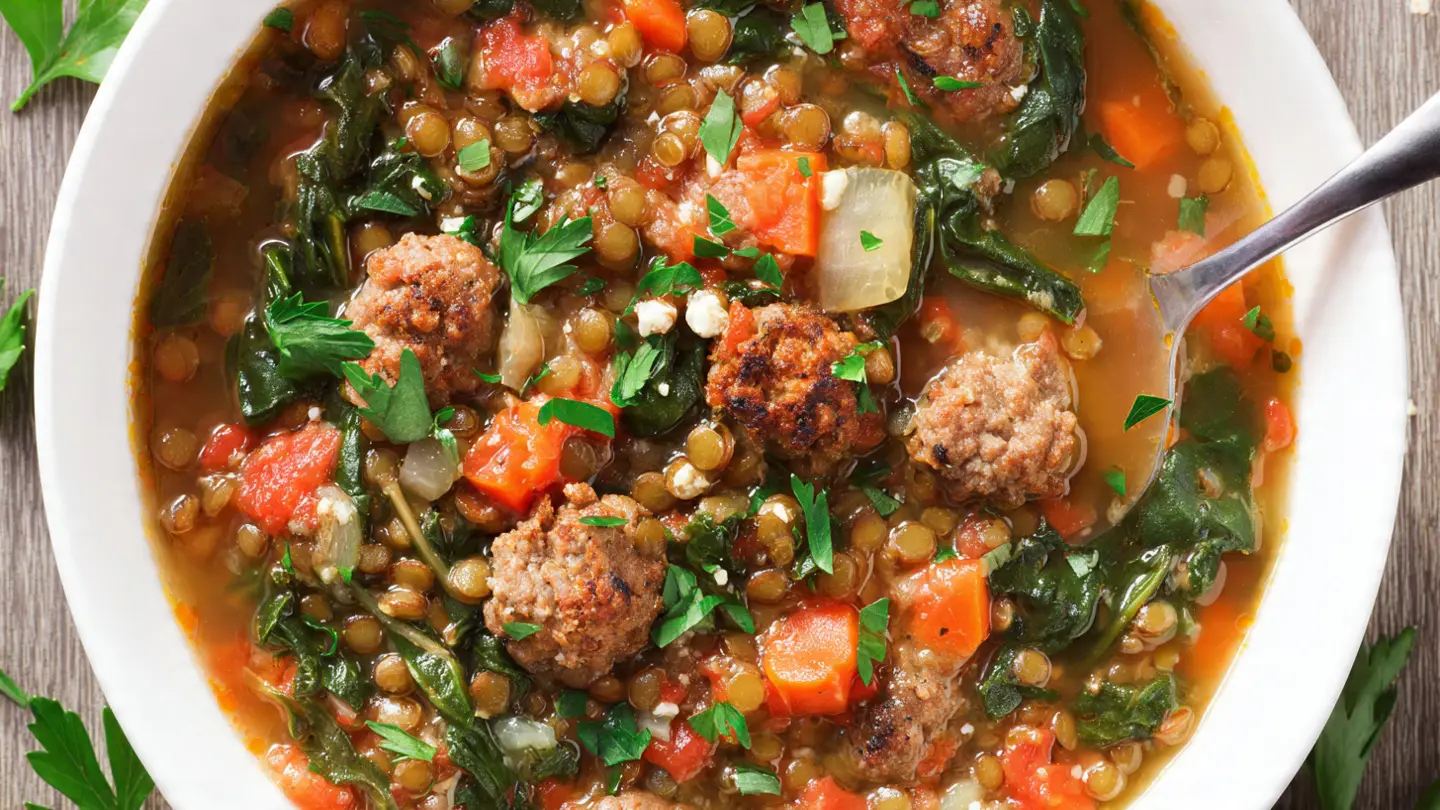
Sausage Lentil Soup
Ingredients
- 1 lb Italian sausage - 450g, mild or spicy, casings removed
- 1 tbsp olive oil
- 1 large yellow onion - diced, about 1½ cups or 200g
- 3 medium carrots - diced, about 1½ cups or 180g
- 3 celery stalks - diced, about 1 cup or 120g
- 4 garlic cloves - minced
- 1½ cups dried green or brown lentils - 300g, rinsed and picked over
- 1 can diced tomatoes with juice - 14.5 oz or 411g
- 6 cups low-sodium chicken broth - 1.4 liters
- 2 cups water - 475ml
- 2 bay leaves
- 1 tsp dried thyme
- 1 tsp dried oregano
- ½ tsp smoked paprika
- ¼ tsp red pepper flakes - optional, for heat
- salt and black pepper - to taste
- 2 cups fresh spinach or kale - 60g, roughly chopped; remove tough stems if using kale
- 2 tbsp fresh lemon juice
- fresh parsley - optional, for garnish
Equipment
- Large Dutch oven or heavy-bottomed pot - 6–8 quart capacity recommended
- Wooden spoon or sturdy spatula - For breaking up sausage and stirring
- Cutting board - Large size preferred for prepping all vegetables at once
- Ladle - For serving
- Fine-mesh strainer - For rinsing lentils
- Immersion blender - (optional) For partially blending soup to a creamier texture
Method
- Dice onion, carrots, and celery into ¼-inch pieces; mince garlic; rinse lentils in a fine-mesh strainer and remove any debris; remove sausage casings; roughly chop spinach or kale.
- Heat a large Dutch oven over medium-high heat, add olive oil, then add sausage. Cook 6–8 minutes, breaking it into ½–1 inch pieces, until deeply browned. Do not drain unless there is more than 2 tablespoons of fat.
- Reduce heat to medium, add onion and cook 5 minutes until softened, then add carrots and celery and cook 4–5 more minutes. Push vegetables aside, add garlic to the center, and cook 30–60 seconds until fragrant.
- Stir in the rinsed lentils and canned diced tomatoes with their juice, scraping up any browned bits from the bottom of the pot with a wooden spoon.
- Pour in chicken broth and water, then add bay leaves, thyme, oregano, smoked paprika, red pepper flakes (if using), 1 tsp salt, and ½ tsp black pepper. Stir well and bring to a boil over high heat.
- Reduce heat to medium-low, partially cover, and simmer 35–40 minutes, stirring every 10 minutes, until lentils are tender but still hold their shape. Add more water or broth if soup becomes too thick.
- Taste and adjust salt and pepper, remove bay leaves, then stir in the spinach or kale and cook 1–4 minutes until wilted. Turn off heat and stir in fresh lemon juice.
- Let soup rest off heat for 5–10 minutes, then ladle into bowls and garnish with fresh parsley. Serve with crusty bread for dipping.
Nutrition
Notes
- Use green or brown lentils: Red lentils break down too quickly and make the soup mushy — stick with green or brown for the best texture.
- Brown the sausage deeply: Don’t rush this step; the caramelized crust on the sausage provides most of the soup’s flavor foundation.
- Salt lentils at the end: Adding all your salt early can toughen lentil skins and extend cooking time. Add most salt in the last 10 minutes.
- Old lentils cook slower: Lentils older than a year may take significantly longer to soften — buy fresh lentils for best results.
- Adjust lemon juice to taste: The fresh lemon juice brightens all the flavors and balances the richness of the sausage — don’t skip it.
- Tastes better the next day: Flavors deepen overnight. If making ahead, add greens and lemon juice when reheating for freshest flavor.
- Freezer-friendly: Freeze for up to 3 months. For best results, freeze before adding greens and lemon juice. Add extra broth when reheating as soup thickens considerably.
- Slow cooker method: Brown sausage first, then add all ingredients (except greens and lemon) and cook on low 6–7 hours or high 3–4 hours. Stir in greens and lemon in the last 15 minutes.
- Instant Pot method: Use sauté function to brown sausage and vegetables, then pressure cook on high for 15 minutes with natural release. Add greens and lemon after cooking.
- Customize the heat: Use mild Italian sausage for a kid-friendly version, spicy sausage for adults, or a mix of both for a balanced kick.
Private Notes
Tried this recipe?
Let us know how it was!Final Thoughts
I hope this recipe becomes as beloved in your kitchen as it has in mine. There’s something deeply satisfying about a pot of soup that comes together easily, fills your home with incredible aromas, and feeds your family well for multiple meals.
What started as a pantry-clearing experiment has become one of my most treasured recipes. I’ve served it to skeptical teenagers who went back for seconds, to dinner party guests who asked for the recipe, and to sick friends who told me it made them feel better. That’s the power of a good, honest bowl of soup.
Give this sausage lentil soup a try this week, and feel free to make it your own. I’d love to hear how it turns out for you, what variations you tried, and whether your family loved it as much as mine does. Drop a comment below with your experience, and happy cooking!
Recommended:
- Pasta Fagioli Recipe
- Italian Wedding Soup Recipe
- Chicken Gnocchi Soup Recipe
- Zuppa Toscana Recipe
- Crockpot Beef Stew Recipe
- Cowboy Stew Recipe
- Brunswick Stew Recipe
- Irish Stew Recipe
- Matzo Ball Soup Recipe
- Easy Chicken Noodle Soup Recipe




Rich flavorful broth. I substituted a diced fresh tomato and turkey sausage. I forgot to add the lemon, but there was still great flavor. I have made several types of lentil soup, but I feel this tasted best, and I will make this again.
Hi Suzie. I’m so delighted you love it. Thank you for trying my recipe.