I made my first beef quesadilla recipe on a random weeknight when I had leftover taco meat and a bag of shredded cheese staring at me from the fridge. What started as a “clean out the fridge” meal quickly became one of the most requested dinners in my house.
I’ve since made these dozens of times, tweaking the seasoning blend and experimenting with different cheese combinations. After too many batches of soggy quesadillas (yes, that’s a real mistake I made early on), I finally figured out the tricks that make them perfectly crispy every single time.
The secret is in getting the skillet hot enough before adding the tortilla, and making sure your filling isn’t too wet. Trust me, a little patience at this stage pays off big.
| Quick Recipe Summary | |
|---|---|
| Prep Time | 15 minutes |
| Cook Time | 16 minutes |
| Total Time | 31 minutes |
| Servings | 4 quesadillas |
| Difficulty Level | Easy |
If you love this one, my Steak Quesadilla Recipe uses strips of marinated skirt steak for a slightly fancier take on the same idea.
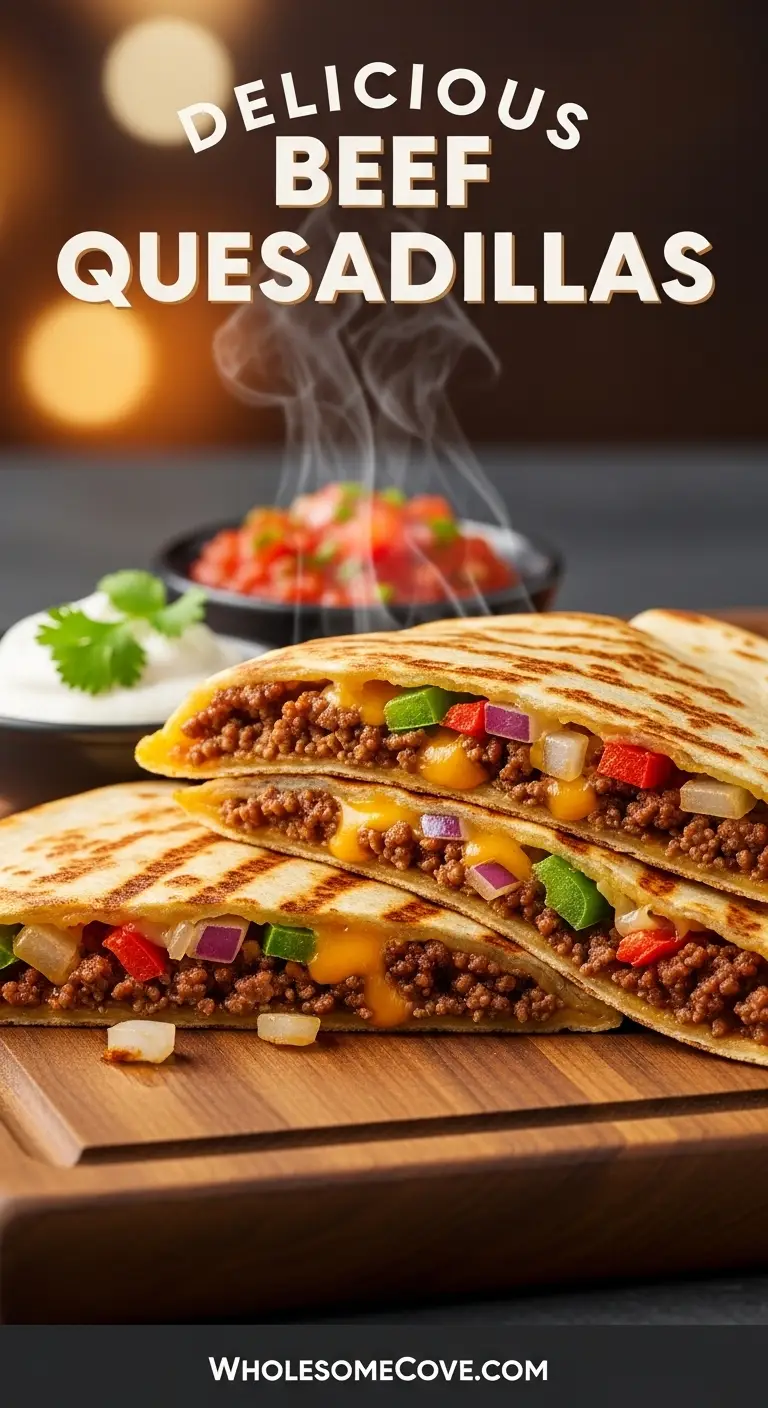
Why You’ll Love This Beef Quesadilla Recipe
These quesadillas come together in under 35 minutes from start to finish. That makes them perfect for busy weeknights when you want something satisfying but don’t have time to fuss.
The filling is bold and deeply savory, seasoned with a homemade spice blend that beats any packet seasoning. Once you taste it, you’ll never go back to the store-bought stuff.
Every bite gives you crispy, golden tortilla on the outside and melty, gooey cheese on the inside. That texture contrast is honestly half the appeal.
These are also extremely versatile. You can customize the toppings and mix-ins without changing the base recipe at all.
Kids and adults love them equally. They’re a crowd-pleaser at casual gatherings, game nights, or even lunchboxes the next day.
The cleanup is minimal since everything cooks in one skillet. That alone is enough to sell me on making these on repeat.
You might also enjoy: Chicken Quesadilla Recipe
Ingredients
Making great beef quesadillas starts with good-quality ingredients, especially the beef. I use an 80/20 ground beef blend here because the fat content keeps the filling juicy and flavorful without becoming greasy once you drain it properly. The cheese is just as important as the beef, and I always go with a combination of Monterey Jack and cheddar for the best melt and flavor balance.
- 1 lb (450g) ground beef (80/20 blend)
- 8 large (10-inch) flour tortillas
- 2 cups (200g) shredded Monterey Jack cheese
- 1 cup (100g) shredded cheddar cheese
- 1 small yellow onion, finely diced (about ¾ cup / 110g)
- 1 small green bell pepper, finely diced (about ¾ cup / 110g)
- 3 cloves garlic, minced
- 1 tbsp olive oil
- 1 tsp chili powder
- 1 tsp ground cumin
- ½ tsp smoked paprika
- ½ tsp garlic powder
- ½ tsp onion powder
- ¼ tsp dried oregano
- ½ tsp salt, or to taste
- ¼ tsp black pepper
- 2 tbsp tomato paste
- 2 tbsp water
- Cooking spray or neutral oil for the pan
For serving (optional):
- Sour cream
- Chipotle guacamole or regular guacamole
- Fresh salsa or pico de gallo
- Pickled jalapeños
- Fresh cilantro
Read Also: Cheese Quesadilla Recipe
Kitchen Equipment Needed
Having the right tools makes the whole process smoother. The most important piece of equipment is a good flat skillet or griddle pan that distributes heat evenly. I’ve tried using a small pan and ended up with quesadillas that were burnt in the middle and raw on the edges, so pan size really does matter here.
- Large cast iron skillet or flat griddle pan (12-inch / 30cm minimum)
- Large skillet or sauté pan for cooking the beef filling
- Wooden spoon or silicone spatula
- Wide flat spatula or quesadilla spatula for flipping
- Cutting board and sharp knife
- Measuring spoons
- Colander or slotted spoon for draining fat
- Pizza cutter or sharp knife for slicing
Read Also: Shrimp Quesadilla Recipe
Recommended Products for This Recipe
These are products I personally use and genuinely recommend based on years of making quesadillas at home. Using the right tools really does make a noticeable difference in results.
1. Lodge 12-Inch Cast Iron Skillet
I’ve used the same Lodge cast iron skillet for years, and it’s by far the best tool for making perfectly crispy quesadillas. Cast iron holds and distributes heat incredibly evenly, which means no hot spots that burn one corner while the rest stays pale. It also gives you that deep golden crust that non-stick pans just can’t match.
2. OXO Good Grips Large Flat Spatula
Flipping quesadillas without losing your filling is a real skill, and this wide flat spatula makes it so much easier. The thin, flexible edge slides cleanly under the tortilla without disturbing the contents. I’ve used thinner spatulas that bent under the weight and dropped the whole thing, so this one is a genuine upgrade.
3. Old El Paso Taco Seasoning (for the spice blend base)
While I prefer making my own seasoning blend, Old El Paso makes a great backup when I’m short on individual spices. The flavor profile is well-balanced and not too salty compared to many other packaged options. It’s a reliable shortcut that still produces a delicious filling.
4. OXO Pizza Wheel and Cutter
A good pizza cutter makes slicing quesadillas quick, clean, and effortless. The sharp wheel glides through the crispy tortilla without dragging the filling or breaking the layers. I used to use a knife and always ended up with uneven messy cuts.
You might also enjoy: Ground Elk Quesadillas Recipe
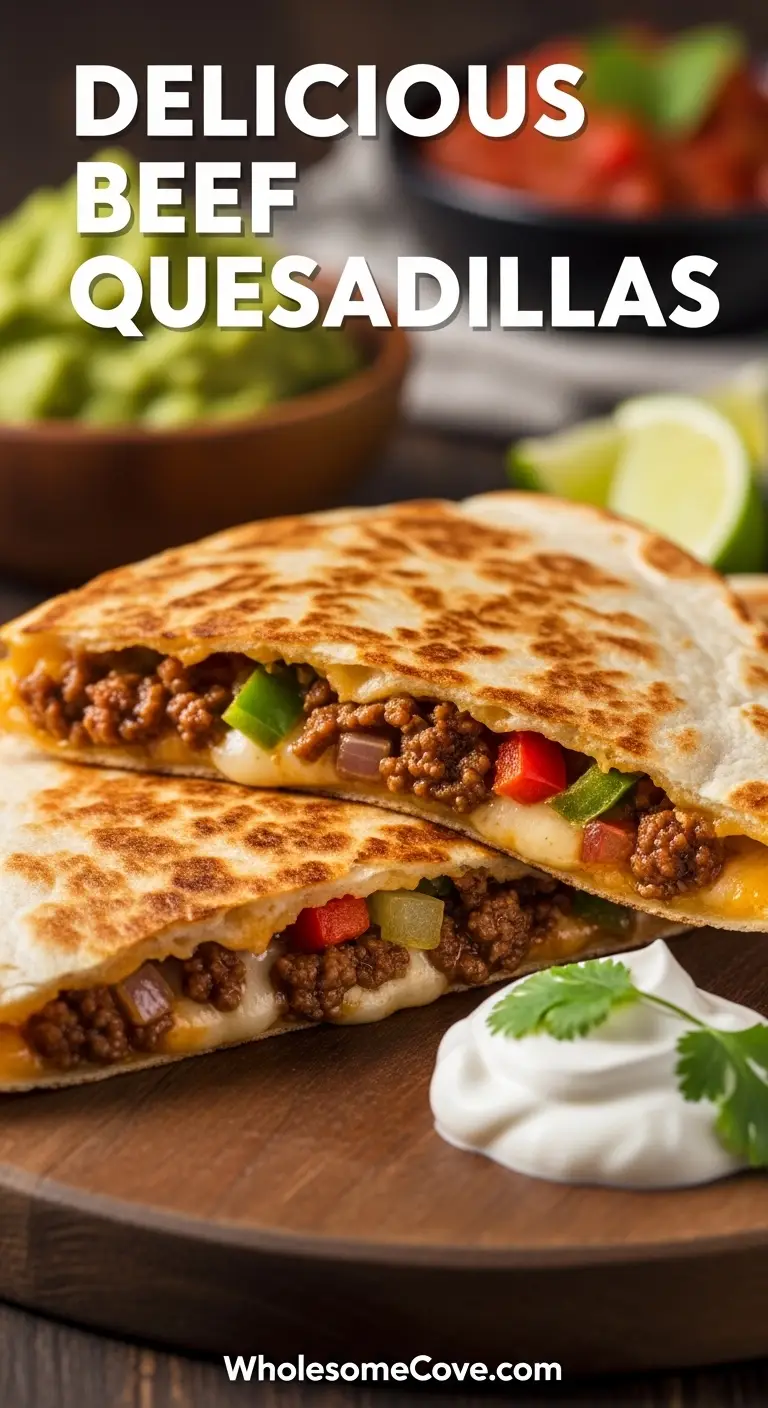
Step-by-Step Instructions: How to Make Beef Quesadillas
Step 1: Prep Your Ingredients
- Finely dice the yellow onion into small, uniform pieces, about ¼ inch (6mm) in size, so they cook quickly and evenly without large chunks in the filling.
- Finely dice the green bell pepper to roughly the same size as the onion pieces to ensure even cooking.
- Mince the garlic cloves as finely as possible. You can use a garlic press if you prefer a smoother texture in the filling.
- Combine the chili powder, cumin, smoked paprika, garlic powder, onion powder, dried oregano, salt, and black pepper in a small bowl. Mix them together so your spice blend is ready to go when the beef hits the pan.
- Shred your cheeses if using block cheese (freshly shredded melts better than pre-shredded), and combine the Monterey Jack and cheddar together in a bowl. Set aside.
Step 2: Cook the Beef Filling
- Heat the olive oil in a large skillet over medium-high heat until it shimmers, about 1-2 minutes.
- Add the diced onion and diced green bell pepper to the skillet. Cook, stirring frequently, for 3-4 minutes until the vegetables are softened and the onion is beginning to turn translucent.
- Add the minced garlic and stir constantly for 30-60 seconds until fragrant. Don’t let the garlic burn or it will turn bitter.
- Add the ground beef to the skillet, breaking it apart immediately with your wooden spoon or spatula into small crumbles as it hits the pan. Larger chunks don’t distribute well inside the quesadilla.
- Cook the beef, continuing to break it apart, for 5-6 minutes over medium-high heat until it is fully browned with no pink remaining.
- Carefully drain off the excess fat using a slotted spoon to remove the meat while leaving the fat in the pan, or by tilting the pan and spooning it out. This step is important to prevent a greasy, soggy quesadilla.
- Return the drained beef mixture to the skillet over medium heat. Add the entire spice blend you mixed in Step 1 and stir well to coat every piece of meat.
- Add the tomato paste and 2 tablespoons of water to the beef. Stir everything together until the tomato paste is fully incorporated and the filling looks saucy and glossy, about 1-2 minutes. The water helps distribute the paste and prevents the spices from burning.
- Taste the filling and adjust salt and seasoning as needed. Remove from heat and set aside.
Step 3: Assemble the Quesadillas
- Lay one large flour tortilla flat on your clean cutting board or countertop.
- Sprinkle about ¼ cup (25g) of the combined cheese blend evenly over one half of the tortilla, leaving a small border around the edge to prevent overflow. Using just one half means you’ll fold it into a half-moon rather than stacking a second tortilla on top, which makes flipping easier.
- Spoon about ¼ to ⅓ cup of the beef filling on top of the cheese on the same half, spreading it in an even layer. Don’t overfill or the quesadilla will burst when you flip it.
- Sprinkle another 2-3 tablespoons of cheese over the beef filling. Adding cheese both under and over the filling helps it all stay together when you cut it.
- Fold the plain half of the tortilla over the filled half to form a half-moon shape. Press down gently with your hand to seal it.
- Repeat the assembly process for the remaining three quesadillas.
Step 4: Cook the Quesadillas
- Heat your large cast iron skillet or griddle pan over medium heat for about 2 minutes. A properly preheated pan is the key to a golden crust without burning.
- Lightly spray the pan with cooking spray or brush with a very thin layer of neutral oil.
- Place one or two assembled quesadillas in the skillet (depending on your pan size). Don’t crowd the pan or steam will build up and make them soggy.
- Cook on the first side for 2-3 minutes without moving them. You’re looking for a deep golden-brown color and the tortilla becoming visibly crisp. Lift a corner gently to check the color.
- Slide your wide flat spatula fully under the quesadilla and flip in one confident, swift motion. Hesitating mid-flip often causes the filling to spill out.
- Cook the second side for another 2-3 minutes until equally golden and crispy, and the cheese is fully melted.
- Transfer the finished quesadilla to a cutting board. Let it rest for 1-2 minutes before cutting. Cutting too soon causes the filling to run out.
- Repeat with the remaining quesadillas, adding a small amount of oil between each batch if the pan looks dry.
Step 5: Slice and Serve
- Use a sharp pizza cutter or chef’s knife to cut each quesadilla into 3 triangles (for a half-moon quesadilla) or 4 triangles.
- Arrange on a serving plate and add your desired toppings such as sour cream, guacamole, salsa, pickled jalapeños, and fresh cilantro on the side.
- Serve immediately while the cheese is still melty and the tortilla is at its crispiest.
For another great Tex-Mex weeknight dinner, try my Chipotle Burrito Recipe which uses many of the same spices.
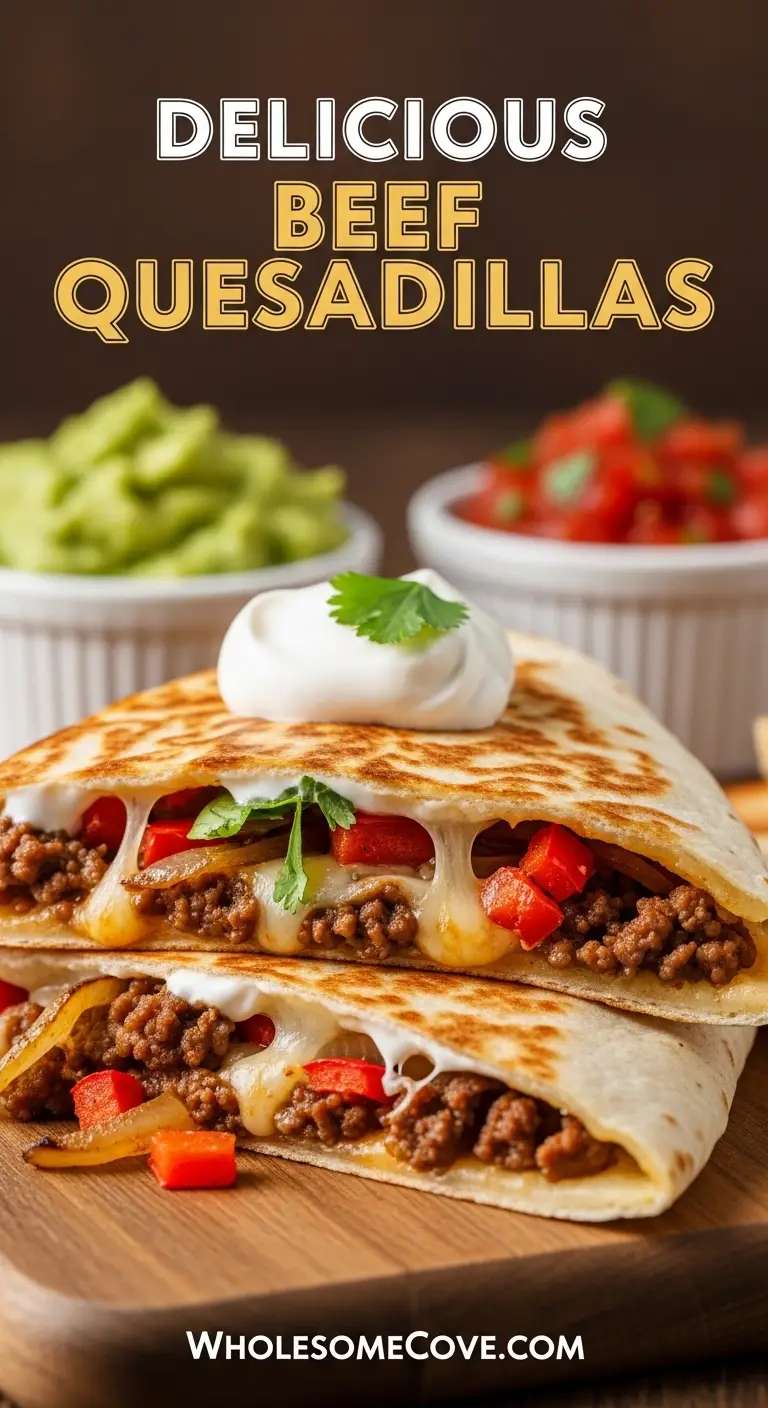
Tips for The Best Beef Quesadillas
Even a simple recipe has a few points where things can go wrong. These are the tips I’ve gathered from making beef quesadillas more times than I can count. Getting these small details right is what separates a good quesadilla from a great one.
- Drain the fat thoroughly. Excess grease from the beef is the number one cause of soggy, limp quesadillas. Don’t skip this step even if you’re in a hurry.
- Don’t overfill. It’s tempting to pile in a lot of filling, but a stuffed quesadilla is hard to flip and tends to burst. About ⅓ cup of filling per quesadilla is the sweet spot.
- Use freshly shredded cheese. Pre-shredded cheeses are coated with anti-caking agents that prevent smooth melting. Block cheese melted from scratch gives you that stretchy, gooey pull.
- Preheat the pan properly. Adding a quesadilla to a cold pan means it absorbs oil and steams instead of crisping. Give the pan a full 2 minutes to heat up before anything touches it.
- Medium heat is your friend. Too high and the outside burns before the cheese melts. Too low and you end up with a pale, floppy tortilla. Medium heat gives you a beautifully golden crust with melted cheese.
- Let it rest before cutting. A minute or two of resting time allows the cheese to set slightly so it doesn’t all pour out when you slice.
- Use large flour tortillas. Small or medium tortillas don’t leave enough room for filling without tearing. A 10-inch tortilla is ideal.
- Warm your tortillas briefly before filling. If your tortillas have been refrigerated, warming them for 10 seconds in the microwave makes them more pliable and less likely to crack when folded.
- Press down gently during cooking. Using the back of your spatula to lightly press the quesadilla flat as it cooks ensures even contact with the pan surface and better browning.
- Cook in batches. Cooking more than two at a time in a regular skillet causes temperature drops that ruin the crisp. Take your time.
Read Also: Taco Casserole Recipe
What to Serve with Beef Quesadillas
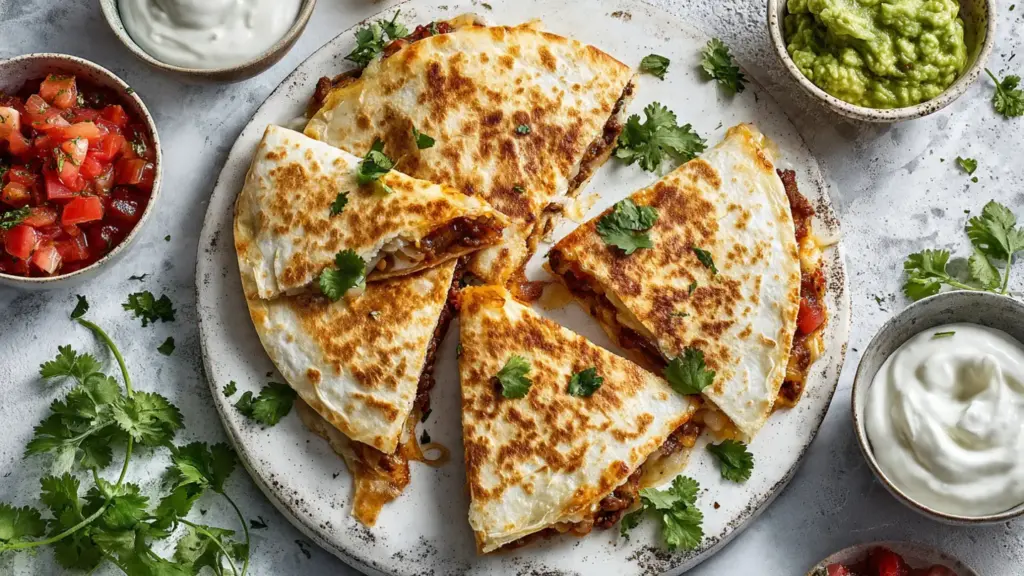
Beef quesadillas are hearty on their own, but pairing them with the right sides turns them into a full, satisfying meal. I like to set up a little topping station with small bowls of different accompaniments so everyone can build their own plate.
- Sour cream – The cool, tangy creaminess is the classic pairing that balances the spiced beef perfectly.
- Guacamole – Fresh guac adds richness and a pop of bright avocado flavor that cuts through the fattiness of the cheese.
- Fresh salsa or pico de gallo – The acidity and freshness of tomato-based salsas is an essential contrast to the rich filling.
- Mexican Street Corn – Elotes alongside quesadillas is a match made in Tex-Mex heaven. The sweetness of the corn plays off the savory beef beautifully.
- Healthy Coleslaw – A simple slaw adds crunch and a light, refreshing element to the meal.
- Taco Soup – Serving quesadillas with a bowl of taco soup on the side is one of my favorite cool-weather combinations. The quesadilla acts as a perfect dipper.
- Chipotle Guacamole – For those who like a little smoke and heat in their guac, the chipotle version is outstanding with the spiced beef filling.
- Pickled jalapeños – A few slices add sharpness and heat that brightens up every bite.
- Black beans or refried beans – A simple side of seasoned beans rounds out the plate and adds fiber.
- Healthy Nachos – If you’re feeding a crowd, setting out a plate of nachos alongside your quesadillas makes for an impressive spread.
Read Also: 7 Layer Taco Salad Recipe
Variations of Beef Quesadillas
The base beef quesadilla recipe is endlessly adaptable. Once you’ve mastered the standard version, experimenting with different ingredients keeps things interesting. Here are some of my favorite ways to switch it up without straying too far from the original concept.
- Spicy Beef Quesadillas – Add 1-2 finely chopped chipotle peppers in adobo sauce to the beef filling, along with ½ teaspoon of cayenne pepper in the spice blend. The smoky heat is addictive.
- Beef and Black Bean Quesadillas – Stir one 15 oz (425g) can of drained, rinsed black beans into the cooked beef filling. The beans add heartiness, fiber, and a slightly earthy flavor that works really well.
- Beef and Mushroom Quesadillas – Sauté 8 oz (225g) of finely chopped cremini mushrooms along with the onion and pepper. The mushrooms add an umami depth and stretch the filling further.
- Cheesesteak-Style Quesadillas – Use thinly sliced ribeye steak instead of ground beef and add sautéed mushrooms and caramelized onions. It bridges the gap between a Philly cheesesteak and a quesadilla.
- Breakfast Beef Quesadillas – Add scrambled eggs and crumbled cooked bacon to the ground beef filling, then season with a little hot sauce. It’s a filling breakfast that uses up leftover taco meat beautifully.
- BBQ Beef Quesadillas – Swap the spice blend for your favorite BBQ sauce and add thinly sliced red onions. It has a sweet, smoky twist that kids especially love.
- Tex-Mex Beef Quesadillas with Corn – Stir ½ cup (85g) of frozen sweet corn kernels (thawed and patted dry) into the filling before assembling. It adds pops of sweetness and texture.
- Beef Quesadillas with Pepper Jack – Replace the Monterey Jack with pepper jack cheese for a spicier, more complex flavor profile. This is my go-to when I’m making these just for the adults.
You might also enjoy: Steak Quesadilla Recipe
Storage and Reheating
Beef quesadillas store well, which makes them a great option for meal prep. The key is letting them cool completely before storing so they don’t become steamy and soggy in the container.
- Refrigerator: Let quesadillas cool completely at room temperature, then stack them with a small piece of parchment paper between each one to prevent sticking. Store in an airtight container in the fridge for up to 3 days.
- Freezer: To freeze, cool completely, then wrap each quesadilla individually in plastic wrap and place in a freezer-safe zip bag. They freeze well for up to 2 months. Thaw overnight in the fridge before reheating.
- Reheating in a skillet (best method): Heat a dry skillet over medium heat for 2 minutes. Place the quesadilla in the pan without any oil and heat for 2-3 minutes per side until the tortilla is crispy again and the cheese is melted. This method restores the original texture.
- Reheating in an air fryer: Place the quesadilla in a single layer in the air fryer basket and cook at 350°F (175°C) for 3-4 minutes until hot and crispy. This is my second favorite method, especially for frozen ones.
- Reheating in the oven: Preheat your oven to 375°F (190°C). Place quesadillas on a baking sheet in a single layer and heat for 8-10 minutes, flipping halfway through. Works well for reheating multiple at once.
- Microwave (quick but not ideal): Wrap the quesadilla in a damp paper towel and microwave for 60-90 seconds. The tortilla won’t be crispy but the filling will be hot. Use this only when you’re in a real rush.
Read Also: Beef Enchilada Casserole Recipe
Nutritional Facts
The following values are approximate estimates per one quesadilla (based on 4 servings), without additional toppings like sour cream or guacamole. Actual values will vary depending on specific ingredients and brands used.
| Nutrient | Per Quesadilla | ||| | Calories | ~620 kcal | | Total Fat | 32g | | Saturated Fat | 15g | | Cholesterol | 110mg | | Sodium | 870mg | | Total Carbohydrates | 44g | | Dietary Fiber | 2g | | Sugars | 3g | | Protein | 38g |
Choosing 90/10 ground beef instead of 80/20 reduces the fat content by roughly 6-8g per quesadilla. Using reduced-fat cheese also brings down the calorie count noticeably, though the melt quality is slightly different.
You might also enjoy: Healthy Nachos Recipe
Health Benefits of Key Ingredients
While beef quesadillas are an indulgent comfort food, they do contain some genuinely nutritious ingredients worth highlighting. Enjoying them as part of a balanced diet means you get real nutrients alongside the flavor.
- Ground beef is a rich source of complete protein, providing all essential amino acids needed for muscle maintenance and repair. It’s also one of the most bioavailable sources of iron, zinc, and vitamin B12, nutrients that are often harder to get from plant-based foods alone.
- Garlic contains allicin, a sulfur compound with well-documented antimicrobial and anti-inflammatory properties. Regular consumption has been associated with modest improvements in blood pressure and immune function.
- Green bell pepper is surprisingly high in vitamin C, containing more per ounce than many citrus fruits. It also provides vitamin A precursors, folate, and a range of antioxidants that help protect cells from oxidative stress.
- Cumin is more than just a flavor agent. It has been studied for its potential digestive benefits and contains antioxidants including flavonoids and polyphenols.
- Olive oil provides heart-healthy monounsaturated fats and polyphenols with antioxidant activity. Using it as your cooking fat rather than butter or vegetable shortening is a simple swap that adds real nutritional value.
- Monterey Jack cheese and cheddar both contribute calcium and phosphorus, essential for bone density and dental health. They also add more protein per serving than many people realize.
- Onion contains quercetin, a flavonoid antioxidant with anti-inflammatory effects. Onions are also a natural source of prebiotics that support gut health.
- Smoked paprika provides capsaicin and carotenoids. These compounds have antioxidant properties and may support metabolic health.
Read Also: Mexican Chicken Soup Recipe
FAQs About Beef Quesadillas
1. What is the best cheese for beef quesadillas?
Monterey Jack is widely considered the best melting cheese for quesadillas. It melts smoothly, doesn’t release as much oil as cheddar alone, and has a mild, creamy flavor that lets the beef shine.
A blend of Monterey Jack and cheddar gives you the best of both worlds: excellent melt from the Jack and sharp, tangy flavor from the cheddar.
2. Can I use flour tortillas or corn tortillas?
Flour tortillas are the standard choice for quesadillas because they’re pliable, hold their shape when folded, and crisp up beautifully in the pan. Corn tortillas can be used but they’re smaller, more fragile, and tend to crack when folded unless they’re warmed first.
If you use corn tortillas, consider making open-face quesadillas using two separate tortillas with filling sandwiched between them, rather than folding.
3. How do I keep my quesadillas from getting soggy?
The biggest causes of soggy quesadillas are excess grease in the filling and steam trapped in the pan. Drain the beef fat thoroughly after browning, and make sure your fillings aren’t overly wet.
Cooking in a properly preheated pan over medium heat without crowding also prevents steam buildup.
4. Can I make beef quesadillas ahead of time?
You can cook the beef filling up to 2 days in advance and store it covered in the refrigerator. When you’re ready to eat, assemble and cook the quesadillas fresh, which only takes about 5 minutes once the filling is ready.
Fully assembled and cooked quesadillas can also be made ahead and reheated in a skillet or air fryer, though freshly cooked will always be crispier.
5. What ground beef ratio should I use for quesadillas?
An 80/20 ground beef (80% lean, 20% fat) is ideal for quesadillas because the fat adds flavor and keeps the filling moist during cooking. The key is to drain it well after browning so you don’t transfer the excess grease into the quesadilla.
If you prefer a leaner option, 90/10 works fine with a slightly drier filling. Just be careful not to overcook it or the meat will be tough and crumbly.
You might also enjoy: Beef and Broccoli Stir Fry Recipe
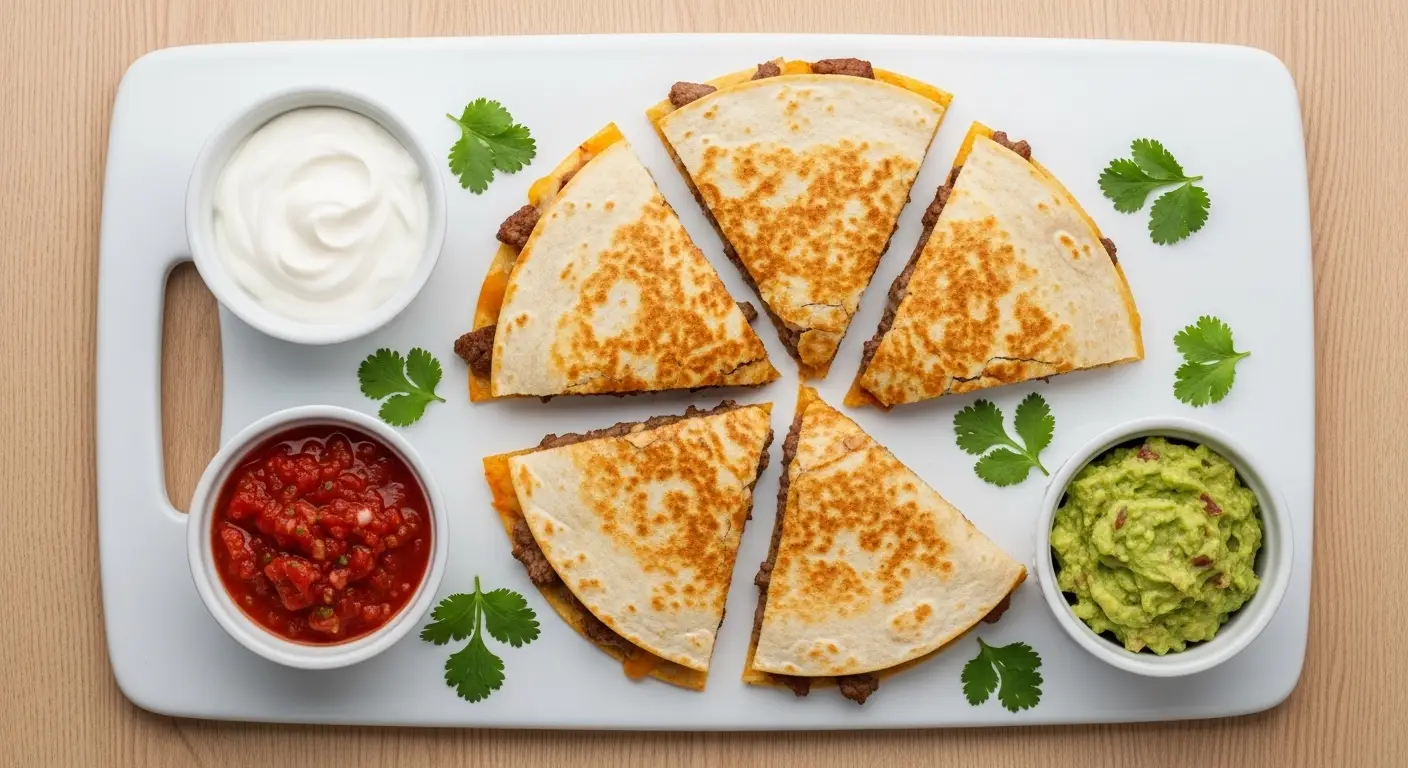
Beef Quesadillas
Ingredients
- 1 lb ground beef - 450g, 80/20 blend recommended
- 8 large flour tortillas - 10-inch / 25cm size
- 2 cups shredded Monterey Jack cheese - 200g; freshly shredded from block recommended
- 1 cup shredded cheddar cheese - 100g; freshly shredded from block recommended
- 1 small yellow onion - about ¾ cup / 110g, finely diced
- 1 small green bell pepper - about ¾ cup / 110g, finely diced
- 3 cloves garlic - minced
- 1 tbsp olive oil
- 1 tsp chili powder
- 1 tsp ground cumin
- ½ tsp smoked paprika
- ½ tsp garlic powder
- ½ tsp onion powder
- ¼ tsp dried oregano
- ½ tsp salt - or to taste
- ¼ tsp black pepper
- 2 tbsp tomato paste
- 2 tbsp water
- cooking spray or neutral oil - for the pan
- sour cream
- guacamole - chipotle or regular
- fresh salsa or pico de gallo
- pickled jalapeños
- fresh cilantro
Equipment
- Large cast iron skillet or flat griddle pan (12-inch / 30cm minimum) - For cooking the quesadillas; cast iron recommended for best crust
- Large skillet or sauté pan - For cooking the beef filling
- Wooden spoon or silicone spatula - For breaking up and stirring the ground beef
- Wide flat spatula or quesadilla spatula - For flipping quesadillas cleanly
- Cutting board and sharp knife - For dicing vegetables
- Colander or slotted spoon - For draining excess fat from the cooked beef
- Small bowl - For mixing the spice blend
- Pizza cutter or sharp knife - For slicing finished quesadillas
Method
- Finely dice the onion and green bell pepper into ¼-inch (6mm) pieces, mince the garlic, and combine all spice blend ingredients in a small bowl. Combine the shredded Monterey Jack and cheddar cheeses in a separate bowl and set aside.
- Heat olive oil in a large skillet over medium-high heat until shimmering, then add the diced onion and green bell pepper and cook for 3–4 minutes until softened. Add the minced garlic and stir for 30–60 seconds until fragrant.
- Add the ground beef, breaking it into small crumbles immediately, and cook for 5–6 minutes over medium-high heat until fully browned with no pink remaining. Carefully drain the excess fat.
- Return the drained beef to the skillet over medium heat, add the entire spice blend, and stir well to coat. Add the tomato paste and 2 tablespoons of water, stirring for 1–2 minutes until fully combined and glossy, then remove from heat.
- Lay one tortilla flat, sprinkle ¼ cup of the cheese blend over one half, top with about ⅓ cup of beef filling, add another 2–3 tablespoons of cheese, then fold the plain half over to form a half-moon. Repeat for the remaining three quesadillas.
- Preheat a lightly oiled cast iron skillet or griddle over medium heat for 2 minutes, then cook each quesadilla for 2–3 minutes per side until deep golden brown and the cheese is fully melted. Work in batches to avoid crowding the pan.
- Transfer to a cutting board, rest for 1–2 minutes, then cut into 3 triangles with a pizza cutter. Serve immediately with sour cream, guacamole, salsa, pickled jalapeños, and fresh cilantro on the side.
Nutrition
Notes
- Drain the fat thoroughly: Excess grease from the beef is the number one cause of soggy quesadillas. Always drain well before adding the spice blend.
- Don’t overfill: Stick to about ⅓ cup of filling per quesadilla. Overfilling makes flipping difficult and causes bursting.
- Freshly shredded cheese melts best: Pre-shredded cheese contains anti-caking agents that prevent smooth melting. Use block cheese and shred it yourself for the best results.
- Preheat the pan properly: A cold pan leads to steaming instead of crisping. Give your skillet a full 2 minutes to heat before adding the quesadilla.
- Use medium heat: Too high burns the outside before the cheese melts; too low produces a pale, floppy tortilla. Medium heat is the sweet spot.
- Make-ahead tip: Cook the beef filling up to 2 days in advance and refrigerate. Assemble and cook quesadillas fresh when ready to eat.
- Storage: Cool completely, layer with parchment paper, and store in an airtight container in the refrigerator for up to 3 days, or freeze individually wrapped for up to 2 months.
- Best reheating method: Reheat in a dry skillet over medium heat for 2–3 minutes per side to restore crispiness. An air fryer at 350°F (175°C) for 3–4 minutes also works well.
- Spice substitution: In a pinch, replace the homemade spice blend with one packet of taco seasoning mixed with 2 tablespoons of water.
- Cheese variation: Swap Monterey Jack for pepper jack to add heat and a more complex flavor profile, especially if making these for adults.
Private Notes
Tried this recipe?
Let us know how it was!Final Thoughts
A great beef quesadilla recipe is one of those fundamentals that every home cook should have in their back pocket. It’s fast, delicious, and satisfying in a way that very few weeknight meals can match.
I hope the tips in this post help you nail that perfectly crispy exterior and gooey interior every time. Once you get the technique down, it really does become effortless.
Go ahead and give it a try this week. And when you do, I’d love to hear how it turned out in the comments below!
If you made any tweaks or found a combination you love, share it with the community. Your variation might just become someone else’s new favorite.
Recommended:
- Chicken Quesadilla Recipe
- Shrimp Quesadilla Recipe
- Cheese Quesadilla Recipe
- Ground Elk Quesadillas Recipe
- Taco Soup Recipe
- Beef Enchilada Casserole Recipe
- Mexican Street Corn Recipe
- Healthy Nachos Recipe
- Guacamole Recipe
- BBQ Sauce Recipe