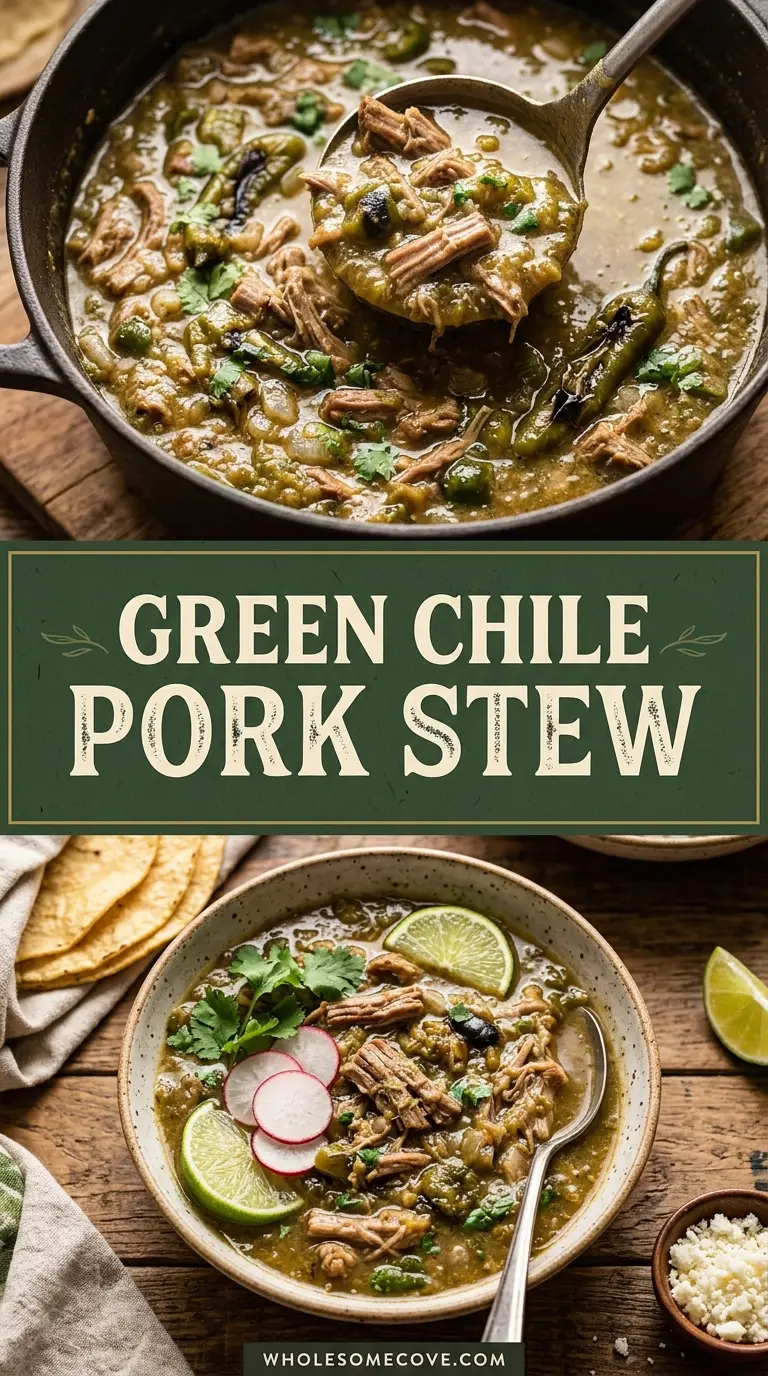
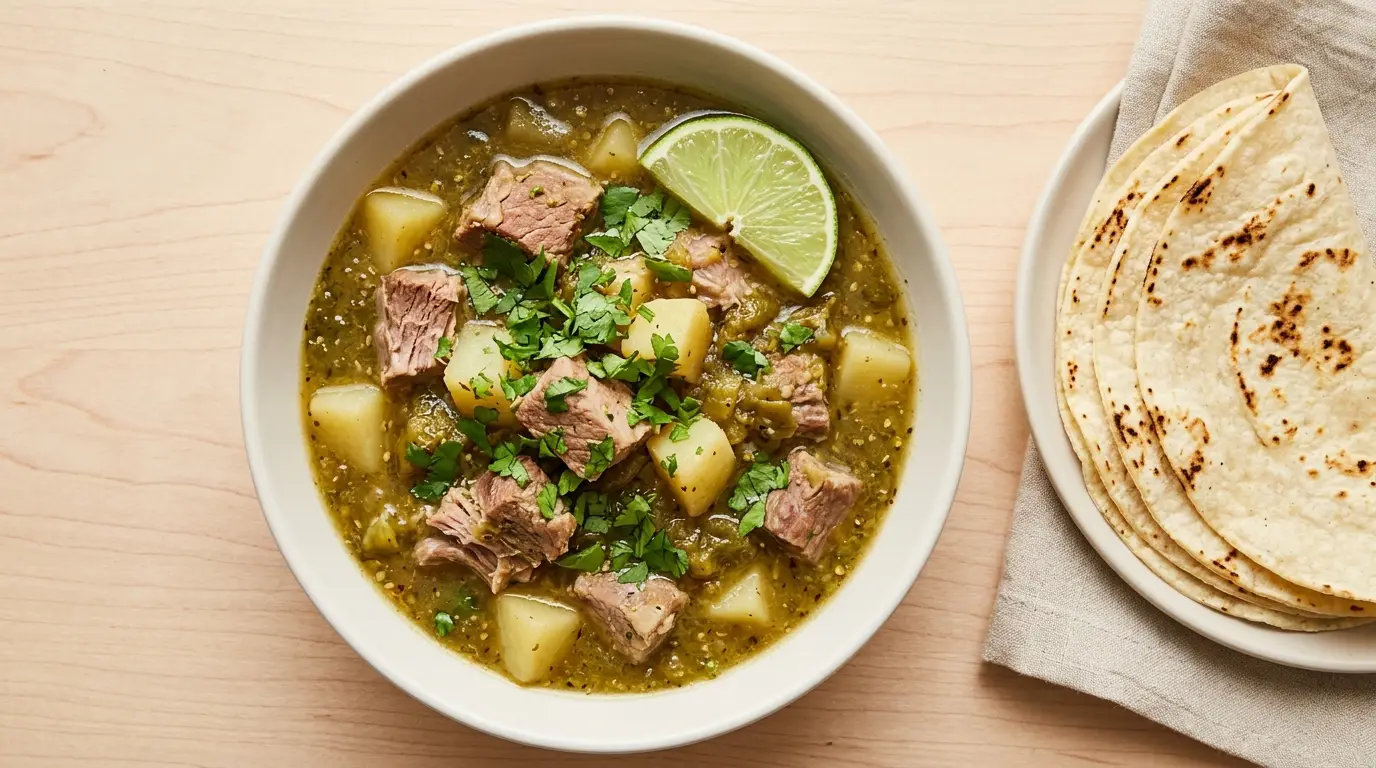
Roasted Hatch chiles and seared pork shoulder give this green chile pork stew recipe its smoky heat. A light dusting of flour on the meat thickens the broth just enough.
Most versions turn out thin and watery because the chiles go in raw straight from a can. Roasting and chopping them first concentrates their flavor and keeps the broth from tasting like seasoned water.
You need about 2 pounds (900 g) of green chiles and 2.5 pounds (1.1 kg) of pork for a pot that serves six to eight.
Cumin, oregano, and a couple of bay leaves round it out, and it all comes together in about two hours. Serve it with warm tortillas and you have dinner.
| Quick Recipe Summary | |
|---|---|
| Prep Time | 25 minutes |
| Cook Time | 1 hour 45 minutes |
| Total Time | 2 hours 10 minutes |
| Servings | 6 to 8 bowls |
| Difficulty Level | Easy |
Read Also: Pork Stew Recipe

Why You’ll Love This Green Chile Pork Stew Recipe
This is the kind of pot you start on a cool afternoon and let simmer while the house fills with the smell of chile and browned pork. It asks for about 25 minutes of hands-on work, then mostly takes care of itself.
Here is what makes it worth cooking:
- The pork turns fork-tender. Pork shoulder has enough fat and connective tissue to go soft and spoonable after a slow simmer, unlike leaner cuts that dry out.
- The heat is adjustable. Mixing mild and hot chiles lets you dial the spice up or down without changing anything else.
- It uses one pot. Browning, sautéing, and simmering all happen in the same Dutch oven, so cleanup is quick.
- It tastes better the next day. The chile and cumin settle into the broth overnight, which makes this a strong make-ahead meal.
- It freezes well. The pork and broth hold their texture after thawing, so a double batch stocks the freezer.
- It feeds a crowd for little money. Pork shoulder is inexpensive, and a single roast stretches across six to eight bowls.
For a different spin on the same cut, see Mexican Pork Stew.
Ingredients
The ingredient list is short, but the quality of two items matters most: the pork and the chiles. Fresh-roasted or frozen Hatch chile will give you the deepest flavor, with canned as a reliable backup.
- 2.5 lbs (1.1 kg) boneless pork shoulder, trimmed and cut into 1-inch (2.5 cm) cubes
- 3 tbsp (45 ml) avocado oil or other neutral high-heat oil, divided
- 3 tbsp (24 g) all-purpose flour
- 1 large yellow onion, diced (about 1.5 cups / 240 g)
- 5 garlic cloves, minced
- 2 lbs (900 g) roasted, peeled green chiles, chopped (Hatch preferred; Anaheim or poblano work too), or substitute four 4-oz (113 g) cans fire-roasted green chiles
- 1 lb (450 g) Yukon Gold potatoes, peeled and cut into 3/4-inch (2 cm) cubes
- 2 tsp (4 g) ground cumin
- 1 tsp (1 g) dried Mexican oregano
- 2 bay leaves
- 6 cups (1.4 L) low-sodium chicken broth
- 1 tsp (6 g) fine sea salt, plus more to taste
- 1/2 tsp (1 g) black pepper
- Optional garnishes: chopped fresh cilantro, lime wedges, sour cream
A quick note on the chiles: taste them before they go in. The heat of green chile swings a lot by variety and season, so one batch of Hatch can be mild and the next genuinely hot.
For a hands-off take, try: Slow Cooker Pork Stew Recipe
Kitchen Equipment Needed
Nothing here is specialized. A heavy pot that browns well and holds heat is the one thing that makes a real difference.
- A 6-quart Dutch oven or other heavy-bottomed pot with a lid
- A sharp chef’s knife for cubing the pork and potatoes
- A wooden cutting board
- A wooden spoon for scraping up the browned bits
- A soup ladle for serving
- A pair of kitchen tongs for turning the pork as it browns
Another hearty option worth trying is Beef Stew.
Recommended Products for This Recipe
These are the products I reach for when making this stew. Each one solves a specific problem I ran into while testing it.
1. Lodge Enameled Cast Iron Dutch Oven
Thin pots scorch the flour and leave pale, steamed pork instead of a brown crust. The enameled cast iron holds steady heat, so the pork sears evenly and the broth simmers low without catching on the bottom.
2. 505 Southwestern Roasted Hatch Green Chile
When Hatch season is over, this roasted chile is the closest thing to fresh. It already carries that fire-roasted flavor, which saves you the broiling step without the flat taste of plain canned diced chiles.
3. Instant-Read Meat Thermometer
I used to cut pork open to check it, which let the juices run out and made the pieces dry. A quick probe to 195°F (90°C) tells you the collagen has broken down and the meat is spoon-tender without the guesswork.
4. Better Than Bouillon Roasted Chicken Base
Boxed broth can taste washed out in a stew this chile-forward. A spoonful of this concentrated base deepens the background savoriness so the broth tastes cooked-down even on a weeknight timeline.
5. Stainless Steel Tortilla Warmer
Cold tortillas go stiff fast at the table. This warmer keeps a stack soft and pliable through a slow dinner, which matters when the tortillas are doing the job of a spoon.
For a hands-off version, try: Instant Pot Pork Stew Recipe

Step-by-Step Instructions: How to Make Green Chile Pork Stew
Follow these steps in order and you’ll have a pot of tender pork and chile broth ready by dinner.
Step 1: Season and brown the pork
- Pat the pork cubes dry with paper towels, then season them all over with the salt and black pepper.
- Heat 2 tablespoons (30 ml) of the oil in your Dutch oven over medium-high heat until it shimmers.
- Add the pork in a single layer, working in two or three batches so the pot is not crowded.
- Let each batch sear undisturbed for 2 to 3 minutes before turning, browning all sides, about 6 to 8 minutes per batch.
- Transfer the browned pork to a plate and set it aside. Leave the drippings in the pot.
I’ve found pork shoulder holds up far better than loin here, because loin dries out and turns stringy over a long simmer while the shoulder stays silky.
Step 2: Sauté the aromatics
- Add the remaining 1 tablespoon (15 ml) of oil to the pot.
- Stir in the diced onion and cook over medium heat until soft and lightly golden, about 4 to 5 minutes.
- Add the minced garlic and cook for 1 minute more, until fragrant but not browned.
Step 3: Build the base
- Sprinkle the flour, cumin, and oregano over the onions.
- Stir constantly for about 1 minute to toast the flour and spices and coat the aromatics.
- The mixture will look dry and paste-like, which is what you want before the liquid goes in.
Step 4: Add broth and simmer the pork
- Pour in the chicken broth a little at a time, scraping the bottom of the pot with a wooden spoon to lift the browned bits.
- Return the pork and any juices from the plate to the pot, then tuck in the bay leaves.
- Bring to a boil, then reduce the heat to low, cover, and simmer gently for 1 hour.
Step 5: Add the chiles and potatoes
- Stir in the chopped green chiles and the cubed potatoes.
- Return to a low simmer and cook uncovered for 30 to 40 minutes.
- The stew is ready when the pork pulls apart easily, the potatoes are tender, and the broth has thickened slightly.
Step 6: Season and rest
- Remove and discard the bay leaves.
- Taste and adjust with more salt and pepper as needed, keeping in mind the chiles carry their own heat.
- Let the pot rest off the heat for 5 minutes so the broth settles before serving.
Step 7: Serve
- Ladle the stew into warmed bowls.
- Top with chopped cilantro, a squeeze of lime, and a spoonful of sour cream if you like.
- Serve with warm tortillas on the side.
For another cozy bowl, try: Chicken Stew Recipe
Tips for The Best Green Chile Pork Stew
Small choices in technique are what separate a flat, watery pot from one with real depth. These are the adjustments that made the biggest difference in testing.
- Dry the pork before browning. Surface moisture steams the meat instead of searing it, so blot the cubes well and don’t crowd the pot.
- Thicken with flour, not a slurry at the end. I ruined a batch early on by stirring in a cornstarch slurry at the finish, which left the broth slick and cloudy; toasting flour with the aromatics gives a cleaner, rounder body.
- Roast your own chiles when you can. Blistering fresh chiles over an open flame or under the broiler, then steaming and peeling them, pulls out a sweetness that canned chile never quite matches.
- Taste the chiles first. Because heat varies batch to batch, sample a piece and blend hot and mild chiles to hit the spice level you want.
- Let it rest or sit overnight. The flavor deepens as it cools, so making it a day ahead genuinely improves it.
- Keep the simmer low. A hard boil toughens pork; a lazy bubble is what breaks the meat down into tender pieces.
- Add potatoes later, not earlier. Dropping them in for the final 30 to 40 minutes keeps them from turning to mush.
A related recipe is Cowboy Stew.
What to Serve with Green Chile Pork Stew
This stew is filling on its own, but the right sides turn it into a spread. Starchy and cooling partners balance the chile heat, and anything that soaks up broth earns its place on the table.
- Warm flour or corn tortillas for scooping and wrapping
- Fluffy Basmati Rice to spoon the broth over
- A wedge of Cornbread for mopping up the bowl
- Creamy Refried Beans on the side
- Cool, chunky Guacamole to offset the heat
- Charred, tangy Mexican Street Corn
- A plate of Street Tacos to round out a bigger meal
- A crisp green salad with lime vinaigrette for something fresh
- Cold Mexican lager or a tart limeade to drink
You might also enjoy: Green Chile Chicken Enchilada Casserole
Variations of Green Chile Pork Stew
Once you have the base down, the stew bends easily to what you have on hand. These are the swaps worth making on purpose.
- Beef green chile stew. Swap the pork for cubed chuck roast and add 20 to 30 minutes of simmer time for the tougher cut.
- With hominy. Stir in a drained 15-oz (425 g) can of white hominy with the potatoes for a pozole-leaning version.
- Extra-hot. Use hot Hatch chile, keep a few of the seeds, or add a diced jalapeño with the onion.
- Blended smooth. Puree part of the finished stew for a thicker, saucier texture that also works as an enchilada filling.
- Tomato-forward. Add a can of diced tomatoes with the broth for a slightly tangier, redder pot.
- Vegetable-heavy. Fold in diced zucchini or a handful of corn in the last 10 minutes.
- Cornmeal finish. Sprinkle in a tablespoon or two of cornmeal at the end for a gentle thickening and a faint sweet-corn note.
I keep a bag of frozen roasted Hatch chile from late summer in the freezer, since it beats canned on flavor every time I reach for it.
For more recipes in this style, check out Pork and Sweet Potato Stew.
Storage and Reheating
This is a stew that rewards leftovers, so plan to make extra. It holds its texture better than most because the pork and potatoes are sturdy.
- Refrigerator: Cool the stew, then store it in an airtight container for up to 4 days.
- Freezer: Freeze in portioned containers for up to 3 months, leaving a little headspace for expansion.
- Thawing: Move frozen stew to the fridge overnight before reheating for the most even results.
- Stovetop reheating: Warm gently over medium-low, stirring now and then, and add a splash of broth if it has thickened too much.
- Microwave reheating: Heat single bowls in 1-minute bursts, stirring between each, until hot throughout.
- Make-ahead note: The flavor is best a day or two after cooking, so this is an easy dish to prep in advance.
For a batch-cook favorite, try: Crockpot Beef Stew Recipe
Nutritional Facts
The values below are estimates per serving, based on eight servings and before optional garnishes. Actual numbers will shift with your cut of pork and chile.
| Nutrient | Amount per Serving |
|---|---|
| Calories | 330 kcal |
| Protein | 28 g |
| Total Fat | 17 g |
| Saturated Fat | 5 g |
| Carbohydrates | 16 g |
| Fiber | 3 g |
| Sugar | 4 g |
| Sodium | 620 mg |
For a lighter option, try: Slow Cooker Chili Recipe
Health Benefits of Key Ingredients
Beyond tasting good, the core ingredients bring real nutritional value. Here is what each of the main players contributes.
- Pork shoulder: A solid source of complete protein, plus B vitamins like thiamine and B12 that support energy metabolism.
- Green chiles: High in vitamin C and vitamin A, and they carry capsaicin, the compound linked to metabolism and anti-inflammatory effects.
- Onion and garlic: Both provide antioxidants and sulfur compounds that are associated with heart and immune support.
- Potatoes: A good source of potassium and vitamin C, and they add fiber when you leave some of the skin on.
- Cumin: Contributes iron and plant compounds that may aid digestion.
- Chicken broth: Adds hydration and, if homemade, small amounts of minerals and collagen.
You’ll find more inspiration in Chicken Enchilada Casserole.
FAQs About Green Chile Pork Stew
1. What kind of pork is best for green chile pork stew?
Boneless pork shoulder, sometimes labeled pork butt, is the top choice. Its fat and connective tissue break down over a slow simmer and leave the meat tender rather than dry.
You can trim the meat off a bone-in roast if that is what you have. Leaner cuts like loin are not recommended, since they tend to toughen and shred.
2. Can I use canned green chiles instead of fresh?
Yes, canned diced green chiles work well and save you the roasting step. Look for fire-roasted or Hatch varieties for the fullest flavor.
You’ll need about four 4-oz (113 g) cans to replace the 2 pounds of fresh chile. Taste and add more if you want a stronger chile presence.
3. How do I make the stew thicker?
The flour toasted with the aromatics does most of the thickening as the stew simmers. Letting it cook uncovered at the end also reduces and concentrates the broth.
If you want it thicker still, mash a few of the cooked potatoes against the side of the pot. A tablespoon of cornmeal stirred in at the end is another traditional fix.
4. How spicy is green chile pork stew?
The heat depends entirely on the chiles you use, which can range from mild to genuinely fiery. Mild Hatch or Anaheim chiles keep it gentle, while hot Hatch brings serious warmth.
Taste a piece of your chile before adding it and blend mild and hot to control the level. A spoonful of sour cream in the bowl also tames the heat.
5. Can I make this in a slow cooker or Instant Pot?
Yes to both. For a slow cooker, brown the pork and aromatics first, then transfer everything and cook on low for 7 to 8 hours, adding potatoes partway through.
For an Instant Pot, use the sauté function to brown, then pressure cook for about 35 minutes. Add the potatoes and chiles for a short second cook so they do not overcook.
6. Why is my green chile stew watery?
The most common cause is skipping the flour step or dumping in raw, liquid-heavy canned chile. Simmering uncovered at the end lets excess liquid cook off.
Draining canned chiles before adding them also helps. A quick potato mash or cornmeal stir-in will tighten a thin broth fast.
For another comforting bowl, try: Bush’s White Chicken Chili Recipe
Green Chile Pork Stew
Ingredients
- 2.5 lbs boneless pork shoulder - 1.1 kg, trimmed and cut into 1-inch (2.5 cm) cubes
- 3 tbsp avocado oil - 45 ml, or other neutral high-heat oil, divided
- 3 tbsp all-purpose flour - 24 g
- 1 large yellow onion - about 1.5 cups or 240 g, diced
- 5 cloves garlic - minced
- 2 lbs roasted, peeled green chiles - 900 g, chopped; Hatch preferred, Anaheim or poblano work too, or substitute four 4-oz (113 g) cans fire-roasted green chiles
- 1 lb Yukon Gold potatoes - 450 g, peeled and cut into 3/4-inch (2 cm) cubes
- 2 tsp ground cumin - 4 g
- 1 tsp dried Mexican oregano - 1 g
- 2 bay leaves
- 6 cups low-sodium chicken broth - 1.4 L
- 1 tsp fine sea salt - 6 g, plus more to taste
- 1/2 tsp black pepper - 1 g
- fresh cilantro - chopped, optional garnish
- lime wedges - optional garnish
- sour cream - optional garnish
- warm tortillas - for serving
Equipment
- 6-quart Dutch oven - or other heavy-bottomed pot with a lid
- Chef’s knife - sharp, for cubing the pork and potatoes
- Wooden cutting board
- Wooden spoon - for scraping up the browned bits
- Soup Ladle - for serving
- Kitchen tongs - for turning the pork as it browns
Method
- Pat the pork cubes dry and season all over with salt and pepper. Heat 2 tablespoons oil in a Dutch oven over medium-high heat and sear the pork in batches until browned on all sides, 6 to 8 minutes per batch. Transfer to a plate.
- Add the remaining 1 tablespoon oil to the pot. Sauté the diced onion over medium heat until soft and lightly golden, about 4 to 5 minutes. Add the garlic and cook 1 minute more until fragrant.
- Sprinkle the flour, cumin, and oregano over the onions. Stir constantly for about 1 minute to toast the flour and spices and coat the aromatics.
- Pour in the chicken broth a little at a time, scraping up the browned bits. Return the pork and juices to the pot, tuck in the bay leaves, bring to a boil, then reduce heat to low, cover, and simmer gently for 1 hour.
- Stir in the chopped green chiles and cubed potatoes. Return to a low simmer and cook uncovered for 30 to 40 minutes until the pork pulls apart easily and the potatoes are tender.
- Remove and discard the bay leaves. Taste and adjust with more salt and pepper as needed. Let the pot rest off the heat for 5 minutes before serving.
- Ladle the stew into warmed bowls. Top with chopped cilantro, a squeeze of lime, and a spoonful of sour cream if you like. Serve with warm tortillas on the side.
Nutrition
Notes
- Dry the pork before browning: Surface moisture steams the meat instead of searing it, so blot the cubes well and don’t crowd the pot.
- Thicken with flour, not a slurry: Toasting flour with the aromatics gives a cleaner, rounder body than stirring in a cornstarch slurry at the end.
- Roast your own chiles when you can: Blistering fresh chiles over an open flame or under the broiler, then steaming and peeling them, pulls out a sweetness that canned chile never quite matches.
- Taste the chiles first: Heat varies batch to batch, so sample a piece and blend hot and mild chiles to hit the spice level you want.
- Make it ahead: The flavor deepens as it cools, so making it a day ahead genuinely improves it. Store in the refrigerator for up to 4 days or freeze for up to 3 months.
- Keep the simmer low: A hard boil toughens pork; a lazy bubble is what breaks the meat down into tender pieces.
- Add potatoes later, not earlier: Dropping them in for the final 30 to 40 minutes keeps them from turning to mush.
- Substitutions: Canned fire-roasted green chiles work well; use about four 4-oz (113 g) cans to replace the 2 pounds of fresh chile. For beef green chile stew, swap the pork for cubed chuck roast and add 20 to 30 minutes of simmer time.
- Make it thicker: Mash a few of the cooked potatoes against the side of the pot, or stir in a tablespoon of cornmeal at the end.
- Slow cooker and Instant Pot: For a slow cooker, brown the pork and aromatics first, then cook on low for 7 to 8 hours, adding potatoes partway through. For an Instant Pot, sauté to brown, then pressure cook about 35 minutes, adding potatoes and chiles for a short second cook.
Private Notes
Tried this recipe?
Let us know how it was!Final Thoughts
Green chile pork stew is the kind of recipe that earns a permanent spot once you make it. The smoky chile, tender pork, and soft potato come together into something that tastes like it took far more effort than it did.
Make a big pot on a cold evening and let the leftovers carry you through the week. It only gets better by day two.
If you give it a try, I’d love to hear how you set your heat level and what you served alongside it. Leave a comment below and share this recipe with someone who loves a good bowl of chile.
Recommended:
- Chicken Quesadilla Recipe
- Enchilada Sauce Recipe
- Chipotle Guacamole Recipe
- Refried Beans Recipe
- Apple Cider Glazed Pork Chops Recipe
- Pork Chop Supreme Recipe
- Beef Barley Soup Recipe
- Taco Soup Recipe
- Slow Cooker Taco Soup Recipe
- Brunswick Stew Recipe