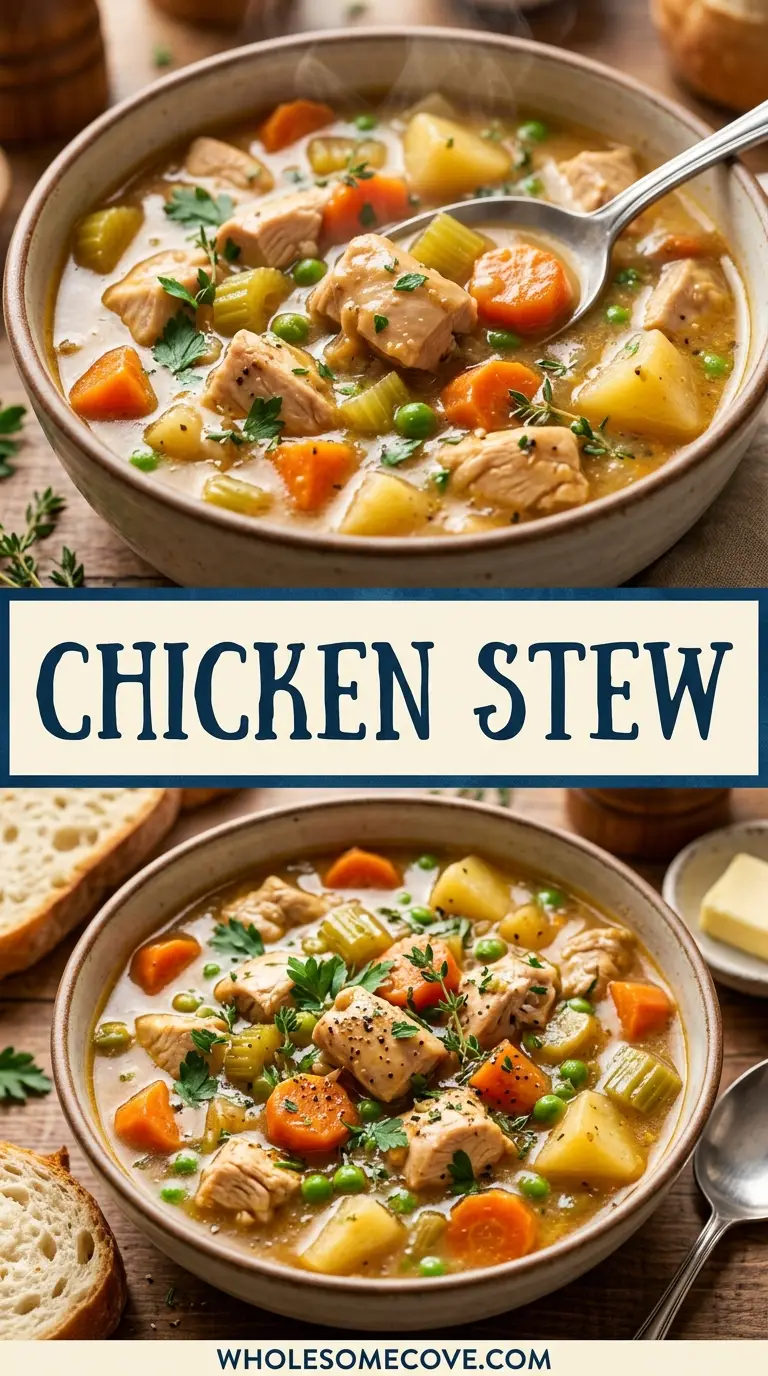
This chicken stew builds its body from a butter and flour roux, so the broth turns into a glossy gravy instead of the thin, soupy liquid most versions settle for. Bone-in thighs, browned first, give the pot a deeper savor than plain poached breast ever could.
You get chunks of tender chicken, waxy potatoes that hold their shape, and a classic mirepoix of onion, carrot, and celery in every spoonful. The whole thing comes together in one pot in about 55 minutes.
Most people end up with watery chicken stew because they never build a real thickener or they keep the lid on the entire time. This version fixes both, with a proper roux at the start and a final uncovered simmer that reduces the broth down.
Nine core ingredients carry the dish, plus a handful of pantry herbs you likely already own. It feeds six and tastes even better the next day once the flavors settle.
| Quick Recipe Summary | |
|---|---|
| Prep Time | 15 minutes |
| Cook Time | 40 minutes |
| Total Time | 55 minutes |
| Servings | 6 servings |
| Difficulty Level | Easy |
For another cozy one-pot meal in this style, see Chicken Gnocchi Soup.
Why You’ll Love This Chicken Stew Recipe
This is the kind of dependable, no-fuss dinner that turns everyday pantry staples into something rich and satisfying. The recipe rewards a little patience but forgives almost any mistake along the way.
Here is what makes it worth adding to your regular rotation:
- The broth is thick, not watery. A butter and flour roux gives the liquid a gravy-like body that clings to every piece of chicken and potato.
- One pot, less cleanup. Everything happens in a single Dutch oven, from browning the chicken to the final simmer.
- Budget-friendly ingredients. Chicken thighs, potatoes, carrots, celery, and onion are cheap year-round and easy to find anywhere.
- Better the next day. Like most stews, the flavors deepen overnight, so leftovers are arguably the best part.
- Naturally flexible. Swap thighs for breast, potatoes for parsnips, or stir in peas and corn without changing the method.
- Comfort food that fills you up. Protein, vegetables, and starch in one bowl means you rarely need more than a slice of bread on the side.
- Freezer-friendly. It holds up well in the freezer for up to three months, making it a smart batch-cook option.
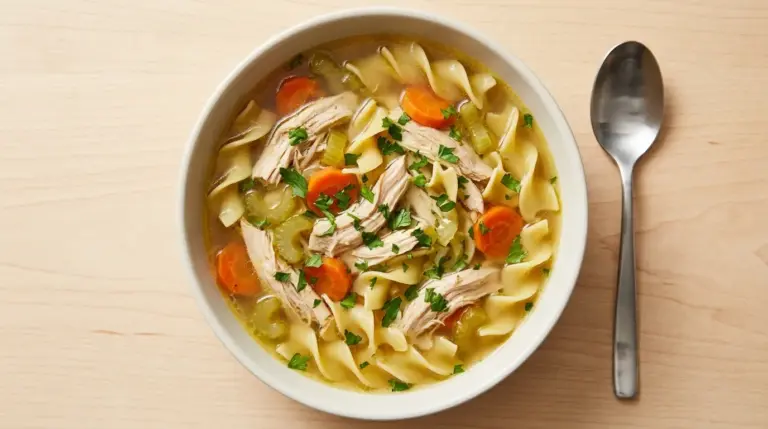
You might also enjoy: Chicken Noodle Soup
Ingredients
Every ingredient here earns its place, and the quantities are scaled for a hearty pot that serves six. Both imperial and metric measurements are listed so you can cook confidently anywhere.
- 2 lbs (900 g) boneless, skinless chicken thighs, cut into 1.5-inch (4 cm) chunks
- 1.5 tsp salt, divided, plus more to taste
- 0.5 tsp black pepper, divided
- 3 tbsp all-purpose flour, divided
- 2 tbsp olive oil, divided
- 3 tbsp unsalted butter
- 1 large yellow onion, diced
- 3 medium carrots, peeled and sliced into 0.5-inch (1 cm) rounds
- 3 celery stalks, sliced
- 4 garlic cloves, minced
- 1.25 lbs (565 g) Yukon Gold potatoes, cut into 1-inch (2.5 cm) cubes
- 4 cups (950 ml) low-sodium chicken broth
- 1 tsp dried thyme
- 0.75 tsp dried rosemary, crushed
- 2 dried bay leaves
- 0.5 cup (120 ml) heavy cream
- 2 tbsp fresh parsley, chopped, for finishing
A related recipe is Chicken Pot Pie.
Kitchen Equipment Needed
You do not need anything fancy for this stew, but a heavy pot makes a real difference in how evenly everything browns and simmers. Here is the short list of what to have ready before you start.
- A large Dutch oven or heavy-bottomed pot (5 to 6 quart / 5 to 6 liter capacity)
- A sturdy chef’s knife for chopping the chicken and vegetables
- A wooden spoon for stirring and scraping up browned bits
- A cutting board, ideally a large one for prepping vegetables
- Measuring cups and measuring spoons
- An instant-read thermometer to confirm the chicken reaches 165°F (74°C)
- A small bowl for tossing the chicken with flour
Read Also: Beef Stew
Recommended Products for This Recipe
These are the tools and ingredients I reach for whenever I make this stew, chosen because each one solved a specific problem I ran into while testing. They are worth the upgrade if you make one-pot meals often.
1. Lodge Enameled Cast Iron Dutch Oven
Thin pots scorch the roux and let the bottom layer of stew stick and burn before the top even simmers. This heavy enameled Dutch oven holds steady, even heat, so the flour cooks into a smooth base and nothing catches while it reduces uncovered at the end.
2. OXO Instant-Read Meat Thermometer
Chicken thighs are forgiving, but chunks cook at different rates and it is easy to serve a piece that is still pink in the center. A fast digital thermometer lets you check the largest chunk in seconds so you hit 165°F (74°C) without cutting everything open.
3. Better Than Bouillon Chicken Base
Watery, flat broth is the fastest way to a disappointing stew. A spoonful of concentrated chicken base stirred into the broth deepens the savory backbone far more than boxed stock alone, and one jar lasts for months in the fridge.
4. Glass Meal-Prep Storage Containers
Since this stew tastes better the next day, you want containers that stack cleanly and reheat without staining or holding odors. Glass sets with locking lids handle the fridge and freezer without leaking, which matters when you are storing a liquid-heavy dish.
For more comforting mains, check out Marry Me Chicken.

Step-by-Step Instructions: How to Make Chicken Stew
Follow these steps in order and you’ll have a rich, thick chicken stew on the table in under an hour.
Step 1: Season and Coat the Chicken
- Place the chicken chunks in a small bowl and sprinkle with 1 teaspoon of the salt and 0.25 teaspoon of the black pepper.
- Add 1 tablespoon of the flour and toss until every piece is lightly and evenly coated.
- This light flour coating helps the chicken brown and gives the stew a head start on thickening.
Step 2: Brown the Chicken
- Heat 1 tablespoon of the olive oil in your Dutch oven over medium-high heat until it shimmers.
- Add the chicken in a single layer, working in two batches if needed to avoid crowding the pot.
- Let the pieces sear undisturbed for about 3 minutes per side, until a golden crust forms.
- The chicken does not need to be cooked through here, just browned. Remove it to a plate and set aside.
Step 3: Soften the Vegetables
- Reduce the heat to medium and add the remaining 1 tablespoon olive oil to the same pot.
- Add the diced onion, carrots, and celery, then cook for about 5 minutes, stirring occasionally, until they begin to soften.
- Scrape up any browned bits stuck to the bottom of the pot as the vegetables release their moisture.
- Stir in the minced garlic and cook for 1 more minute, until fragrant.
Step 4: Build the Roux
- Add the 3 tablespoons of butter to the vegetables and let it melt completely.
- Sprinkle in the remaining 2 tablespoons of flour and stir constantly for about 2 minutes.
- Cook until the flour loses its raw smell and coats the vegetables in a pale paste.
- This roux is what transforms the broth into a thick, gravy-like base, so do not rush it.
Step 5: Add Broth, Potatoes, and Herbs
- Pour in the chicken broth slowly, stirring the whole time to dissolve the roux and prevent lumps.
- Add the cubed potatoes, dried thyme, crushed rosemary, and bay leaves.
- Return the browned chicken and any juices from the plate to the pot.
- Stir in the remaining 0.5 teaspoon salt and 0.25 teaspoon black pepper.
Step 6: Simmer Covered
- Bring the stew to a gentle boil, then reduce the heat to low.
- Cover the pot and simmer for 20 minutes, stirring once or twice, until the potatoes are fork-tender and the chicken is cooked through.
- Check that the largest chicken chunk registers 165°F (74°C) on a thermometer.
Step 7: Reduce and Finish
- Uncover the pot and let the stew simmer for 5 to 10 more minutes to reduce and thicken the broth.
- Remove and discard the bay leaves.
- Turn off the heat and stir in the heavy cream until the broth turns silky and slightly lighter in color.
- Taste and adjust the salt and pepper, then stir in the fresh parsley just before serving.
You’ll find more inspiration in Slow Cooker Chicken Gnocchi Soup.
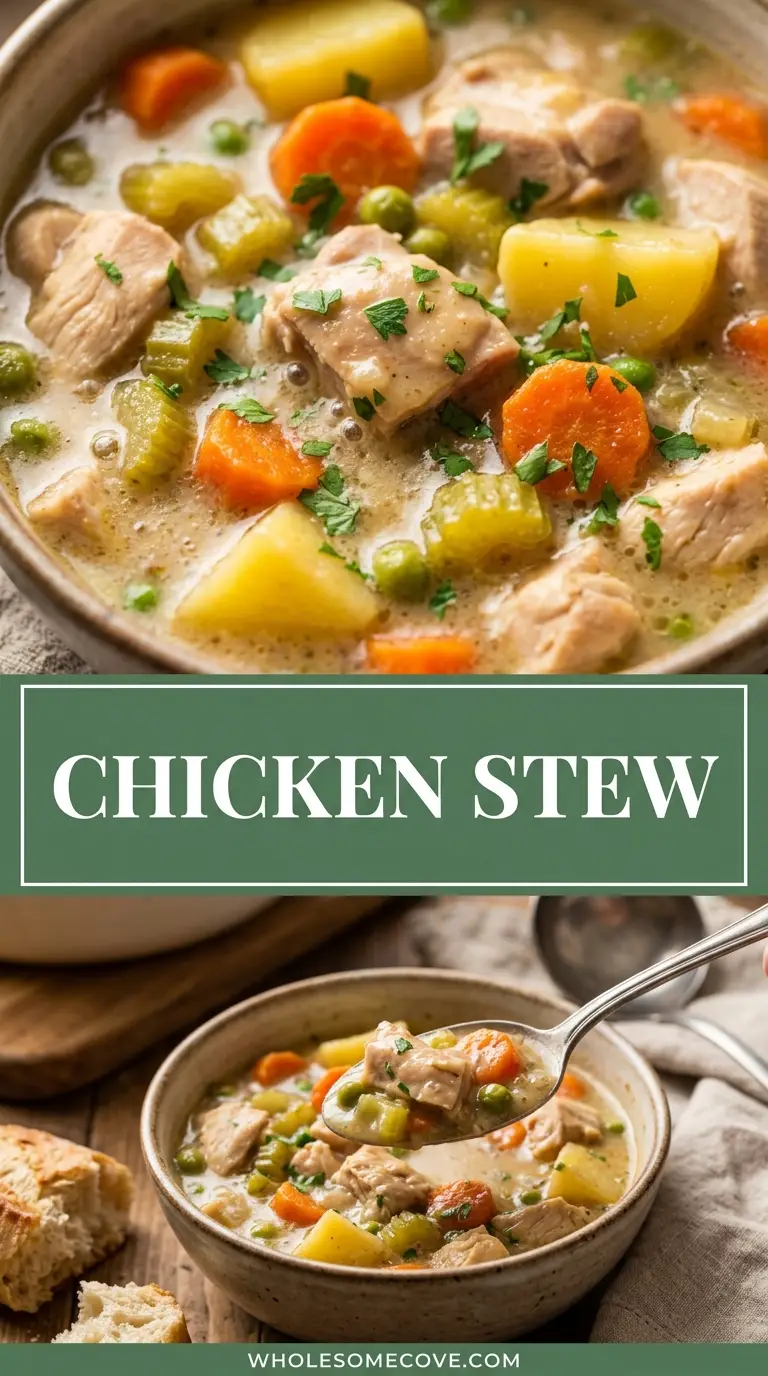
Tips for The Best Chicken Stew
A few small habits separate a good pot of stew from a great one. These are the details that make the biggest difference in flavor and texture.
- Do not skip the browning. The golden crust on the chicken adds a savory depth you cannot get from raw meat dropped straight into broth.
- Use thighs over breast when you can. Thigh meat stays juicy through a long simmer, while breast can dry out and turn stringy.
- Cook the roux properly. I ruined an early batch by adding broth before the flour lost its raw taste, and the whole stew carried a chalky, pasty flavor. Two full minutes of stirring fixed it.
- Choose waxy potatoes. Yukon Gold and red potatoes hold their shape, while starchy russets tend to fall apart and cloud the broth.
- Simmer uncovered at the end. This is the step most people skip, and it is the difference between a thin soup and a proper stew.
- Add cream off the heat. Stirring the cream in after the boil stops keeps it from curdling or breaking.
- Salt in layers. Seasoning the chicken, then the broth, then adjusting at the end builds far more flavor than one big pinch at the finish.
For a different comfort classic, see Italian Wedding Soup.
What to Serve with Chicken Stew
Chicken stew is a full meal on its own, but the right side turns it into something worth setting the table for. The best pairings are simple things that soak up the thick broth or add a fresh contrast to the richness.
Here are the sides and accompaniments that work best:
- Crusty bread or Dinner Rolls for sopping up every last bit of gravy
- Homemade Biscuits, warm and buttery, are a natural match for a thick stew
- Cornbread for a slightly sweet, crumbly contrast
- Mashed Potatoes if you want to ladle the stew right over the top
- A crisp green salad with a sharp vinaigrette to cut through the creaminess
- Coleslaw for a cool, crunchy side
- Steamed or Roasted Vegetables like green beans or Brussels sprouts
- A glass of dry white wine, such as Sauvignon Blanc, which complements the herbs
For a lighter option, try: Mediterranean Quinoa Salad
Variations of Chicken Stew
One of the best things about this stew is how easily it bends to what you have on hand or what you are in the mood for. Here are the variations worth trying once you know the base recipe.
- Creamy herb version: Double the cream and add a handful of grated Parmesan at the end for a richer, more velvety broth.
- Dairy-free: Swap the butter for extra olive oil and use full-fat coconut milk in place of the cream. Add the coconut milk earlier so its flavor mellows.
- Loaded with vegetables: Stir in a cup of frozen peas, corn, or green beans during the last 5 minutes of cooking.
- Rotisserie shortcut: Skip the browning step and stir in shredded rotisserie chicken during the final simmer to cut the cook time.
- Rustic root vegetable: Replace half the potatoes with parsnips, turnips, or sweet potatoes for an earthier, slightly sweet stew.
- Spiced up: Add 0.25 teaspoon cayenne or a pinch of smoked paprika to the roux for gentle warmth.
- Wine-braised: Deglaze the pot with 0.5 cup dry white wine after softening the vegetables, letting it reduce before adding the broth.
For a heartier cold-weather option, see Crockpot Beef Stew.
Storage and Reheating
This stew is a fantastic make-ahead meal, and it genuinely improves after a night in the fridge. Here is how to store and reheat it without losing that thick, creamy texture.
- Refrigerate: Cool the stew to room temperature, then store it in an airtight container in the fridge for up to 4 days.
- Freeze: Ladle cooled stew into freezer-safe containers, leaving a little headspace, and freeze for up to 3 months. I freeze mine before adding the cream, since dairy can separate when thawed, and stir in fresh cream while reheating.
- Thaw: Move frozen stew to the fridge overnight before reheating for the best texture.
- Reheat on the stovetop: Warm gently over low to medium heat, stirring often, and add a splash of broth or water if it has thickened too much.
- Reheat in the microwave: Heat in 1-minute intervals, stirring between each, until warmed through.
- Avoid a hard boil when reheating, since it can make the potatoes mushy and cause the cream to break.
For another freezer-friendly favorite, see Chicken Soup.
Nutritional Facts
The values below are estimates per serving, based on six servings. Actual numbers will vary with the specific brands and cuts you use.
| Nutrient | Amount per Serving |
|---|---|
| Calories | 385 kcal |
| Protein | 31 g |
| Carbohydrates | 24 g |
| Fat | 19 g |
| Saturated Fat | 8 g |
| Fiber | 3 g |
| Sugar | 4 g |
| Sodium | 620 mg |
For another protein-rich dinner, see Marry Me Chicken Pasta.
Health Benefits of Key Ingredients
Beyond being comfort food, this stew packs in ingredients that bring real nutritional value to the bowl. Here is what the main players contribute.
- Chicken thighs: A strong source of protein for muscle repair, plus iron and zinc that support energy and immune function.
- Carrots: Rich in beta-carotene, which the body converts to vitamin A for healthy vision and skin.
- Celery: Very low in calories and high in water, while adding fiber and a dose of vitamin K.
- Onion: Contains antioxidants and compounds linked to heart health, plus prebiotic fiber that supports gut bacteria.
- Garlic: Long valued for compounds that may support immune function and cardiovascular health.
- Potatoes: Provide slow-burning complex carbohydrates, potassium, and vitamin C, especially when you leave some skin on.
- Fresh parsley: More than a garnish, it delivers vitamin C, vitamin K, and a fresh, mineral-rich finish.
For more wholesome dinners, see Lentil and Vegetable Soup.
FAQs About Chicken Stew
1. Why is my chicken stew watery?
The most common cause is skipping or shortchanging the thickener. Without a proper roux or a final uncovered simmer, the broth stays thin.
If your stew is already made and still too loose, mix 1 tablespoon of cornstarch with 2 tablespoons of cold water and stir it in while the stew simmers. It will thicken within a couple of minutes.
2. Can I use chicken breast instead of thighs?
Yes, boneless skinless chicken breast works well and is a leaner option. Just keep in mind it can dry out over a long simmer.
To avoid tough meat, cut the breast into larger chunks and add it a little later, or reduce the covered simmer time slightly. Pull it from the heat as soon as it reaches 165°F (74°C).
3. Can I make chicken stew in a slow cooker?
Absolutely. Brown the chicken and build the roux on the stovetop first, since those steps add crucial flavor, then transfer everything to the slow cooker.
Cook on low for 6 to 7 hours or high for 3 to 4 hours. Stir in the cream during the last 30 minutes so it does not curdle.
4. What potatoes are best for chicken stew?
Waxy potatoes like Yukon Gold and red potatoes are ideal because they hold their shape and keep the broth clear. They resist turning mushy even after simmering.
Starchy russets can work if you prefer a thicker, more broken-down texture, but they tend to fall apart. Cut them a little larger if you go that route.
5. Can I freeze chicken stew?
Yes, this stew freezes well for up to 3 months. For the best texture, freeze it before adding the cream, since dairy can separate when thawed and reheated.
Thaw it overnight in the fridge, then reheat gently on the stovetop and stir in fresh cream at the end. Add a splash of broth if it needs loosening.
6. How do I make chicken stew gluten-free?
Swap the all-purpose flour for a gluten-free flour blend, or skip the roux entirely and thicken with a cornstarch slurry at the end. Use about half as much cornstarch as flour for the same effect.
Double-check that your chicken broth is certified gluten-free, as some brands contain wheat-based additives. The rest of the ingredients are naturally gluten-free.
For a comforting bowl on a busy night, see Easy Chicken Noodle Soup.
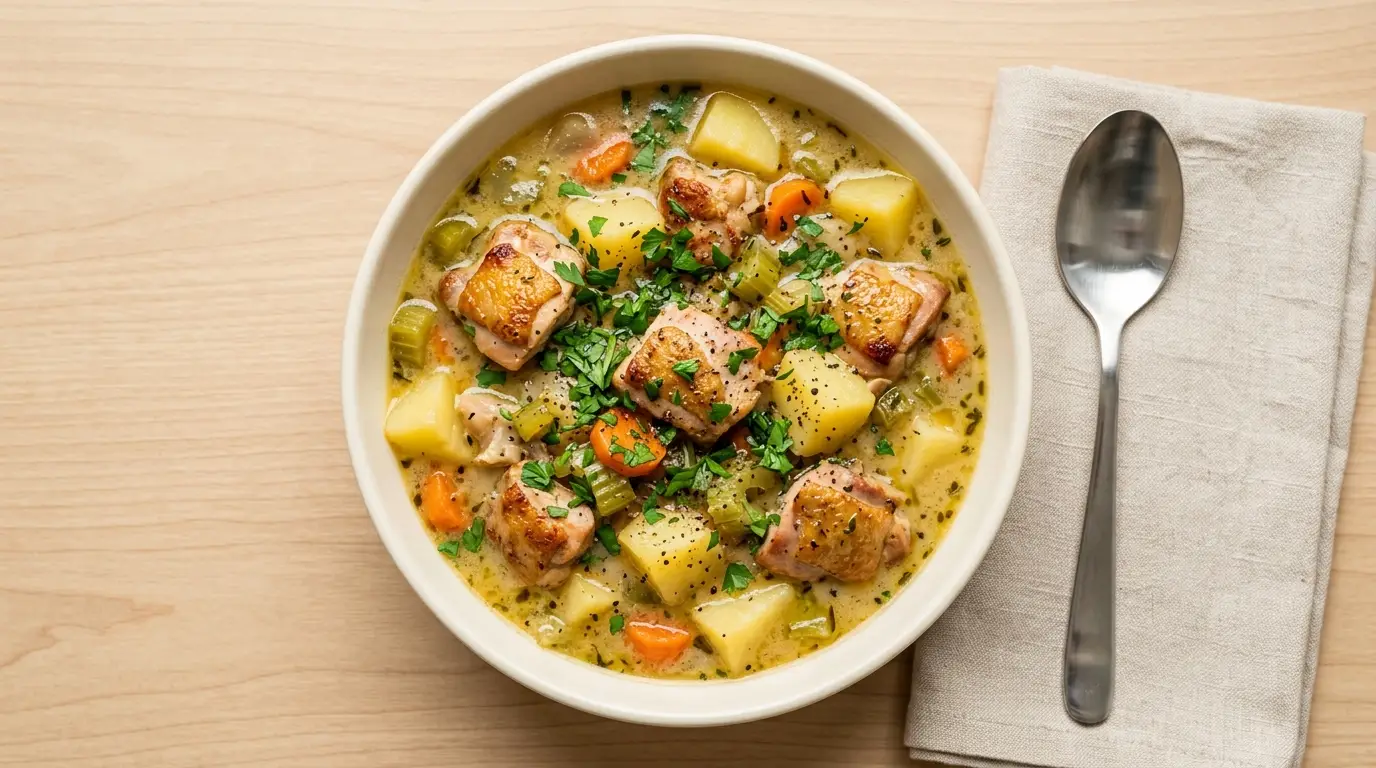
Chicken Stew
Ingredients
- 2 lbs boneless, skinless chicken thighs - 900 g, cut into 1.5-inch (4 cm) chunks
- 1.5 tsp salt - divided, plus more to taste
- 0.5 tsp black pepper - divided
- 3 tbsp all-purpose flour - divided
- 2 tbsp olive oil - divided
- 3 tbsp unsalted butter
- 1 large yellow onion - diced
- 3 medium carrots - peeled and sliced into 0.5-inch (1 cm) rounds
- 3 stalks celery - sliced
- 4 cloves garlic - minced
- 1.25 lbs Yukon Gold potatoes - 565 g, cut into 1-inch (2.5 cm) cubes
- 4 cups low-sodium chicken broth - 950 ml
- 1 tsp dried thyme
- 0.75 tsp dried rosemary - crushed
- 2 dried bay leaves
- 0.5 cup heavy cream - 120 ml
- 2 tbsp fresh parsley - chopped, for finishing
Equipment
- Large Dutch oven or heavy-bottomed pot - 5 to 6 quart / 5 to 6 liter capacity
- Chef’s knife - For chopping chicken and vegetables
- Wooden spoon - For stirring and scraping up browned bits
- Cutting board - Ideally a large one for prepping vegetables
- Measuring cups and measuring spoons
- Instant-read thermometer - To confirm chicken reaches 165°F (74°C)
- Small bowl - For tossing chicken with flour
Method
- Place the chicken chunks in a small bowl and sprinkle with 1 teaspoon of the salt and 0.25 teaspoon of the black pepper. Add 1 tablespoon of the flour and toss until every piece is lightly and evenly coated.
- Heat 1 tablespoon of the olive oil in your Dutch oven over medium-high heat until it shimmers. Add the chicken in a single layer, working in two batches if needed, and sear undisturbed for about 3 minutes per side until golden. Remove to a plate and set aside.
- Reduce the heat to medium and add the remaining 1 tablespoon olive oil to the same pot. Add the diced onion, carrots, and celery, then cook for about 5 minutes, stirring occasionally, until they begin to soften. Scrape up any browned bits, then stir in the minced garlic and cook for 1 more minute until fragrant.
- Add the 3 tablespoons of butter to the vegetables and let it melt completely. Sprinkle in the remaining 2 tablespoons of flour and stir constantly for about 2 minutes until the flour loses its raw smell and coats the vegetables in a pale paste.
- Pour in the chicken broth slowly, stirring the whole time to dissolve the roux and prevent lumps. Add the cubed potatoes, dried thyme, crushed rosemary, and bay leaves. Return the browned chicken and any juices to the pot, then stir in the remaining 0.5 teaspoon salt and 0.25 teaspoon black pepper.
- Bring the stew to a gentle boil, then reduce the heat to low. Cover the pot and simmer for 20 minutes, stirring once or twice, until the potatoes are fork-tender and the chicken is cooked through to 165°F (74°C).
- Uncover the pot and let the stew simmer for 5 to 10 more minutes to reduce and thicken the broth. Remove and discard the bay leaves. Turn off the heat and stir in the heavy cream until the broth turns silky. Taste and adjust salt and pepper, then stir in the fresh parsley just before serving.
Nutrition
Notes
- Do not skip the browning — the golden crust on the chicken adds savory depth you cannot get from raw meat dropped straight into broth.
- Use thighs over breast when you can; thigh meat stays juicy through a long simmer, while breast can dry out and turn stringy.
- Cook the roux properly for a full 2 minutes until the flour loses its raw taste, otherwise the stew will carry a chalky, pasty flavor.
- Choose waxy potatoes like Yukon Gold or red potatoes; starchy russets tend to fall apart and cloud the broth.
- Simmer uncovered at the end — this step is the difference between a thin soup and a proper stew.
- Add cream off the heat to stop it from curdling or breaking.
- Salt in layers: season the chicken, then the broth, then adjust at the end for far more flavor.
- Store leftovers in an airtight container in the fridge for up to 4 days; the stew tastes even better the next day.
- Freeze for up to 3 months, but freeze before adding the cream since dairy can separate when thawed; stir in fresh cream while reheating.
- For a gluten-free version, swap the all-purpose flour for a gluten-free flour blend or thicken with a cornstarch slurry at the end.
Private Notes
Tried this recipe?
Let us know how it was!Final Thoughts
A good chicken stew is one of those recipes that feels like it has been in the family for years, even the first time you make it. This one earns a permanent spot with its thick, gravy-like broth and tender, well-browned chicken.
Make it once on a cold evening and you’ll understand why leftovers rarely last past the next day. It is honest, filling food that asks very little and gives back a lot.
If you try this chicken stew, I’d love to hear how it turned out for you. Leave a comment below and share it with anyone who could use a warm bowl on a chilly night.
Recommended:
- Instant Pot Chicken Noodle Soup
- Brunswick Stew
- Mississippi Pot Roast
- Shepherd’s Pie
- Chicken Spaghetti
- Loaded Baked Potato Soup
- Zuppa Toscana
- Roast Chicken
- Slow Cooker Pot Roast