My grandmother always said that throwing away the giblets was like throwing away liquid gold, and honestly, she wasn’t wrong. The first time I made giblet gravy, I was terrified of that little packet tucked inside the turkey, but now it’s become my secret weapon for the richest, most flavorful gravy that has everyone asking for seconds.
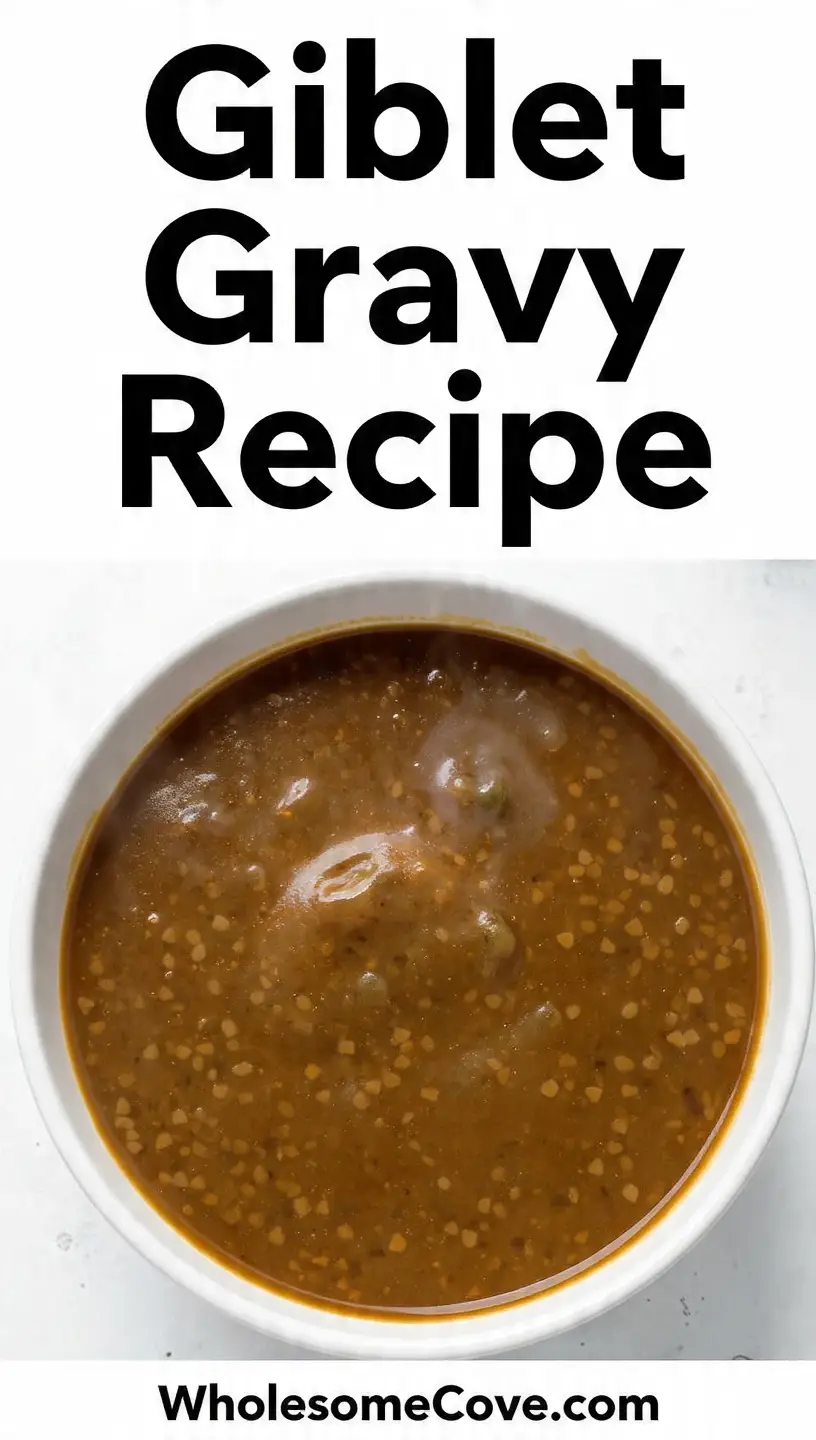
This giblet gravy recipe transforms those often-overlooked turkey or chicken parts into a deeply savory, silky smooth sauce that elevates your entire holiday meal. I’ve been making this traditional Southern-style gravy for over a decade now, and it never fails to steal the show at Thanksgiving dinner.
| Quick Recipe Summary | |
|---|---|
| Prep Time | 15 minutes |
| Cook Time | 2 hours 15 minutes |
| Total Time | 2 hours 30 minutes |
| Servings | 10 servings |
| Difficulty Level | Medium |
For another classic gravy that pairs beautifully with poultry, try my Turkey Gravy Recipe.
Why You’ll Love This Giblet Gravy Recipe
This isn’t just any gravy. It’s the kind that makes your mashed potatoes sing and turns simple turkey slices into a restaurant-quality meal.
The giblets create a depth of flavor that you simply cannot achieve with plain pan drippings alone. I learned this the hard way when I tried skipping them one year, and my family actually noticed the difference.
Here’s what makes this recipe special:
- Rich, meaty flavor: The slow-simmered giblets create an incredibly savory base that’s miles ahead of store-bought gravy
- Perfect texture: Silky smooth with tender bits of chopped meat throughout, giving you the best of both worlds
- Make-ahead friendly: You can prepare this entirely in advance, which is a lifesaver on busy holiday mornings
- Uses every part: Nothing goes to waste, and you’ll feel good about maximizing your ingredient investment
- Versatile: Works beautifully with both turkey and chicken, so you can enjoy it year-round
- Traditional Southern recipe: Passed down through generations, this is authentic comfort food at its finest
You might also enjoy: Chicken Gravy Recipe
Ingredients
This recipe calls for simple ingredients that come together to create something truly special. Most of these you’ll already have in your pantry, and the giblets come right inside your bird.
For the Giblet Stock:
- Turkey or chicken giblets (neck, heart, gizzard, liver from 1 whole bird)
- 6 cups (1.4 liters) water
- 2 cups (480 ml) low-sodium chicken broth
- 1 medium carrot, roughly chopped
- 2 celery stalks, roughly chopped
- 1 medium onion, quartered
- 2 bay leaves
- 4 sprigs fresh thyme
- 1 teaspoon whole black peppercorns
- 1 teaspoon kosher salt
For the Gravy:
- 5 tablespoons (71g) unsalted butter
- 5 tablespoons (40g) all-purpose flour
- 3 cups (720 ml) strained giblet stock
- 1/2 cup (120 ml) heavy cream or whole milk
- 1 cup (240 ml) turkey pan drippings (if available, or substitute with additional stock)
- 2 hard-boiled eggs, finely chopped (optional, but traditional)
- 1/2 teaspoon kosher salt (adjust to taste)
- 1/2 teaspoon freshly ground black pepper
- 1 tablespoon apple cider vinegar
Another favorite: Sausage Gravy Recipe
Kitchen Equipment Needed
Having the right tools makes this recipe come together smoothly. Here’s what you’ll need on hand before you start cooking.
- Large stockpot or Dutch oven (at least 6-quart capacity)
- Fine-mesh strainer
- Large saucepan or skillet (for making the roux)
- Whisk
- Sharp knife
- Cutting board
- Measuring cups and spoons
- Fat separator (optional but helpful)
- Ladle
- Gravy boat for serving
If you’re looking for a truly delicious pairing, check out my Biscuits and Gravy Recipe.
Recommended Products for This Recipe
After making this gravy countless times, I’ve found a few products that truly make a difference in the final result. These are my personal go-tos that I think you’ll love too.
1. Le Creuset Enameled Cast Iron Dutch Oven
This is my absolute favorite pot for simmering the giblet stock. The heavy bottom distributes heat so evenly that you get perfectly cooked giblets every single time without any scorching. The enamel coating means nothing sticks, and it goes from stovetop to cleanup without any fuss.
2. OXO Good Grips Fat Separator
This tool changed my gravy game completely. Instead of skimming fat off the top with a spoon and making a mess, this separator lets you pour pure, defatted drippings directly into your gravy. The bottom-pour spout is genius, and it makes your gravy so much cleaner and less greasy.
3. Better Than Bouillon Turkey Base
For those times when you need to stretch your stock a bit or don’t have quite enough drippings, this turkey base is a lifesaver. It’s concentrated, flavorful, and tastes miles better than boxed broth. Just a spoonful dissolved in water gives you rich turkey flavor that complements your giblet stock beautifully.
4. Cuisinart Smart Stick Immersion Blender
While not essential, this makes it incredibly easy to smooth out any lumps if your gravy isn’t quite as silky as you’d like. A quick 30-second buzz and you’ve got restaurant-quality texture. It’s also great for so many other recipes that I consider it a must-have kitchen tool.
Don’t forget to pair this gravy with my Brown Gravy Recipe for a complete gravy spread.

Step-by-Step Instructions: How to Make Giblet Gravy
Follow these detailed steps to create the most flavorful giblet gravy you’ve ever tasted. Take your time with the stock, it’s where all the magic happens.
1. Prepare the Giblets
- Remove the giblet packet from inside your turkey or chicken (usually found in the neck cavity or body cavity)
- Rinse the giblets thoroughly under cold running water to remove any blood or debris
- Pat them completely dry with paper towels
- Inspect each piece and trim away any excess fat or connective tissue
- Some people prefer to remove the liver and set it aside to add later, as it can make the stock slightly bitter if simmered too long, but I include everything for maximum flavor
2. Start the Giblet Stock
- Place the giblets and neck in your large stockpot or Dutch oven
- Add 6 cups of water and 2 cups of chicken broth to the pot
- Toss in the chopped carrot, celery stalks, and quartered onion
- Add the bay leaves, fresh thyme sprigs, peppercorns, and kosher salt
- Bring everything to a rolling boil over high heat, which should take about 10 minutes
- As it comes to a boil, you’ll notice foam and scum rising to the surface
- Use a large spoon or ladle to skim off this foam and discard it, this keeps your stock clear and clean-tasting
3. Simmer the Stock Low and Slow
- Once you’ve skimmed the foam, reduce the heat to low so the liquid is just barely bubbling
- Partially cover the pot with a lid, leaving it slightly ajar to allow steam to escape
- Let this simmer gently for 2 hours, stirring occasionally
- The giblets should become very tender, and the liquid will reduce and concentrate in flavor
- You’ll know it’s ready when the meat easily pulls away from the neck bone and the giblets are completely cooked through
- The stock should have a deep golden color and smell incredibly savory
4. Strain and Chop
- Set a fine-mesh strainer over a large bowl or measuring cup
- Carefully pour the entire contents of the pot through the strainer to separate the solids from the liquid
- Press gently on the vegetables with the back of a spoon to extract all their flavorful juices, then discard them
- Transfer the giblets and neck to a cutting board and let them cool for about 10 minutes until you can handle them comfortably
- Using your fingers or a fork, pull all the meat off the neck bones (there’s more than you’d think)
- Finely chop the neck meat along with the heart, gizzard, and liver into small, uniform pieces about 1/4-inch in size
- Set the chopped meat aside in a bowl
5. Make the Roux
- In a large saucepan or the roasting pan (if using drippings), melt the 5 tablespoons of butter over medium heat
- Once the butter is fully melted and starting to foam slightly, sprinkle in the 5 tablespoons of flour all at once
- Immediately start whisking vigorously to combine the flour and butter into a smooth paste
- Continue cooking and whisking constantly for 3-4 minutes, scraping the bottom and sides of the pan
- The roux will progress from blonde to a light tan color and should smell nutty, not raw
- Don’t rush this step, a properly cooked roux is essential for both flavor and texture
- If you’re using pan drippings, you can use them in place of or in addition to the butter for even more flavor
6. Build the Gravy Base
- Slowly pour in 1 cup of the strained giblet stock while whisking constantly to prevent lumps
- The mixture will seize up at first, but keep whisking and it will smooth out
- Gradually add the remaining 2 cups of stock, about 1/2 cup at a time, whisking well after each addition
- Add the turkey pan drippings if you have them (or substitute with more stock)
- Bring the mixture to a gentle boil, then reduce heat to medium-low
- Let it simmer for about 10 minutes, whisking frequently, until it thickens to a gravy consistency
- It should coat the back of a spoon nicely
7. Finish and Season
- Stir in the heavy cream or whole milk and whisk until fully incorporated
- Add the chopped giblet meat and stir to distribute it evenly throughout the gravy
- If you’re using hard-boiled eggs (traditional in Southern giblet gravy), fold in the finely chopped eggs now
- Season with the kosher salt and black pepper, starting with the amounts listed and adjusting to your taste
- Add the tablespoon of apple cider vinegar, which brightens all the flavors and cuts through the richness
- Let the gravy simmer for another 2-3 minutes to heat everything through
- Taste and adjust seasoning as needed, some people like to add a pinch of poultry seasoning here
8. Adjust Consistency and Serve
- If your gravy is too thick, thin it with a bit more giblet stock, chicken broth, or even hot water, adding just a tablespoon or two at a time
- If it’s too thin, let it simmer uncovered for a few more minutes to reduce and thicken
- The gravy will thicken slightly as it cools, so it’s better to err on the slightly thinner side
- Transfer to a warmed gravy boat or serving bowl
- Serve immediately while piping hot over turkey, mashed potatoes, dressing, or biscuits
- Keep any leftover gravy warm in a small saucepan on the stovetop over very low heat, stirring occasionally
I still remember the first time I threw together my Best Chicken Soup Recipes using similar stock-making techniques.
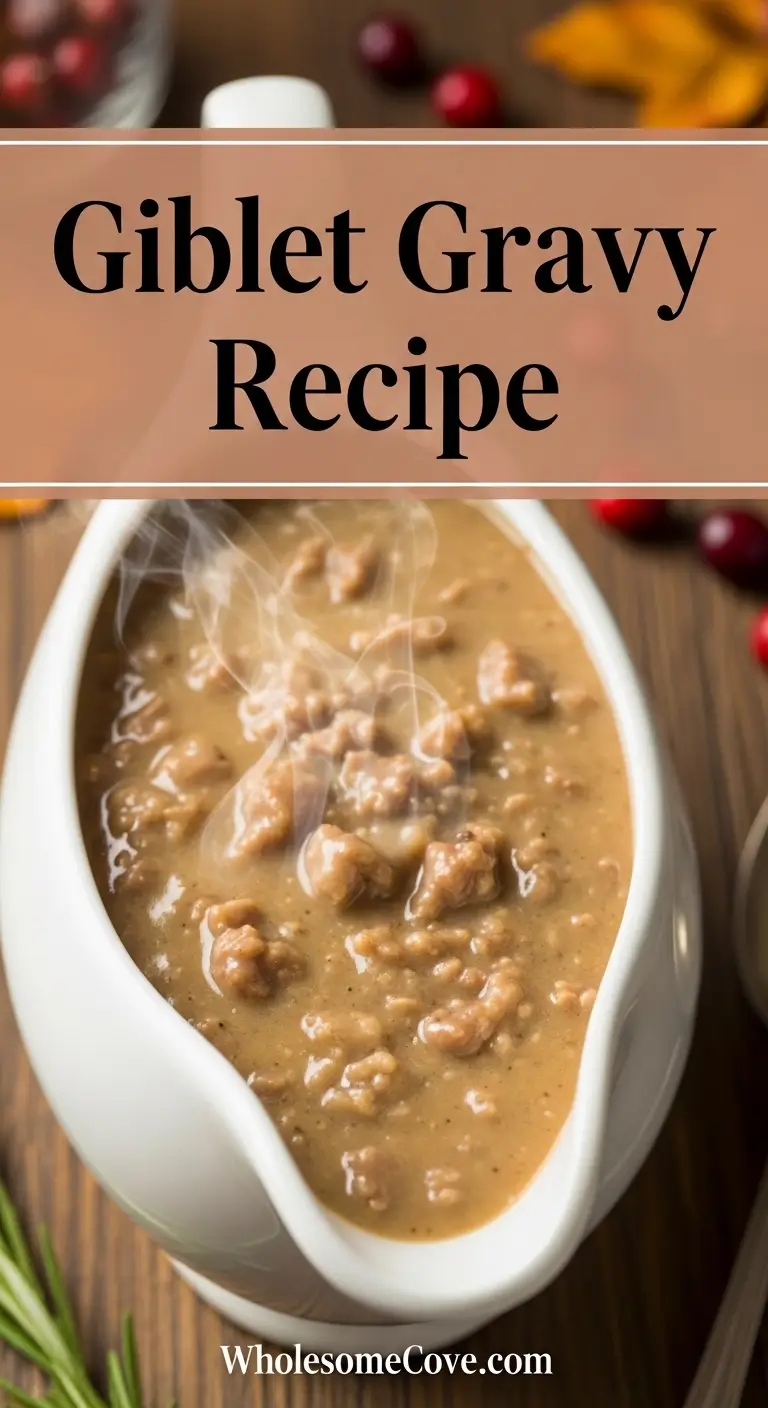
Tips for The Best Giblet Gravy
After years of perfecting this recipe, I’ve learned some tricks that make all the difference between good gravy and absolutely spectacular gravy.
Here are my insider tips:
- Don’t skip the aromatics: Those vegetables, bay leaves, and thyme might seem optional, but they add layers of complexity to your stock that make the final gravy taste restaurant-quality
- Skim the foam: Taking the extra minute to skim foam from the stock prevents cloudy, bitter gravy
- Cook the roux properly: A well-cooked roux should smell nutty and toasty, not raw and flour-like, give it the full 3-4 minutes
- Whisk constantly when adding liquid: This is the key to lump-free gravy, slow and steady wins the race
- Reserve some stock: Keep an extra cup of giblet stock on hand for thinning if needed, it’s much better than plain water
- Taste as you go: Season gradually, especially if you’re using pan drippings which can be quite salty
- Strain twice for silky texture: If you want ultra-smooth gravy, strain the finished product through a fine-mesh strainer before serving
- Make it ahead: This gravy actually tastes better the next day after the flavors meld, just reheat gently
- Watch the liver: If you find liver too strong, you can omit it or add it only for the last 30 minutes of simmering
- Use fat wisely: Turkey or chicken fat skimmed from the stock can replace some of the butter in your roux for extra flavor
- Keep it warm: Gravy can form a skin on top if left sitting, so keep it covered and warm until serving time
Try serving this alongside my Roasted Potatoes Recipe.
What to Serve with Giblet Gravy
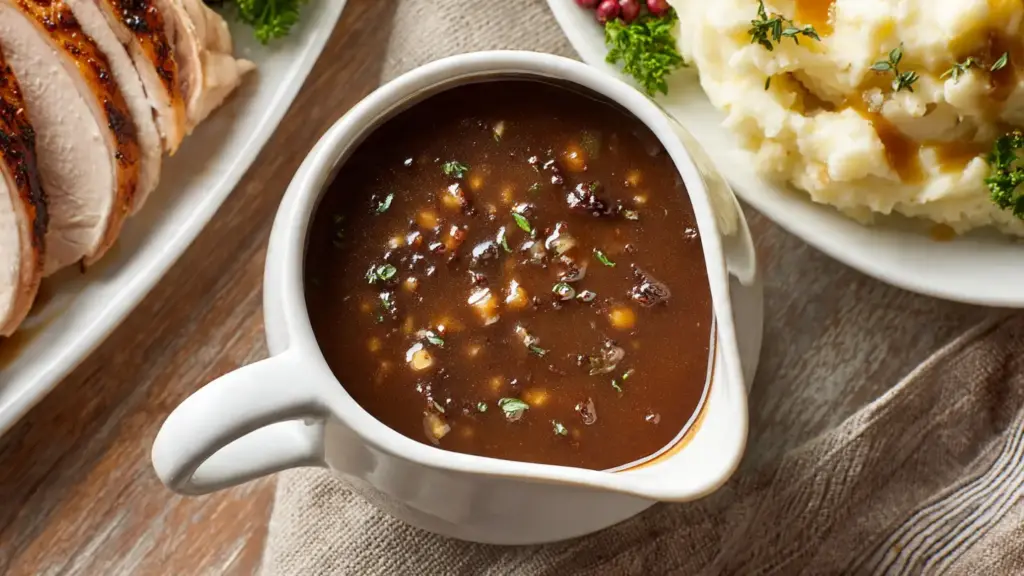
This rich, savory gravy is incredibly versatile and makes so many dishes taste better. Here’s how I like to use it.
The obvious pairing is with roasted turkey or chicken, but don’t stop there. This gravy transforms everyday meals into something special.
- Twice Baked Potatoes
- Classic mashed potatoes (the gravy seeps into every fluffy bite)
- Smashed Potatoes
- Au Gratin Potatoes
- Cornbread dressing or stuffing (this is non-negotiable at my Thanksgiving table)
- Biscuits and Gravy
- Open-faced turkey or chicken sandwiches (like a homemade hot brown)
- Breakfast Potatoes
- Rice or egg noodles (soaks up all that delicious sauce)
- Shepherds Pie (drizzle on top before serving)
- Roasted vegetables like carrots, green beans, or Brussels sprouts
- Baked chicken breast (turns boring chicken into a feast)
- Turkey meatloaf (I pour this over slices and it’s incredible)
Read Also: Cheesy Potatoes Recipe
Variations of Giblet Gravy
While the traditional version is my go-to, I’ve experimented with several variations over the years that you might enjoy trying.
Each one brings something a little different to the table:
- Cream-free version: Skip the cream entirely and use all stock for a lighter, less rich gravy that lets the giblet flavor shine through more
- Mushroom giblet gravy: Sauté 8 ounces of sliced mushrooms until golden, then add them to the finished gravy for an earthy twist
- Herbed giblet gravy: Add 2 tablespoons of fresh chopped sage, rosemary, or parsley right before serving for bright, fresh flavor
- Spicy giblet gravy: Stir in a teaspoon of hot sauce or a pinch of cayenne pepper for those who like a little kick
- Wine-enhanced gravy: Replace 1/2 cup of the stock with white wine for a more sophisticated, restaurant-style gravy
- Extra chunky version: Increase the giblets to include extras from a second bird, or add more chopped hard-boiled eggs
- Gluten-free giblet gravy: Use cornstarch slurry (2 tablespoons cornstarch mixed with 2 tablespoons cold water) instead of a flour roux
- Pan drippings only: Skip the butter and use only pan drippings and flour for the roux if you have enough drippings
- Chicken giblet gravy: Use chicken instead of turkey giblets and chicken stock for a year-round version that’s just as delicious
For another sauce variation, try my Garlic Parmesan Sauce Recipe.
Storage and Reheating
Proper storage ensures you can enjoy this delicious gravy for days after your big meal. Here’s how to keep it fresh.
One of the best things about this recipe is how well it stores and reheats:
- Refrigerator storage: Let the gravy cool completely to room temperature (don’t leave it out for more than 2 hours though), then transfer to an airtight container and refrigerate for up to 4 days
- Freezer storage: This gravy freezes beautifully for up to 3 months, I like to freeze it in 1-cup portions in freezer bags laid flat for easy thawing
- Reheating on stovetop: This is my preferred method, pour the gravy into a saucepan and reheat over medium-low heat, stirring frequently, you may need to add a splash of stock or water to thin it back to the right consistency
- Reheating in microwave: Transfer to a microwave-safe bowl and heat in 30-second intervals, stirring between each, until hot throughout
- Preventing separation: If your reheated gravy looks separated or grainy, whisk in a tablespoon of cold butter off the heat until smooth
- Make-ahead tip: I often make this gravy 2 days before Thanksgiving, it actually tastes even better after the flavors have time to marry
- Portion control: Freeze in ice cube trays, then pop out the frozen cubes and store in a freezer bag, this way you can thaw exactly what you need
- Thawing: The best way is in the refrigerator overnight, but you can also thaw in a saucepan over low heat, stirring constantly
Another make-ahead favorite: Funeral Potatoes Recipe
Nutritional Facts
Here’s the nutritional breakdown per 1/2 cup serving of this giblet gravy. Keep in mind these are estimates and can vary based on your specific ingredients.
Per Serving (1/2 cup):
- Calories: 145
- Total Fat: 11g
- Saturated Fat: 6g
- Cholesterol: 95mg
- Sodium: 320mg
- Total Carbohydrates: 6g
- Dietary Fiber: 0g
- Sugars: 1g
- Protein: 7g
- Vitamin A: 15% DV
- Calcium: 4% DV
- Iron: 8% DV
Note that these values will increase if you include the optional hard-boiled eggs, and will vary depending on whether you use cream or milk, and how much butter or pan drippings you incorporate.
For a healthier side option, check out my Healthy Mashed Potatoes Recipe.
Health Benefits of Key Ingredients
While gravy isn’t exactly a health food, this homemade version does offer some nutritional benefits you won’t find in store-bought versions.
Let me break down what’s actually good for you:
- Giblets: These organ meats are incredibly nutrient-dense, packed with B vitamins (especially B12), iron, zinc, and selenium, the liver is particularly high in vitamin A
- Bone broth from neck: Rich in collagen and gelatin, which support joint health, skin elasticity, and gut health
- Aromatics (carrot, celery, onion): These vegetables infuse the stock with vitamins, minerals, and antioxidants
- Butter: Despite its reputation, butter contains vitamin A, vitamin E, and beneficial fatty acids
- Black pepper: Contains piperine, which has anti-inflammatory properties and may improve nutrient absorption
- Fresh herbs: Thyme provides vitamin C and has antimicrobial properties
- Apple cider vinegar: Helps balance blood sugar and aids digestion
The homemade aspect also means you control the sodium content, unlike commercial gravies which are typically loaded with salt.
You might also enjoy: Bone Broth Soup Recipe
FAQs About Giblet Gravy
1. Can I make giblet gravy without the liver?
Absolutely, many people find the liver too strong or bitter. You can simply omit it from the recipe and use just the neck, heart, and gizzard.
The gravy will still be incredibly flavorful. Some cooks prefer to add the liver only for the last 30 minutes of simmering to get some of its flavor without the bitterness.
2. What if I don’t have enough pan drippings?
No problem at all, this recipe is designed to work with or without drippings. Simply use additional giblet stock or low-sodium chicken broth in place of the drippings.
I’ve made it both ways and while drippings add extra richness, the giblet stock alone creates a deeply flavorful gravy.
3. Why is my gravy lumpy and how do I fix it?
Lumps usually happen when you add liquid too quickly to the roux or don’t whisk constantly. If you end up with lumps, you can strain the gravy through a fine-mesh strainer.
Even better, use an immersion blender to quickly smooth out any lumps. To prevent lumps in the future, add your liquid slowly and whisk vigorously the entire time.
4. Can I use this recipe with chicken instead of turkey?
Yes, absolutely, chicken giblets work perfectly in this recipe. The flavor will be slightly milder but still delicious.
You might want to reduce the simmering time to about 1.5 hours since chicken giblets are smaller and cook faster than turkey giblets.
5. How do I keep my gravy from being too salty?
Always use low-sodium or no-sodium broth so you control the salt level. If you’re using pan drippings, remember they’re often quite salty already.
Season gradually at the end, tasting as you go. If your gravy does end up too salty, you can dilute it with a bit of unsalted stock or water, or balance it with a splash of cream.
If you love experimenting with sauces, try my Worcestershire Sauce Recipe.
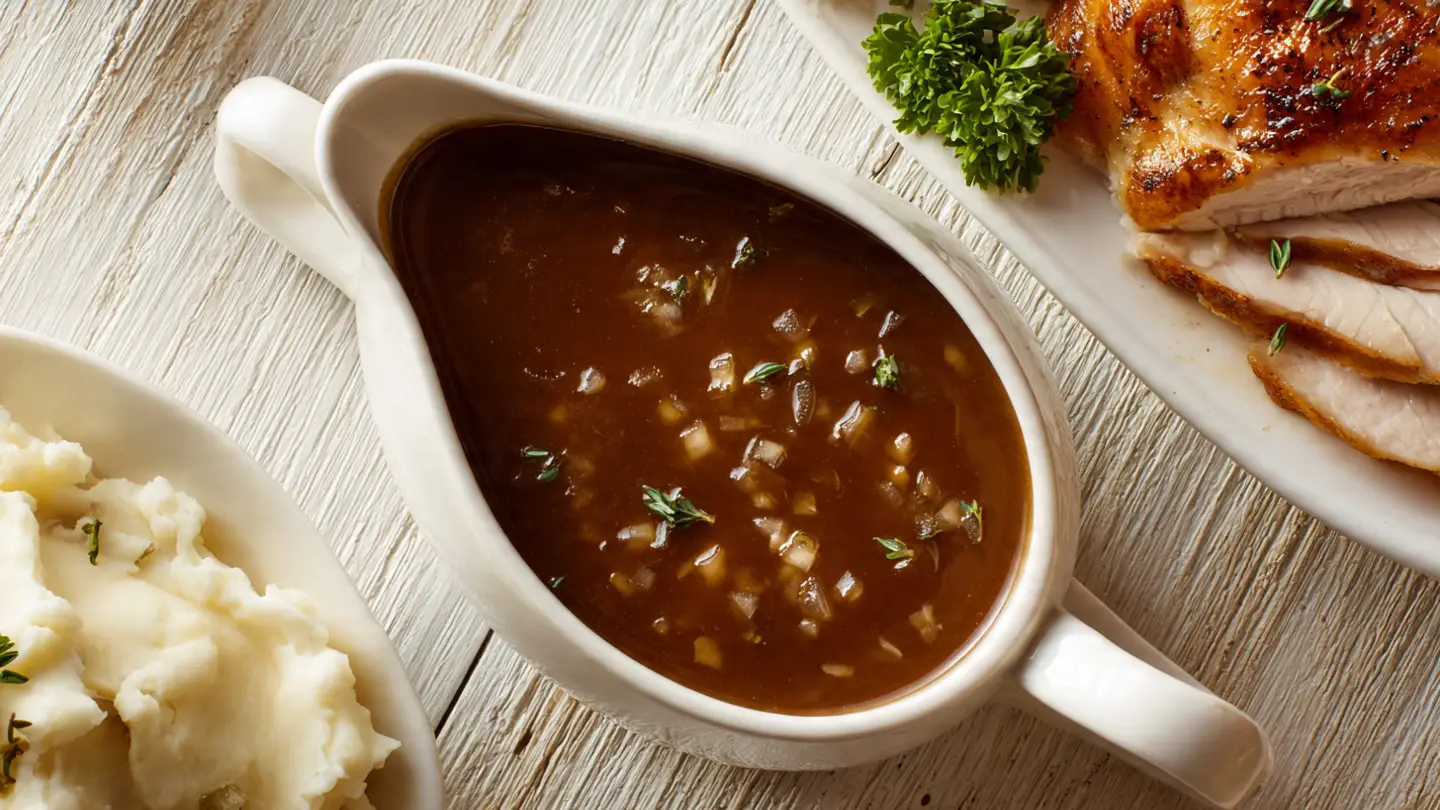
Giblet Gravy
Ingredients
- turkey or chicken giblets - neck, heart, gizzard, liver from 1 whole bird
- 6 cups water - 1.4 liters
- 2 cups low-sodium chicken broth - 480 ml
- 1 medium carrot - roughly chopped
- 2 stalks celery - roughly chopped
- 1 medium onion - quartered
- 2 bay leaves
- 4 sprigs fresh thyme
- 1 teaspoon whole black peppercorns
- 1 teaspoon kosher salt
- 5 tablespoons unsalted butter - 71g
- 5 tablespoons all-purpose flour - 40g
- 3 cups strained giblet stock - 720 ml
- 1/2 cup heavy cream or whole milk - 120 ml
- 1 cup turkey pan drippings - 240 ml, if available, or substitute with additional stock
- 2 hard-boiled eggs - finely chopped, optional but traditional
- 1/2 teaspoon kosher salt - adjust to taste
- 1/2 teaspoon freshly ground black pepper
- 1 tablespoon apple cider vinegar
Equipment
- Large stockpot or Dutch oven - At least 6-quart capacity
- Large saucepan or skillet - For making the roux
- Fat separator - (optional)
- Gravy boat - For serving
Method
- Remove giblet packet from turkey or chicken, rinse thoroughly under cold water, pat dry, and trim excess fat. Some prefer to set liver aside to add later if concerned about bitterness.
- Place giblets and neck in stockpot with water, broth, vegetables, bay leaves, thyme, peppercorns, and salt. Bring to boil over high heat and skim foam from surface.
- Reduce heat to low, partially cover, and simmer for 2 hours until giblets are very tender and stock is deeply golden and concentrated in flavor.
- Strain stock through fine-mesh strainer into bowl, pressing vegetables to extract juices. Pull meat from neck bones and finely chop all giblets into 1/4-inch pieces, set aside.
- Melt butter in large saucepan over medium heat, add flour, and whisk constantly for 3-4 minutes until roux is light tan and smells nutty.
- Slowly add giblet stock while whisking constantly, starting with 1 cup then adding remaining stock gradually. Add pan drippings if using, bring to gentle boil, then reduce heat and simmer 10 minutes until thickened.
- Stir in cream, chopped giblet meat, hard-boiled eggs (if using), salt, pepper, and vinegar. Simmer 2-3 minutes to heat through and adjust seasoning to taste.
- Thin with additional stock if too thick or simmer longer if too thin. Transfer to warmed gravy boat and serve immediately over turkey, mashed potatoes, or dressing.
Nutrition
Notes
- Always use low-sodium broth so you can control the salt level, especially if using pan drippings which are often quite salty.
- The roux must be cooked for the full 3-4 minutes to eliminate the raw flour taste. It should smell nutty and toasty, not pasty.
- Omit the liver if you find it too strong, or add it only for the last 30 minutes of simmering for milder flavor.
- Make-ahead tip: This gravy actually tastes better the next day. Prepare up to 2 days before and reheat gently, adding a splash of stock to thin if needed.
- To prevent lumps, add the stock slowly to the roux while whisking constantly. If lumps do form, strain the gravy or use an immersion blender.
- For gluten-free version, use cornstarch slurry (2 tablespoons cornstarch mixed with 2 tablespoons cold water) instead of flour roux.
- Storage: Refrigerate in airtight container for up to 4 days or freeze in portions for up to 3 months. Reheat gently on stovetop, stirring frequently.
- The gravy will thicken as it cools, so err on the slightly thinner side when making it. You can always simmer longer to thicken.
- Turkey or chicken fat skimmed from the stock can replace some of the butter in the roux for extra flavor.
- Keep gravy covered and warm until serving to prevent a skin from forming on top.
Private Notes
Tried this recipe?
Let us know how it was!Final Thoughts
Making giblet gravy from scratch might seem intimidating at first, but I promise it’s one of those recipes that becomes second nature after you’ve done it once or twice. The slow-simmered giblets create a depth of flavor that store-bought gravy simply cannot match.
What I love most about this recipe is how it honors the whole bird and wastes nothing. There’s something deeply satisfying about transforming those often-discarded parts into the star of the holiday table.
Give this traditional giblet gravy a try at your next family gathering. I’d love to hear how it turns out for you and what dishes you served it over!
Recommended:
- Honey Mustard Sauce Recipe
- Sweet and Sour Sauce Recipe
- Chicken Soup Recipe
- Scalloped Potatoes Recipe
- Baked Ziti Recipe
- Mississippi Mud Potatoes Recipe
- Potato Salad Recipe
- Creamy Chicken Soup Recipe
- Cream of Chicken Soup Recipe
- Vodka Sauce Recipe