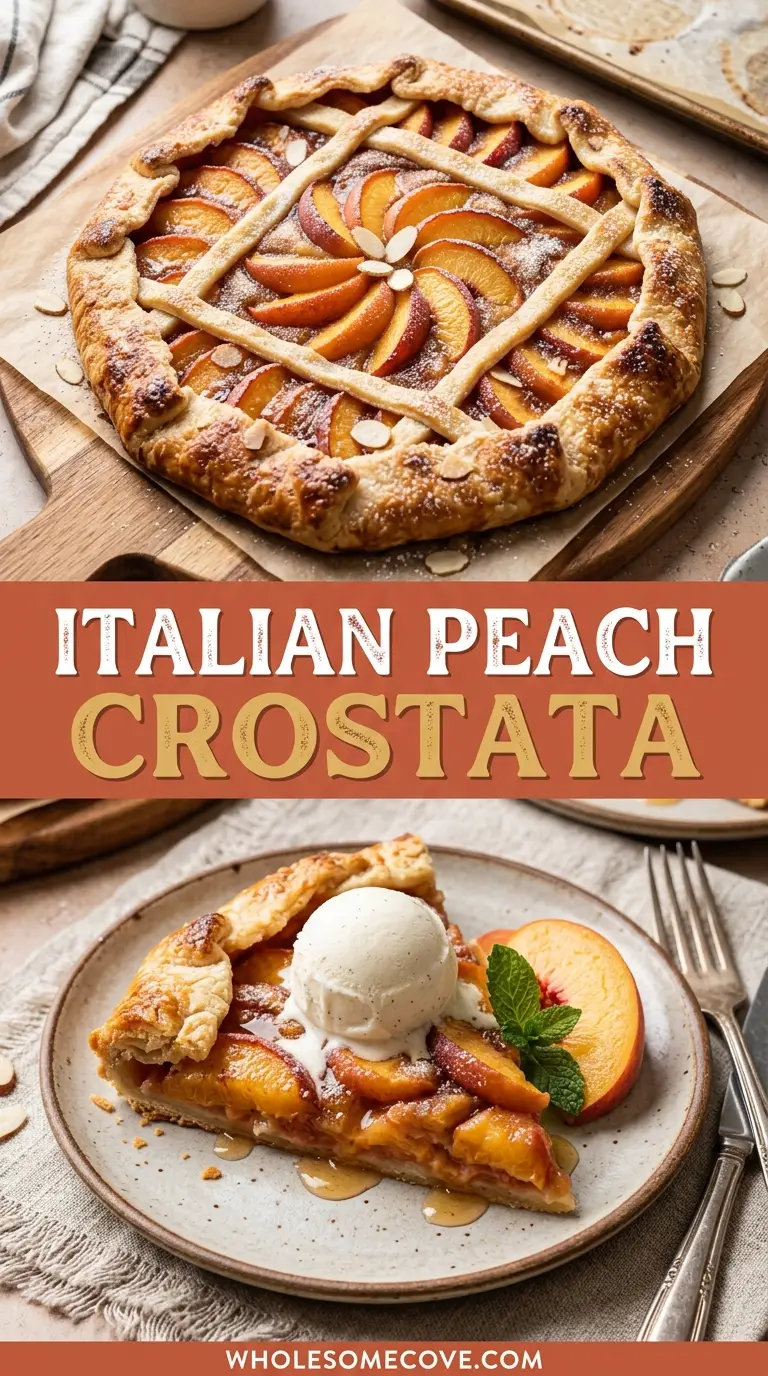
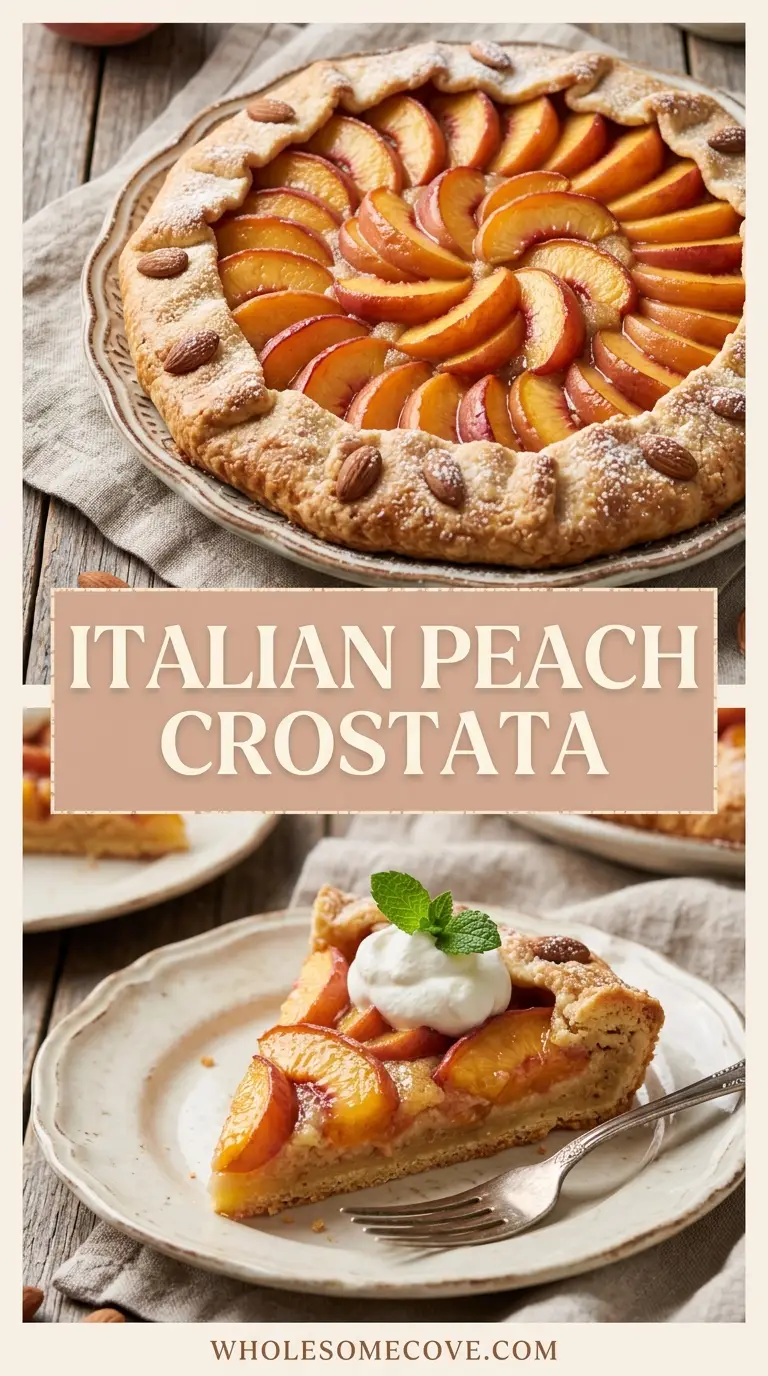
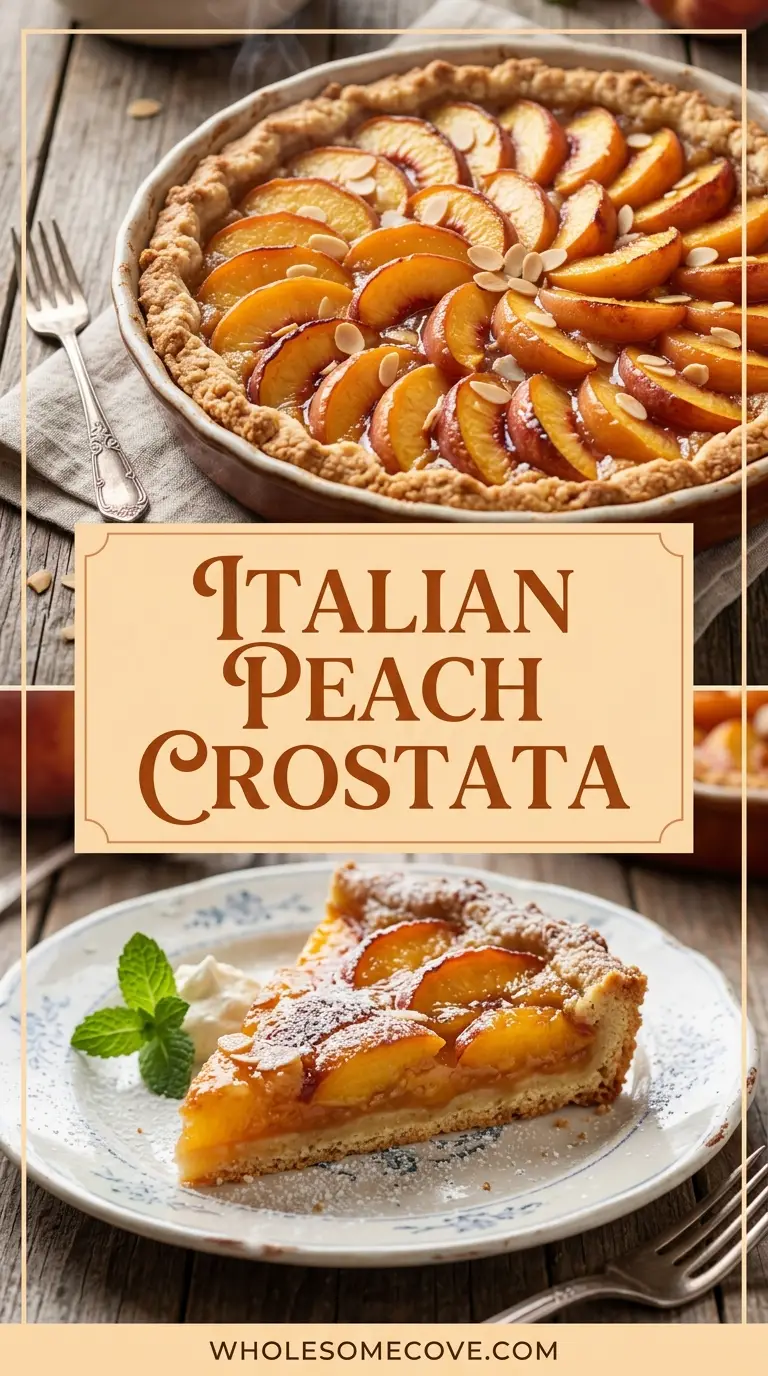
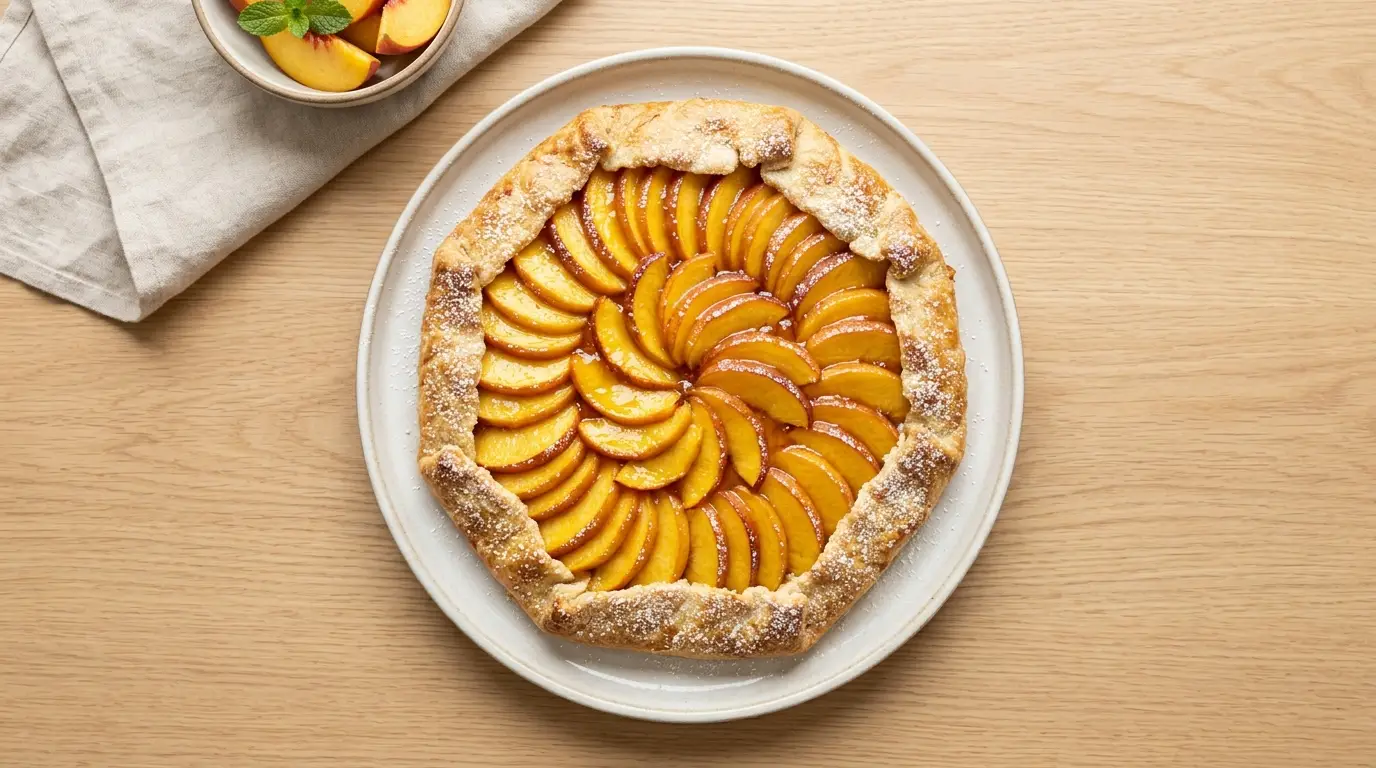
This Italian peach crostata recipe layers a thin bed of apricot jam under fanned slices of fresh peach, all cradled in a tender pasta frolla crust. That jam layer is the detail most home versions skip, and it is exactly what keeps the pastry from turning soggy under the juicy fruit.
The dough itself is enriched with egg yolks, which gives it a texture closer to a sugar cookie than a flaky pie crust. It rolls out smooth, patches easily when it tears, and bakes to a sandy golden edge that holds its shape around the fruit.
Most peach tarts weep liquid onto the base and leave you with a pale, wet center. Here the jam seals the pastry and the peaches sit on top rather than sinking in, so the crust stays crisp from rim to middle.
You need about 90 minutes start to finish, including a 30-minute chill for the dough. The result serves 8 and uses roughly four ripe peaches plus pantry staples you likely already have.
| Quick Recipe Summary | |
|---|---|
| Prep Time | 25 minutes (plus 30 minutes chilling) |
| Cook Time | 40 minutes |
| Total Time | 1 hour 35 minutes |
| Servings | 8 slices |
| Difficulty Level | Easy to Moderate |
For a fruit-forward companion recipe with a similar rustic spirit, see Peach Galette.
Why You’ll Love This Italian Peach Crostata Recipe
This is the kind of dessert that looks far more impressive than the effort it asks of you. The pasta frolla comes together in one bowl, and the fruit needs nothing more than slicing.
Here is what makes it worth baking:
- The crust tastes like an Italian bakery. Egg yolks and a touch of lemon zest give pasta frolla its signature rich, almost shortbread-like bite.
- The jam layer is the secret. A thin spread of apricot or peach jam under the fruit keeps the base crisp and adds a glossy sweetness between crust and peach.
- No special equipment required. You can make the dough by hand, and it bakes in a standard tart pan or free-form on a sheet.
- It works with imperfect peaches. Slightly firm or slightly overripe fruit both bake beautifully once the sugar and heat do their work.
- It holds well. A crostata keeps its texture for a couple of days, unlike a cream tart that needs eating the same day.
- It scales to the season. The same dough and method carry you into apples, plums, or apricots when peaches disappear.
For a different fresh-peach dessert to try next, see Peach Tart.
Ingredients
The recipe splits into two parts: the pasta frolla dough and the peach filling. Everything is measured in both imperial and metric below so you can work with whichever suits your kitchen.
For the pasta frolla dough:
- 2 cups (250 g) all-purpose flour, plus extra for dusting
- 1/3 cup (67 g) granulated sugar
- 1/2 teaspoon baking powder
- 1/8 teaspoon fine salt
- Zest of 1 lemon
- 1/2 cup (115 g) cold unsalted butter, cut into small cubes
- 2 large egg yolks
- 1 large egg
- 1/2 teaspoon pure vanilla extract
For the peach filling:
- 4 medium ripe peaches (about 1.5 lb / 680 g), pitted and sliced 1/4 inch thick
- 1/3 cup (100 g) apricot jam or peach jam
- 2 tablespoons granulated sugar
- 1 tablespoon cornstarch
- 1 tablespoon fresh lemon juice
- 1/4 teaspoon ground cinnamon (optional)
For finishing:
- 1 egg beaten with 1 tablespoon water, for egg wash
- 1 tablespoon turbinado or raw sugar, for sprinkling
- Powdered sugar, for dusting (optional)
Read Also: Peach Pie Filling
Kitchen Equipment Needed
You do not need much for a crostata, which is part of its charm. A few basics cover everything.
- A large mixing bowl or food processor
- A 9-inch tart pan with a removable bottom (or a baking sheet for free-form)
- A rolling pin
- Parchment paper
- A sharp paring knife for slicing peaches
- A microplane zester for the lemon
- A pastry brush for the egg wash
- Plastic wrap for chilling the dough
For a related bake that uses the same rolling and folding technique, see Peach Galette with Puff Pastry.
Recommended Products for This Recipe
These are the tools and ingredients I reach for when I want this crostata to come out right every time. Each one solves a specific problem I ran into while testing.
1. Tart Pan with Removable Bottom
A fixed-bottom pan makes it nearly impossible to release a crostata without cracking the crust. A removable base lets you push the tart up cleanly and slide it onto a serving plate with the fluted edge intact.
2. Microplane Zester
Lemon zest is what lifts pasta frolla out of plain-sweet territory, and a coarse grater tears the peel and pulls in bitter pith. A fine microplane takes only the fragrant top layer, so the dough tastes bright rather than sharp.
3. Marble Rolling Pin
Pasta frolla warms and softens fast under warm hands, which is when it starts tearing. A heavy marble pin stays cool and rolls the dough thin with less pressure, so it holds together better.
4. Offset Spatula
Spreading jam over raw dough with the back of a spoon drags and tears the surface. A small offset spatula glides the jam into an even layer without disturbing the pastry underneath.
For another summer dessert that rewards a good tart pan, see Peach Tarte Tatin.
Step-by-Step Instructions: How to Make Italian Peach Crostata
Follow these steps in order and you’ll have a golden, bakery-worthy crostata cooling on your counter before long.
Step 1: Make the Pasta Frolla Dough
- In a large bowl, whisk together the flour, granulated sugar, baking powder, salt, and lemon zest until evenly combined.
- Scatter the cold cubed butter over the dry ingredients.
- Using your fingertips or a pastry cutter, rub the butter into the flour until the mixture looks like coarse, sandy crumbs with a few pea-sized pieces remaining.
- Make a well in the center and add the 2 egg yolks, the whole egg, and the vanilla extract.
- Mix with a fork, then bring the dough together with your hands until it just forms a ball. Do not overwork it, or the crust will turn tough.
Step 2: Chill the Dough
- Press the dough into a flat disc about 1 inch thick.
- Wrap it tightly in plastic wrap.
- Refrigerate for at least 30 minutes. This firms the butter and makes the dough far easier to roll.
Step 3: Prepare the Peach Filling
- While the dough chills, slice the peaches into 1/4-inch pieces and place them in a bowl.
- Add the granulated sugar, cornstarch, lemon juice, and cinnamon if using.
- Toss gently until every slice is coated. The cornstarch will thicken the released juices as the tart bakes.
- Let the peaches sit while you roll the dough so the flavors mingle.
Step 4: Roll Out the Dough
- Preheat your oven to 375°F (190°C).
- Lightly flour a sheet of parchment paper and place the chilled dough on top.
- Roll the dough into a circle about 12 inches (30 cm) across and 1/4 inch thick.
- If using a tart pan, transfer the dough into it and press gently into the corners, trimming any excess. For a free-form crostata, leave the dough on the parchment and slide it onto a baking sheet.
Step 5: Add the Jam Layer
- Spread the apricot or peach jam evenly over the base of the dough using an offset spatula.
- Leave a 1.5-inch (4 cm) border bare around the edge if making a free-form crostata, or spread to the pan edge if using a tart pan.
- This jam layer seals the pastry and stops the fruit juices from soaking in.
Step 6: Arrange the Peaches
- Lift the peach slices out of the bowl, leaving most of the excess liquid behind.
- Fan the slices over the jam in overlapping concentric circles, or pile them loosely for a rustic look.
- Drizzle a spoonful of the remaining juices over the fruit, but do not flood the base.
Step 7: Fold and Finish
- For a free-form crostata, fold the bare dough border up and over the outer ring of fruit, pleating as you go.
- Brush the exposed dough with the egg wash.
- Sprinkle the crust with turbinado sugar for crunch and shine.
Step 8: Bake
- Bake for 40 minutes, or until the crust is deep golden and the peach juices bubble at the edges.
- If the crust browns too quickly, tent the edges loosely with foil.
- Let the crostata cool in the pan for at least 20 minutes before releasing. It sets as it cools.
- Dust with powdered sugar just before serving if you like.
For a stone-fruit dessert that uses a similar bake-and-cool method, see Peach Cobbler.
Tips for The Best Italian Peach Crostata
Small adjustments make the difference between a good crostata and a great one. These are the details worth paying attention to.
- Keep the butter cold. The colder your butter and dough, the more tender the baked crust. If the kitchen is warm, chill the rolled dough again before filling.
- Do not skip the cornstarch. It thickens the peach juices so the filling sets instead of running. I skipped it on an early test and ended up with a puddle under the fruit that never firmed up.
- Peel or don’t, your call. Traditional versions often leave the skins on for color and texture, but you can blanch and peel the peaches for a smoother bite.
- Drain the fruit well. Lifting the slices out with a slotted spoon keeps excess liquid from the crust. Overripe peaches release more juice, so drain them more aggressively.
- Patch, don’t panic. Pasta frolla tears easily when cold. Press any cracks back together with your fingers, no rerolling needed.
- Use jam that complements, not competes. Apricot is the classic choice because it is mild. I find peach jam can make the tart taste one-note, so apricot gives it a subtle backbone.
- Let it cool fully for clean slices. Cutting warm gives you a lovely mess. Cutting cooled gives you neat wedges.
You might also enjoy: Peach Crumble
What to Serve with Italian Peach Crostata
A crostata is happy on its own, but the right accompaniment turns a slice into a proper dessert course. Here are pairings that work with its buttery crust and jammy fruit.
- A scoop of vanilla gelato or Peach Ice Cream, which melts into the warm fruit
- Lightly sweetened whipped mascarpone or crème fraîche on the side
- A drizzle of Peach Compote for extra fruit and gloss
- An espresso or cappuccino, the traditional Italian pairing for an afternoon merenda
- A glass of chilled Peach Iced Tea for a summer gathering
- A cool Peach Milkshake if you’re serving a crowd of kids
- Fresh berries tossed with a little sugar to balance the richness
For a light, fresh starter to serve before this dessert, see Peach Caprese Salad.
Variations of Italian Peach Crostata
Once you have the base method down, the crostata becomes a template. Here are the ways I like to change it up through the seasons.
- Free-form rustic crostata. Skip the tart pan entirely and fold the dough border over the fruit on a baking sheet for a looser, more casual look.
- Amaretti crumble base. Sprinkle crushed amaretti cookies over the jam before the peaches for a nutty almond layer that soaks up juice.
- Lattice top. Reserve a third of the dough, cut it into strips, and weave a lattice over the fruit for a more finished, traditional appearance.
- Mixed stone fruit. Swap in plums, apricots, or nectarines, alone or combined with the peaches.
- Berry and peach. Fold a handful of blueberries or raspberries in with the peach slices for color and tartness.
- Almond flour dough. Replace a quarter of the flour with almond flour for a richer, more tender crust.
- Autumn apple version. When peaches vanish, use the same dough with diced apples and a little extra cinnamon.
For a berry-forward take on the free-form style, see Blueberry Peach Galette.
Storage and Reheating
Crostata is one of those desserts that actually keeps well, so it is worth making ahead. Here is how to store and revive it.
- Room temperature: Keep the crostata loosely covered at room temperature for up to 2 days. The crust stays crispest this way.
- Refrigerator: For longer storage, refrigerate in an airtight container for up to 4 days. The crust softens slightly but the flavor holds.
- Freezer: Wrap individual slices tightly and freeze for up to 2 months. Thaw at room temperature before reheating.
- Reheating: Warm slices in a 325°F (160°C) oven for 8 to 10 minutes to re-crisp the crust. Avoid the microwave, which makes the pastry limp.
- Make-ahead dough: The pasta frolla can be made up to 3 days ahead and kept wrapped in the fridge, or frozen for up to 3 months. Thaw overnight before rolling.
For another fruit dessert that freezes and reheats well, see Peach Hand Pies.
Nutritional Facts
The values below are estimates per slice, based on 8 servings. Actual numbers will vary with the size and ripeness of your peaches and the jam you use.
| Nutrient | Amount per Serving |
|---|---|
| Calories | 295 kcal |
| Total Fat | 13 g |
| Saturated Fat | 7.5 g |
| Carbohydrates | 42 g |
| Sugars | 21 g |
| Protein | 4 g |
| Fiber | 2 g |
| Sodium | 75 mg |
For a lighter fruit dessert option, see Air Fryer Peaches.
Health Benefits of Key Ingredients
While a crostata is a treat, several of its core ingredients bring genuine nutritional value to the table. Here is what the main components offer.
- Peaches are a good source of vitamin C and vitamin A, along with antioxidants like beta-carotene that support skin and eye health.
- Peaches also provide fiber, which aids digestion and helps you feel satisfied.
- Lemon zest and juice add vitamin C and bright flavor without extra calories, letting you use less sugar.
- Eggs in the pasta frolla contribute protein and essential nutrients like choline and vitamin D.
- Cinnamon, if you use it, has anti-inflammatory compounds and may help moderate blood sugar response.
- Butter in moderation provides fat-soluble vitamins A and E, and its richness means a small slice satisfies.
For more fresh-peach inspiration with a savory angle, see Peach Bruschetta.
FAQs About Italian Peach Crostata
1. What is the difference between a crostata and a galette?
Both are rustic, free-form tarts with a fruit filling and a folded crust. The main difference is the dough.
A crostata uses Italian pasta frolla, which is sweet and enriched with egg yolks, while a galette typically uses a plainer, flaky French pastry. The crostata also often includes a jam layer under the fruit.
2. Can I use canned or frozen peaches?
Yes, though fresh peaches give the best texture and flavor. If using canned, drain them very well and pat dry to avoid a watery filling.
For frozen peaches, thaw and drain them thoroughly, then add an extra teaspoon of cornstarch to absorb the additional liquid. The filling will be a little softer than with fresh fruit.
3. Why did my crostata crust turn out tough?
The most common cause is overworking the dough. Once the flour is hydrated, mixing too much develops gluten and toughens the pastry.
Mix just until the dough comes together, and handle it as little as possible. Keeping the butter cold also helps preserve tenderness.
4. Do I need to peel the peaches?
No, peeling is optional for a crostata. The skins add color and hold their shape during baking, and many traditional versions leave them on.
If you prefer a smoother texture, blanch the peaches in boiling water for 30 seconds, then slip the skins off. This is worth doing if your peaches have particularly thick or fuzzy skin.
5. Can I make the crostata ahead of time?
Absolutely, and it is a great make-ahead dessert. You can prepare the dough up to 3 days in advance, or bake the whole crostata a day ahead.
If baking ahead, store it loosely covered at room temperature and warm it briefly before serving. The flavors actually deepen after a few hours.
6. My filling was runny. What went wrong?
Runny filling usually comes from too much peach juice and not enough thickener. Overripe peaches release a lot of liquid.
Make sure to drain the sliced peaches before arranging them, and do not skip the cornstarch. The jam layer also helps by sealing the crust against moisture.
For a foundational fruit filling technique you can reuse, see Peach Jam.
Italian Peach Crostata
Ingredients
- 2 cups all-purpose flour - 250 g, plus extra for dusting
- 1/3 cup granulated sugar - 67 g
- 1/2 teaspoon baking powder
- 1/8 teaspoon fine salt
- 1 lemon - zest only
- 1/2 cup cold unsalted butter - 115 g, cut into small cubes
- 2 large egg yolks
- 1 large egg
- 1/2 teaspoon pure vanilla extract
- 4 medium ripe peaches - about 1.5 lb / 680 g, pitted and sliced 1/4 inch thick
- 1/3 cup apricot jam - 100 g, or peach jam
- 2 tablespoons granulated sugar
- 1 tablespoon cornstarch
- 1 tablespoon fresh lemon juice
- 1/4 teaspoon ground cinnamon - optional
- 1 egg - beaten with 1 tablespoon water, for egg wash
- 1 tablespoon turbinado or raw sugar - for sprinkling
- powdered sugar - for dusting, optional
Equipment
- Large mixing bowl - or food processor
- 9-inch tart pan with removable bottom - or a baking sheet for free-form crostata
- Sharp paring knife - for slicing peaches
- Microplane zester - for the lemon
- Pastry brush - for the egg wash
- Plastic wrap - for chilling the dough
Method
- In a large bowl, whisk together the flour, granulated sugar, baking powder, salt, and lemon zest until evenly combined.
- Scatter the cold cubed butter over the dry ingredients and rub it in with your fingertips or a pastry cutter until the mixture looks like coarse, sandy crumbs with a few pea-sized pieces remaining.
- Make a well in the center and add the 2 egg yolks, the whole egg, and the vanilla extract. Mix with a fork, then bring the dough together with your hands until it just forms a ball. Do not overwork it.
- Press the dough into a flat disc about 1 inch thick, wrap it tightly in plastic wrap, and refrigerate for at least 30 minutes.
- While the dough chills, slice the peaches into 1/4-inch pieces and toss them in a bowl with the granulated sugar, cornstarch, lemon juice, and cinnamon if using. Let them sit while you roll the dough.
- Preheat your oven to 375°F (190°C). Lightly flour a sheet of parchment paper and roll the chilled dough into a circle about 12 inches (30 cm) across and 1/4 inch thick.
- If using a tart pan, transfer the dough into it and press gently into the corners, trimming any excess. For a free-form crostata, leave the dough on the parchment and slide it onto a baking sheet.
- Spread the apricot or peach jam evenly over the base of the dough using an offset spatula, leaving a 1.5-inch (4 cm) border bare for free-form or spreading to the pan edge for a tart pan.
- Lift the peach slices out of the bowl, leaving most of the excess liquid behind, and fan them over the jam in overlapping concentric circles or pile them loosely for a rustic look. Drizzle a spoonful of the remaining juices over the fruit.
- For a free-form crostata, fold the bare dough border up and over the outer ring of fruit, pleating as you go. Brush the exposed dough with the egg wash and sprinkle with turbinado sugar.
- Bake for 40 minutes, or until the crust is deep golden and the peach juices bubble at the edges. If the crust browns too quickly, tent the edges loosely with foil.
- Let the crostata cool in the pan for at least 20 minutes before releasing. Dust with powdered sugar just before serving if you like.
Nutrition
Notes
- Keep the butter and dough cold for the most tender baked crust. If the kitchen is warm, chill the rolled dough again before filling.
- Do not skip the cornstarch; it thickens the peach juices so the filling sets instead of running.
- Peeling the peaches is optional. Traditional versions often leave the skins on for color and texture.
- Drain the fruit well with a slotted spoon to keep excess liquid off the crust. Overripe peaches release more juice, so drain them more aggressively.
- Pasta frolla tears easily when cold. Press any cracks back together with your fingers; no rerolling needed.
- Apricot jam is the classic choice because it is mild. Peach jam can make the tart taste one-note.
- Let the crostata cool fully for clean slices. Cutting warm gives you a lovely mess.
- Store loosely covered at room temperature for up to 2 days, or refrigerate in an airtight container for up to 4 days.
- Freeze individual slices tightly wrapped for up to 2 months. Thaw at room temperature before reheating.
- Reheat slices in a 325°F (160°C) oven for 8 to 10 minutes to re-crisp the crust. Avoid the microwave.
- The pasta frolla dough can be made up to 3 days ahead and kept wrapped in the fridge, or frozen for up to 3 months.
Private Notes
Tried this recipe?
Let us know how it was!Final Thoughts
An Italian peach crostata is proof that the simplest desserts are often the most satisfying. A tender crust, a whisper of jam, and ripe summer fruit are all it takes.
Once you make it a time or two, the method becomes second nature, and you’ll find yourself reaching for it whenever good peaches show up. It is forgiving, adaptable, and always looks like you fussed more than you did.
Give this crostata a try the next time peaches are at their peak. If you do, come back and leave a comment to let me know how it turned out, and share it with a fellow baker who would love a slice.
Recommended:
- Peach Cobbler with Cake Mix
- Peach Crumble Bars
- Peach Muffins
- Grilled Peaches
- Peach Bread
- Peach Scones
- Peach Turnovers
- Peach Danish
- Fried Peach Pies
- Peach Trifle