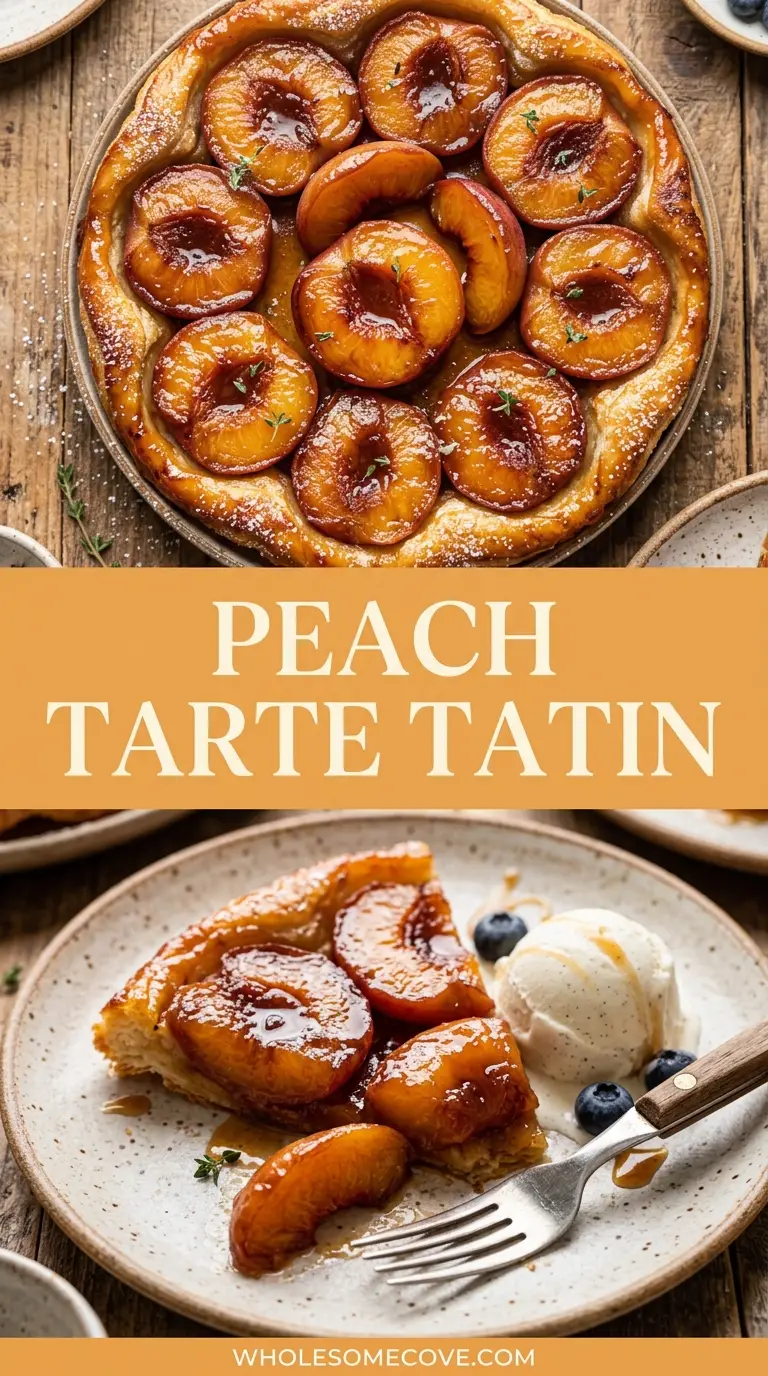
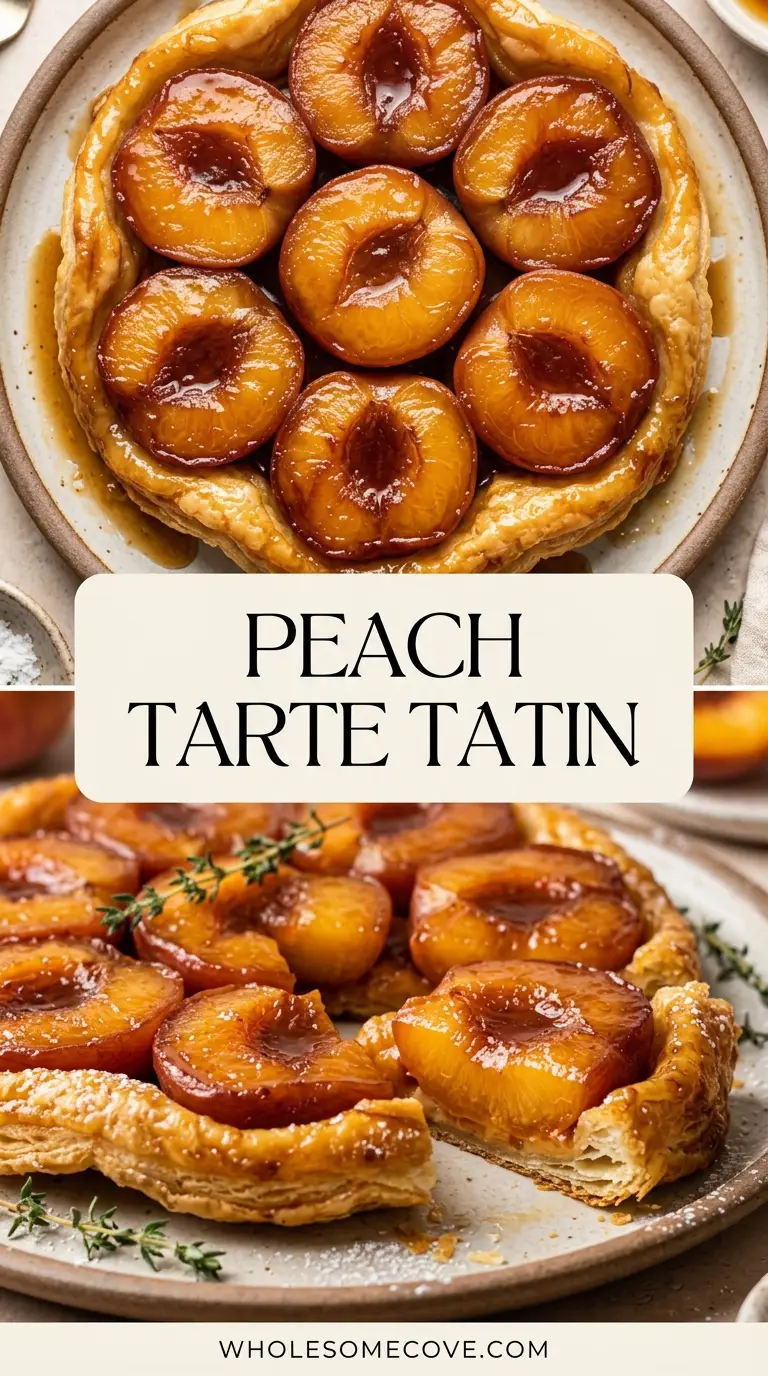
This peach tarte tatin recipe swaps the traditional apples for ripe summer peaches, caramelized in butter and sugar until the juices turn deep amber before a sheet of puff pastry seals everything in. Six ingredients and one skillet are all it takes to get a glossy, caramel-soaked dessert that flips out cleanly in one piece.
Most home versions turn out watery because the peaches go into a caramel that hasn’t cooked long enough to concentrate. Letting the butter and sugar reach a deep amber first gives the caramel enough body to hold up against all the juice the fruit releases in the oven.
| Quick Recipe Summary | |
|---|---|
| Prep Time | 20 minutes |
| Cook Time | 40 minutes |
| Total Time | 60 minutes |
| Servings | 8 slices |
| Difficulty Level | Easy |
Read Also: Peach Tart With Puff Pastry
Why You’ll Love This Peach Tarte Tatin Recipe
This dessert looks like it came from a French bakery, but the technique is closer to a stovetop caramel with a pastry lid than anything fussy. It comes together with pantry staples and whatever peaches are ripe on the counter.
- Six ingredients, no special dough: store-bought puff pastry means there’s no pastry dough to make from scratch.
- One skillet, minimal cleanup: the caramel, the fruit, and the bake all happen in the same pan.
- Deep caramel flavor: cooking the sugar and butter to a true amber (not just melted) gives the finished tart a toffee-like depth that plain baked peaches don’t have.
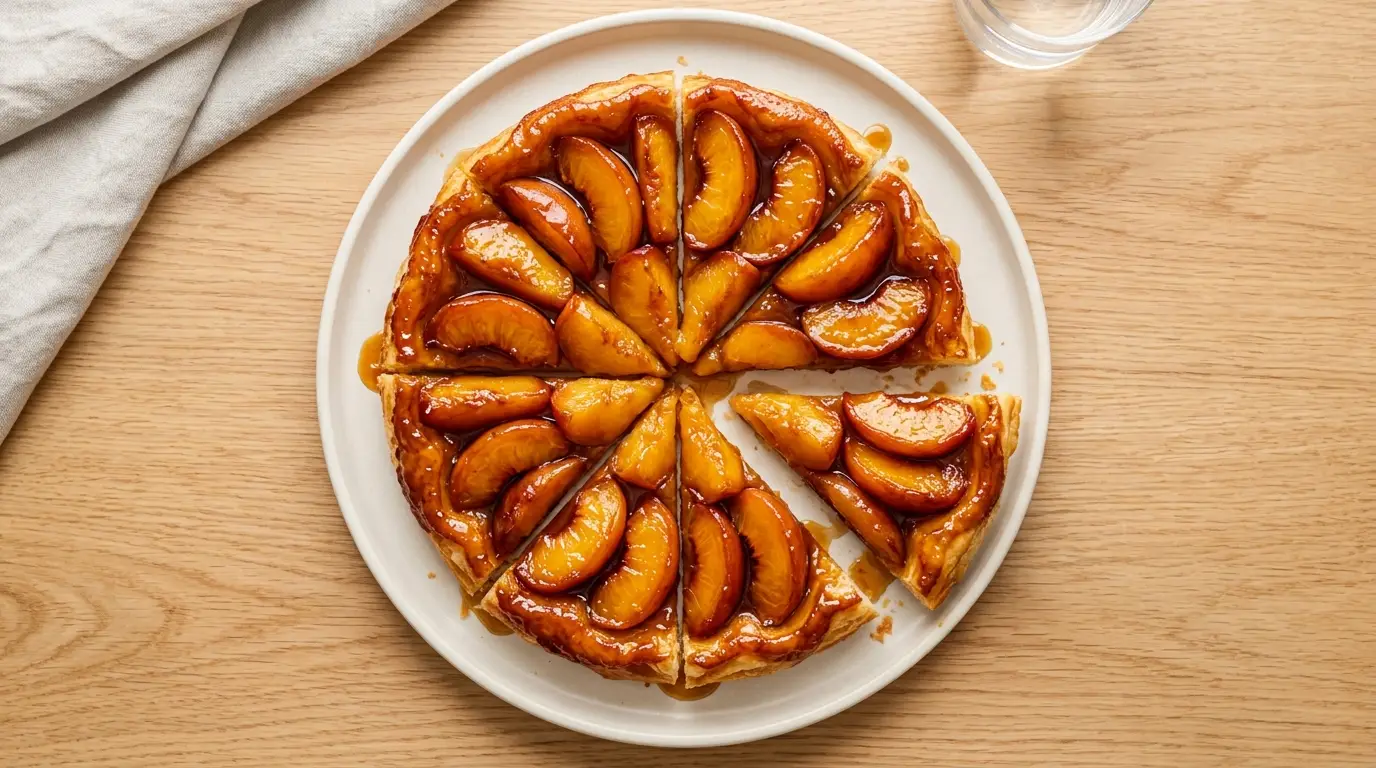
- Dramatic presentation: flipping the skillet reveals a glossy dome of caramelized peach wedges that looks far more elaborate than the effort involved.
- Flexible timing: it bakes in well under an hour, so it fits into a weeknight dinner as easily as a dinner party.
For another take on the same fruit and pastry combination, see Strawberry Peach Tart Recipe.
Ingredients
Ripe but firm peaches hold their shape best here. If they’re too soft, they’ll break down into mush instead of holding distinct wedges.
Every ingredient below plays a specific role rather than just adding flavor. The butter and sugar form the caramel base, the lemon juice keeps that caramel from tasting flat and one-note, the salt balances the sweetness, and the puff pastry provides the crisp contrast against the soft fruit once everything is flipped and sliced.
- 6 medium ripe peaches (about 1.1kg / 2.5 lbs), pitted and cut into thick wedges
- 113g (1/2 cup) unsalted butter, cut into pieces
- 150g (3/4 cup) granulated sugar
- 1.5g (1/4 tsp) fine sea salt
- 15ml (1 tbsp) fresh lemon juice
- 1 sheet frozen puff pastry (about 400g / 14 oz), thawed but still cold
Peach skins soften completely in the caramel, so I no longer bother peeling them before slicing.
A related recipe worth trying is Peach Pie Recipe.
Kitchen Equipment Needed
A heavy, oven-safe skillet is the one piece of equipment that actually matters here, since it needs to go from stovetop to oven without a hitch. Everything else on this list is either a convenience or a safety item, but skipping the right pan is the one shortcut that tends to cause real problems.
- 25cm / 10-inch oven-safe skillet, cast iron or another heavy metal that conducts heat evenly
- Rolling pin, for lightly rolling the puff pastry to size
- Pastry brush, optional, for brushing off excess flour
- Sharp paring knife, for pitting and slicing the peaches
- Wire cooling rack, for the short rest before flipping
- Large serving plate, wider than the skillet, for the inversion
- Oven mitts, for handling the hot skillet handle safely
- A wooden spoon, for swirling the caramel without stirring it
For a smaller-format version of the same idea, see Mini Peach Tart Recipe.
Recommended Products for This Recipe
These are tools I reach for specifically because they solve a problem I’ve run into while making this tart. None of them are required, but each one makes the process a little easier or the result a little better.
1. Lodge 10-Inch Cast Iron Skillet
Thin nonstick pans heat unevenly enough that the caramel scorches in one spot while staying pale in another. A properly seasoned cast iron skillet holds heat evenly across the whole surface, so the sugar caramelizes at roughly the same rate everywhere, and it moves straight from stovetop to oven without any pan-swapping.
2. Mauviel Copper Tarte Tatin Pan
Copper conducts heat faster and more evenly than cast iron, which means less risk of a caramel that’s dark at the edges and still runny in the center. It’s a splurge, but for anyone who makes tarte tatin regularly, it cuts several minutes off the caramelizing stage and makes the color easier to judge.
3. Wüsthof Classic Paring Knife
A dull paring knife tears through ripe peach flesh instead of slicing it cleanly, which leaves ragged wedges that cook unevenly. A properly sharp paring knife glides through the fruit and keeps the wedges intact right up until they hit the caramel.
4. Large Offset Cake Spatula
Lifting a hot puff pastry disc onto simmering caramel by hand risks burns and a crumpled crust. An offset spatula lets you slide the pastry into place and tuck the edges down without touching the hot pan.
You might also enjoy: No Bake Peach Tart Recipe

Step-by-Step Instructions: How to Make Peach Tarte Tatin
Follow these steps in order and the caramel, fruit, and pastry will all finish cooking at the same time.
1. Prep the Peaches and Pastry
- Pit each peach and slice it into 6 to 8 thick wedges, about 1.5cm (1/2 inch) wide at the thickest point.
- Set the wedges aside in a single layer so they aren’t sitting in their own juice.
- Lightly flour a work surface and roll the puff pastry just enough to smooth out any fold lines, keeping it roughly the same size it started.
- Using the skillet as a guide, cut the pastry into a circle about 2.5cm (1 inch) wider than the skillet’s rim, then return it to the refrigerator while the caramel cooks.
2. Make the Caramel
- Preheat the oven to 190°C (375°F).
- Place the butter in the 25cm (10-inch) oven-safe skillet over medium heat and let it melt completely.
- Add the sugar and salt, stirring once or twice just to combine, then stop stirring.
- Let the mixture cook undisturbed, swirling the pan occasionally by the handle, until it turns a deep amber color, about 8 to 10 minutes.
3. Cook the Peaches in the Caramel
- Remove the skillet from the heat and carefully stir in the lemon juice; the caramel will bubble up, so stand back slightly.
- Arrange the peach wedges in the caramel, rounded side down, packing them tightly in a circular pattern since they will shrink as they cook.
- Return the skillet to medium heat and cook for 5 to 7 minutes, until the peaches soften slightly at the edges but still hold their shape.
- Remove the skillet from the heat once the peaches look glossy and the caramel has thickened around them.
4. Top with the Puff Pastry
- Lay the chilled pastry circle directly over the peaches.
- Tuck the edges of the pastry down into the gap between the fruit and the inside of the skillet, using a spoon or offset spatula to press it snugly against the pan.
- Cut 3 to 4 small slits in the top of the pastry to let steam escape as it bakes.
5. Bake the Tarte Tatin
- Transfer the skillet to the oven and bake for 25 to 30 minutes, until the pastry is deeply golden brown and puffed.
- Check at the 20-minute mark; if the pastry is browning too quickly, loosely tent it with foil for the remaining time.
- Remove the skillet from the oven once the crust looks crisp and the caramel is bubbling visibly at the edges.
6. Cool and Invert
- Let the tarte tatin rest in the skillet on a wire cooling rack for 8 to 10 minutes; this lets the caramel thicken slightly so it doesn’t run everywhere.
- Place a large serving plate upside down over the skillet.
- Using oven mitts, hold the plate and skillet firmly together and flip both in one confident motion.
- Lift the skillet away slowly, scraping any caramel left in the pan back over the top of the tart.
For another take on this fruit and pastry pairing, see Peach Tart Recipe.
Tips for The Best Peach Tarte Tatin
Small details make the difference between a caramel that’s too pale to taste like anything and one that tastes burnt. Most of these come down to timing and heat control rather than any special technique, so reading through them once before starting saves a lot of second-guessing partway through.
- I ruined my first attempt by pulling the caramel off the heat too early, while it was still pale gold; it never developed enough bitterness to balance the sweetness of the peaches once baked.
- Choose peaches that give slightly when pressed but aren’t soft enough to bruise easily; overripe peaches turn to mush in the hot caramel.
- Keep the pastry cold until the moment it goes into the skillet, since a warm, softened sheet is harder to handle and puffs less evenly.
- Don’t stir the caramel once the sugar dissolves; stirring encourages crystallization, which turns the caramel grainy instead of smooth.
- If the caramel seizes or looks lumpy after the lemon juice is added, return it to low heat for a minute while swirling gently until it smooths back out.
- Flip the tart onto the serving plate while it’s still warm; once it cools completely in the pan, the caramel can stick.
- Use a skillet with sloped or straight sides rather than a springform pan, since a springform can leak caramel during baking.
- Pack the peach wedges tightly before adding the pastry; gaps between the fruit will show up as dips once the tart is flipped and sliced.
- If the top of the pastry browns faster than the caramel finishes thickening, lower the oven temperature by about 10°C (15°F) for the final stretch of baking rather than pulling the tart early.
A related recipe is Blackberry Peach Galette Recipe.
What to Serve with Peach Tarte Tatin
This tart is rich enough on its own, but a cold or creamy element on the side balances the warm caramel nicely.
- A scoop of vanilla bean ice cream, which melts slightly into the warm caramel
- Lightly sweetened whipped cream
- A dollop of crème fraîche or mascarpone for tang against the sweetness
- Hot coffee or espresso to cut the richness
- On a cooler evening, a mug of Hot Chocolate alongside a slice
- A small glass of dessert wine, such as a late-harvest Riesling
- Fresh mint leaves scattered over the top for a bit of contrast
You might also enjoy: Blueberry Peach Galette Recipe
Variations of Peach Tarte Tatin
Once the base technique is familiar, it’s easy to adjust the flavor without changing the method. The caramel, fruit, and pastry ratios stay roughly the same across all of these, so none of them require rethinking the timing or the pan size.
- Spiced version: add a pinch of cinnamon and a small grating of nutmeg to the caramel along with the sugar.
- Ginger peach: stir a teaspoon of grated fresh ginger into the caramel right before adding the peaches.
- Bourbon caramel: off the heat, stir a tablespoon of bourbon into the caramel along with the lemon juice.
- Mixed stone fruit: replace half the peaches with nectarine or plum wedges for a more layered flavor.
- Individual tarts: divide the caramel and peaches among four small oven-safe skillets or ramekins and top each with its own pastry round, reducing the bake time to about 15 minutes.
- Shortcrust version: swap the puff pastry for a rolled shortcrust or pâte brisée for a sturdier, less flaky top.
- Savory-sweet twist: add a tablespoon of fresh thyme leaves to the caramel for a herbal note that plays well with the peach.
A similar approach works in Peach Galette Recipe.
Storage and Reheating
This tart is best the day it’s made, since the pastry softens as it sits in the caramel overnight. It still tastes good the next day, just with a noticeably different texture underneath the fruit.
- Store leftovers loosely covered at room temperature for up to 24 hours, or in the refrigerator for up to 3 days.
- Refrigeration will soften the crust further, so bring slices to room temperature or reheat before serving for the best texture.
- I keep the skillet handy for a quick 5-minute reheat in the oven instead of the microwave, since the microwave turns the pastry chewy instead of crisp.
- To reheat, warm individual slices in a 175°C (350°F) oven for 5 to 8 minutes, until the pastry crisps back up.
- This tart doesn’t hold its texture well after freezing, since the caramel and thawed pastry turn soggy together.
- If you must make it ahead, bake it up to 4 hours before serving and reheat briefly just before guests arrive.
For another take on this style of caramelized pastry, see Peach Galette with Puff Pastry.
Nutritional Facts
| Nutrition (per slice, 1 of 8) | |
|---|---|
| Calories | 290 kcal |
| Carbohydrates | 34g |
| Protein | 3g |
| Fat | 15g |
| Saturated Fat | 8g |
| Sugar | 22g |
| Fiber | 2g |
| Sodium | 95mg |
Values are estimates based on standard ingredient databases and will vary depending on peach size and exact brands used.
Read Also: Peach Crumble Recipe
Health Benefits of Key Ingredients
Even as a dessert, this tart is built around a few ingredients that carry real nutritional value on their own.
- Peaches provide vitamin C, which supports immune function, along with potassium that helps regulate fluid balance.
- Peaches also contain fiber, most of it concentrated in the skin, which is part of why leaving the skins on adds nutritional value along with convenience.
- Butter contributes small amounts of fat-soluble vitamins A and D, though it should still be enjoyed in moderation given its saturated fat content.
- Lemon juice adds a small dose of vitamin C and helps balance the sweetness of the caramel without adding significant calories.
- Puff pastry made with butter provides quick energy from carbohydrates and fat, useful in the context of an occasional dessert rather than a daily staple.
A related recipe is Peach Crumble Pie Recipe.
FAQs About Peach Tarte Tatin
1. Can I use canned or frozen peaches for this peach tarte tatin recipe?
Canned peaches hold too much water and will turn the caramel thin and overly sweet, since they’re already packed in syrup.
Frozen peaches release even more liquid as they thaw, so fresh, firm peaches give the most reliable result.
2. Why did my caramel seize when I added the peaches?
A sudden drop in temperature when cold fruit hits hot caramel can cause the sugar to seize into hard clumps.
Returning the pan to low heat and swirling gently, without stirring, usually smooths the caramel back out within a minute or two.
3. Can I make peach tarte tatin ahead of time?
It can be baked up to 4 hours ahead and reheated briefly before serving, but it isn’t a good make-ahead dessert for the next day.
The pastry absorbs moisture from the caramel as it sits, so a tart made a day in advance loses its crisp texture.
4. Do I need a special tarte tatin pan?
A dedicated tarte tatin pan isn’t required; any heavy, oven-safe skillet with sloped or straight sides works.
Cast iron is a common substitute because it holds heat evenly and transitions easily from stovetop to oven.
5. Why is my crust soggy after flipping the tarte tatin?
This usually happens when the caramel hasn’t cooked long enough before the peaches go in, leaving too much liquid in the pan during baking.
Cooking the caramel to a true deep amber before adding the fruit, and letting the peaches release some juice before topping with pastry, both help keep the crust crisp.
For a different approach, see Peach Pie Filling Recipe.
Peach Tarte Tatin
Ingredients
- 6 medium ripe peaches - about 1.1kg / 2.5 lbs, pitted and cut into thick wedges
- 113 g unsalted butter - 1/2 cup, cut into pieces
- 150 g granulated sugar - 3/4 cup
- 1.5 g fine sea salt - 1/4 tsp
- 15 ml fresh lemon juice - 1 tbsp
- 1 sheet frozen puff pastry - about 400g / 14 oz, thawed but still cold
Equipment
- 25cm / 10-inch oven-safe skillet - Cast iron or other heavy metal that conducts heat evenly
- Rolling Pin - For lightly rolling the puff pastry to size
- Pastry brush - Optional, for brushing off excess flour
- Sharp paring knife - For pitting and slicing the peaches
- Wire cooling rack - For the short rest before flipping
- Large serving plate - Wider than the skillet, for the inversion
- Oven mitts - For handling the hot skillet handle safely
- Wooden spoon - For swirling the caramel without stirring it
Method
- Pit and slice the peaches into 6-8 thick wedges, about 1.5cm (1/2 inch) wide, setting them aside in a single layer. Lightly flour a work surface and roll the puff pastry just enough to smooth out fold lines. Using the skillet as a guide, cut the pastry into a circle about 2.5cm (1 inch) wider than the skillet’s rim and refrigerate.
- Preheat the oven to 190°C (375°F). Melt the butter in the 25cm (10-inch) oven-safe skillet over medium heat. Add the sugar and salt, stirring once or twice to combine, then stop stirring. Let cook undisturbed, swirling the pan occasionally, until it turns a deep amber color, about 8 to 10 minutes.
- Remove the skillet from the heat and carefully stir in the lemon juice, standing back as it bubbles. Arrange the peach wedges in the caramel, rounded side down, packing them tightly in a circular pattern. Return to medium heat and cook for 5 to 7 minutes, until the peaches soften slightly at the edges but still hold their shape.
- Lay the chilled pastry circle directly over the peaches. Tuck the edges down into the gap between the fruit and the skillet using a spoon or offset spatula. Cut 3 to 4 small slits in the top of the pastry to let steam escape.
- Transfer the skillet to the oven and bake for 25 to 30 minutes, until the pastry is deeply golden brown and puffed. Check at the 20-minute mark; if the pastry is browning too quickly, loosely tent it with foil for the remaining time. Remove once the crust looks crisp and the caramel is bubbling visibly at the edges.
- Let the tarte tatin rest in the skillet on a wire cooling rack for 8 to 10 minutes. Place a large serving plate upside down over the skillet. Using oven mitts, hold the plate and skillet firmly together and flip both in one confident motion. Lift the skillet away slowly, scraping any caramel left in the pan back over the top of the tart.
Nutrition
Notes
- Choose peaches that give slightly when pressed but aren’t soft enough to bruise easily; overripe peaches turn to mush in the hot caramel.
- Keep the pastry cold until the moment it goes into the skillet, since a warm, softened sheet is harder to handle and puffs less evenly.
- Don’t stir the caramel once the sugar dissolves; stirring encourages crystallization, which turns the caramel grainy instead of smooth.
- If the caramel seizes or looks lumpy after the lemon juice is added, return it to low heat for a minute while swirling gently until it smooths back out.
- Flip the tart onto the serving plate while it’s still warm; once it cools completely in the pan, the caramel can stick.
- Use a skillet with sloped or straight sides rather than a springform pan, since a springform can leak caramel during baking.
- Pack the peach wedges tightly before adding the pastry; gaps between the fruit will show up as dips once the tart is flipped and sliced.
- If the top of the pastry browns faster than the caramel finishes thickening, lower the oven temperature by about 10°C (15°F) for the final stretch of baking rather than pulling the tart early.
- Store leftovers loosely covered at room temperature for up to 24 hours, or in the refrigerator for up to 3 days. Refrigeration will soften the crust further.
- Reheat individual slices in a 175°C (350°F) oven for 5 to 8 minutes to crisp the pastry back up; microwave not recommended as it turns the pastry chewy.
Private Notes
Tried this recipe?
Let us know how it was!Final Thoughts
This peach tarte tatin recipe is a good one to keep on hand whenever peaches are at their best and a dessert needs to look more impressive than it actually was to make.
The caramel does most of the work, and the flip at the end turns a simple skillet dessert into something that looks like it came from a pastry case.
Give it a try the next time peaches are in season, and leave a comment below with how yours turned out.
Recommended:
- Peach Crumble Bars Recipe
- Peach Cobbler Recipe
- Peach Dump Cake Recipe
- Crockpot Peach Dump Cake Recipe
- Blueberry Peach Crisp Recipe
- Peach Crisp with Canned Peaches
- Peach Crisp Recipe
- Blueberry Peach Crumble Recipe
- Apple Crisp Recipe
- Creme Brulee Recipe