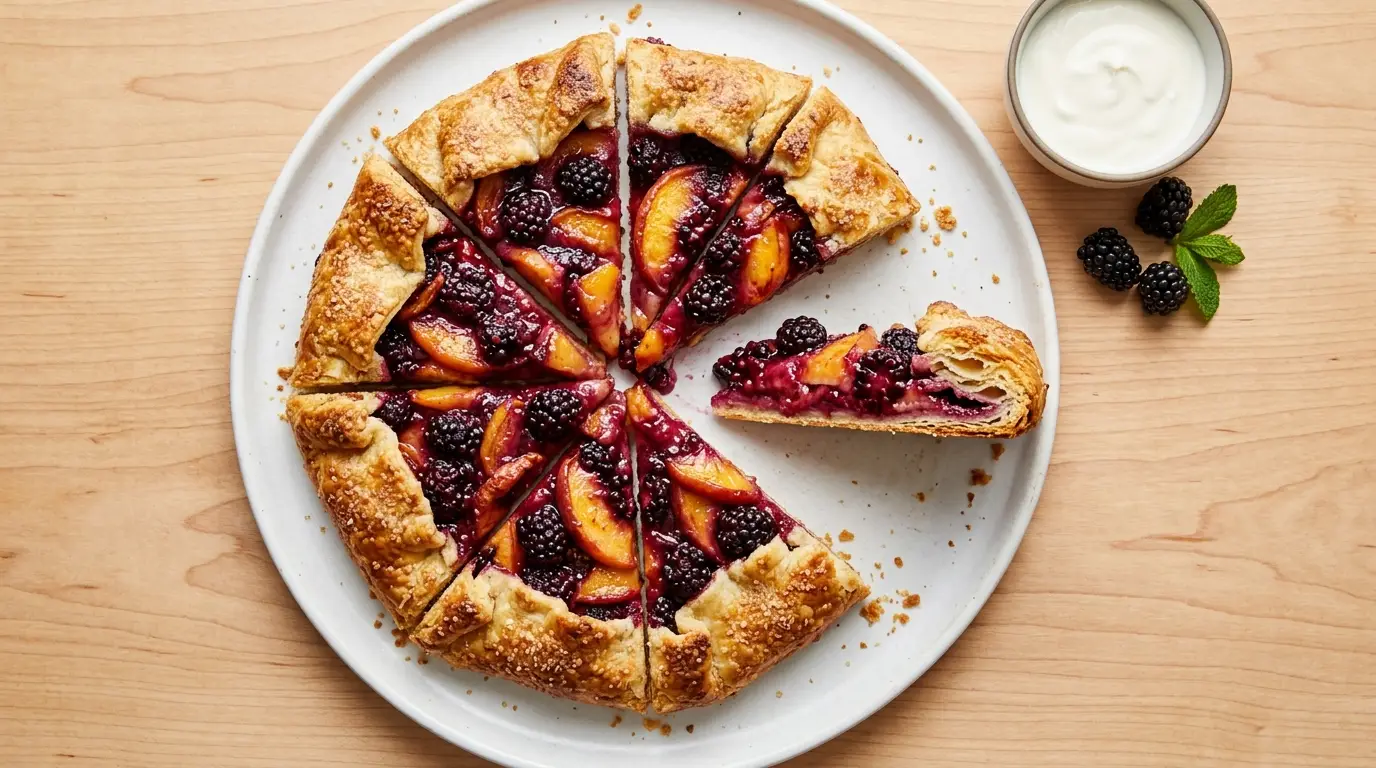
This blackberry peach galette recipe turns ripe summer peaches and fresh blackberries into a free-form tart with a buttery, flaky crust that holds its shape without a pie pan.
Six main ingredients make up the filling, and the dough comes together in under ten minutes if the butter stays cold.
Most galettes turn soggy in the center because the fruit releases too much liquid before the crust has a chance to set. Tossing the fruit with cornstarch and letting it sit for a few minutes before assembly solves that problem, so the bottom crust bakes through instead of turning gummy.
The result is a dessert with jammy, purple-red filling, deeply golden pastry edges, and just enough structure to slice cleanly at the table.
| Quick Recipe Summary | |
|---|---|
| Prep Time | 25 minutes |
| Chill Time | 30 minutes |
| Cook Time | 45 minutes |
| Total Time | 1 hour 40 minutes |
| Servings | 8 slices |
| Difficulty Level | Moderate |
For another take on this fruit combination, see Blueberry Peach Galette.

Why You’ll Love This Blackberry Peach Galette Recipe
A galette skips the pie dish entirely, so there’s no crimping a perfect edge or worrying about a soggy bottom crust hiding under a lattice.
The dough folds itself into loose, rustic pleats, which means small tears or uneven edges only add character.
It also bakes faster than a standard double-crust pie, since there’s only one layer of dough for the oven’s heat to work through.
- No pie pan required, just a baking sheet and a sheet of parchment paper
- A single crust means less rolling and less cleanup than a double-crust pie
- Ripe peaches and blackberries need very little added sugar to taste good
- The exposed fruit caramelizes at the edges for deeper flavor than a fully enclosed pie
- Freeform shaping forgives imperfect edges, so it’s beginner-friendly
- Leftovers reheat well and taste nearly as good the next day
A related recipe is Peach Galette.
Ingredients
The crust uses a classic pâte brisée ratio of flour, cold butter, and ice water, and the filling relies on just enough cornstarch to thicken the juices without turning gluey. Everything on this list is available at a regular grocery store, though a farmers market is usually the better source for the peaches and blackberries themselves.
For the Crust:
- 2 ½ cups (313g) all-purpose flour, plus more for dusting
- 1 tablespoon (12g) granulated sugar
- 1 teaspoon (6g) fine sea salt
- 1 cup (226g) unsalted European-style butter, cold and cubed
- ½ to ¾ cup (120 to 180ml) ice water
For the Filling:
- 3 medium (about 450g) ripe fresh peaches, sliced into ¼-inch wedges
- 1 ½ cups (170g) fresh blackberries
- ⅓ cup (67g) granulated sugar
- 2 tablespoons (16g) cornstarch
- 1 tablespoon (15ml) fresh lemon juice
- ½ teaspoon ground cinnamon
- ¼ teaspoon fine sea salt
For Assembly:
- 1 large egg, beaten with 1 tablespoon water, for the egg wash
- 2 tablespoons (25g) turbinado sugar, for topping
I’ve found that peaches on the firmer side of ripe hold their shape better in the oven than very soft ones, which tend to collapse into mush before the crust finishes browning.
You might also enjoy: Peach Pie Filling
Kitchen Equipment Needed
Nothing here is specialized. A rolling pin, a sturdy baking sheet, and a few mixing bowls cover most of what this recipe needs, and most home kitchens already have the majority of it on hand.
- Rolling pin
- Large mixing bowls
- Rimmed baking sheet
- Parchment paper
- Pastry brush
- Sharp paring knife
- Cutting board
- Measuring cups and spoons
- Small bowl, for the egg wash
- Plastic wrap, for chilling the dough
- Wire cooling rack, for cooling the galette evenly on all sides
- Offset spatula, for lifting slices cleanly once cooled
A related recipe is Fruit Tart.
Recommended Products for This Recipe
These are tools I’ve personally found useful when making pastry dough and rustic tarts, based on what actually solves the common frustrations with this kind of baking. None of them are required to make this recipe work, but each one addresses a specific step where things tend to go wrong.
1. French Tapered Rolling Pin
A straight, handle-free French pin gives more direct control over dough thickness than a standard pin with handles, which matters when rolling a free-form circle instead of fitting dough into a pan. The tapered ends make it easier to roll from the center outward without over-thinning the edges.
2. OXO Good Grips Pastry Blender
Cutting cold butter into flour by hand with two knives works, but it takes longer and warms the butter faster than a blender with sharp, closely spaced wires. Keeping the butter cold is what keeps the crust flaky, so a good blender directly affects the final texture.
3. Heavy-Duty Half Sheet Pan
Thin, flimsy baking sheets warp in a hot oven and bake unevenly, which shows up as a galette that’s pale on one side and overly dark on the other. A heavier aluminized steel pan distributes heat evenly enough that the crust browns at a consistent rate all the way around.
4. Digital Kitchen Scale
Measuring flour by volume can vary by up to 20% depending on how it’s scooped, which throws off the flour-to-butter ratio that keeps this dough from turning tough or crumbly. A scale removes that guesswork entirely.
5. Bench Scraper
A bench scraper does double duty here: it helps cut cold butter into smaller pieces quickly, and it lifts the rolled dough off the counter without stretching or tearing it when transferring to the baking sheet.
Read Also: Peach Crumble Recipe

Step-by-Step Instructions: How to Make Blackberry Peach Galette
Follow these steps and the dough and filling come together well before the oven is even preheated.
1. Make the Dough
- In a large bowl, whisk together the flour, sugar, and salt until evenly combined.
- Add the cold, cubed butter and cut it into the flour using a pastry blender or two knives, working until the mixture looks like coarse crumbs with some pea-sized butter pieces still visible.
- Sprinkle in the ice water one tablespoon at a time, tossing with a fork after each addition, until the dough just holds together when pressed between your fingers.
- Turn the dough out onto a lightly floured surface and gather it into a disk, being careful not to overwork it.
- Wrap the disk tightly in plastic wrap and refrigerate for at least 30 minutes.
2. Prepare the Filling
- In a medium bowl, combine the sliced peaches and blackberries.
- Add the granulated sugar, cornstarch, lemon juice, cinnamon, and salt.
- Toss gently until every piece of fruit is coated and no dry cornstarch remains visible.
- Let the mixture sit at room temperature while you roll out the dough, which gives the cornstarch time to start absorbing the released juices.
3. Roll Out the Dough
- Remove the chilled dough from the refrigerator and let it sit for 5 minutes if it feels too firm to roll.
- On a lightly floured surface, roll the dough into a rough circle about 12 inches (30cm) in diameter and ¼-inch thick.
- Rotate the dough a quarter turn every few passes with the rolling pin so it stays an even circle instead of stretching into an oval.
- I keep a small bowl of extra flour within reach specifically for re-dusting the counter, since this dough turns sticky fast once it warms up past refrigerator temperature.
- Transfer the rolled dough to a parchment-lined baking sheet by rolling it loosely around the rolling pin and unrolling it onto the sheet.
4. Assemble the Galette
- Preheat the oven to 400°F (200°C).
- Spoon the fruit filling into the center of the dough, leaving a border of about 2 inches (5cm) bare around the edge.
- Leave any excess liquid pooled in the bowl behind, since too much liquid on the dough will make the crust soggy.
- Fold the bare edge of the dough up and over the fruit, working around the circle and overlapping the dough every few inches to form loose pleats.
5. Add the Egg Wash and Sugar
- Brush the folded dough edges evenly with the beaten egg wash.
- Sprinkle the turbinado sugar over the egg-washed crust for a crisp, sparkling finish.
- Turbinado sugar holds its crunch through baking far better than regular granulated sugar, which tends to dissolve into the crust instead of staying textured on top.
6. Bake the Galette
- Bake in the preheated oven for 40 to 45 minutes, until the crust is deeply golden brown and the fruit filling is bubbling thickly in the center.
- If the edges start browning too quickly before the center is done, loosely tent the galette with foil for the remaining bake time.
7. Cool and Slice
- Let the galette cool on the baking sheet for at least 15 to 20 minutes before slicing, which gives the filling time to set.
- Slice into wedges using a sharp knife and serve warm or at room temperature.
Read Also: Peach Galette With Puff Pastry

Tips for The Best Blackberry Peach Galette
A few small details separate a galette with a crisp, flaky bottom from one that turns out pale and soft underneath.
- Keep the butter and water as cold as possible; warm butter is the single biggest cause of a tough, dense crust
- Don’t skip the resting time in the refrigerator, since it lets the gluten relax and prevents excessive shrinking during baking
- Leave the excess fruit liquid in the bowl instead of pouring it all onto the dough
- Bake on the lowest oven rack for the last 10 minutes if the bottom crust seems pale, since this puts it closer to the heat source
- Use a light hand when folding the edges; overly thick folds take longer to cook through than the rest of the crust
- Let the galette cool before slicing so the filling has time to firm up instead of running across the plate
- If the dough cracks while rolling, patch it with a small scrap of dough rather than starting over
- Weigh the flour instead of scooping it with a measuring cup whenever possible, since scooped flour can pack in and throw off the dough’s texture
- Chill the fully assembled, unbaked galette for 10 to 15 minutes before it goes into the oven if the kitchen is warm, which helps the butter firm back up before baking
I ruined my first few galettes by pouring every drop of the macerated fruit juice onto the dough, which left the bottom crust raw and pale even after 50 minutes in the oven.
A similar approach works well in Apple Crisp.
What to Serve with Blackberry Peach Galette
A warm slice pairs naturally with something cold and something to cut the sweetness, which is why classic pairings lean toward dairy and unsweetened drinks.
- Vanilla ice cream, for a warm-and-cold contrast
- Lightly sweetened whipped cream
- Mascarpone or crème fraîche, spooned on top
- Freshly brewed coffee or espresso
- Iced black tea or unsweetened iced tea
- A handful of toasted, sliced almonds for crunch
- Fresh mint leaves, torn over the top just before serving
- A cheese board with a mild soft cheese, for a brunch spread
- A drizzle of warm honey or salted caramel sauce over the top
- A small glass of dessert wine, like a late-harvest Riesling, for an after-dinner pairing
Another option worth trying is Peach Crumble Pie.
Variations of Blackberry Peach Galette
The base recipe is flexible enough to swap fruit, spices, or even the type of dough without changing the overall method.
- Swap the blackberries for raspberries or blueberries for a different berry flavor
- Use nectarines in place of peaches; they don’t need peeling
- Add a tablespoon of finely chopped fresh ginger to the filling for warmth
- Stir a teaspoon of orange zest into the filling for brightness
- Make individual mini galettes by dividing the dough into 4 smaller rounds
- Use store-bought puff pastry instead of homemade dough for a faster version
- Add a thin layer of almond frangipane under the fruit for a bakery-style twist
- Brush the baked crust with warm honey instead of using turbinado sugar
- Use a whole wheat pastry flour blend for a slightly nuttier crust
- Add a pinch of cardamom along with the cinnamon for a warmer spice profile
For a different approach, see Blueberry Peach Crumble.
Storage and Reheating
Once fully cooled, this galette keeps well at room temperature for a day and in the refrigerator for longer.
- Store leftovers loosely covered at room temperature for up to 1 day
- Refrigerate in an airtight container for up to 4 days
- Reheat individual slices in a 350°F (175°C) oven for 8 to 10 minutes to re-crisp the crust
- Avoid microwaving if possible, since it softens the crust instead of keeping it flaky
- Freeze fully baked and cooled galette, wrapped tightly, for up to 2 months
- Thaw frozen galette overnight in the refrigerator before reheating in the oven
- The unbaked, assembled galette can also be frozen and baked straight from frozen, adding about 10 extra minutes to the bake time
- Wrap slices individually in plastic wrap before freezing if you want to reheat single portions later
- Let refrigerated slices sit at room temperature for 15 minutes before reheating so they warm through evenly
For a lighter option, try: Peach Crisp
Nutritional Facts
| Nutrient | Amount Per Serving (1 of 8 slices) |
|---|---|
| Calories | 310 kcal |
| Total Fat | 16g |
| Saturated Fat | 10g |
| Cholesterol | 60mg |
| Sodium | 190mg |
| Total Carbohydrates | 39g |
| Dietary Fiber | 3g |
| Sugars | 16g |
| Protein | 4g |
Nutritional values are estimates and will vary based on specific ingredients and portion sizes used. Values were calculated using standard nutrition databases for the ingredients and quantities listed above, divided across 8 servings.
For more recipes in this style, check out Peach Smoothie.
Health Benefits of Key Ingredients
Beyond dessert, both main fruits in this recipe bring nutritional value along with their flavor.
- Peaches: A good source of vitamin C and vitamin A, and they contain potassium that supports fluid balance
- Blackberries: High in fiber and antioxidants called anthocyanins, which give the berries their deep color
- Lemon juice: Adds vitamin C and helps balance the sweetness without adding more sugar
- Cinnamon: Contains compounds that have been studied for their anti-inflammatory properties
- Butter: Provides fat-soluble vitamins A and E, though it should be enjoyed in moderation
- Eggs: The egg wash contributes a small amount of protein and choline to the finished crust
- Flour: Enriched all-purpose flour typically contains added B vitamins and iron
- Cornstarch: A neutral thickener that adds very little in the way of flavor or nutrients but keeps the filling from being watery
A related recipe is Blackberry Smoothie.
FAQs About Blackberry Peach Galette
1. Can I use frozen peaches or blackberries instead of fresh?
Frozen fruit works, but thaw it fully and drain off the excess liquid first.
Pat the fruit dry with a paper towel before tossing it with the sugar and cornstarch, or the filling will be much wetter than intended.
2. Why did my galette leak juice all over the baking sheet?
Some juice leaking onto the parchment is normal and expected with a free-form crust.
Excessive leaking usually means the fruit sat too long before baking or too much of the macerating liquid was added to the filling.
3. Can I make the dough ahead of time?
Yes, the dough can be made up to 2 days ahead and kept wrapped in the refrigerator.
It can also be frozen for up to 1 month; thaw it in the refrigerator overnight before rolling.
4. Do I need to peel the peaches first?
Peeling is optional and mostly a matter of preference.
The skins soften significantly during baking and add a bit of color and texture to the filling.
5. How do I know the galette is fully baked?
Look for a deeply golden, not just light tan, crust color, since underbaked pastry tends to taste raw and doughy.
The filling should also be visibly bubbling and thickened in the center, not just around the edges.
You might also enjoy: Peach Cobbler
Blackberry Peach Galette
Ingredients
- 2 ½ cups all-purpose flour - 313g, plus more for dusting
- 1 tablespoon granulated sugar - 12g
- 1 teaspoon fine sea salt - 6g
- 1 cup unsalted European-style butter - 226g, cold and cubed
- ½ cup ice water - 120ml to ¾ cup (180ml)
- 3 medium fresh peaches - about 450g, ripe, sliced into ¼-inch wedges
- 1 ½ cups fresh blackberries - 170g
- ⅓ cup granulated sugar - 67g
- 2 tablespoons cornstarch - 16g
- 1 tablespoon fresh lemon juice - 15ml
- ½ teaspoon ground cinnamon
- ¼ teaspoon fine sea salt
- 1 large egg - beaten with 1 tablespoon water, for the egg wash
- 2 tablespoons turbinado sugar - 25g, for topping
Equipment
- Rimmed baking sheet - Heavy-duty half sheet pan recommended
- Small bowl - For the egg wash
- Plastic wrap - For chilling the dough
- French Tapered Rolling Pin - (optional)
- OXO Good Grips Pastry Blender - (optional)
- Digital kitchen scale - (optional)
- Bench scraper - (optional)
Method
- Whisk together the flour, sugar, and salt in a large bowl.
- Cut cold butter into the flour mixture using a pastry blender until coarse crumbs form with pea-sized butter pieces visible.
- Add ice water one tablespoon at a time, tossing with a fork until the dough holds together when pressed.
- Gather the dough into a disk on a lightly floured surface, wrap in plastic, and refrigerate for at least 30 minutes.
- Combine sliced peaches, blackberries, sugar, cornstarch, lemon juice, cinnamon, and salt in a medium bowl.
- Toss gently until the fruit is coated and no dry cornstarch remains, then let sit while you roll out the dough.
- On a lightly floured surface, roll the chilled dough into a rough 12-inch circle about ¼-inch thick.
- Transfer the rolled dough to a parchment-lined baking sheet and preheat the oven to 400°F (200°C).
- Spoon the fruit filling into the center of the dough, leaving a 2-inch bare border around the edge.
- Fold the bare edge of the dough up and over the fruit, overlapping every few inches to form loose pleats.
- Brush the folded dough edges evenly with the beaten egg wash.
- Sprinkle the turbinado sugar over the egg-washed crust for a crisp, sparkling finish.
- Bake for 40 to 45 minutes until the crust is deeply golden brown and the fruit filling is bubbling thickly in the center.
- Let the galette cool on the baking sheet for 15-20 minutes before slicing into wedges.
Nutrition
Notes
- Keep the butter and water as cold as possible; warm butter is the single biggest cause of a tough, dense crust.
- Don’t skip the resting time in the refrigerator, since it lets the gluten relax and prevents excessive shrinking during baking.
- Leave the excess fruit liquid in the bowl instead of pouring it all onto the dough to avoid a soggy bottom crust.
- Bake on the lowest oven rack for the last 10 minutes if the bottom crust seems pale, since this puts it closer to the heat source.
- Use a light hand when folding the edges; overly thick folds take longer to cook through than the rest of the crust.
- If the dough cracks while rolling, patch it with a small scrap of dough rather than starting over.
- Weigh the flour instead of scooping it with a measuring cup whenever possible, since scooped flour can pack in and throw off the dough’s texture.
- Chill the fully assembled, unbaked galette for 10 to 15 minutes before it goes into the oven if the kitchen is warm, which helps the butter firm back up before baking.
- For a faster version, use store-bought puff pastry instead of homemade dough.
- Store leftovers loosely covered at room temperature for up to 1 day or refrigerate in an airtight container for up to 4 days.
- Reheat individual slices in a 350°F (175°C) oven for 8 to 10 minutes to re-crisp the crust.
- Freeze fully baked and cooled galette, wrapped tightly, for up to 2 months.
Private Notes
Tried this recipe?
Let us know how it was!Final Thoughts
This blackberry peach galette comes together with far less fuss than a traditional double-crust pie, and the payoff is a dessert that looks like it took more effort than it did.
Give it a try the next time peaches and blackberries overlap at the market.
Leave a comment below if you make it, and share a photo if you post it online.
Recommended:
- Peach Crumble Bars
- Blueberry Peach Crisp
- Bisquick Peach Cobbler
- Peach Crisp With Canned Peaches
- Peach Cobbler Recipe With Cake Mix
- Strawberry Blackberry Smoothie
- Apple Pie
- Pecan Pie
- Healthy Apple Pie
- Berry Smoothie