
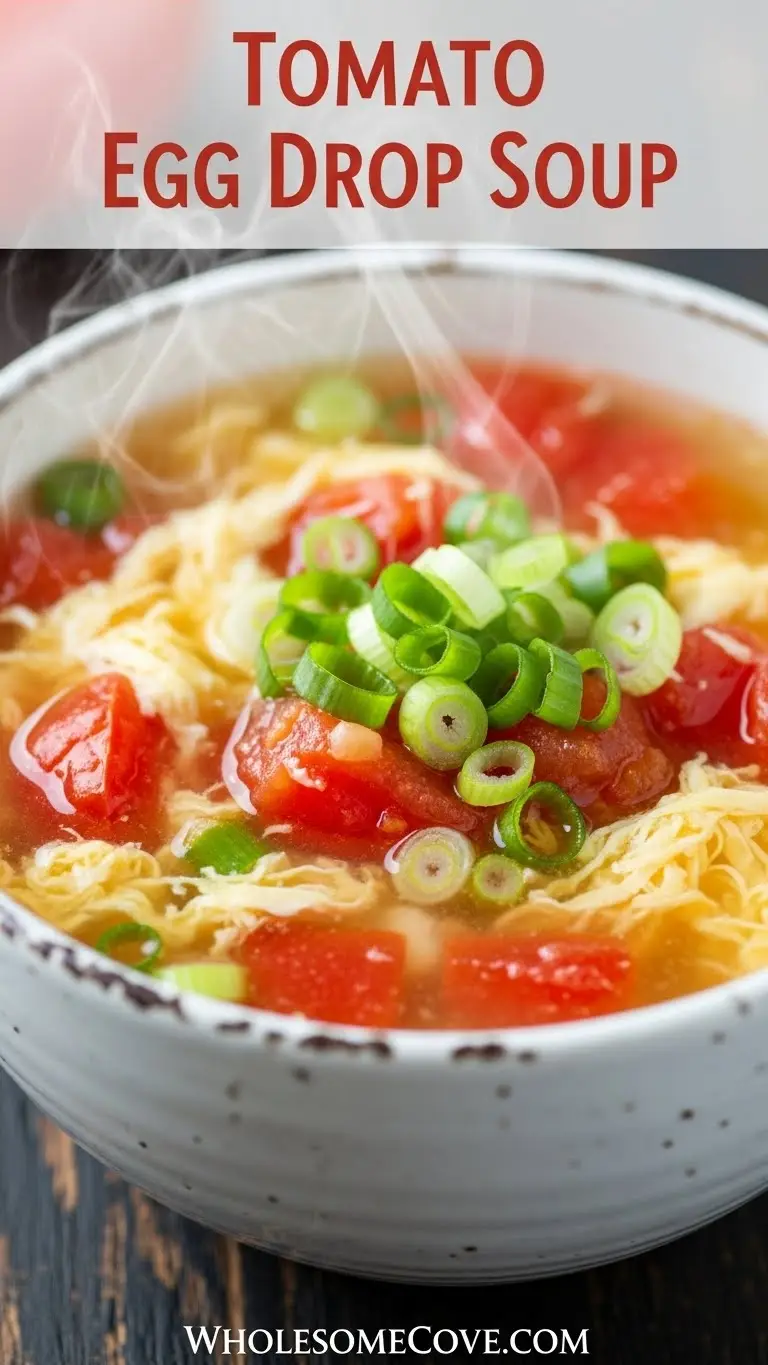
I stumbled upon this Tomato Egg Drop Soup Recipe during one of those chaotic weeknights when I needed something warm, nourishing, and incredibly fast. My pantry was nearly bare, but I had eggs, a few tomatoes, and some basic seasonings.
What happened next surprised me. This simple combination transformed into one of the most comforting soups I’ve ever made.
The silky egg ribbons swirling through tangy tomato broth became an instant family favorite. My kids, who usually turn their noses up at soup, actually asked for seconds.
This soup bridges Chinese and Western cooking styles beautifully. The technique of dropping beaten eggs into simmering broth creates those gorgeous, delicate ribbons that make egg drop soup so distinctive, while fresh tomatoes add a bright, tangy depth you won’t find in traditional versions.
| Quick Recipe Summary | |
|---|---|
| Prep Time | 8 minutes |
| Cook Time | 15 minutes |
| Total Time | 23 minutes |
| Servings | 4 servings |
| Difficulty Level | Easy |
If you’re looking for more comforting soup options, my Egg Drop Soup offers the classic version without tomatoes.
Why You’ll Love This Tomato Egg Drop Soup Recipe
This soup checks every box for a weeknight winner. It comes together in under 25 minutes, making it perfect when you need dinner on the table fast.
The ingredient list is refreshingly short and uses items you probably already have. No need for specialty store runs or expensive ingredients.
Here’s what makes this soup special:
- Quick and effortless: From start to finish in just over 20 minutes
- Budget-friendly: Uses simple, affordable ingredients without sacrificing flavor
- Nutritious and satisfying: Packed with protein from eggs and vitamins from tomatoes
- Versatile: Easily customized with different seasonings or add-ins
- Light yet filling: Perfect for lunch or a light dinner that won’t leave you sluggish
- Kid-approved: The mild flavor and silky texture appeal to even picky eaters
The beauty of this recipe lies in its simplicity. You’re not juggling complicated techniques or obscure ingredients, just combining a few basics in a way that creates something truly comforting.
Another standout soup worth trying is my Roasted Tomato Soup, which takes tomato soup in a richer, more intense direction.
Ingredients
This recipe celebrates simplicity without compromising on flavor. Each ingredient plays a specific role in creating that perfect balance of tangy, savory, and satisfying.
For the soup base:
- 4 medium ripe tomatoes (about 1.5 lbs or 680g), diced
- 6 cups (1.4 liters) chicken or vegetable broth
- 2 tablespoons vegetable oil
- 3 cloves garlic, minced
- 1 tablespoon fresh ginger, grated
- 2 tablespoons soy sauce
- 1 tablespoon rice vinegar
- 1 teaspoon sesame oil
- 1 teaspoon sugar
- ½ teaspoon white pepper
- Salt to taste
For the eggs:
- 4 large eggs
- 1 tablespoon water
- Pinch of salt
For the thickener:
- 2 tablespoons cornstarch
- 3 tablespoons cold water
For garnish:
- 2 green onions, thinly sliced
- Fresh cilantro leaves (optional)
- Additional sesame oil for drizzling
I learned the hard way that using underripe tomatoes creates a flat, acidic soup. Always choose tomatoes that feel heavy for their size and give slightly when pressed.
You might also enjoy my Tomato Soup Recipe for a classic creamy version.
Kitchen Equipment Needed
Having the right tools makes this recipe even easier to execute. Nothing fancy required, just standard kitchen equipment you likely already own.
Essential equipment:
- Large soup pot or Dutch oven (at least 4-quart capacity)
- Sharp chef’s knife for dicing tomatoes
- Cutting board
- Small bowl for beating eggs
- Measuring cups and spoons
- Whisk or fork for beating eggs
- Ladle for serving
- Small bowl for cornstarch slurry
Optional but helpful:
- Immersion blender if you prefer a smoother soup base
- Fine-mesh strainer for perfectly smooth broth
- Microplane grater for ginger and garlic
The most important piece is a wide pot that allows plenty of surface area. This helps the egg ribbons form properly when you drizzle them into the simmering broth.
I initially tried making this in a narrow saucepan, and the eggs clumped together instead of creating those beautiful ribbons. Width matters here.
For more soup inspiration, check out my Creamy Tomato Basil Soup.
Recommended Products for This Recipe
After making this soup dozens of times, I’ve found a few products that genuinely improve the results and make the cooking process smoother.
1. High-Quality Sesame Oil
Not all sesame oils are created equal. A good toasted sesame oil adds incredible depth and that authentic Asian flavor to this soup. The cheap versions taste harsh and overwhelming, while quality sesame oil brings a subtle, nutty richness that ties everything together perfectly.
2. Fresh Ginger Root
While ground ginger works in a pinch, fresh ginger brings a bright, zesty flavor that dried versions simply can’t match. I keep fresh ginger in my freezer and grate it directly into the soup while still frozen. It lasts for months and eliminates the need for peeling.
3. Premium Chicken Broth
The broth forms the backbone of this soup, so quality matters. I’ve tested boxed broths, canned versions, and homemade, and there’s a noticeable difference. A rich, full-bodied chicken broth makes this soup restaurant-quality, while weak broth leaves it tasting watery.
4. Dutch Oven or Heavy-Bottomed Pot
A quality pot distributes heat evenly, preventing hot spots that can scramble your eggs prematurely. I use my enameled Dutch oven for this soup because it maintains steady heat and the wide surface area is perfect for creating those silky egg ribbons.
Another comforting recipe you’ll love is my Chicken Corn Chowder.
Step-by-Step Instructions: How to Make Tomato Egg Drop Soup
Follow these detailed steps for perfect results every time. I’ve included all the little tricks I’ve learned through trial and error.
1. Prepare Your Ingredients
- Dice the tomatoes into ½-inch pieces, removing the cores but keeping the seeds and juice (they add flavor)
- Mince the garlic finely so it distributes evenly throughout the soup
- Grate the ginger using a microplane or fine grater
- Slice the green onions, separating the white parts from the green tops
- Beat the eggs with 1 tablespoon water and a pinch of salt until completely smooth with no streaks
- Mix the cornstarch with cold water in a small bowl to create a smooth slurry
Having everything prepped before you start cooking makes the process flow smoothly. This is especially important for the egg-dropping step, which happens quickly.
2. Sauté the Aromatics
- Heat 2 tablespoons of vegetable oil in your soup pot over medium heat until it shimmers
- Add the minced garlic and grated ginger, stirring constantly for about 30 seconds until fragrant but not browned
- Watch carefully during this step because garlic burns quickly and turns bitter
The aromatics should smell incredible and fill your kitchen with their fragrance. If they start to brown, your heat is too high.
3. Cook the Tomatoes
- Add the diced tomatoes to the pot and stir to coat them with the aromatic oil
- Cook for 5-7 minutes, stirring occasionally, until the tomatoes break down and release their juices
- Use your spoon to gently press on some tomato pieces to help them break apart
- The mixture should look saucy and slightly reduced
I discovered that cooking the tomatoes first concentrates their flavor and creates a richer soup base. Don’t rush this step.
4. Add the Broth and Seasonings
- Pour in all 6 cups of chicken or vegetable broth, stirring to combine
- Add the soy sauce, rice vinegar, sesame oil, sugar, and white pepper
- Stir everything together thoroughly
- Bring the soup to a gentle boil over medium-high heat, then reduce to a simmer
- Let it simmer for 5 minutes to allow the flavors to meld together
- Taste and adjust seasoning with salt as needed (remember, soy sauce is salty, so you may not need much)
The soup should taste well-balanced with a slight tanginess from the vinegar and tomatoes, umami from the soy sauce, and warmth from the ginger.
5. Thicken the Soup
- Give your cornstarch slurry a quick stir to recombine it (cornstarch settles)
- While stirring the soup continuously, slowly drizzle in the cornstarch mixture
- Continue stirring for 1-2 minutes until the soup thickens slightly
- The soup should coat the back of a spoon but not be gloppy
- Bring the soup back to a gentle simmer
The thickened broth is crucial for creating those beautiful egg ribbons. Without it, the eggs disperse too much and create a cloudy soup instead of distinct ribbons.
6. Create the Egg Ribbons
- Reduce the heat so the soup is at a bare simmer with just a few bubbles breaking the surface
- Using a fork or whisk, begin stirring the soup in a circular motion to create a gentle whirlpool
- With your other hand, very slowly drizzle the beaten eggs into the moving soup in a thin stream
- Continue stirring gently as you pour
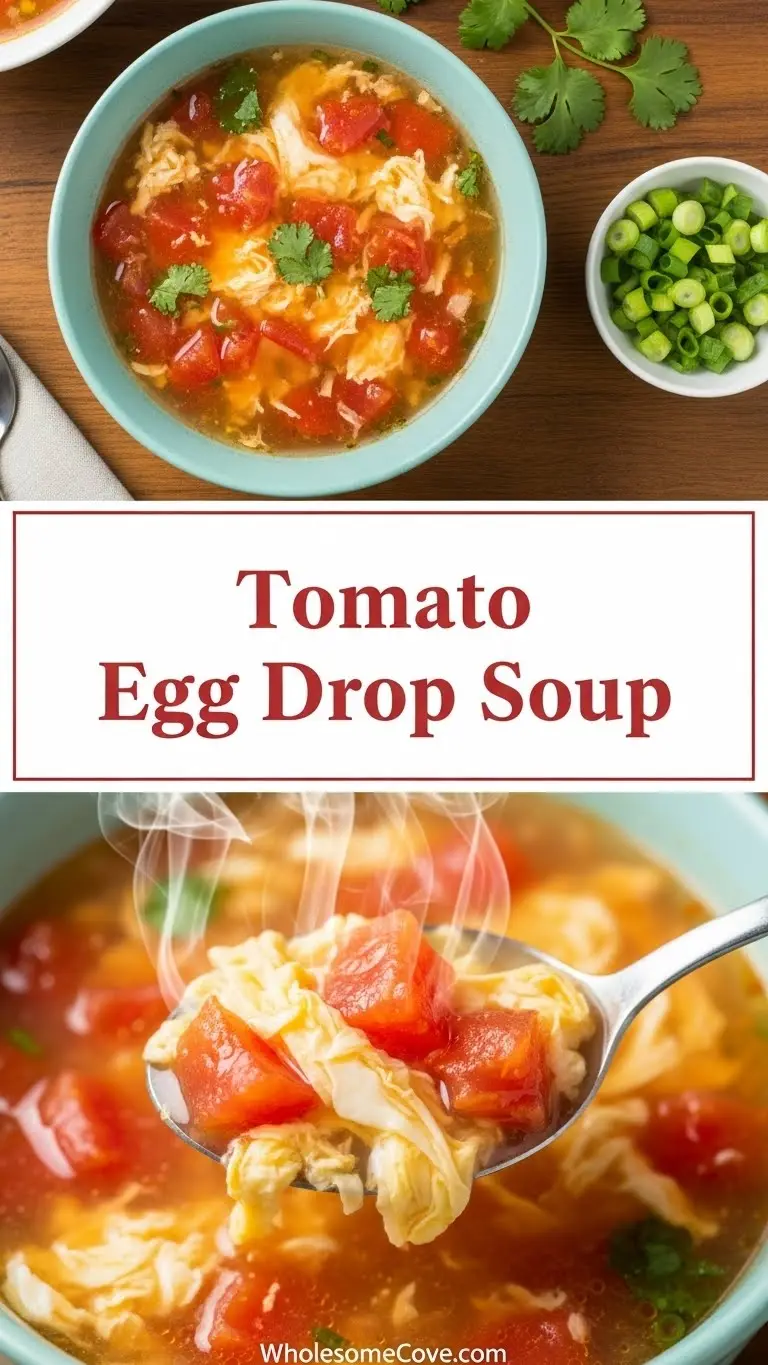
- The eggs will immediately cook on contact and form delicate ribbons
- Once all the eggs are added, stir gently once or twice more, then let the soup sit undisturbed for 30 seconds
This is the most important step and where technique really matters. Pouring too quickly creates clumps. Pouring into soup that’s boiling too vigorously makes the eggs break apart. The gentle simmer and constant stirring motion are key.
7. Final Touches
- Remove the pot from heat
- Taste the soup one final time and adjust seasonings if needed
- Ladle the soup into serving bowls
- Garnish each bowl with sliced green onions and fresh cilantro if using
- Drizzle a few drops of sesame oil over each serving for extra flavor
The residual heat will continue cooking the eggs slightly, so serve immediately for the best texture.
For a heartier meal, pair this with my Baked Ziti.

Tips for The Best Tomato Egg Drop Soup
These tips come from countless batches and plenty of learning moments. They’ll help you avoid common pitfalls and achieve perfect results.
Key techniques for success:
- Use room temperature eggs: Cold eggs from the fridge create uneven ribbons and can lower the soup temperature too quickly
- Master the pour: Hold the bowl of beaten eggs about 6 inches above the pot and pour in the thinnest stream possible
- Control the heat: The soup should simmer gently, not boil vigorously, or the eggs will break apart into tiny pieces
- Stir while pouring: Creating movement in the soup helps distribute the eggs evenly and forms longer, prettier ribbons
- Don’t over-thicken: The cornstarch slurry should create a slightly silky texture, not a thick, gloppy consistency
- Fresh is best: This soup tastes best when served immediately, as the eggs can become rubbery if reheated
- Season gradually: Start with less soy sauce and salt, then adjust at the end since flavors concentrate as the soup simmers
- Choose ripe tomatoes: Underripe tomatoes create a harsh, acidic flavor that no amount of sugar can fix
- Strain if needed: For an ultra-smooth broth, strain the soup after cooking the tomatoes and before adding the eggs
- Add cornstarch slowly: Pour it in gradually while stirring to prevent lumps from forming
My biggest mistake early on was boiling the soup when adding the eggs. They turned into scrambled egg chunks instead of delicate ribbons. Low and slow wins here.
You might also like my Manhattan Clam Chowder for another tomato-based soup option.
What to Serve with Tomato Egg Drop Soup

This light soup pairs beautifully with a variety of sides and mains. Here are my favorite combinations for a complete meal.
Perfect pairings:
This soup works as a starter or a light main course depending on what you serve alongside it. For a more substantial meal, I love pairing it with steamed rice or crispy Air Fryer French Toast for breakfast.
Asian-inspired sides complement the soup’s flavors perfectly. Try serving it with Potstickers or spring rolls for a restaurant-style meal at home.
Simple protein dishes also work well. Teriyaki Grilled Chicken or Air Fryer Salmon make excellent main courses with this soup as a starter.
For vegetable sides, consider Grilled Vegetable Skewers or a simple cucumber salad with rice vinegar and sesame seeds.
Crispy appetizers provide great textural contrast. Deviled Eggs or Air Fryer Avocado Egg Rolls add substance and variety to your meal.
Another great soup pairing is my Zuppa Toscana.
Variations of Tomato Egg Drop Soup
One of the best things about this recipe is how adaptable it is. Here are some variations I’ve tested and loved.
Try these delicious twists:
- Spicy version: Add 1-2 teaspoons of chili oil or sriracha for heat, or include sliced fresh chilies when cooking the aromatics
- Protein boost: Stir in shredded cooked chicken, small shrimp, or cubed tofu during the last few minutes of cooking
- Veggie-packed: Add baby spinach, bok choy, corn kernels, or frozen peas for extra vegetables and nutrition
- Coconut twist: Replace 1 cup of broth with coconut milk for a creamy, slightly sweet variation
- Herbal notes: Add fresh basil, Thai basil, or mint at the end for a bright, herbaceous flavor
- Mushroom addition: Sauté sliced shiitake or button mushrooms with the aromatics for earthy depth
- Noodle soup: Add cooked rice noodles, ramen noodles, or vermicelli to make it more filling
- Miso enhancement: Stir in 1-2 tablespoons of miso paste for deeper umami flavor
- Fire-roasted tomatoes: Use canned fire-roasted tomatoes instead of fresh for a smokier flavor
- Italian fusion: Swap the Asian seasonings for Italian herbs like oregano and basil, and use balsamic vinegar instead of rice vinegar
My family’s favorite variation includes baby spinach and small shrimp added during the last two minutes of cooking. It transforms the soup into a complete one-bowl meal.
For another variation-rich recipe, explore my Waffle Recipe collection.
Storage and Reheating
While this soup is best enjoyed fresh, you can store leftovers with a few important considerations.
Storage guidelines:
- Refrigerator storage: Transfer cooled soup to an airtight container and refrigerate for up to 3 days
- Freezer storage: Not recommended, as the egg texture becomes rubbery and unpleasant when frozen
- Separate components: For best results, store the broth separately from the eggs if you know you’ll have leftovers
- Cool quickly: Don’t leave the soup at room temperature for more than 2 hours to prevent bacterial growth
- Reheat gently: Warm over low heat, stirring occasionally, just until heated through
- Avoid boiling: Boiling leftover soup makes the eggs tough and chewy
- Refresh flavors: Add a splash of soy sauce or a few drops of sesame oil when reheating to brighten the flavors
- Add fresh garnish: Top with fresh green onions and cilantro to revive the presentation
The eggs will never be quite as silky and tender as when freshly made, but gentle reheating helps preserve their texture as much as possible.
I actually prefer making fresh batches rather than reheating leftovers since this soup comes together so quickly anyway.
Try my Chicken Gnocchi Soup for another soup that’s worth making fresh.

Nutritional Facts
Here’s the approximate nutritional breakdown per serving (based on 4 servings):
Per serving:
- Calories: 165
- Total Fat: 9g
- Saturated Fat: 2g
- Cholesterol: 186mg
- Sodium: 890mg
- Total Carbohydrates: 12g
- Dietary Fiber: 2g
- Sugars: 6g
- Protein: 9g
- Vitamin A: 18% DV
- Vitamin C: 25% DV
- Calcium: 4% DV
- Iron: 8% DV
These values are estimates and will vary based on specific ingredients used, particularly the type of broth and whether you add extra salt. Using low-sodium broth significantly reduces the sodium content.
This soup is relatively low in calories while providing good amounts of protein and vitamins. The eggs contribute essential amino acids and the tomatoes add lycopene, a powerful antioxidant.
For another nutritious option, check out my Lentil and Vegetable Soup.
Health Benefits of Key Ingredients
This simple soup packs impressive nutritional value thanks to its wholesome ingredients.
Nutritional highlights:
Tomatoes are rich in lycopene, a powerful antioxidant that supports heart health and may reduce cancer risk. Cooking tomatoes actually increases the bioavailability of lycopene, making this soup even more beneficial than eating raw tomatoes.
Eggs provide high-quality complete protein containing all nine essential amino acids your body needs. They’re also rich in choline, which supports brain health and metabolism.
Ginger has natural anti-inflammatory properties and can help with digestion and nausea. The small amount in this soup provides these benefits while adding wonderful flavor.
Garlic contains compounds that may boost immune function and help lower blood pressure and cholesterol. It’s also been shown to have antimicrobial properties.
Sesame oil provides healthy unsaturated fats and contains sesamol and sesaminol, antioxidants that may help protect cells from damage.
The soup base itself is hydrating and low in calories, making this a filling yet light meal option. It’s perfect when you need something nourishing but don’t want to feel overly full.
For more healthy recipes, browse my collection of Easy Healthy Dinner Recipes for Family.
FAQs About Tomato Egg Drop Soup
1. Can I use canned tomatoes instead of fresh?
Absolutely, canned tomatoes work wonderfully in this recipe. Use one 14.5-ounce can of diced tomatoes with their juices.
Canned tomatoes are often more consistent in flavor than fresh, especially during winter months. Fire-roasted canned tomatoes add a nice smoky depth to the soup.
2. Why did my eggs turn out clumpy instead of forming ribbons?
This happens when the soup is boiling too vigorously or when you pour the eggs too quickly. The key is maintaining a gentle simmer and pouring the eggs in a very thin stream while stirring.
Also make sure your soup has been thickened with the cornstarch slurry first. The slightly thicker consistency helps the eggs hold their shape instead of dispersing into tiny bits.
3. Can I make this soup vegetarian or vegan?
Yes, use vegetable broth instead of chicken broth to make it vegetarian. For a vegan version, you’ll need to replace the eggs entirely.
Try using silken tofu cut into small cubes added at the end, or make a vegan “egg” by whisking together chickpea flour with water and drizzling it into the soup. The texture will be different but still delicious.
4. How can I make the soup thicker or thinner?
For thicker soup, add more cornstarch slurry (mix equal parts cornstarch and cold water) and stir it in gradually. For thinner soup, simply add more broth until you reach your desired consistency.
Remember that the soup will thicken slightly as it cools, so it’s better to err on the side of slightly thinner when it’s hot.
5. Can I add other vegetables to this soup?
Definitely, this soup is very versatile. Spinach, bok choy, mushrooms, corn, and peas all work beautifully.
Add heartier vegetables like mushrooms at the beginning with the tomatoes. Quick-cooking greens like spinach should go in during the last minute before serving so they don’t become mushy.
Read Also: Italian Wedding Soup

Tomato Egg Drop Soup
Ingredients
- 4 medium ripe tomatoes - about 1.5 lbs or 680g, diced into ½-inch pieces, cores removed
- 6 cups chicken or vegetable broth - 1.4 liters; use low-sodium for reduced salt content
- 2 tbsp vegetable oil
- 3 cloves garlic - minced finely
- 1 tbsp fresh ginger - grated; can freeze ginger and grate from frozen
- 2 tbsp soy sauce
- 1 tbsp rice vinegar
- 1 tsp sesame oil - toasted sesame oil preferred
- 1 tsp sugar
- ½ tsp white pepper
- salt - to taste
- 4 large eggs - room temperature for best ribbon formation
- 1 tbsp water - for beating with eggs
- salt - pinch, for egg mixture
- 2 tbsp cornstarch
- 3 tbsp cold water - for cornstarch slurry
- 2 green onions - thinly sliced, white and green parts separated
- fresh cilantro leaves - optional
- sesame oil - a few drops per bowl for drizzling
Equipment
- Large soup pot or Dutch oven - At least 4-quart capacity; wide surface area helps form egg ribbons
- Chef’s knife - For dicing tomatoes
- Small bowl - For beating eggs
- Whisk or fork - For beating eggs
- Ladle - For serving
- Small bowl - For cornstarch slurry
- Immersion blender - (optional) For a smoother soup base
- Fine-mesh strainer - (optional) For perfectly smooth broth
- Microplane grater - (optional) For grating ginger and garlic
Method
- Dice tomatoes into ½-inch pieces (keep seeds and juices), mince garlic, grate ginger, and slice green onions separating white from green tops. Beat eggs with 1 tbsp water and a pinch of salt until smooth; mix cornstarch with cold water in a small bowl.
- Heat 2 tbsp vegetable oil in a large soup pot over medium heat until shimmering. Add garlic and ginger and stir constantly for about 30 seconds until fragrant but not browned.
- Add diced tomatoes and stir to coat with the oil. Cook for 5–7 minutes, occasionally pressing on the tomatoes with a spoon, until they break down and release their juices into a saucy base.
- Pour in 6 cups broth, then add soy sauce, rice vinegar, sesame oil, sugar, and white pepper. Bring to a gentle boil, reduce to a simmer, and cook for 5 minutes; taste and adjust salt as needed.
- Stir the cornstarch slurry to recombine, then slowly drizzle it into the simmering soup while stirring continuously. Stir for 1–2 minutes until the soup is slightly thickened and coats the back of a spoon.
- Reduce heat to a bare simmer, stir the soup in a circular motion to create a gentle whirlpool, then very slowly drizzle in the beaten eggs in a thin stream while continuing to stir. Let sit undisturbed for 30 seconds once all eggs are added.
- Remove from heat, ladle into bowls, and top with sliced green onions, fresh cilantro (if using), and a drizzle of sesame oil. Serve immediately for the best egg texture.
Nutrition
Notes
- Egg ribbon technique: Pour eggs in the thinnest stream possible from about 6 inches above the pot into a gently simmering (not boiling) soup — vigorous boiling breaks the ribbons into tiny bits.
- Room temperature eggs: Take eggs out of the fridge 15–20 minutes before cooking to ensure even, delicate ribbon formation.
- Ripe tomatoes matter: Always use tomatoes that feel heavy and give slightly when pressed; underripe tomatoes create a harsh, flat flavor.
- Canned tomato substitute: One 14.5 oz can of diced tomatoes (with juices) works well, especially in winter. Fire-roasted canned tomatoes add a nice smoky depth.
- Don’t over-thicken: The cornstarch slurry should create a silky texture, not a gloppy one — add gradually and stop when the broth just coats a spoon.
- Variations: Add shredded chicken, small shrimp, or cubed tofu in the last 2 minutes; stir in baby spinach or bok choy just before serving; add chili oil for heat.
- Storage: Refrigerate leftovers in an airtight container for up to 3 days. Do not freeze — egg texture becomes rubbery.
- Reheating: Warm gently over low heat without boiling; add a splash of soy sauce and fresh sesame oil to refresh flavors, and top with fresh green onions.
- Make it vegetarian/vegan: Use vegetable broth for vegetarian; replace eggs with silken tofu cubes or a chickpea flour slurry for a vegan version.
- Wide pot is key: Use a pot with plenty of surface area — a narrow saucepan causes the eggs to clump instead of forming beautiful ribbons.
Private Notes
Tried this recipe?
Let us know how it was!Final Thoughts
This Tomato Egg Drop Soup has earned its permanent spot in my weekly dinner rotation. It’s the recipe I turn to when I want something warm and comforting but don’t have much time or energy to spend in the kitchen.
The combination of tangy tomatoes and silky egg ribbons never gets old. Plus, knowing that I’m serving my family something nutritious and homemade makes me feel good about dinner, even on the busiest nights.
I hope you’ll give this recipe a try and experience how something so simple can be so satisfying. Let me know in the comments how your soup turns out, and feel free to share any variations you discover along the way!
Recommended:
- Chicken Chowder
- Seafood Chowder
- Corn Chowder
- Pasta Fagioli
- Taco Soup
- Beef Barley Soup
- Potato Leek Soup
- Carrot Ginger Soup
- Avgolemono Soup
- Matzo Ball Soup