I stumbled upon my perfect shrimp chowder recipe during a particularly chaotic weeknight when I needed something comforting but didn’t have hours to spend in the kitchen.
I had picked up fresh shrimp from the market that morning with no real plan, and when dinnertime rolled around, I started throwing ingredients together based on what I remembered from a New England vacation years ago.
What came out of that experimental evening has become one of my most-requested dishes. The creamy base, tender shrimp, and perfectly seasoned broth come together in less than 30 minutes, making this shrimp chowder recipe ideal for busy weeknights or impressive enough for weekend entertaining.
The best part? You don’t need any fancy techniques or hard-to-find ingredients. Just good shrimp, some aromatics, potatoes, and cream.
| Quick Recipe Summary | |
|---|---|
| Prep Time | 10 minutes |
| Cook Time | 20 minutes |
| Total Time | 30 minutes |
| Servings | 6 servings |
| Difficulty Level | Easy |
If you’re a fan of seafood soups, you’ll also love my Salmon Chowder Recipe for another delicious variation.
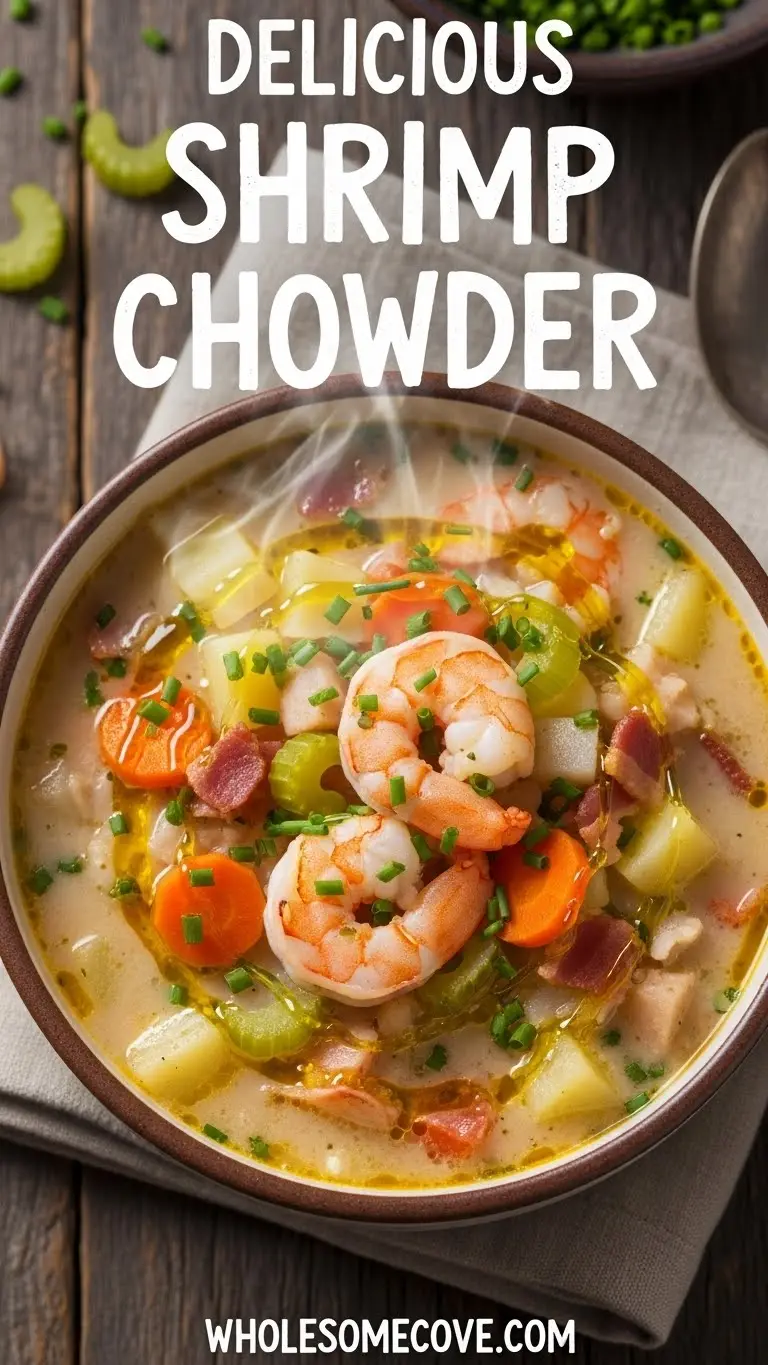
Why You’ll Love This Shrimp Chowder Recipe
This chowder has everything going for it, and I’m not just saying that because I’ve made it approximately a hundred times.
First, it’s incredibly quick. From start to finish, you’re looking at 30 minutes max. I’ve made this on nights when I got home late from work and still managed to have dinner on the table before anyone could complain about being hungry.
- Restaurant-quality flavor at home: The combination of fresh shrimp, aromatic vegetables, and a perfectly seasoned cream base creates a depth of flavor that rivals any upscale seafood restaurant. I’ve served this to guests who’ve asked for the recipe before they even finished their bowls.
- Budget-friendly seafood dinner: Shrimp chowder stretches your seafood budget beautifully. A pound of shrimp serves six people generously, and the hearty potatoes and cream make it incredibly filling.
- Customizable to your taste: You can make this as thick or thin as you like, add extra vegetables, incorporate different seasonings, or even throw in some bacon for a smoky element. I’ve made countless variations over the years, and they’ve all been delicious.
- Perfect for meal prep: This chowder actually tastes better the next day once all the flavors have had time to meld together. I often make a double batch on Sunday and eat it throughout the week.
- Impressive but approachable: This dish looks and tastes fancy enough to serve at a dinner party, but it’s so straightforward that even beginner cooks can nail it on their first try.
For more hearty soup options, try my Corn Chowder Recipe.
Ingredients
The ingredient list is refreshingly simple, and you probably already have half of these items in your kitchen. I’ve learned through many batches that using high-quality shrimp makes a noticeable difference in the final dish.
- 1 ½ pounds (680g) large shrimp, peeled and deveined: I prefer buying fresh shrimp already peeled to save time, but you can also use frozen shrimp. Just make sure to thaw them completely and pat dry before cooking.
- 4 strips thick-cut bacon, chopped: The bacon adds incredible depth and a subtle smokiness. If you want to skip it, you can use 2 tablespoons of butter instead, but you’ll miss out on some of that rich flavor.
- 1 large yellow onion, diced: Yellow onions provide the perfect balance of sweetness and sharpness.
- 3 celery stalks, diced: Celery adds that classic chowder flavor and a nice textural element.
- 2 medium carrots, diced: I started adding carrots after my kids complained the chowder needed more vegetables, and now I wouldn’t make it without them.
- 4 garlic cloves, minced: Fresh garlic is non-negotiable here. The jarred stuff just doesn’t deliver the same punch.
- 3 medium Yukon Gold potatoes, peeled and diced into ½-inch cubes: Yukon Golds hold their shape beautifully and add a buttery quality to the broth.
- 3 cups (720ml) seafood stock or chicken broth: Seafood stock is my preference for maximum flavor, but chicken broth works perfectly fine if that’s what you have.
- 1 cup (240ml) whole milk: Whole milk creates a richer texture than lower-fat options.
- 1 cup (240ml) heavy cream: This is what makes the chowder luxuriously creamy. Don’t substitute it with half-and-half unless you’re okay with a thinner consistency.
- ¼ cup (30g) all-purpose flour: The flour thickens the chowder to that perfect spoon-coating consistency.
- 2 bay leaves: These add subtle aromatic depth.
- 1 teaspoon dried thyme: Thyme and seafood are a match made in culinary heaven.
- ½ teaspoon smoked paprika: This adds warmth and a hint of color.
- ¼ teaspoon cayenne pepper: Just enough to give a gentle kick without overwhelming the delicate shrimp flavor.
- 2 tablespoons fresh parsley, chopped: For garnish and a fresh finishing note.
- Salt and black pepper to taste: I usually add about 1 teaspoon of salt and ½ teaspoon of pepper, but taste as you go.
- 2 tablespoons butter: For sautéing and adding richness.
Another delicious chowder option is my Fish Chowder Recipe.
Kitchen Equipment Needed
You don’t need a fancy kitchen to make exceptional shrimp chowder. Here’s everything I use, most of which you probably already own.
- Large heavy-bottomed pot or Dutch oven (6-8 quarts): A heavy Dutch oven distributes heat evenly and prevents scorching. I use my 7-quart Le Creuset for this recipe, but any large pot works.
- Sharp chef’s knife: For chopping vegetables efficiently.
- Cutting board: I prefer using separate boards for vegetables and seafood to avoid cross-contamination.
- Wooden spoon or silicone spatula: For stirring without scratching your pot.
- Measuring cups and spoons: Accuracy matters, especially with the flour and liquids.
- Ladle: For serving the finished chowder.
- Small bowl: For mixing the flour with some liquid to create a smooth slurry.
You might also enjoy: Chicken Corn Chowder Recipe.
Recommended Products for This Recipe
After making this shrimp chowder countless times, I’ve found a few products that genuinely make the process easier and the results better. These aren’t necessary, but they’re the tools and ingredients I reach for every single time.
1. Le Creuset Enameled Cast Iron Dutch Oven
I’ve been using my Le Creuset for years, and it’s hands down the best investment I’ve made for soups and chowders. The even heat distribution means no hot spots, the potatoes cook uniformly, and cleanup is incredibly easy thanks to the enamel coating. It also keeps the chowder warm for serving.
2. Wild-Caught Gulf Shrimp
The quality of your shrimp directly impacts the final dish. I always look for wild-caught shrimp, preferably from the Gulf of Mexico, because they have better flavor and firmer texture than farm-raised varieties. Fresh is ideal, but high-quality frozen works beautifully too.
3. Seafood Stock Concentrate
When I can’t find good seafood stock at my local store, I use a high-quality stock concentrate. Better Than Bouillon Lobster Base is my go-to because it adds incredible depth without being overly salty. A little goes a long way, and one jar lasts for months.
4. Microplane Grater for Fresh Garlic
Finely grated garlic distributes throughout the chowder better than chopped garlic, creating a more even flavor. A Microplane also works perfectly for zesting lemon if you want to add a bright finishing touch to your chowder.
For another creamy soup option, check out my New England Clam Chowder Recipe.
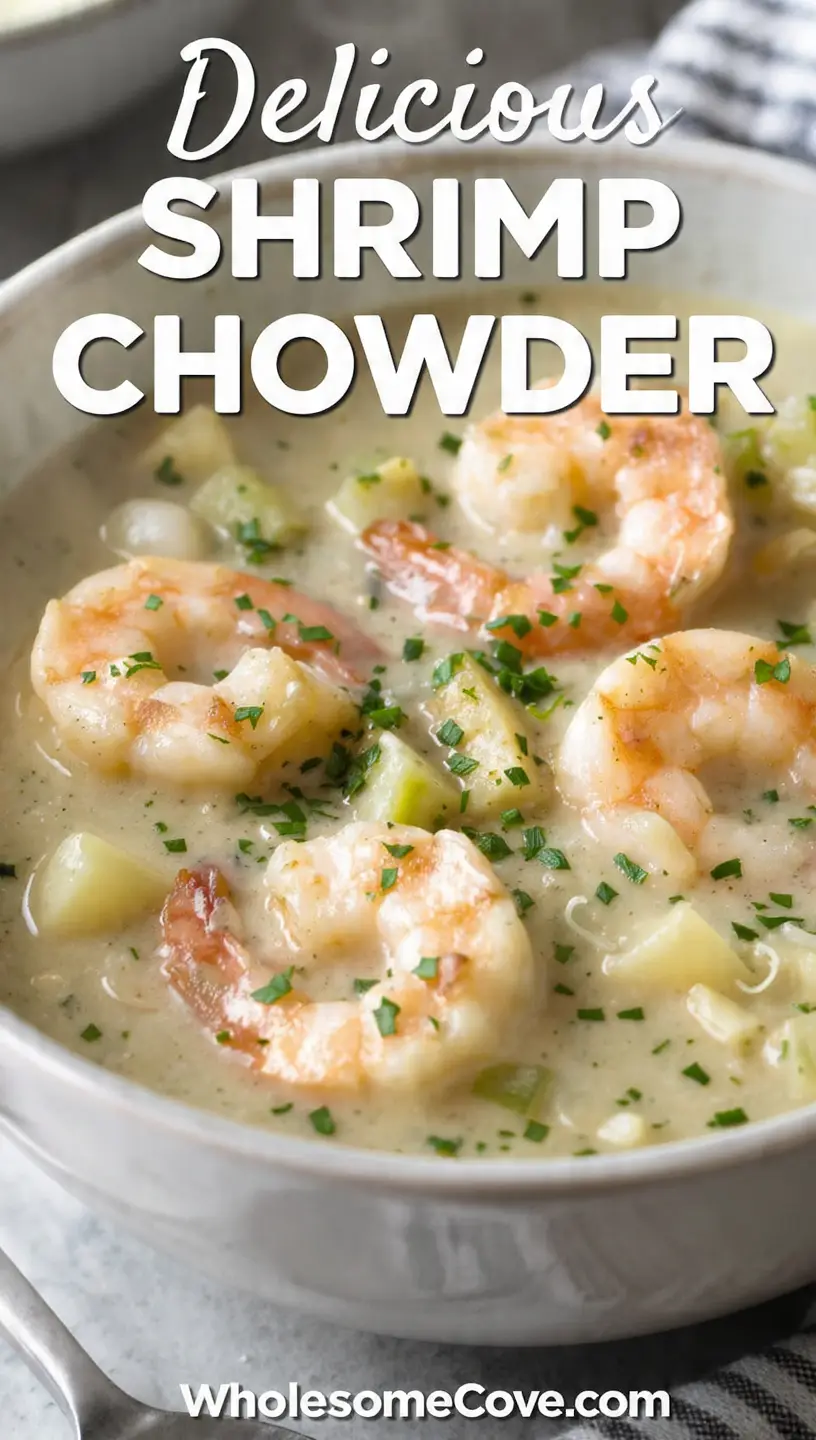
Step-by-Step Instructions: How to Make Shrimp Chowder
I’ve broken down every step so clearly that even if you’ve never made chowder before, you’ll end up with a restaurant-worthy bowl. Take your time with the prep work, and the actual cooking goes incredibly quickly.
1. Prepare Your Ingredients
- Pat the shrimp completely dry with paper towels and season lightly with a pinch of salt and black pepper. Set aside in the refrigerator until needed.
- Dice the onion, celery, and carrots into uniform pieces about ¼-inch in size. Consistent sizing ensures even cooking.
- Peel the potatoes and cut them into ½-inch cubes. Place them in a bowl of cold water to prevent browning while you work on the other ingredients.
- Mince the garlic finely. I usually use a garlic press or microplane for the most even distribution.
- Chop the bacon into ½-inch pieces.
- Measure out all your remaining ingredients so everything is ready when you need it.
2. Cook the Bacon
- Place your large pot or Dutch oven over medium heat and add the chopped bacon.
- Cook for 6-8 minutes, stirring occasionally, until the bacon is crispy and has rendered most of its fat. The bacon should be golden brown and the fat should be bubbling.
- Use a slotted spoon to transfer the cooked bacon to a paper towel-lined plate, leaving the bacon fat in the pot. Reserve the bacon for garnish later.
- If you have more than 2 tablespoons of bacon fat in the pot, pour off the excess but don’t discard it completely. Save it for another use if you like.
3. Sauté the Aromatics
- Add the 2 tablespoons of butter to the bacon fat in the pot and let it melt over medium heat.
- Once the butter is melted and foaming slightly, add the diced onion, celery, and carrots to the pot.
- Sauté for 5-6 minutes, stirring frequently, until the vegetables are softened and the onion becomes translucent. You should see the onion pieces become slightly golden at the edges.
- Add the minced garlic, thyme, smoked paprika, and cayenne pepper. Stir constantly for about 1 minute until the garlic becomes fragrant but not browned. This is crucial because burned garlic will make the entire chowder bitter.
4. Add the Flour
- Sprinkle the flour evenly over the sautéed vegetables.
- Stir continuously for 2-3 minutes, coating all the vegetables with the flour. This step, called making a roux, is what will thicken your chowder and prevent it from being watery.
- The mixture should look slightly pasty and coat the vegetables evenly. Don’t rush this step; you want to cook out the raw flour taste.
5. Build the Chowder Base
- Drain the potatoes from their soaking water and add them to the pot, stirring to coat them with the vegetable-flour mixture.
- Slowly pour in the seafood stock while stirring constantly to prevent lumps from forming. Start with about 1 cup and stir well, then gradually add the remaining stock.
- Add the bay leaves and bring the mixture to a boil over medium-high heat.
- Once boiling, reduce the heat to medium-low and simmer for 12-15 minutes, stirring occasionally, until the potatoes are tender when pierced with a fork but not falling apart.
6. Add the Dairy
- Reduce the heat to low. This is important because adding cream to a rapidly boiling pot can cause it to break or curdle.
- Slowly pour in the milk, stirring constantly, followed by the heavy cream. Continue stirring as you add each ingredient.
- Let the chowder heat through for 3-4 minutes, stirring occasionally. The mixture should be steaming but not boiling. Taste and adjust the seasoning with salt and black pepper as needed.
7. Cook the Shrimp
- Add the seasoned shrimp to the pot, gently stirring to distribute them throughout the chowder.
- Cook for 3-4 minutes, stirring occasionally, until the shrimp turn pink and opaque throughout. Be careful not to overcook them; shrimp cook very quickly and become rubbery if left in too long.
- The shrimp are done when they curl into a loose C-shape and are completely pink with no translucent gray areas remaining.
- Remove the bay leaves from the chowder and discard them.
8. Finish and Serve
- Taste the chowder one final time and adjust the seasoning if needed. I usually add another pinch of salt and a few grinds of fresh black pepper at this stage.
- Ladle the hot chowder into bowls.
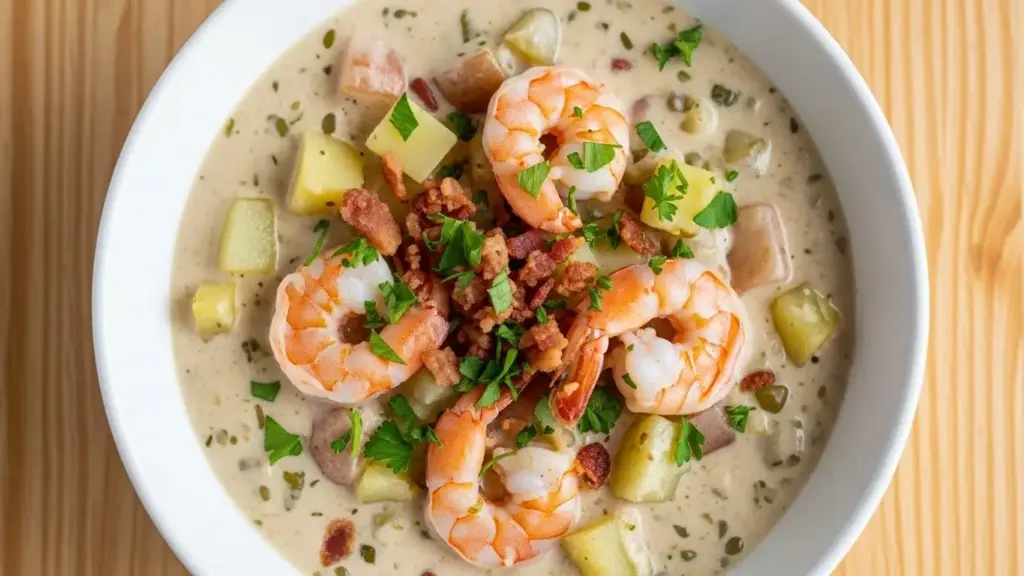
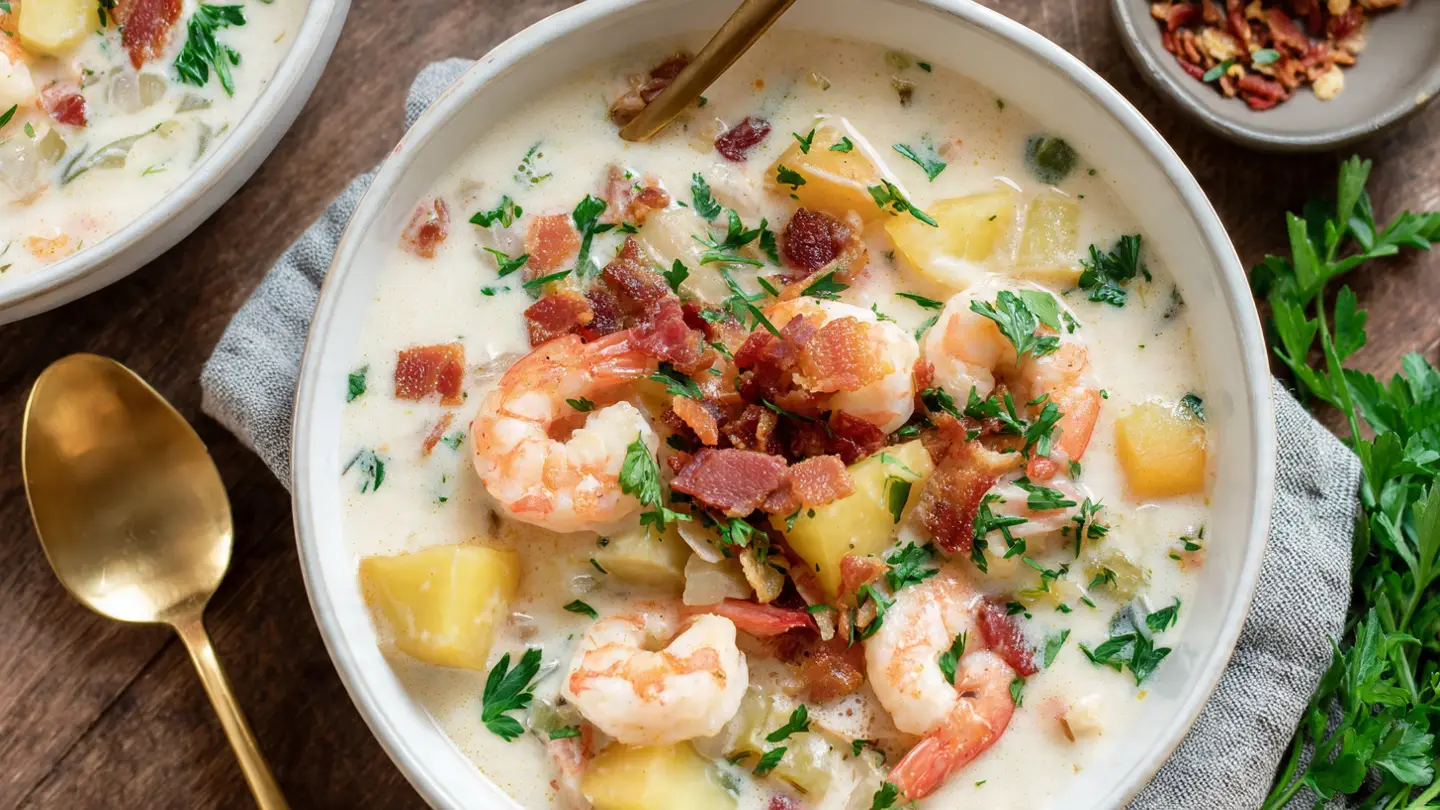
- Garnish each serving with the reserved crispy bacon, fresh chopped parsley, and an extra crack of black pepper if desired.
- Serve immediately while hot with crusty bread on the side.
For a different seafood soup experience, try my Seafood Stew Recipe.

Tips for The Best Shrimp Chowder
I’ve made this recipe so many times that I’ve figured out exactly what makes the difference between good chowder and spectacular chowder. Here are the insider tips I’ve learned along the way.
- Don’t skip the bacon step: Even if you’re tempted to use all butter, the bacon fat adds a depth of flavor that’s impossible to replicate. The smokiness complements the sweet shrimp perfectly.
- Use cold dairy products: Adding cold milk and cream to hot soup helps prevent curdling. If your dairy is at room temperature, the chowder can sometimes develop a grainy texture.
- Choose the right potatoes: Yukon Golds are my favorite because they’re naturally buttery and hold their shape well. Russets can get too starchy and fall apart, creating an overly thick, gluey texture.
- Don’t overcook the shrimp: This is the most common mistake I see people make. Shrimp cook in just a few minutes, and overcooked shrimp become tough and chewy. Remove the pot from heat as soon as they turn completely pink.
- Let it rest before serving: If time allows, let the finished chowder sit for 5-10 minutes off the heat before serving. This gives the flavors time to meld and the temperature to even out for perfect eating temperature.
- Adjust thickness to your preference: If your chowder is too thick, thin it with additional stock or milk. If it’s too thin, mix 1 tablespoon of flour with 2 tablespoons of cold water to make a slurry, stir it into the chowder, and simmer for 3-4 minutes until thickened.
- Use fresh herbs when possible: While dried thyme works beautifully in the cooking process, fresh parsley for garnish makes a noticeable difference in the final presentation and flavor.
- Season in stages: Add salt gradually throughout the cooking process rather than all at once at the end. This builds layers of flavor and prevents over-salting.
Another favorite: Manhattan Clam Chowder Recipe.
What to Serve with Shrimp Chowder
A bowl of creamy shrimp chowder deserves equally delicious accompaniments. Here’s what I typically serve alongside it.
This chowder is hearty enough to be a complete meal, but adding a few strategic side dishes turns it into a proper feast. I always serve some kind of bread for soaking up every last drop of that creamy broth.
- Crusty sourdough bread: My absolute favorite pairing. The tangy sourdough complements the rich, creamy chowder perfectly, and the crusty exterior holds up to dunking without falling apart.
- Homemade Biscuit: Warm, buttery biscuits are another excellent choice, especially for a more indulgent meal.
- Simple green salad: A crisp salad with a light vinaigrette provides a refreshing contrast to the rich chowder. I usually go with mixed greens, cucumber, and a lemon vinaigrette.
- Coleslaw: The crunchy, tangy coleslaw cuts through the richness beautifully.
- Steamed green beans: Lightly steamed green beans with a pat of butter and squeeze of lemon keep the meal balanced without overwhelming the star of the show.
- Deviled Eggs: If you’re entertaining, deviled eggs make a great starter before the chowder.
- Oyster crackers: For a classic New England touch, serve small oyster crackers on the side or floating in the chowder.
- Garlic bread: Another crowd-pleaser that’s perfect for soaking up the broth.
You might also enjoy: Lemon Garlic Shrimp Over Couscous Recipe.
Variations of Shrimp Chowder
One of my favorite things about this recipe is how adaptable it is. I’ve tried countless variations over the years, and here are the ones that have become regular rotations in my kitchen.
- Southwestern shrimp chowder: Replace the thyme with cumin, add a diced jalapeño with the aromatics, and stir in 1 cup of corn kernels with the potatoes. Top with fresh cilantro, diced avocado, and a squeeze of lime juice. This version has a completely different flavor profile that my family loves during summer months.
- Spicy Cajun version: Add 1 tablespoon of Cajun seasoning along with the other spices, include diced bell peppers with the vegetables, and add sliced andouille sausage along with the shrimp. This turns it into a heartier, spicier meal that’s perfect for cold nights.
- Lighter version: Use half-and-half instead of heavy cream, skip the bacon, and use olive oil for sautéing. You’ll lose some richness but save significant calories while maintaining great flavor.
- Seafood medley chowder: Add chunks of firm white fish like cod or halibut along with the shrimp. You can also include scallops or lump crab meat for an ultra-luxurious version.
- Lobster and shrimp chowder: Fold in cooked lobster meat during the last minute of cooking for a special occasion version. The combination of lobster and shrimp creates incredible depth.
- Corn and shrimp chowder: Add 2 cups of fresh or frozen corn kernels along with the potatoes. The sweetness of corn pairs beautifully with shrimp.
- Coconut shrimp chowder: Replace 1 cup of the heavy cream with full-fat coconut milk and add 1 teaspoon of curry powder for an Asian-inspired twist.
For another seafood option, check out my Shrimp and Avocado Salad Recipe.
Storage and Reheating
This chowder stores beautifully, which makes it perfect for meal prep or enjoying leftovers throughout the week. Here’s everything you need to know about keeping it fresh.
- Refrigerator storage: Let the chowder cool completely to room temperature, then transfer it to an airtight container. It will keep in the refrigerator for up to 3-4 days. The flavors actually deepen and improve after a day in the fridge.
- Freezing considerations: I generally don’t recommend freezing cream-based chowders because the dairy can separate and become grainy when thawed. However, if you want to freeze it, cool completely and freeze in airtight containers for up to 2 months. The texture may be slightly different after thawing, but the flavor remains good.
- Reheating on the stovetop: This is my preferred method. Pour the chowder into a pot and reheat over medium-low heat, stirring frequently. Don’t let it boil, as this can cause the cream to break. Add a splash of milk or stock if it’s thickened too much in the fridge.
- Microwave reheating: Place individual portions in microwave-safe bowls and heat in 1-minute intervals, stirring between each interval, until heated through. Use 50% power to prevent the cream from separating.
- Make-ahead tips: You can prepare the chowder base (through step 6) up to 2 days ahead and refrigerate. When ready to serve, reheat the base gently, then add the shrimp and cook until just done.
- Preventing oxidation: If the chowder develops a grayish tint on top after refrigeration, simply stir it well before reheating. This is normal oxidation and doesn’t affect flavor or safety.
Another delicious soup option: Potato Leek Soup Recipe.
Nutritional Facts
Per serving (based on 6 servings):
- Calories: 385
- Total Fat: 22g
- Saturated Fat: 12g
- Cholesterol: 215mg
- Sodium: 680mg
- Total Carbohydrates: 24g
- Dietary Fiber: 2g
- Sugars: 5g
- Protein: 24g
- Vitamin A: 45% DV
- Vitamin C: 18% DV
- Calcium: 12% DV
- Iron: 15% DV
Note that these values are approximate and will vary based on the specific ingredients you use and portion sizes. Using lower-fat dairy will reduce the calorie and fat content, while adding extra bacon or butter will increase it.
You might also like: Zuppa Toscana Recipe.
Health Benefits of Key Ingredients
Beyond being absolutely delicious, this shrimp chowder actually packs some impressive nutritional benefits. Here’s what makes this more than just comfort food.
Shrimp is the real nutritional superstar here, and it’s one of the reasons I feel good about serving this dish regularly. Despite being low in calories, shrimp provides an impressive amount of high-quality protein.
- Shrimp for lean protein: Shrimp is incredibly protein-dense, offering about 24 grams of protein per 4-ounce serving while being very low in calories and fat. It’s also rich in selenium, which supports thyroid function and immune health.
- Omega-3 fatty acids: Shrimp contains beneficial omega-3 fatty acids that support heart and brain health. While not as high as fatty fish like salmon, it still contributes to your daily omega-3 intake.
- Potatoes provide resistant starch: When potatoes are cooked and cooled, they develop resistant starch, a type of carbohydrate that acts as a prebiotic and supports gut health. Even reheated, some of this beneficial starch remains.
- Carrots for vitamin A: The carrots provide a significant dose of vitamin A in the form of beta-carotene, which supports eye health and immune function.
- Garlic’s antimicrobial properties: Garlic contains allicin, a compound with natural antimicrobial and anti-inflammatory properties. It’s been used medicinally for centuries.
- Bone health from dairy: The milk and cream provide calcium and vitamin D, both essential for maintaining strong bones and teeth.
- Celery for hydration: Celery is mostly water and provides electrolytes like potassium, making it naturally hydrating and beneficial for blood pressure regulation.
For more healthy dinner options, check out my Easy Healthy Dinner Recipes for Family.
FAQs About Shrimp Chowder
1. Can I use frozen shrimp for this recipe?
Absolutely! Frozen shrimp works perfectly well for this chowder. Just make sure to thaw them completely before using by placing them in the refrigerator overnight or running them under cold water for a quick thaw. Pat them thoroughly dry with paper towels before adding to the chowder to prevent excess water from diluting your soup.
2. Why did my chowder turn out too thin or too thick?
Thickness issues usually come down to the flour-to-liquid ratio or cooking time. If your chowder is too thin, you can fix it by mixing 1 tablespoon of flour with 2 tablespoons of cold water to make a slurry, then stirring it into the simmering chowder and cooking for 3-4 minutes more. If it’s too thick, simply add more stock or milk, a quarter cup at a time, until you reach your desired consistency.
3. Can I make this chowder dairy-free?
Yes, with some modifications. Replace the butter with olive oil, use full-fat coconut milk instead of heavy cream, and substitute the whole milk with unsweetened almond or oat milk. The flavor profile will change slightly, becoming more coconut-forward, but it will still be delicious and creamy.
4. How do I know when the shrimp are perfectly cooked?
Properly cooked shrimp will be pink, opaque throughout, and curled into a loose C-shape. They should feel firm but not rubbery when you bite into them. Shrimp cook very quickly, usually in just 3-4 minutes, so watch them carefully. If you overcook them, they’ll become tough and chewy.
5. Can I substitute the bacon with something else?
Definitely. If you don’t eat pork or want a lighter version, you can skip the bacon entirely and use 3 tablespoons of butter for sautéing instead. You’ll lose the smoky flavor, but the chowder will still be delicious. For a different twist, try using diced ham or even turkey bacon as alternatives.
Another great recipe: Italian Wedding Soup Recipe.
Shrimp Chowder
Ingredients
- 1.5 lbs large shrimp - 680g, peeled and deveined; fresh or fully thawed frozen, patted dry
- 4 strips thick-cut bacon - chopped into ½-inch pieces
- 2 tbsp butter - 30g; plus bacon fat from cooking
- 1 large yellow onion - diced into ¼-inch pieces
- 3 celery stalks - diced into ¼-inch pieces
- 2 medium carrots - diced into ¼-inch pieces
- 4 garlic cloves - minced or finely grated
- 3 medium Yukon Gold potatoes - about 1.5 lbs / 680g, peeled and diced into ½-inch cubes
- 0.25 cup all-purpose flour - 30g; for thickening the chowder
- 3 cups seafood stock - 720ml; or substitute chicken broth
- 1 cup whole milk - 240ml; cold from the refrigerator
- 1 cup heavy cream - 240ml; cold from the refrigerator; do not substitute with half-and-half
- 2 bay leaves
- 1 tsp dried thyme
- 0.5 tsp smoked paprika
- 0.25 tsp cayenne pepper
- 1 tsp salt - plus more to taste
- 0.5 tsp black pepper - plus more to taste
- 2 tbsp fresh parsley - chopped
- reserved crispy bacon - from cooking; crumbled over each bowl
Equipment
- Large heavy-bottomed pot or Dutch oven - 6-8 quart capacity recommended
- Sharp chef’s knife
- Cutting board - Use separate boards for vegetables and seafood
- Wooden spoon or silicone spatula
- Measuring cups and spoons
- Ladle - For serving
- Small bowl - For mixing flour slurry if needed
- Slotted spoon - For transferring bacon
- Microplane grater - (optional) For finely grating garlic
Method
- Pat shrimp dry, season lightly with salt and pepper, and refrigerate until needed. Dice onion, celery, and carrots into ¼-inch pieces; cube potatoes into ½-inch pieces and place in cold water to prevent browning. Mince garlic and chop bacon.
- In a large Dutch oven over medium heat, cook bacon for 6–8 minutes until crispy and fat is rendered. Remove bacon with a slotted spoon to a paper towel-lined plate; leave fat in the pot (pour off excess if more than 2 tablespoons).
- Add butter to the bacon fat and melt over medium heat, then add onion, celery, and carrots; cook 5–6 minutes until softened. Stir in garlic, thyme, smoked paprika, and cayenne for 1 minute until fragrant.
- Sprinkle flour over the vegetables and stir continuously for 2–3 minutes until all vegetables are coated and the raw flour smell is gone.
- Drain the potatoes and add to the pot; slowly pour in the seafood stock while stirring constantly to prevent lumps, then add bay leaves. Bring to a boil, then reduce to medium-low and simmer 12–15 minutes until potatoes are fork-tender.
- Reduce heat to low, then slowly stir in the cold milk followed by the heavy cream; heat for 3–4 minutes until steaming but not boiling. Season with salt and pepper to taste.
- Add seasoned shrimp and stir gently; cook 3–4 minutes until shrimp are pink, opaque, and curled into a loose C-shape. Remove and discard bay leaves.
- Taste and adjust seasoning, then ladle into bowls and garnish with reserved crispy bacon and fresh parsley. Serve immediately with crusty bread.
Nutrition
Notes
- Don’t overcook the shrimp: Shrimp cook in just 3–4 minutes. Remove from heat as soon as they turn completely pink and curl into a C-shape to avoid a rubbery texture.
- Use cold dairy: Adding cold milk and cream to the hot soup helps prevent curdling and a grainy texture.
- Choose Yukon Gold potatoes: They hold their shape well and add a buttery quality. Russets can get too starchy and fall apart.
- Adjust thickness: Too thick? Add a splash of stock or milk. Too thin? Stir in a slurry of 1 tbsp flour + 2 tbsp cold water and simmer 3–4 minutes.
- Bacon substitute: Skip bacon and use 3 tbsp butter instead, or swap in diced ham or turkey bacon for a different flavor profile.
- Make-ahead tip: Prepare the chowder base through the dairy step up to 2 days ahead; refrigerate. Reheat gently and add shrimp just before serving.
- Storage: Cool completely and refrigerate in an airtight container for up to 3–4 days. Reheat over medium-low heat; do not boil. Freezing is not recommended as the cream base may separate.
- Variations: Add 2 cups corn kernels with the potatoes for corn-shrimp chowder, or substitute 1 cup coconut milk for the heavy cream and add 1 tsp curry powder for a Thai-inspired twist.
- Seafood stock tip: If seafood stock isn’t available, use chicken broth or dissolve a lobster or seafood bouillon concentrate in water for deeper flavor.
- Season in stages: Add salt gradually throughout cooking rather than all at once at the end to build layered flavor and prevent over-salting.
Private Notes
Tried this recipe?
Let us know how it was!Final Thoughts
This shrimp chowder recipe has earned its place as one of my most reliable weeknight dinners. It’s comforting, flavorful, and surprisingly quick to make considering how impressive the results are.
I love that it strikes the perfect balance between being simple enough for a Tuesday night but special enough for company. Every time I make it, I’m reminded why it’s become such a staple in my kitchen.
Give this recipe a try and see for yourself how a bowl of homemade shrimp chowder can transform an ordinary evening into something special. I’d love to hear how yours turns out, so drop a comment below and let me know if you made any fun variations or what you served alongside it!
Recommended:
- Pasta Fagioli Recipe
- Chicken Gnocchi Soup Recipe
- Taco Soup Recipe
- Cheeseburger Soup Recipe
- Baja Fish Tacos Recipe
- Lobster Rolls Recipe
- Shrimp Tacos with Mango Salsa Recipe
- Zucchini Noodles with Pesto and Shrimp Bowls Recipe
- Baked Cod with Mango Salsa Recipe
- Old Fashioned Salmon Patties Recipe