
My first encounter with fruit chaat happened at a neighbor’s Iftar table, and I still remember the exact moment it hit my tongue. I expected plain fruit salad, but what I got was this bold, mouth-puckering, lightly spiced explosion that I could not stop eating.
I went home that same night and started researching the Fruit Chaat Recipe, determined to recreate it. After several batches, some too salty, some too tart, some with mushy bananas I added too early, I finally landed on a version that makes me genuinely excited to prepare it.
It is incredibly simple, it comes together in about 15 minutes, and every single person I have served it to has asked for the recipe.
| Quick Recipe Summary | |
|---|---|
| Prep Time | 15 minutes |
| Cook Time | 0 minutes |
| Total Time | 15 minutes (plus 30 minutes chilling) |
| Servings | 6 servings |
| Difficulty Level | Easy |
If you love fruit-forward dishes, you will also enjoy this Papdi Chaat Recipe that brings the same street-food magic with crunchy wafers and tangy chutneys.

Why You’ll Love This Fruit Chaat Recipe
This Fruit Chaat Recipe checks every box you never knew you needed checked in a fruit dish.
It is genuinely one of the easiest things you can make, requiring zero cooking and minimal cleanup.
The combination of sweet fruit, tangy lemon juice, and warm spices from chaat masala creates a flavor profile unlike anything a plain fruit salad offers.
You can use whatever fruit is in season, which means this recipe works perfectly year-round.
The whole dish can be prepped ahead of time, making it ideal for entertaining or meal prep.
- No cooking required. This is purely a chop-and-toss recipe, which means even the most beginner cook can nail it on the first try.
- Endlessly customizable. You can swap fruits in and out based on what is fresh, ripe, and available at your local market without changing a single other element.
- Ready in 15 minutes. Once your fruit is chopped, you are basically done. A quick toss and a brief chill in the refrigerator is all that stands between you and a perfect bowl.
- Healthy and naturally sweet. With no added artificial flavors or heavy sauces, this chaat is loaded with vitamins, fiber, and antioxidants.
- Crowd-pleasing. It suits everyone at the table, including kids, picky eaters, vegetarians, and vegans.
- Perfect for Ramadan Iftar. Traditionally served at Iftar to hydrate and refresh after fasting, it is light enough not to weigh you down before the rest of the meal.
- Great for parties and potlucks. It travels well, looks beautiful in a serving bowl, and requires no reheating.
For another fresh and vibrant salad to serve alongside this, try this stunning Watermelon Feta Salad with Mint that is equally quick to put together.
Ingredients
The beauty of this recipe lies in its simplicity. You need a handful of fresh fruits and a few pantry spice staples to build that iconic sweet, salty, and tangy flavor profile that makes fruit chaat so irresistible. The star ingredient is chaat masala, that pre-blended South Asian spice mix that contains dried mango powder, black salt, cumin, and red chili, transforming ordinary fruit into something spectacular.
Fruits:
- 2 medium apples (about 300g / 10.5 oz), peeled, cored, and cut into ½-inch cubes
- 2 medium bananas (about 240g / 8.5 oz), peeled and sliced into ½-inch rounds
- 1 cup (150g / 5.3 oz) red or green grapes, halved
- 1 cup (165g / 5.8 oz) fresh mango chunks, peeled and cut into ½-inch cubes (or 1 medium mango)
- 1 medium orange or 2 mandarin oranges (about 180g / 6.3 oz), peeled, segmented, and cut into bite-sized pieces
- ½ cup (85g / 3 oz) fresh pomegranate arils
- 1 cup (152g / 5.4 oz) fresh strawberries, hulled and quartered (optional but highly recommended)
For the Dressing:
- 3 tablespoons (45 ml) fresh lemon juice (about 1.5 lemons)
- ¼ cup (60 ml) fresh orange juice
- 1 tablespoon (12g) granulated sugar, or to taste
- 1½ teaspoons chaat masala, or to taste
- ¼ teaspoon red chili powder (or more for heat)
- ¼ teaspoon freshly ground black pepper
- ¼ teaspoon salt (or black salt / kala namak for a more authentic flavor)
Optional Garnishes:
- ½ teaspoon Tajin seasoning, sprinkled on top just before serving
- Fresh mint leaves, for garnish
- A drizzle of tamarind chutney (about 1 tablespoon)
You might also enjoy: Katori Chaat Recipe
Kitchen Equipment Needed
You do not need any fancy tools to make this dish, which is part of why it is so approachable. A sharp knife and a good-sized bowl are really all that stand between you and a fantastic bowl of chaat.
- Large mixing bowl (at least 4-quart capacity) for tossing all the fruits together without spillage
- Sharp chef’s knife for cleanly dicing the fruit into even, uniform pieces
- Cutting board (a large one makes prep much easier)
- Citrus juicer or reamer, to squeeze the lemon and orange juice
- Measuring spoons and a measuring cup
- Airtight serving bowl with lid, for chilling the chaat in the refrigerator before serving
- Small bowl or jar, for mixing the dressing before pouring it over the fruit
- Serving spoon
Read Also: Chickpea Salad Recipe
Recommended Products for This Recipe
These are products I have personally tested and regularly reach for when making this fruit chaat. They genuinely make a difference in both the process and the final flavor.
1. Shan Chaat Masala
This is the brand I always come back to for fruit chaat. The blend is beautifully balanced between tart, salty, and spicy, which gives the chaat that authentic street-food character without any one flavor overpowering the rest. It is available at most international grocery stores, but ordering it online means you always have it stocked.
2. Large Glass Mixing Bowl Set
A wide, deep glass bowl is a must for tossing fruit without splashing the dressing everywhere. Glass is better than plastic here because it does not absorb odors or stains from the citrus and spices, and it goes straight from the counter to the refrigerator beautifully. I use the 4-quart size for this recipe.
3. Black Salt (Kala Namak)
If you have never tried kala namak in your fruit chaat, you are missing out on what makes the most authentic versions taste so distinct. It has a slightly sulphuric, almost eggy quality that sounds strange but works absolutely magically with sweet fruit and citrus. A small pinch replaces regular salt and takes the chaat to a completely different level.
4. Fresh Pomegranate Arils (Ready-to-Use)
Deseeding a pomegranate is one of those tasks that sounds simple but always ends up splashing red juice everywhere. Pre-packaged fresh pomegranate arils solve this completely, and they are just as fresh and flavorful as cracking open a whole fruit yourself. I grab these every time I am making a batch in a hurry.
5. Tamarind Chutney
A small drizzle of tamarind chutney over the finished chaat adds a deep, complex sweetness that is a total flavor upgrade. This is not traditional in every household, but once you try it you will never skip it. The Tamarind House brand is thick, tangy, and perfectly balanced.
The same vibrant spices in this chaat are on full display in this Chickpea and Spinach Curry Recipe if you want to build a full South Asian-inspired spread.

Step-by-Step Instructions: How to Make Fruit Chaat
Step 1: Prepare the Dressing
Before you touch a single piece of fruit, mix up your dressing so it is ready to go the moment your fruit is chopped.
- In a small bowl or jar, combine the fresh lemon juice (3 tablespoons / 45 ml) and fresh orange juice (¼ cup / 60 ml).
- Add the granulated sugar (1 tablespoon / 12g) and stir until it is mostly dissolved. The sugar does not need to be perfectly dissolved at this point since it will continue to dissolve as it sits with the fruit.
- Add the chaat masala (1½ teaspoons), red chili powder (¼ teaspoon), black pepper (¼ teaspoon), and salt (¼ teaspoon).
- Whisk or stir everything together until fully combined. Set aside.
- Taste the dressing at this point. It should taste pleasantly tangy, slightly sweet, and have a mild kick. If it tastes too sour, add a pinch more sugar. If it seems flat, add a bit more chaat masala.
Step 2: Prep the Apples and Bananas First
These two fruits oxidize quickly once cut, meaning they turn brown when exposed to air. Getting them coated in citrus juice fast is the trick to keeping everything looking fresh.
- Peel, core, and cut the apples into ½-inch (1.25 cm) bite-sized cubes. Do not cut them too small or they will turn mushy after sitting in the dressing.
- Place the apple pieces directly into your large mixing bowl.
- Pour about half of your prepared dressing over the apples and toss immediately to coat them in the lemon and orange juice. This citric acid prevents browning.
- Peel the bananas and slice them into ½-inch (1.25 cm) rounds.
- Add the banana slices to the bowl and toss gently with the apples. Be careful not to mash the bananas. They are soft and bruise easily.
Step 3: Add the Remaining Fruits
Now the rest of the fruit goes in. The key here is to add them one by one and give everything a gentle mix as you go.
- Add the halved grapes (1 cup / 150g) to the bowl and stir to combine with the apple and banana mixture.
- Add the mango cubes (1 cup / 165g). If using a fresh mango, peel it, slice the flesh off the pit in thick slabs, and cut into ½-inch cubes.
- Peel the orange or mandarin oranges and separate them into segments. Use your fingers or a small knife to peel away as much of the white pith as possible, then cut each segment into two or three bite-sized pieces. Add to the bowl.
- Add the fresh strawberries if using (1 cup / 152g), hulled and quartered into even pieces.
- Add the pomegranate arils (½ cup / 85g), spreading them evenly across the top before stirring in so they distribute well without all clumping together.
Step 4: Add the Dressing and Toss
This is the moment when it all comes together.
- Pour the remaining prepared dressing over all the fruit in the bowl.
- Using a large spoon or spatula, gently fold the fruit from the bottom of the bowl upward, coating every piece in the dressing. Do not stir aggressively as this will break the softer fruits.
- Taste the chaat at this point and adjust the seasoning. If it needs more tang, squeeze in a little extra lemon juice. If it needs more sweetness, add a small pinch of sugar. If the spice level feels too low, sprinkle in a bit more chaat masala.
- Note that the flavor will intensify as the chaat chills, so err on the side of slightly less seasoning if you are uncertain.
Step 5: Chill and Rest
Do not skip this step. A brief rest in the refrigerator is what transforms good fruit chaat into incredible fruit chaat.
- Cover the bowl tightly with plastic wrap or use a bowl with an airtight lid.
- Place the bowl in the refrigerator and let it rest for at least 30 minutes. During this time, the fruits release their natural juices which combine with the dressing to create a flavorful pool of liquid at the bottom of the bowl. That liquid is pure gold.
- If you are short on time, even 10-15 minutes of chilling makes a noticeable difference compared to serving immediately.
- Do not chill for more than a couple of hours, especially if bananas are in the mix, as they will start to soften and break down.
Step 6: Garnish and Serve
The finishing touches take about 30 seconds but add a lot of visual appeal and an extra pop of flavor.
- Remove the bowl from the refrigerator and give the chaat one final gentle stir from the bottom to redistribute all those flavorful juices that have pooled.
- Sprinkle the Tajin seasoning (½ teaspoon) evenly over the top if using. Do this right before serving, not before chilling, as it will dissolve.
- If using tamarind chutney, drizzle about 1 tablespoon in a zigzag pattern across the surface.
- Scatter a few fresh mint leaves across the top for a pop of color and a cool herbal note.
- Serve immediately in the same bowl family-style, or scoop into individual serving cups or glasses for a more elegant presentation.
If you love dishes with this kind of fresh, vibrant energy, my Grilled Peach and Burrata Salad is another fruit-forward recipe that delivers big on flavor with minimal effort.

Tips for the Best Fruit Chaat
Getting fruit chaat right is less about technique and more about knowing a handful of key details that most recipes do not mention. These are the lessons that took me a few batches to learn.
Keep these tips in mind every single time you make this recipe:
- Always add bananas last (or right before serving). Bananas break down faster than any other fruit in this recipe. If you add them too early or let the chaat sit for too long, they turn grey and mushy. I add mine either in the very last step before chilling or even right before serving if I know the chaat will sit for a while.
- Cut everything to a uniform size. All fruit should be in roughly ½-inch pieces. When pieces are too big, you get uneven bites where one mouthful is all apple and the next is all dressing. Uniform cuts mean every spoonful has a perfect mix.
- Use freshly squeezed lemon and orange juice. Bottled citrus juice is noticeably flat compared to fresh. The brightness and acidity of fresh juice is what makes the dressing sing. It takes two minutes to squeeze a couple of lemons, and it is completely worth it.
- Taste and adjust before serving. The spice-to-sweetness ratio depends heavily on how ripe and sweet your fruit is. A very ripe mango needs less sugar than an underripe one. Always taste the finished chaat and tweak accordingly.
- Let it rest for at least 30 minutes. The pooled liquid at the bottom of the bowl after chilling is what separates a good fruit chaat from a great one. Do not rush this step.
- Do not peel the grapes. Just halve them. The grape skin holds the fruit together and prevents it from turning into a soft blob after sitting in the dressing.
- Use firm, slightly underripe fruit where possible. Ripe fruit is sweeter but softer. For fruit chaat, you want pieces that hold their shape after sitting in the dressing. Slightly firm apples, firm mango, and firm bananas all hold up better.
- Black salt is worth finding. If you can source kala namak (black salt) from an Indian or Pakistani grocery store, use it in place of regular salt. The slightly tangy, mineral flavor it adds is one of those things that is hard to describe but immediately makes the chaat taste more authentic.
- Chaat masala quality matters. Not all brands are equal. Shan and National are the two most widely trusted brands among home cooks. If yours seems weak, use slightly more than the recipe calls for.
Read Also: Orange Dreamsicle Salad Recipe
What to Serve with Fruit Chaat
Fruit chaat is traditionally a standalone snack or Iftar opener, but it plays incredibly well alongside other dishes when you are building a spread. Its bright, tangy, spicy notes cut beautifully through rich and heavy flavors, which is exactly why it sits so well next to fried and savory foods.
Here are some of my favorite things to serve alongside it:
- Tandoori Chicken: The smoky, spiced grilled chicken and the cool, tangy fruit chaat are a natural pair. The chaat acts almost like a fresh relish next to the warm meat.
- Deviled Eggs: A creamy, rich deviled egg alongside the bright acidity of fruit chaat is a surprisingly excellent combination at party spreads.
- Healthy Hummus: Serve both on a mezze-style platter with pita bread for an effortless entertaining setup that covers both sweet and savory.
- Shakshuka: If you are building a brunch spread, shakshuka and fruit chaat together cover all the flavor bases, one warm and savory, the other cool and bright.
- Healthy Bruschetta: These two dishes together make a light, refreshing appetizer course that feels festive without being heavy.
- Baked Cod with Mango Salsa: The fruity brightness of both dishes plays off each other beautifully if you are serving a light seafood dinner.
- Samosas or pakoras: Classically, these fried savory snacks are served right alongside fruit chaat at Iftar tables. The contrast is perfect.
- Chai or Rooh Afza: A glass of the classic pink Pakistani cordial or a hot cup of masala chai next to your fruit chaat is the most traditional and most comforting combination there is.
You might also enjoy: Poached Pear Recipe
Variations of Fruit Chaat
One of the greatest things about this dish is how flexible it is. The basic formula of fruit plus dressing plus chaat masala stays the same, but you can take it in many different directions depending on what you have on hand or who you are cooking for.
Once you know the base recipe by heart, start experimenting with these variations:
- Guava Fruit Chaat: If you can find fresh guavas at an Indian or Pakistani grocery store, add them into the mix. Guavas give the chaat a tropical, slightly gritty texture and a deeply nostalgic flavor. A splash of guava juice in the dressing in place of some of the orange juice works beautifully as well.
- Tropical Fruit Chaat: Replace the grapes and strawberries with fresh pineapple chunks, kiwi, and papaya for a version that leans into tropical flavors. Add a tiny pinch of ground ginger to the dressing for warmth.
- Winter Fruit Chaat: Use pears, persimmons, clementines, pomegranate, and grapes for a version that feels cozy and seasonal. Reduce the red chili powder slightly and add a small pinch of cinnamon to the spice mix.
- Watermelon and Cucumber Chaat: Replace all the heavier fruits with cubed watermelon, cucumber, and a handful of mint. This version is extraordinarily refreshing in summer heat. A squeeze of lime works better than lemon here.
- Kids Version: Skip the red chili powder entirely and reduce the chaat masala by half. Add a drizzle of honey and a few mini marshmallows for a kid-friendly version that still has the tangy citrus element without the heat.
- Chaat with Yogurt: Some Pakistani families add a dollop of thick plain yogurt (dahi) on top of the fruit chaat, sometimes sweetened with a little sugar. It adds creaminess that works particularly well in summer.
- Berry Chaat: Load the bowl with strawberries, blueberries, raspberries, and blackberries as your primary fruits. The dressing remains the same. This is a beautiful version that also makes a stunning dessert presentation.
Read Also: Fruit Tart Recipe
Storage and Reheating
Fruit chaat is unquestionably best eaten fresh, on the same day it is made. That said, with smart storage you can prep it ahead and have it ready to go with very little quality loss.
Follow these storage guidelines for the best results:
- Same-day serving is ideal. Plan to make and serve fruit chaat within the same day, ideally within 2-4 hours of preparation.
- Refrigerate in an airtight container. If storing leftovers, transfer the chaat to an airtight container and refrigerate immediately. It will keep for up to 24 hours before the fruit becomes too soft.
- Do not freeze fruit chaat. The high water content of the fruits means they will turn completely mushy once thawed, making the dish unpleasant to eat. Freezing is not a viable option for this recipe.
- Prep-ahead strategy for parties: Chop all your fruits and store them separately in the refrigerator up to 24 hours in advance. Mix the dressing separately and store it in a jar. Combine everything and add the spices no more than 1-2 hours before serving. Add the bananas right before serving.
- Revive slightly wilted chaat: If the chaat looks dull after sitting overnight, squeeze in a little fresh lemon juice and a pinch more chaat masala before serving. This wakes up the flavors significantly.
- No reheating needed or recommended. Fruit chaat is served cold. It should never be warmed up.
For another fresh and healthy make-ahead dish, try this Healthy Coleslaw Recipe that also holds up beautifully in the refrigerator.
Nutritional Facts
The following nutritional estimates are based on one serving (approximately one-sixth of the full recipe) including all fruits and the full dressing but without the optional garnishes.
| Nutrient | Per Serving |
|---|---|
| Calories | ~185 kcal |
| Carbohydrates | ~46g |
| Natural Sugars | ~36g |
| Dietary Fiber | ~5g |
| Protein | ~2g |
| Fat | ~0.5g |
| Vitamin C | ~55% DV |
| Vitamin A | ~8% DV |
| Potassium | ~520mg |
| Sodium | ~120mg (with black salt) |
These values are estimates and will vary depending on the exact fruits used, their ripeness, and the precise quantities of sugar and chaat masala you add.
For another naturally sweet and nutrient-packed treat, check out this Homemade Cinnamon Applesauce Recipe.
Health Benefits of Key Ingredients
Fruit chaat is not just delicious. It is genuinely one of the more nutritious snacks you can put on the table, and the combination of ingredients amplifies those benefits in interesting ways.
Here is a closer look at what each key ingredient brings to the table:
- Apples: Rich in quercetin and pectin, apples support heart health, help regulate blood sugar levels, and contribute a meaningful dose of soluble fiber. Eating apple with the skin on maximizes the polyphenol content.
- Bananas: A top source of potassium, bananas support muscle function and heart health. They also contain vitamin B6, which plays a role in brain health, and their natural sugars provide quick, sustained energy.
- Mango: Packed with vitamin C, vitamin A, and folate, mango supports immune function, skin health, and eye health. It also contains powerful antioxidants including mangiferin, which has anti-inflammatory properties.
- Pomegranate arils: One of the most antioxidant-dense foods available, pomegranate is rich in punicalagins and punicic acid, both of which have been studied for their potential to reduce inflammation and support heart health.
- Grapes: Red and purple grapes contain resveratrol, a polyphenol linked to cardiovascular health and anti-aging properties. Grapes are also hydrating with a high water content.
- Strawberries: Among the highest in vitamin C of all fruits, strawberries are also rich in anthocyanins, which are powerful antioxidants associated with reduced risk of chronic disease. They are low in calories relative to their nutrient density.
- Lemon juice: Beyond preventing browning, fresh lemon juice provides vitamin C, supports iron absorption, and adds citric acid which supports digestive health.
- Chaat masala: This spice blend contains cumin, which supports digestion and has antimicrobial properties. The dried mango powder (amchur) in chaat masala is a natural source of vitamin C and has traditionally been used in Ayurvedic medicine.
- Orange juice: Fresh orange juice adds folate, vitamin C, and potassium, all while contributing to the bright, juicy dressing base that makes this chaat so irresistible.
For a similarly health-conscious and equally vibrant salad, this Grilled Peach and Burrata Salad is worth bookmarking too. (Note: this link was already used above; see below for alternative.)
This Healthy Guacamole Recipe is another nutrient-packed crowd-pleaser that makes a great addition to any party spread.
FAQs About Fruit Chaat
1. What is chaat masala and where can I buy it?
Chaat masala is a South Asian spice blend made from dried mango powder (amchur), black salt, cumin, coriander, black pepper, and red chili powder. You can find it at Indian or Pakistani grocery stores, in the international aisle of large supermarkets, or on Amazon.
If you absolutely cannot find it, a basic substitute is a mix of a pinch of salt, a pinch each of cumin powder, black pepper, and a squeeze of extra lemon juice, but genuine chaat masala will always taste more complex and authentic.
2. Can I make fruit chaat ahead of time?
You can absolutely prep the fruit up to 24 hours in advance by storing the cut pieces in separate airtight containers in the refrigerator. Mix the dressing separately and combine everything no more than 1-2 hours before serving.
Add the bananas right before serving to prevent them from browning and going mushy in the dressing.
3. Which fruits work best in fruit chaat?
The most traditional and widely used fruits are apples, bananas, grapes, mango, oranges, and pomegranate. Guava is extremely beloved in Pakistani versions for its tropical aroma and texture.
You can also add strawberries, pineapple, kiwi, pears, peaches, and watermelon depending on the season and your preferences. Avoid avocados and figs, which are not traditional and do not hold up well in the dressing.
4. Is fruit chaat spicy?
It has a mild kick from the chaat masala and red chili powder, but it is not intensely spicy. The heat is more of a background warmth that balances the sweetness of the fruit rather than overpowering it.
For a completely spice-free version, simply omit the red chili powder and reduce the chaat masala by half. The chaat will still be tangy and flavorful.
5. Can I use bottled lemon juice instead of fresh?
You can, but the result will be noticeably less bright and flavorful. Bottled lemon juice lacks the aromatic oils and fresh acidity that come from squeezing a lemon right before you use it.
If fresh lemons are not available, fresh lime juice is a much better substitute than bottled lemon juice in this recipe.
For more easy and satisfying recipes, browse these Summer Dinner Recipes that pair beautifully with a bowl of fruit chaat on a warm evening.
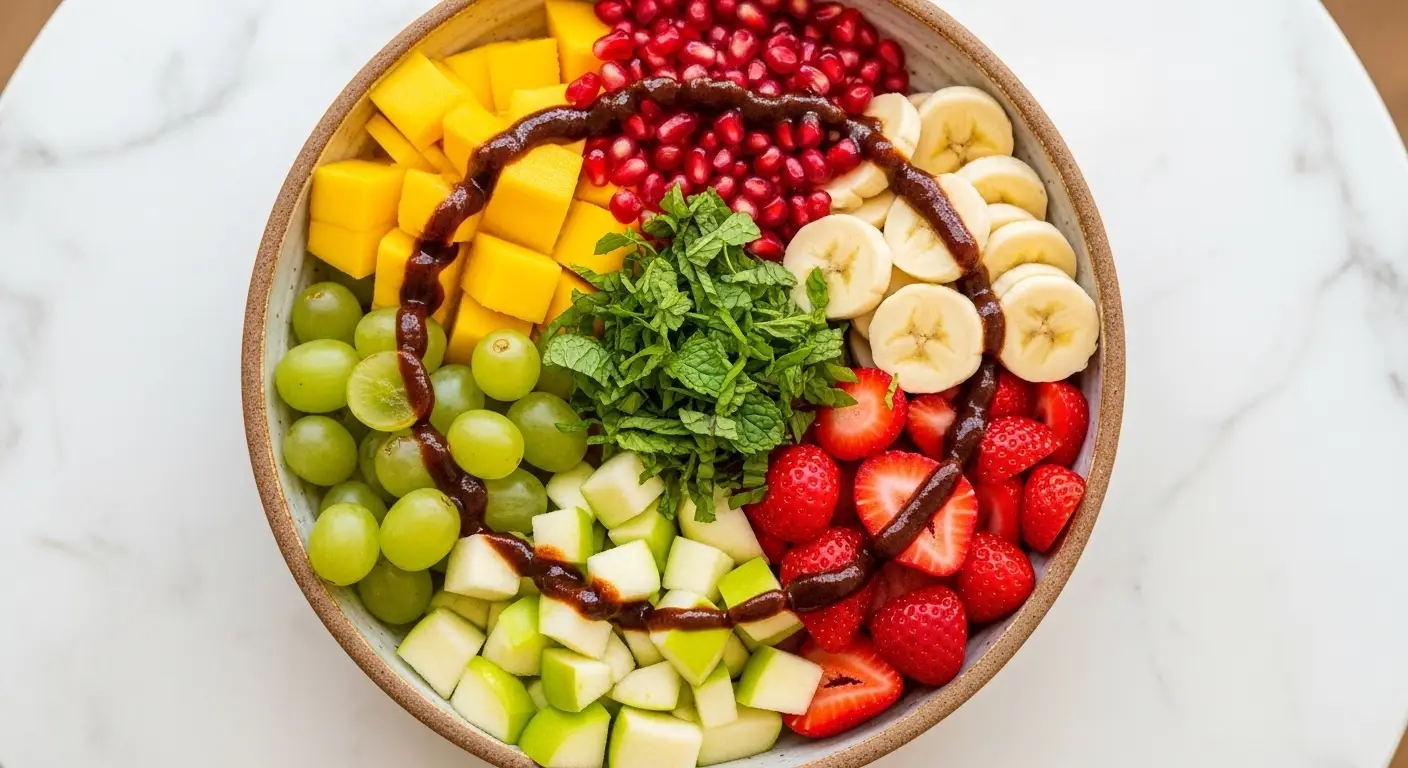
Fruit Chaat
Ingredients
- 3 tbsp fresh lemon juice - 45ml, about 1.5 lemons, freshly squeezed
- 1/4 cup fresh orange juice - 60ml, freshly squeezed
- 1 tbsp granulated sugar - 12g, or to taste
- 1 1/2 tsp chaat masala - or to taste
- 1/4 tsp red chili powder - or more for extra heat
- 1/4 tsp freshly ground black pepper
- 1/4 tsp salt - or black salt (kala namak) for more authentic flavor
- 2 medium apples - about 300g / 10.5 oz, peeled, cored, and cut into 1/2-inch cubes
- 2 medium bananas - about 240g / 8.5 oz, peeled and sliced into 1/2-inch rounds
- 1 cup red or green grapes - 150g / 5.3 oz, halved
- 1 cup fresh mango chunks - 165g / 5.8 oz, peeled and cut into 1/2-inch cubes (about 1 medium mango)
- 1 medium orange - 180g / 6.3 oz, or 2 mandarin oranges, peeled, segmented, and cut into bite-sized pieces
- 1/2 cup fresh pomegranate arils - 85g / 3 oz
- 1 cup fresh strawberries - 152g / 5.4 oz, hulled and quartered (optional but recommended)
- 1/2 tsp Tajin seasoning - sprinkled on top just before serving
- fresh mint leaves - for garnish
- 1 tbsp tamarind chutney - optional, drizzled over the top before serving
Equipment
- Large mixing bowl - At least 4-quart capacity
- Sharp chef’s knife - For cleanly dicing fruit into even pieces
- Cutting board - Large size recommended
- Citrus juicer or reamer - For squeezing fresh lemon and orange juice
- Measuring cup
- Airtight serving bowl with lid - For chilling the chaat before serving
- Small bowl or jar - For mixing the dressing
Method
- In a small bowl or jar, whisk together the lemon juice, orange juice, sugar, chaat masala, red chili powder, black pepper, and salt until the sugar is mostly dissolved. Taste and adjust: add more sugar if too sour, or more chaat masala if flat. Set aside.
- Peel, core, and cut the apples into 1/2-inch cubes, then place them in a large mixing bowl and immediately toss with half the dressing to prevent browning. Peel and slice the bananas into 1/2-inch rounds and add to the bowl, tossing gently to coat.
- Add the grapes, mango chunks, orange pieces, strawberries (if using), and pomegranate arils to the bowl, stirring gently after each addition to distribute evenly without breaking the softer fruits.
- Pour the remaining dressing over all the fruit and gently fold from the bottom upward until every piece is coated. Taste and adjust seasoning as needed, keeping in mind the flavor will intensify as the chaat chills.
- Cover the bowl tightly and refrigerate for at least 30 minutes to allow the fruits to release their juices and the flavors to meld. Do not chill for more than 2 hours, especially if bananas are included.
- Remove from the refrigerator, give the chaat one final gentle stir, then top with Tajin seasoning, a drizzle of tamarind chutney, and fresh mint leaves just before serving. Serve cold in a large bowl or individual cups.
Nutrition
Notes
- Add bananas right before serving if making ahead, as they brown and soften quickly once cut and tossed with dressing.
- Use freshly squeezed lemon and orange juice for the best flavor. Bottled citrus juice lacks the brightness that makes this dressing shine.
- Black salt (kala namak) is highly recommended over regular salt. Its slightly mineral, tangy quality is what makes authentic fruit chaat taste so distinct.
- Cut all fruit into uniform 1/2-inch pieces so every spoonful has an even mix of fruits and dressing.
- To prep ahead, chop all fruits and store them separately in the refrigerator for up to 24 hours. Mix the dressing separately, then combine everything 1-2 hours before serving.
- Do not freeze fruit chaat. The high water content in the fruits means they will turn mushy once thawed.
- Leftovers can be stored in an airtight container in the refrigerator for up to 24 hours. Revive with a squeeze of fresh lemon juice and a pinch of chaat masala before serving.
- For a kid-friendly version, omit the red chili powder entirely and reduce the chaat masala by half. Add a drizzle of honey for extra sweetness.
- The Tajin seasoning and tamarind chutney garnishes should be added right before serving, not before chilling, so they maintain their texture and appearance.
- Use slightly firm, not overly ripe fruit where possible. Firm pieces hold their shape better after sitting in the dressing.
Private Notes
Tried this recipe?
Let us know how it was!Final Thoughts
Fruit chaat is one of those recipes that sounds deceptively simple but delivers flavors that feel genuinely special every single time. It has earned a permanent spot in my regular rotation, not just for Iftar or Ramadan, but any time I want something fresh, vibrant, and a little exciting.
I hope you make this recipe and fall a little bit in love with it, the way I did that first evening at my neighbor’s table.
If you try it, I would absolutely love to hear how it turned out for you. Drop a comment below with your favorite fruit combinations, or share how you customized it for your family.
Recommended:
- Papdi Chaat Recipe
- Katori Chaat Recipe
- Fruit Tart Recipe
- Fruit Cocktail Cake Recipe
- Blackened Fish with Pineapple Salsa
- Summer Vegetable Stir Fry
- Healthy Nachos Recipe
- Chickpea and Spinach Curry
- Sweet and Sour Sauce Recipe
- Easy Healthy Dinner Recipes for Family