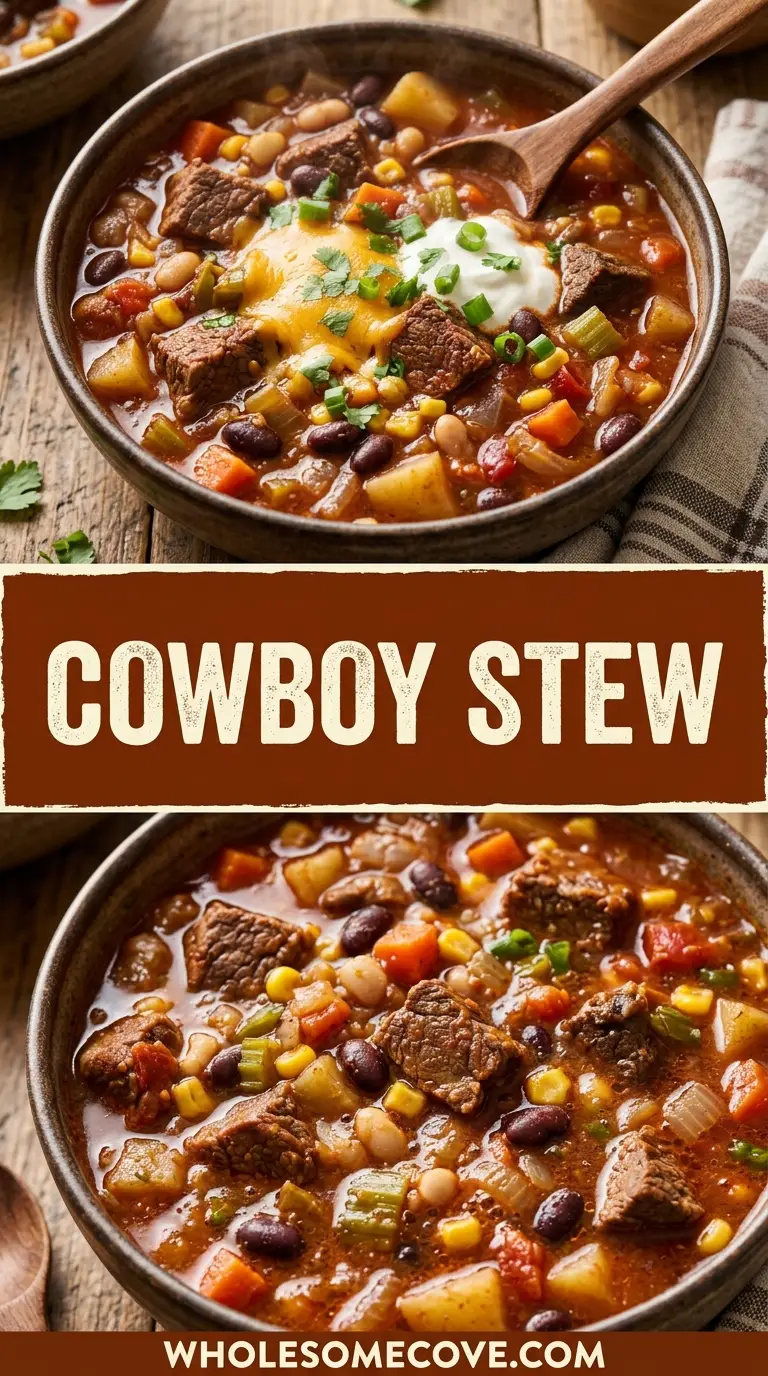
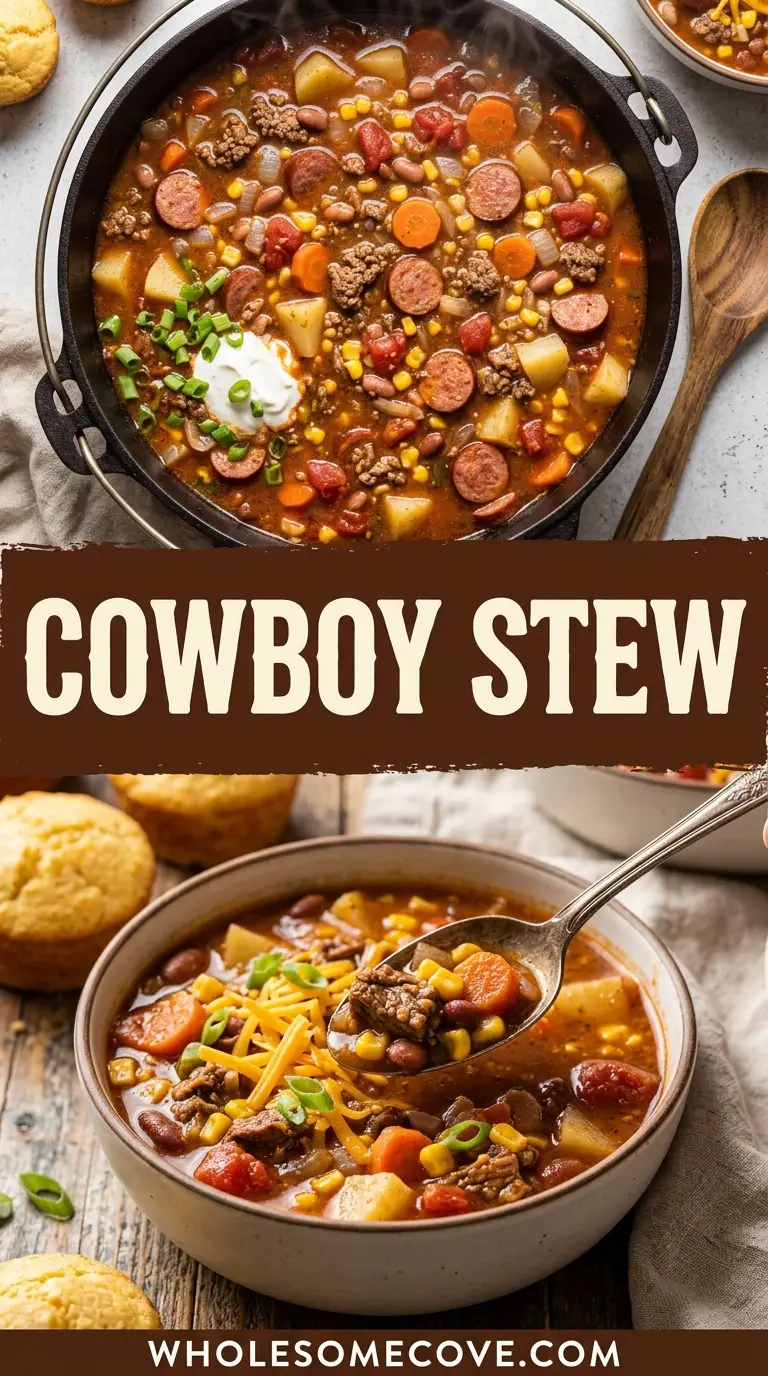
Three kinds of meat go into this pot, and each one pulls its weight. Crisp bacon, browned ground beef, and coins of smoked kielbasa give this cowboy stew recipe a smoky, savory backbone that a single protein could never manage on its own.
Most versions lean too far toward soup, thin and watery by the time it hits the bowl. The fix here is russet potatoes, which break down at the edges as they simmer and thicken the broth into something closer to chili.
You get beans, corn, tomatoes, and Southwestern spices in one Dutch oven, ready in about an hour with no browning marathon. It feeds six to eight people and reheats even better the next day.
| Quick Recipe Summary | |
|---|---|
| Prep Time | 15 minutes |
| Cook Time | 50 minutes |
| Total Time | 65 minutes |
| Servings | 8 servings |
| Difficulty Level | Easy |
For a brothier cousin of this dish, see Beef Stew.
Why You’ll Love This Cowboy Stew Recipe
This is a dump-and-simmer meal once the meat is browned, which means most of the cooking time is hands-off. That makes it a strong pick for busy weeknights and lazy weekends alike.
Here’s what makes it worth keeping in your rotation:
- Three meats, one pot. Bacon, ground beef, and kielbasa each add a different layer, from crisp and salty to smoky and rich.
- It thickens itself. Russet potatoes and beans release starch as they simmer, so you rarely need flour or cornstarch to get a hearty texture.
- Pantry and freezer friendly. Canned beans, corn, and tomatoes make up the bulk, so you can pull this together without a special grocery run.
- Feeds a crowd. One batch fills a 7-quart pot and serves eight, perfect for game day or feeding hungry teenagers.
- Better as leftovers. The flavors meld overnight, and day-two bowls taste deeper than day one.
- Endlessly flexible. Swap the beans, change the sausage, or crank up the heat with jalapeños. It bends to whatever you have.
You might also enjoy: Slow Cooker Chili
Ingredients
Everything below is easy to find, and most of it comes from cans and the freezer. The fresh items are just the potatoes, onion, and garlic.
- 6 slices bacon (170 g), chopped
- 1 lb (450 g) ground beef, 85% to 90% lean
- 14 oz (400 g) smoked kielbasa sausage, sliced into half-moons
- 1 medium yellow onion, diced
- 3 cloves garlic, minced
- 3 medium russet potatoes (about 1.5 lb / 680 g), peeled and cut into 1-inch cubes
- 1 can (15 oz / 425 g) pinto beans, drained and rinsed
- 1 can (15 oz / 425 g) kidney beans, drained and rinsed
- 1 can (15 oz / 425 g) baked beans, undrained
- 1 can (14.5 oz / 411 g) diced tomatoes, undrained
- 1 can (10 oz / 283 g) Rotel diced tomatoes with green chilies, undrained
- 1 can (15 oz / 425 g) whole kernel corn, drained
- 2 cups (480 ml) beef broth
- 1 cup (240 ml) water
- 1 tbsp chili powder
- 1 tsp ground cumin
- 1 tsp smoked paprika
- 1 tsp salt, plus more to taste
- ½ tsp black pepper
- Chopped fresh parsley, for garnish (optional)
Read Also: Crockpot Beef Stew
Kitchen Equipment Needed
You need very little here. One large pot does almost all the work, which is part of the appeal.
- A 7-quart Dutch oven or heavy soup pot. It needs to be big, since this recipe makes a lot.
- A wooden spoon or sturdy spatula for crumbling the beef.
- A slotted spoon to lift out the crisp bacon.
- A sharp chef’s knife for the sausage, potatoes, and onion.
- A cutting board.
- A can opener.
- A ladle for serving.
For a related one-pot meal, try Chicken Stew.
Recommended Products for This Recipe
These are the tools and ingredients I reach for every time I make this stew. Each one solved a specific problem I ran into while testing.
1. Lodge Enameled Cast Iron Dutch Oven
A thin pot scorches the fond before the beef finishes browning, and cowboy stew lives or dies on that browned layer. This one holds heat evenly across the base, so the bacon crisps and the beef browns without hot spots burning the bottom.
2. Zulay Metal Potato Masher
I keep this near the stove because mashing a few softened potato cubes right in the pot is the fastest way to thicken the stew without any flour. A sturdy metal head does it in seconds where a flimsy one just bends.
3. OXO Good Grips Wooden Spoon
Breaking ground beef into fine crumbles matters more than people expect, since big clumps stay pink in the middle. A wide, flat-edged wooden spoon lets you press and scrape at the same time.
4. McCormick Smoked Paprika
Regular paprika adds color but almost no flavor, which is the mistake I made in my first few batches. Smoked paprika is what gives the broth that campfire depth that makes the stew taste slow-cooked.
5. Glass Meal Prep Containers
Since this stew tastes better on day two, I portion leftovers straight into glass containers while it’s still warm. Glass doesn’t stain or hold onto the smoky smell the way plastic does.
A related recipe is Taco Soup.
Step-by-Step Instructions: How to Make Cowboy Stew
Follow these steps in order and you’ll have a thick, smoky pot of cowboy stew ready in about an hour.
1. Crisp the Bacon
- Set your Dutch oven over medium heat and add the chopped bacon.
- Cook for 5 to 7 minutes, stirring now and then, until the pieces are brown and crisp.
- Lift the bacon out with a slotted spoon and set it on a paper-towel-lined plate.
- Pour off the excess fat, leaving about 1 to 2 tablespoons of drippings in the pot for flavor.
2. Brown the Beef, Onion, and Garlic
- Add the ground beef, diced onion, and minced garlic to the pot with the reserved drippings.
- Cook over medium-high heat, breaking the beef into fine crumbles with your spoon.
- Continue for 6 to 8 minutes, until the beef is no longer pink and the onion has softened.
- Drain off any excess grease.
3. Brown the Sausage
- Add the sliced kielbasa to the pot with the beef.
- Cook for 3 to 4 minutes, stirring, until the sausage picks up some color on the cut edges.
- This quick browning deepens the smoky flavor, so don’t skip it.
4. Bloom the Spices
- Reduce the heat to low.
- Sprinkle in the chili powder, cumin, smoked paprika, salt, and black pepper.
- Stir and cook for about 1 minute, until the spices smell fragrant.
- Cooking the spices in the fat first wakes them up and prevents a raw, dusty taste.
5. Add Everything Else
- Add the cubed potatoes, pinto beans, kidney beans, baked beans, diced tomatoes, Rotel, and corn.
- Pour in the beef broth and water.
- Stir in the reserved crisp bacon.
- Stir until everything is well combined.
6. Simmer
- Raise the heat and bring the stew to a boil.
- As soon as it boils, reduce the heat to low and cover the pot.
- Simmer for 30 to 40 minutes, stirring occasionally, until the potatoes are fork-tender.
- The longer it simmers, the more the flavors blend, so give it the full time if you can.
7. Adjust and Serve
- Taste and add more salt or chili powder if needed.
- If the stew is too thick, stir in broth or water a splash at a time. If it’s too thin, mash a few potato cubes against the side of the pot and stir them back in.
- Ladle into bowls and top with chopped parsley.
For a similar hearty bowl, see Brunswick Stew.
Tips for The Best Cowboy Stew
A few small choices make the difference between a good pot and a great one. These are the ones that mattered most in my kitchen.
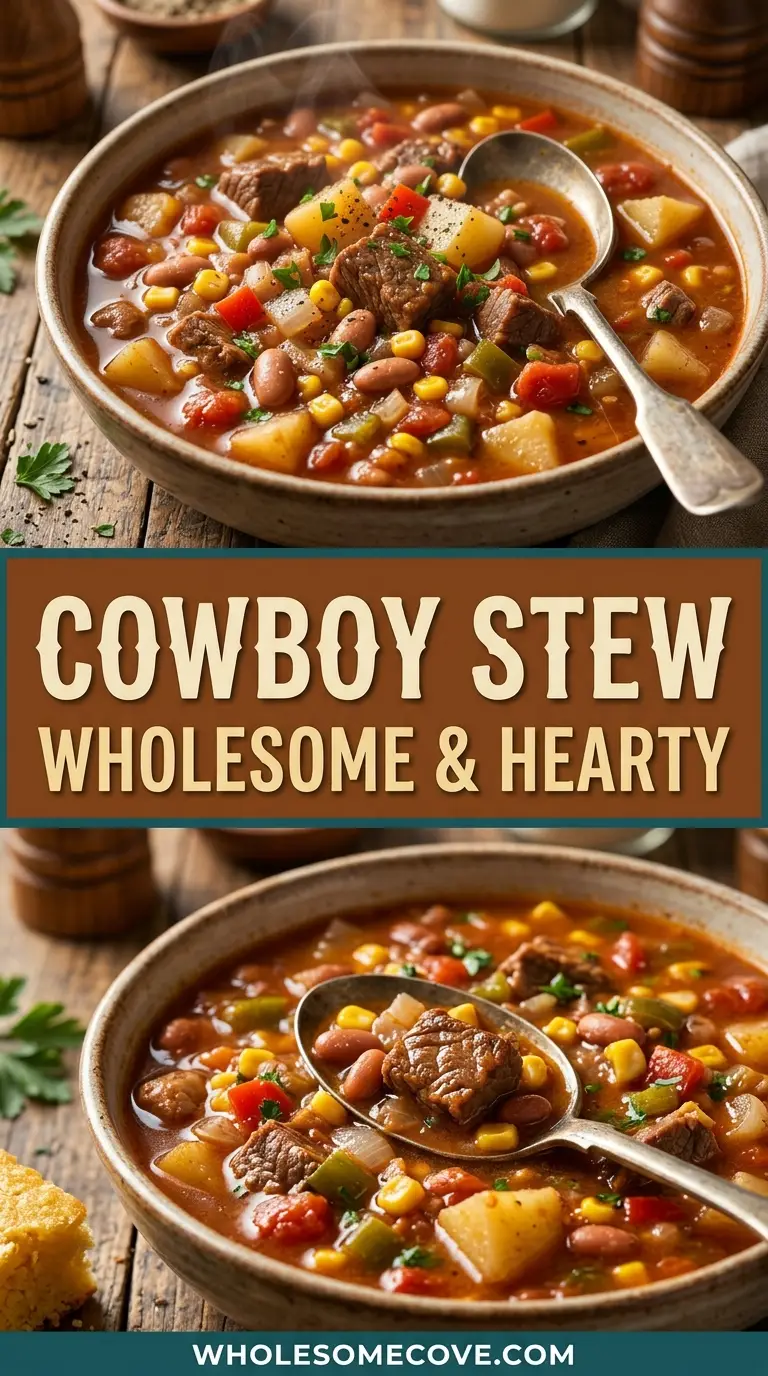
- Use russet potatoes for a thicker stew. They break down at the edges and thicken the broth. If you want cubes that hold their shape, use Yukon gold instead.
- Don’t drain the baked beans, tomatoes, or Rotel. That liquid carries flavor and helps build the broth.
- Brown in batches if your pot is crowded. Meat steams instead of browning when it’s packed too tight, and you lose that fond on the bottom.
- Bloom the spices in the fat. One minute in the hot drippings transforms the flavor compared to dumping them into the liquid.
- Simmer longer for deeper flavor. Fifteen minutes gets you dinner, but an hour gets you the good stuff.
- Make it a day ahead when you can. I’ve found the stew tastes noticeably better after a night in the fridge, once the smoky and spicy notes have time to settle together.
- Taste before you salt. Bacon, kielbasa, and canned beans all bring sodium, so wait until the end to judge.
Read Also: Slow Cooker Pork Stew
What to Serve with Cowboy Stew
This stew is a full meal on its own, but the right side turns it into a spread. Because it’s rich, smoky, and a little spicy, you want sides that either soak up the broth or cut through it with something fresh.
Here are the pairings I come back to:
- Cornbread. The classic partner. A wedge of cornbread is made for dunking into that thick broth.
- Buttermilk biscuits. Warm biscuits work just as well as cornbread for mopping the bowl.
- Dinner rolls. Soft dinner rolls are the easy, crowd-pleasing choice for a big table.
- Coleslaw. A cool, crunchy coleslaw balances the heat and richness.
- Mexican street corn. Charred, creamy Mexican street corn leans into the Southwestern flavors.
- A simple green salad or broccoli salad. A crisp broccoli salad adds freshness against all that meat.
- Shredded cheddar and sour cream. Set out bowls of each so everyone can top their own.
- Sliced jalapeños or hot sauce. For the heat lovers at the table.
For a lighter side, try: Healthy Coleslaw
Variations of Cowboy Stew
The beauty of cowboy stew is how forgiving it is. Change the meat, the beans, or the heat level and it still works. Here are some tested ways to make it your own.
- Slow cooker version. Brown the bacon, beef, and sausage first, then transfer everything to a crock pot. Cook on low for 6 to 8 hours or high for 3 to 4 hours, until the potatoes are tender.
- Instant Pot version. Use the sauté function to brown the meats, add everything else, then pressure cook on high for 10 minutes with a quick release.
- Ground turkey swap. Use 1 pound of lean ground turkey in place of the beef, or split it half and half for a lighter pot.
- Spicier. Add 1 to 2 diced jalapeños with the onion, or stir in a few dashes of hot sauce at the end.
- BBQ twist. Swap the baked beans for BBQ baked beans, or stir in a couple tablespoons of barbecue sauce for a sweeter, smokier profile.
- Bean swap. Black beans, ranch-style beans, chili beans, or navy beans all work in place of the pinto or kidney beans.
- Cheesy baked finish. Ladle the stew into an oven-safe dish, top with shredded cheddar, and broil until bubbly.
For another take on this style, see Kimchi Stew.
Storage and Reheating
Cowboy stew keeps well, which is part of why it’s such a good batch-cooking meal. Here’s how to store it so it tastes just as good later.
- Refrigerator. Cool the stew, then store it in an airtight container for up to 3 days.
- Freezer. Freeze in resealable bags or containers for up to 3 months. For the best texture, leave the potatoes out and add fresh ones when you reheat, since they can turn mushy after thawing.
- Thawing. Move frozen stew to the fridge overnight before reheating.
- Stovetop reheating. Warm it over low heat, stirring occasionally, and add a splash of broth or water if it has thickened too much.
- Microwave reheating. Heat individual bowls at reduced power to avoid overcooking the potatoes.
- Make-ahead tip. This stew actually improves overnight, so cooking it a day before serving is a feature, not a compromise.
For more batch-friendly ideas, see Venison Stew.
Nutritional Facts
Values are approximate and based on the recipe divided into 8 servings. Actual numbers vary with the specific brands and cuts you use.
| Nutrient | Amount per Serving |
|---|---|
| Calories | 430 kcal |
| Total Fat | 21 g |
| Saturated Fat | 7 g |
| Cholesterol | 65 mg |
| Sodium | 1050 mg |
| Total Carbohydrates | 38 g |
| Dietary Fiber | 9 g |
| Sugars | 8 g |
| Protein | 24 g |
For another protein-packed bowl, see Lamb Stew.
Health Benefits of Key Ingredients
Under all that smoky comfort, cowboy stew packs a real nutritional punch. The beans, tomatoes, and vegetables do a lot of quiet work in the background.
- Beans (pinto and kidney). High in plant protein and fiber, they help with fullness and steady energy. The fiber also supports digestion and heart health.
- Tomatoes. A good source of vitamin C and lycopene, an antioxidant that’s actually better absorbed once tomatoes are cooked.
- Potatoes. They bring potassium, vitamin C, and complex carbohydrates for lasting energy.
- Onion and garlic. Both contain compounds linked to immune support and anti-inflammatory benefits.
- Corn. Adds fiber plus small amounts of B vitamins and antioxidants like lutein.
- Lean ground beef. A solid source of protein, iron, zinc, and vitamin B12, all important for energy and muscle.
For a veggie-forward option, see Seafood Stew.
FAQs About Cowboy Stew
1. What is cowboy stew made of?
Cowboy stew is a hearty one-pot meal built on three meats: bacon, ground beef, and smoked sausage. Those cook down with beans, potatoes, corn, and tomatoes in a spiced, tomato-based broth.
It’s often described as somewhere between beef stew and chili. The exact mix varies by cook, but that meat-and-bean base is the constant.
2. What kind of beans go in cowboy stew?
Pinto and kidney beans are the most traditional choices, and many cooks add a can of baked beans for a touch of sweetness. That baked-bean note is part of the campfire flavor people associate with the dish.
You can also use black beans, ranch-style beans, chili beans, or navy beans. Almost any canned bean works, so use what’s in your pantry.
3. How do I thicken cowboy stew?
The easiest way is to let it simmer with russet potatoes, which release starch and naturally thicken the broth. Mashing a few softened potato cubes against the side of the pot speeds this up.
If you want it thicker still, stir in a slurry of 1 tablespoon cornstarch mixed with equal parts cold water. Simmer a few minutes until it sets.
4. What’s the difference between cowboy stew and chili?
They’re close cousins, and cowboy stew is often described as chili with more going on. The big differences are the potatoes and the multiple meats, which chili usually skips.
Cowboy stew also tends to have a thinner, more stew-like consistency than a thick pot of chili. Think of it as chili that wandered toward stew territory.
5. Can I make cowboy stew in a slow cooker?
Yes, and it’s a great hands-off option. Brown the bacon, beef, and sausage first, then add everything to the crock pot.
Cook on low for 6 to 8 hours or high for 3 to 4 hours, until the potatoes are tender. Browning the meat first is worth the extra step for flavor.
6. Why is it called cowboy stew?
The name comes from its roots as a rugged, use-what-you-have meal cooked over campfires on cattle drives. Cowboys combined shelf-stable pantry items like beans, canned tomatoes, and preserved meats into one filling pot.
That practical, dump-it-all-in spirit still defines the dish today. It’s meant to be flexible, hearty, and fuss-free.
For one more cozy bowl, see Irish Stew.
Cowboy Stew
Ingredients
- 6 slices bacon - 170 g, chopped
- 1 lb ground beef - 450 g, 85% to 90% lean
- 14 oz smoked kielbasa sausage - 400 g, sliced into half-moons
- 1 medium yellow onion - diced
- 3 cloves garlic - minced
- 3 medium russet potatoes - about 1.5 lb / 680 g, peeled and cut into 1-inch cubes
- 1 can pinto beans - 15 oz / 425 g, drained and rinsed
- 1 can kidney beans - 15 oz / 425 g, drained and rinsed
- 1 can baked beans - 15 oz / 425 g, undrained
- 1 can diced tomatoes - 14.5 oz / 411 g, undrained
- 1 can Rotel diced tomatoes with green chilies - 10 oz / 283 g, undrained
- 1 can whole kernel corn - 15 oz / 425 g, drained
- 2 cups beef broth - 480 ml
- 1 cup water - 240 ml
- 1 tbsp chili powder
- 1 tsp ground cumin
- 1 tsp smoked paprika
- 1 tsp salt - plus more to taste
- ½ tsp black pepper
- chopped fresh parsley - for garnish (optional)
Equipment
- 7-quart Dutch oven or heavy soup pot - Needs to be large since this recipe makes a lot
- Wooden spoon or sturdy spatula - For crumbling the beef
- Slotted spoon - To lift out the crisp bacon
- Sharp chef’s knife - For the sausage, potatoes, and onion
- Ladle - For serving
Method
- Set your Dutch oven over medium heat and add the chopped bacon. Cook for 5 to 7 minutes, stirring now and then, until the pieces are brown and crisp.
- Lift the bacon out with a slotted spoon and set it on a paper-towel-lined plate. Pour off the excess fat, leaving about 1 to 2 tablespoons of drippings in the pot.
- Add the ground beef, diced onion, and minced garlic to the pot with the reserved drippings. Cook over medium-high heat, breaking the beef into fine crumbles, for 6 to 8 minutes until no longer pink.
- Drain off any excess grease, then add the sliced kielbasa to the pot with the beef. Cook for 3 to 4 minutes, stirring, until the sausage picks up some color on the cut edges.
- Reduce the heat to low and sprinkle in the chili powder, cumin, smoked paprika, salt, and black pepper. Stir and cook for about 1 minute until fragrant.
- Add the cubed potatoes, pinto beans, kidney beans, baked beans, diced tomatoes, Rotel, and corn. Pour in the beef broth and water, then stir in the reserved crisp bacon.
- Raise the heat and bring the stew to a boil, then reduce the heat to low and cover the pot. Simmer for 30 to 40 minutes, stirring occasionally, until the potatoes are fork-tender.
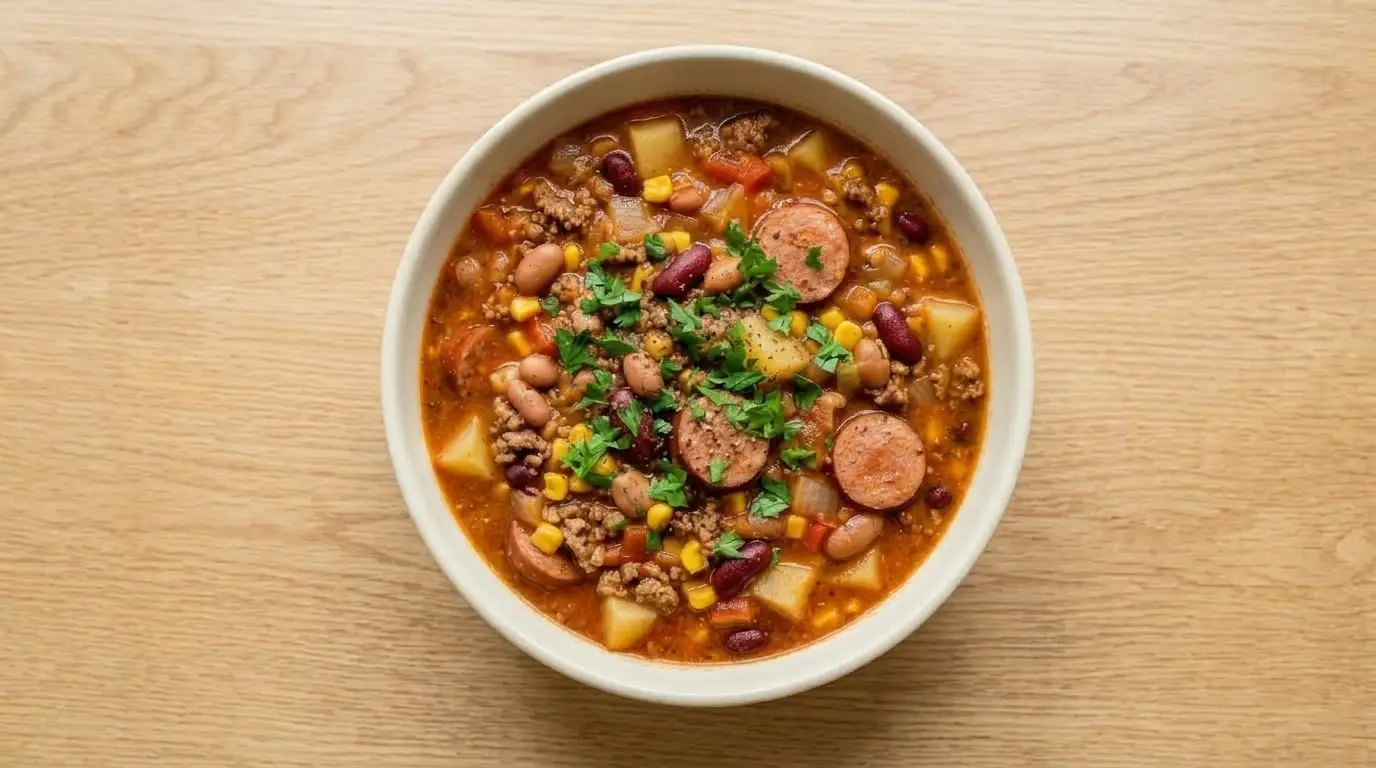
- Taste and add more salt or chili powder if needed. Adjust thickness with broth or by mashing a few potato cubes, then ladle into bowls and top with chopped parsley.
Nutrition
Notes
- Use russet potatoes for a thicker stew since they break down at the edges and thicken the broth. If you want cubes that hold their shape, use Yukon gold instead.
- Don’t drain the baked beans, tomatoes, or Rotel. That liquid carries flavor and helps build the broth.
- Brown in batches if your pot is crowded. Meat steams instead of browning when it’s packed too tight, and you lose that fond on the bottom.
- Bloom the spices in the fat. One minute in the hot drippings transforms the flavor compared to dumping them into the liquid.
- Simmer longer for deeper flavor. Fifteen minutes gets you dinner, but an hour gets you the good stuff.
- Make it a day ahead when you can. The stew tastes noticeably better after a night in the fridge, once the smoky and spicy notes have time to settle together.
- Taste before you salt. Bacon, kielbasa, and canned beans all bring sodium, so wait until the end to judge.
- Slow cooker version: Brown the bacon, beef, and sausage first, then transfer everything to a crock pot. Cook on low for 6 to 8 hours or high for 3 to 4 hours, until the potatoes are tender.
- Instant Pot version: Use the sauté function to brown the meats, add everything else, then pressure cook on high for 10 minutes with a quick release.
- Storage: Cool the stew, then store it in an airtight container for up to 3 days in the refrigerator, or freeze for up to 3 months. For the best texture, leave the potatoes out and add fresh ones when you reheat.
Private Notes
Tried this recipe?
Let us know how it was!Final Thoughts
Cowboy stew is the kind of dinner that asks very little and gives back a lot. One pot, a pile of pantry cans, and about an hour stand between you and a bowl thick enough to stand a spoon in.
Make it once and you’ll understand why it earns a permanent spot on the cold-weather menu. It’s smoky, filling, and somehow even better the next day.
Give this one a try on your next busy night, and don’t be surprised when everyone circles back for seconds. If you make it, I’d love to hear how it turned out, so leave a comment or share it with a friend who needs a good stew in their life.
Recommended:
- Chicken Stew
- Pork Stew
- Oyster Stew
- Easy Healthy Crockpot Chili
- Cheeseburger Soup
- Mashed Potatoes
- Potato Salad
- Mississippi Pot Roast
- Slow Cooker Pot Roast