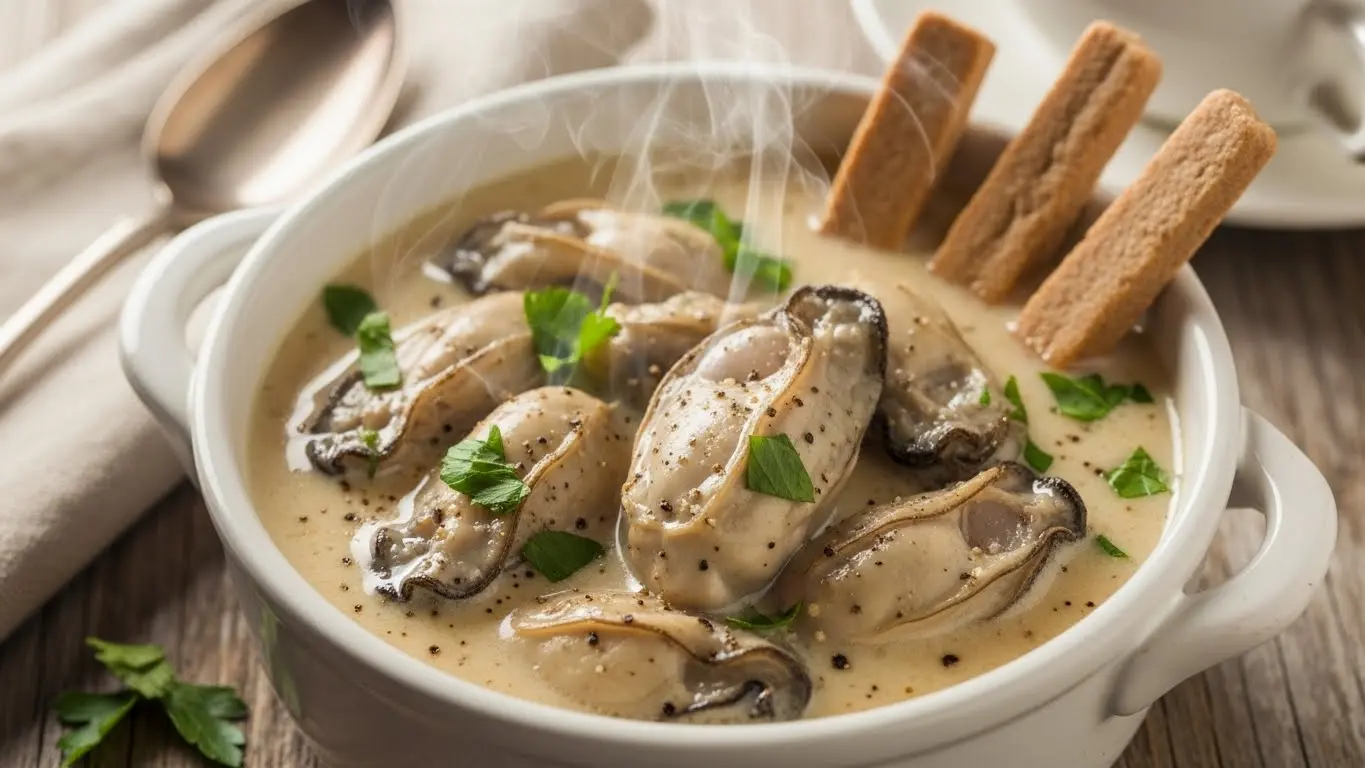
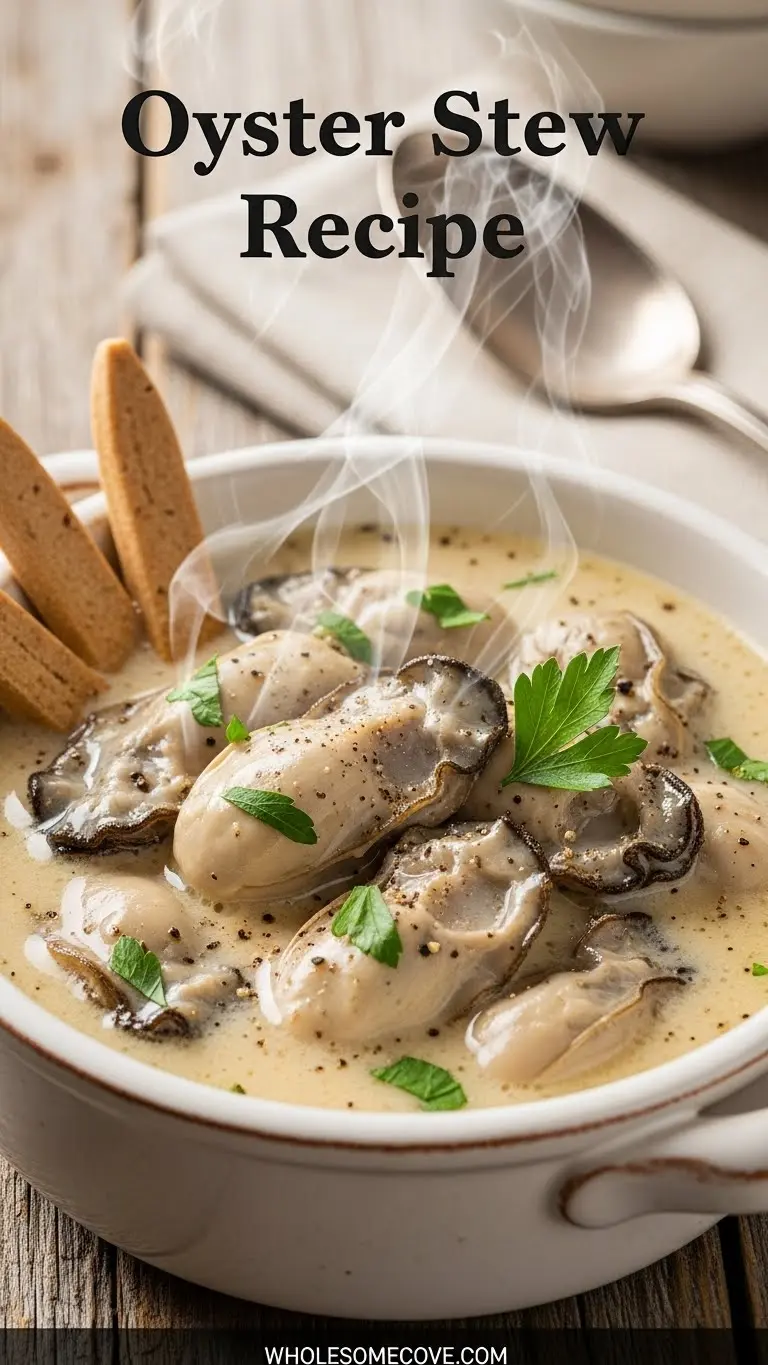
Growing up on the coast, I remember my grandmother making this oyster stew recipe every Christmas Eve. The tradition has stuck with me through the years, and now I make it whenever I’m craving something deeply comforting and special.
There’s something magical about the simplicity of this dish. Fresh oysters swimming in a velvety, butter-enriched broth that tastes like the ocean met the creamery. The first time I attempted to recreate Grandma’s version, I made every mistake possible. I overcooked the oysters until they were rubbery, and I scorched the cream because I wasn’t paying attention.
But after years of trial and error, I’ve finally perfected this recipe. Now it’s one of those dishes I turn to when I want to impress guests without spending hours in the kitchen. The whole thing comes together in under 30 minutes, yet it tastes like you’ve been fussing over it all day.
| Quick Recipe Summary | |
|---|---|
| Prep Time | 10 minutes |
| Cook Time | 15 minutes |
| Total Time | 25 minutes |
| Servings | 4 servings |
| Difficulty Level | Easy |
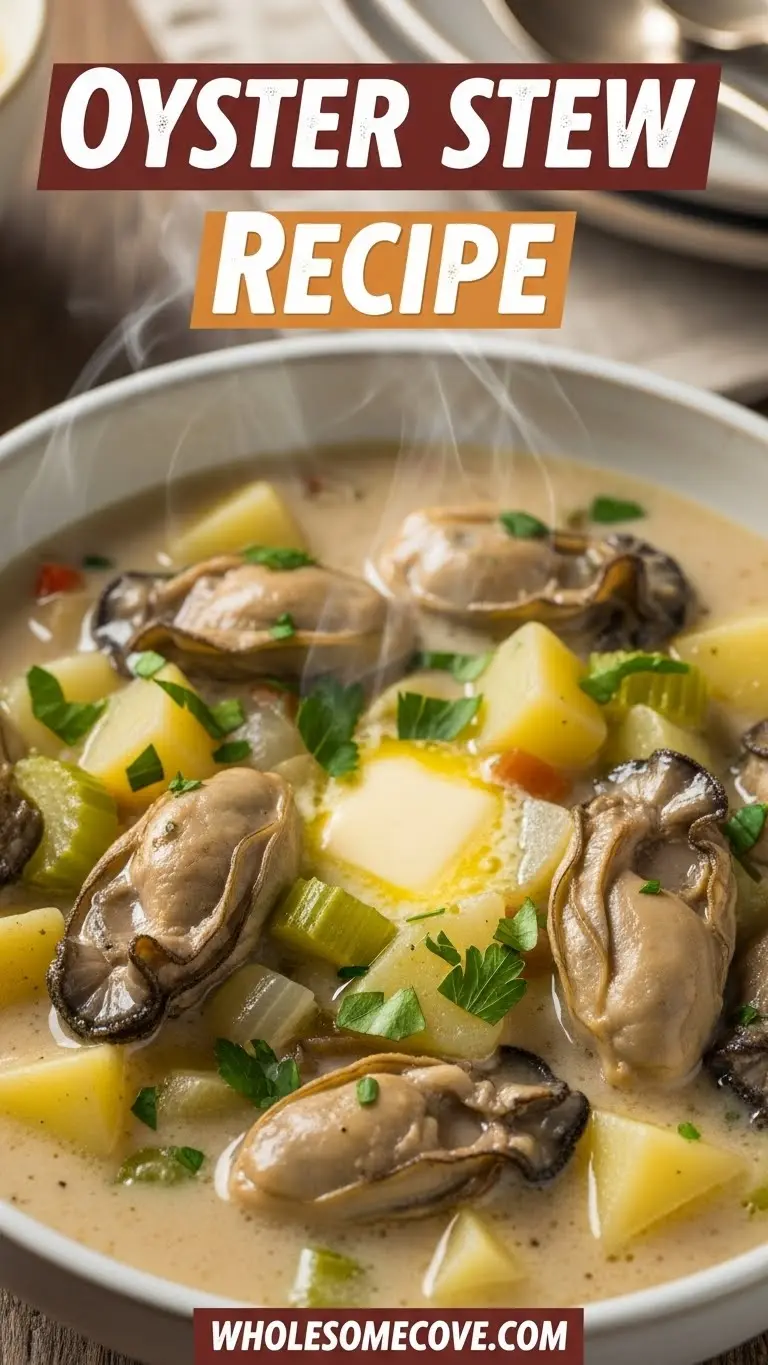
Why You’ll Love This Oyster Stew Recipe
This isn’t just another seafood soup. It’s a celebration of pure, simple flavors that highlight the natural brininess of fresh oysters.
The beauty of oyster stew lies in its restraint. Unlike heavy chowders loaded with potatoes and bacon, this stew lets the oysters shine as the star of the show. The cream adds richness without overwhelming, while butter provides a silky mouthfeel that coats your palate beautifully.
Here’s what makes this recipe stand out:
- Ready in 25 minutes: Perfect for busy weeknights or last-minute entertaining
- Minimal ingredients: You probably have most of what you need already
- Restaurant-quality results: Tastes like something from a high-end seafood restaurant
- Naturally gluten-free: No flour or thickeners needed
- Incredibly versatile: Easy to customize with your favorite herbs and seasonings
- Budget-friendly elegance: Oysters might seem fancy, but fresh shucked oysters are surprisingly affordable when in season
Another favorite comfort dish: Irish Stew Recipe
Ingredients
The key to an exceptional oyster stew is using the freshest ingredients possible. Don’t skimp on quality here, as each component plays a crucial role in the final flavor.
- 2 pints fresh shucked oysters (about 946 ml): With their liquid, don’t drain them
- 4 tablespoons unsalted butter (57 g): Divided into two portions
- 2 cups whole milk (480 ml): The fat content matters here
- 2 cups heavy cream (480 ml): For that luxurious texture
- 1 small shallot, minced: About 2 tablespoons for subtle sweetness
- 2 cloves garlic, minced: Fresh is essential
- 1 teaspoon Worcestershire sauce: Adds depth and umami
- 1/2 teaspoon celery salt: Classic oyster stew seasoning
- 1/4 teaspoon white pepper: Keeps the color pristine
- 1/4 teaspoon cayenne pepper: Just a whisper of heat
- Salt to taste: Start with 1/2 teaspoon
- Fresh parsley, chopped: For garnish and brightness
- Oyster crackers: Traditional accompaniment
Kitchen Equipment Needed
Having the right tools makes this recipe even easier. You don’t need anything fancy, but these essentials will help you achieve the best results.
- Large heavy-bottomed pot or Dutch oven: Prevents scorching and distributes heat evenly
- Medium saucepan: For heating the milk and cream
- Fine mesh strainer: To catch any shell fragments
- Wooden spoon: Won’t scratch your pot
- Ladle: For serving
- Sharp knife: For mincing shallots and garlic
- Cutting board: Preferably one designated for aromatics
- Measuring cups and spoons: Accuracy matters with dairy
You might also enjoy: Potato Leek Soup Recipe
Recommended Products for This Recipe
After making this stew countless times, I’ve discovered a few products that truly elevate the final result. These are my personal go-to recommendations that I genuinely believe make a difference.
1. Le Creuset Enameled Cast Iron Dutch Oven
The even heat distribution of this Dutch oven is unmatched when it comes to delicate seafood preparations. I’ve never had scorched cream or unevenly cooked oysters since switching to this pot. The heavy lid also traps steam perfectly, creating the ideal environment for the flavors to meld.
2. Premium Fresh Shucked Oysters
Quality oysters make or break this dish. I’ve found that ordering premium oysters online delivers better consistency than what I sometimes find at local markets. Look for oysters that smell like the ocean, not fishy, and come with plenty of their natural liquor.
3. OXO Good Grips Fine Mesh Strainer
Even when buying pre-shucked oysters, you’ll occasionally encounter tiny shell fragments. This fine mesh strainer has saved me from serving gritty stew more times than I can count. It’s also perfect for straining the oyster liquor if it seems sandy.
4. Premium Grass-Fed Butter
Since butter is one of the primary flavors in this stew, using high-quality butter makes a noticeable difference. Grass-fed butter has a richer, more complex flavor that complements the oysters beautifully without overpowering them.
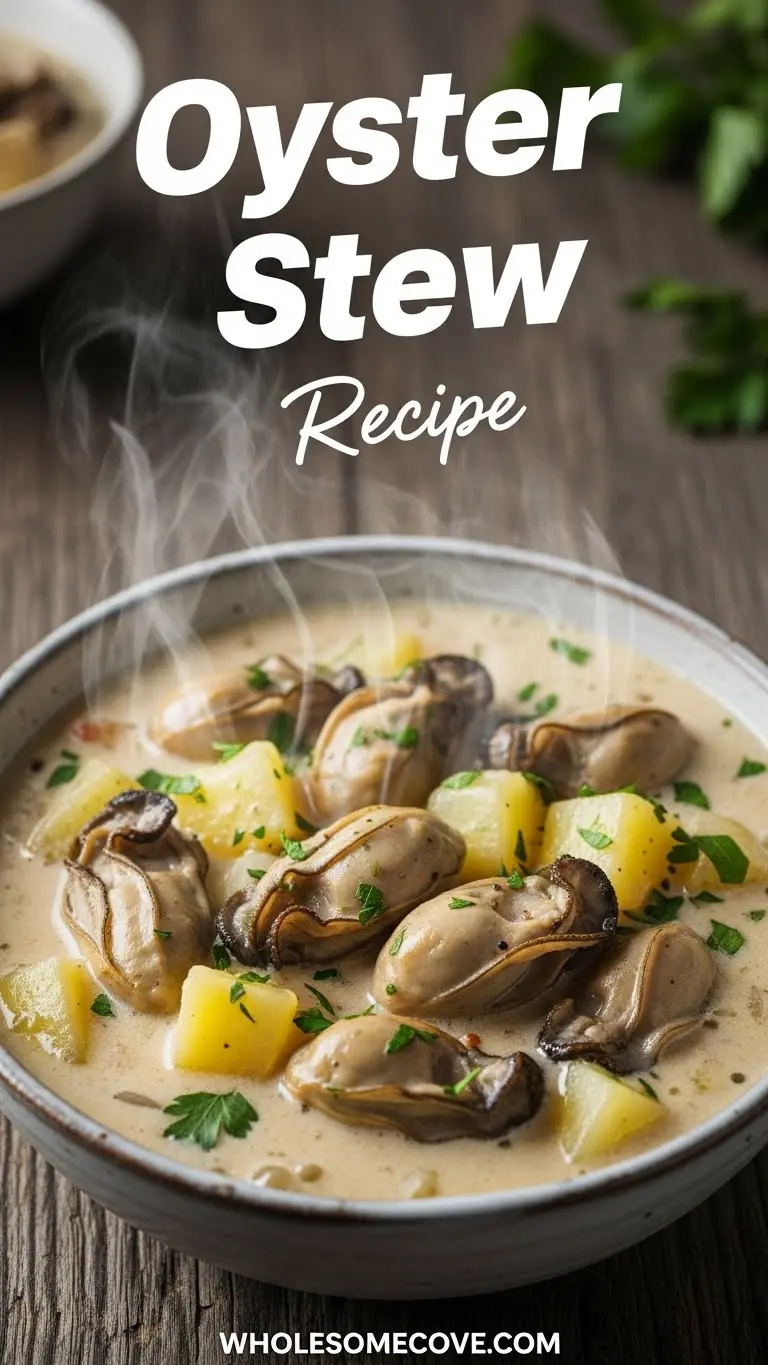
Step-by-Step Instructions: How to Make Oyster Stew
Follow these detailed steps carefully, especially if you’re new to cooking with oysters. The technique is straightforward, but timing is everything.
1. Prepare Your Ingredients
- Drain the oysters through a fine mesh strainer, reserving all of the oyster liquor in a separate bowl
- Pick through the oysters carefully to remove any shell fragments
- Mince the shallot and garlic finely so they blend seamlessly into the broth
- Measure out all your dairy ingredients so they’re ready when you need them
- Have your seasonings lined up and ready to add
2. Heat the Milk and Cream
- Pour the milk and heavy cream into a medium saucepan
- Set over medium-low heat and warm gently until steaming but not boiling
- This prevents temperature shock when you combine everything later
- Keep an eye on it; you want it hot but not scalding
- Turn the heat to the lowest setting once it’s steaming to keep it warm
3. Sauté the Aromatics
- Melt 2 tablespoons of butter in your large pot over medium heat
- Add the minced shallot and cook for 2-3 minutes until softened and translucent
- Stir in the garlic and cook for just 30 seconds until fragrant
- Don’t let the garlic brown or it will turn bitter
- The butter should be foamy but not browned
4. Add the Oyster Liquor
- Pour the reserved oyster liquor into the pot with the aromatics
- Add the Worcestershire sauce, celery salt, white pepper, and cayenne
- Bring to a gentle simmer and let it reduce slightly for about 2 minutes
- This concentrates the briny flavor and infuses the seasonings
- Taste and adjust the seasonings now before adding the oysters
5. Add the Oysters
- Reduce heat to medium-low so the liquid is barely simmering
- Gently add the oysters to the pot, stirring carefully
- Cook just until the oyster edges begin to curl, about 3-4 minutes
- Watch them closely; overcooked oysters become tough and rubbery
- They should look plump and the edges should just start to ruffle
6. Combine with Dairy
- Slowly pour the warm milk and cream mixture into the pot
- Stir gently to combine everything without breaking up the oysters
- Heat through for 2-3 minutes until the stew is steaming hot
- Do not let it boil or the dairy will break and the oysters will overcook
- The stew should be creamy and smooth with no curdling
7. Finish and Serve
- Remove from heat immediately once everything is heated through
- Stir in the remaining 2 tablespoons of butter until melted
- Taste and add salt if needed, keeping in mind the oysters are already salty
- Ladle into warm bowls and garnish with fresh chopped parsley
- Serve immediately with oyster crackers on the side
Another comforting soup: Creamy Tomato Basil Soup Recipe
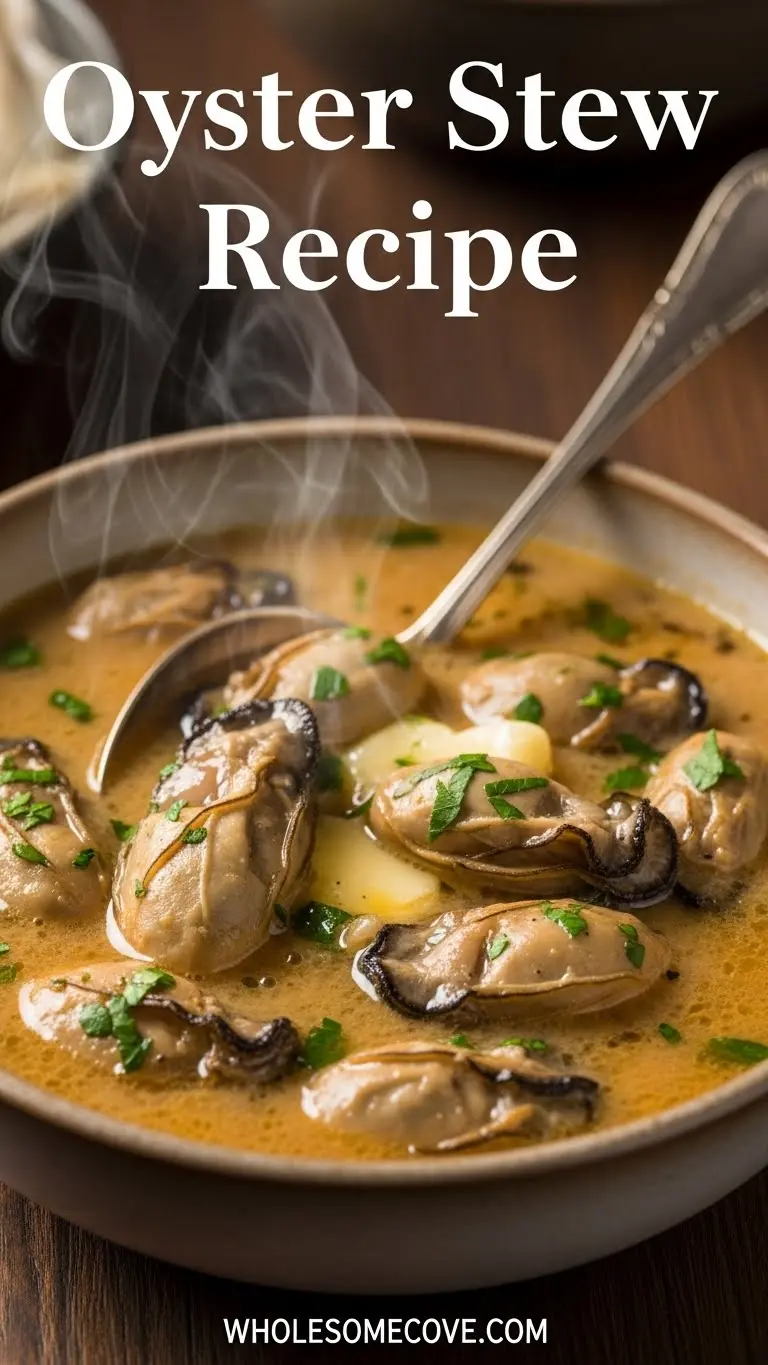
Tips for The Best Oyster Stew
These tricks come from years of making (and occasionally messing up) this recipe. They’ll help you avoid common pitfalls and achieve restaurant-quality results every time.
- Never boil the stew: High heat will curdle the cream and turn the oysters into rubber erasers
- Use fresh oysters: Frozen or canned oysters won’t give you the same sweet, briny flavor
- Warm your bowls: Cold bowls will cool down the stew too quickly
- Don’t skip the oyster liquor: That briny liquid is liquid gold for flavor
- Taste as you go: Oysters vary in saltiness, so adjust seasonings accordingly
- Make it ahead carefully: You can prep ingredients in advance, but cook the stew just before serving
- Strain the oyster liquor: If it looks sandy or gritty, strain it through cheesecloth
- Watch the timing: The difference between perfectly cooked and overcooked oysters is about 60 seconds
- Keep heat low: A gentle simmer is all you need once the oysters go in
- Use whole milk: Lower fat milk will make the stew too thin
Serving Suggestions
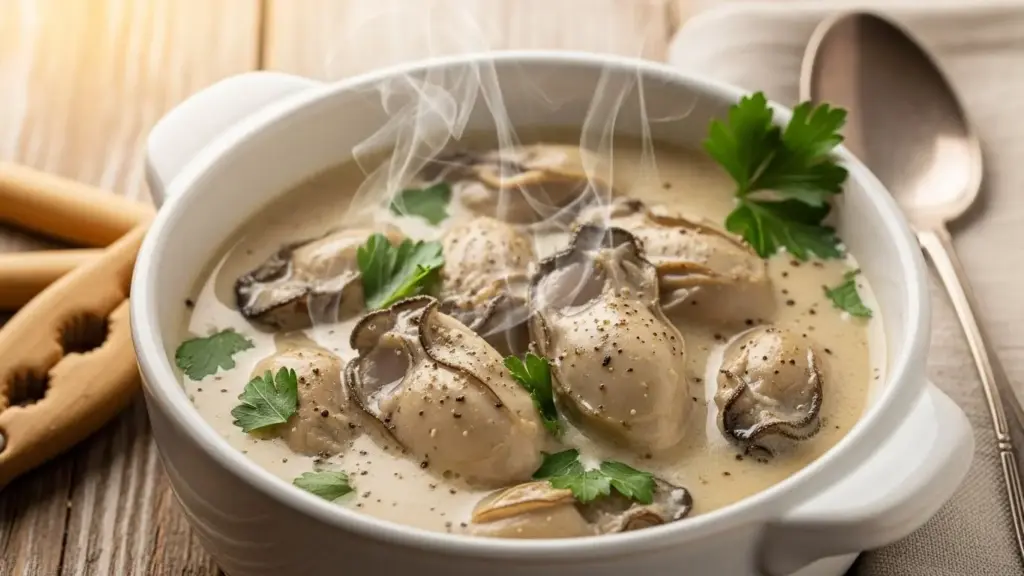
Oyster stew is elegant enough to stand on its own, but pairing it with the right accompaniments creates a complete meal experience.
The classic pairing is oyster crackers or saltines, which add a satisfying crunch and help soak up the creamy broth. I also love serving this with crusty sourdough bread for dipping.
For a more substantial meal, consider these serving ideas:
- Homemade Biscuit: Buttery and warm, perfect for soaking up every drop
- Simple green salad: Dressed lightly with lemon vinaigrette to cut through the richness
- Roasted Brussels Sprouts with Bacon: The smoky, crispy flavors complement the creamy stew
- Garlic bread: A crowd-pleaser that everyone loves
- Coleslaw: The tangy crunch provides nice contrast
- Steamed asparagus: Light and elegant, especially for special occasions
- Crusty baguette: For an authentic New England presentation
Variations of Oyster Stew
While the classic version is hard to beat, these variations offer exciting ways to customize the recipe to your taste preferences or what you have on hand.
- Spicy oyster stew: Double the cayenne and add a dash of hot sauce or a minced jalapeño
- Herbed version: Stir in fresh thyme, tarragon, or chives along with the parsley
- Bacon oyster stew: Cook 4 strips of bacon until crispy, use the fat instead of butter, and crumble bacon on top
- Manhattan-style: Add diced tomatoes and a splash of tomato paste for a red version
- Corn and oyster stew: Add 1 cup of fresh or frozen corn kernels when you add the oysters
- Potato oyster stew: Include 1 cup of diced, pre-cooked potatoes for a heartier meal
- White wine oyster stew: Replace half the oyster liquor with dry white wine
- Smoky version: Add 1/2 teaspoon of smoked paprika with the other seasonings
- Asian-inspired: Add ginger, sesame oil, and scallions instead of traditional seasonings
- Coconut milk version: Replace half the heavy cream with coconut milk for a dairy-free option
Read Also: Zuppa Toscana Recipe
Storage and Reheating
While oyster stew is best enjoyed fresh, sometimes you’ll have leftovers. Here’s how to store and reheat them properly without ruining the texture.
Proper storage is crucial because dairy-based seafood dishes are particularly prone to spoilage and texture changes.
- Refrigerator storage: Transfer cooled stew to an airtight container within 2 hours of cooking
- Shelf life: Use refrigerated stew within 1-2 days maximum for best quality and safety
- Freezing: Not recommended; the cream will separate and oysters will become rubbery when thawed
- Reheating on stovetop: Pour into a pot and warm over low heat, stirring gently and constantly
- Temperature check: Heat only until steaming, never to a boil
- Microwave method: Use 50% power in 30-second intervals, stirring between each
- Add liquid: If the stew has thickened, add a splash of milk or cream while reheating
- Freshen it up: Add a pat of butter and fresh herbs when reheating to brighten the flavors
- Single servings: Store in individual portions for easier reheating
- Label clearly: Mark containers with the date so you know when to use them
Nutritional Facts
Here’s the approximate nutritional information per serving (1/4 of the recipe). Keep in mind that oysters are incredibly nutritious, packed with protein, zinc, and vitamin B12.
- Calories: 420
- Total Fat: 36g
- Saturated Fat: 22g
- Cholesterol: 165mg
- Sodium: 580mg
- Total Carbohydrates: 14g
- Dietary Fiber: 0g
- Sugars: 10g
- Protein: 14g
- Vitamin A: 25% DV
- Vitamin C: 8% DV
- Calcium: 20% DV
- Iron: 35% DV
- Zinc: 180% DV
- Vitamin B12: 200% DV
You might also enjoy: Lentil and Vegetable Soup Recipe
Health Benefits of Key Ingredients
Beyond being delicious, oyster stew offers some impressive nutritional benefits. Each ingredient brings something valuable to the table.
Oysters are one of nature’s most nutrient-dense foods, offering an incredible array of vitamins and minerals in a low-calorie package.
- Oysters: Exceptionally high in zinc for immune function, contain omega-3 fatty acids for heart health, excellent source of vitamin B12 for energy and brain health, provide iron to prevent anemia, and rich in selenium for thyroid function
- Heavy cream: Contains fat-soluble vitamins A, D, E, and K, provides calcium for bone health, includes conjugated linoleic acid which may support heart health, and offers sustained energy from healthy fats
- Butter: Rich in butyric acid which supports gut health, contains vitamin K2 for bone and cardiovascular health, provides vitamin A for eye health, and includes beneficial fatty acids
- Garlic: Known for immune-boosting properties, contains compounds that may lower blood pressure, offers antioxidant protection, and has natural anti-inflammatory effects
- Shallots: Contain quercetin, a powerful antioxidant, provide compounds that support heart health, offer prebiotic fiber for gut health, and have anti-inflammatory properties
FAQs About Oyster Stew
1. Can I use canned oysters for oyster stew?
While you can technically use canned oysters, I strongly recommend against it for the best results. Fresh or jarred oysters have a much better texture and flavor. Canned oysters tend to be mushy and lack the sweet, briny taste that makes oyster stew special.
2. Why did my oyster stew curdle?
Curdling happens when the dairy gets too hot or when you add cold dairy to hot liquid too quickly. Always warm your milk and cream before adding them to the pot, and keep the heat low once the dairy is in. Never let the stew come to a boil after adding the cream.
3. How do I know when the oysters are done cooking?
Oysters cook very quickly, usually in just 3-4 minutes. They’re done when their edges start to curl and they look plump. Overcooking makes them tough and rubbery, so watch them carefully.
4. Can I make oyster stew dairy-free?
You can substitute coconut cream for heavy cream and use plant-based butter, but the flavor will be noticeably different. Full-fat coconut milk works better than coconut cream for a thinner consistency. The result won’t taste exactly like traditional oyster stew, but it can still be delicious.
5. What’s the difference between oyster stew and oyster chowder?
Oyster stew is typically a simple, creamy broth with oysters, milk, cream, and butter. Oyster chowder usually includes potatoes, vegetables, and sometimes bacon or salt pork. Stew is lighter and lets the oyster flavor shine more prominently.
Another hearty option: Beef Barley Soup Recipe
Final Thoughts
After all these years of making oyster stew, I’m still amazed by how something so simple can taste so extraordinary. The creamy, buttery broth cradling those tender oysters never fails to make me feel pampered and content.
This recipe has become my go-to for special occasions and cozy nights alike. Give it a try and see why generations of coastal families have cherished this dish. I’d love to hear how yours turns out, so drop a comment below with your experience or any tweaks you made!
Recommended:
- Pasta Fagioli Recipe
- Chicken Gnocchi Soup Recipe
- Italian Wedding Soup Recipe
- Taco Soup Recipe
- Brunswick Stew Recipe
- Cheeseburger Soup Recipe
- Lasagna Soup Recipe
- Panera Broccoli Cheddar Soup Recipe
- Easy Chicken Noodle Soup Recipe
- Slow Cooker Chili Recipe